Feb 7, 2019 | Advocacy, Non-legal submissions
The ICJ has submitted a written statement on Sri Lanka to the Human Rights Council ahead of its 40th Session in Geneva.
Almost ten years after Sri Lanka emerged from a period of conflict and massive human rights violations, the Government of Sri Lanka still has largely failed to implement its human rights obligations and commitments as reflected in Resolution 30/1.
The ICJ statement focuses on two of four transitional justice mechanisms which the Government committed to establish under the Resolution: (a) the judicial mechanism with special counsel to investigate violations of human rights and international humanitarian law; and (b) the office of missing persons. It highlights how female victims of war are uniquely impacted by the Government’s failure to implement the commitments made before the UNHRC and underscores the importance of holistically including women when such measures are implemented.
Recommendations:
The ICJ considers that the gravity and character of the crimes under international law committed in Sri Lanka, and the failure of the Government of Sri Lanka to meet its obligations and commitments to ensure justice for such crimes including as provided for in resolution 30/1, means that referral to the International Criminal Court or the creation of another international mechanism to facilitate criminal accountability would be fully warranted. If however the Council does not choose to pursue these options at this stage, the ICJ urges the Council at minimum to:
- Continue the monitoring of Sri Lanka through the adoption of a new resolution to ensure that the Government complies with all its obligations and commitments as reflected in resolution 30/1.
- Provide for OHCHR to develop, with the Sri Lankan Government, an implementation strategy with definitive timelines to ensure that the time afforded under the new resolution is utilised to expedite the implementation of measures assured under Resolution 30/1.
- Encourage Member States to exercise universal jurisdiction in order to bring perpetrators to justice.
The ICJ urges the Government of Sri Lanka to:
- Take immediate measures to establish the judicial mechanism with international involvement as contemplated under operative paragraph 6 of Resolution 30/1. The mechanism should ensure gender parity, be accessible for women in civil society, and allow female victims to fully participate in the process.
- Spread awareness regarding the importance of certificates of absence and confirm to the community that issuance of a certificate will not result in the end of efforts to find the person.
- Ensure an overall gender strategy is integrated in all other transitional justice mechanisms that are yet to be established so that structural injustices against women, especially in terms of discrimination and lack of participation, are addressed.
(full text of submission, in PDF: UN-HRC40-SriLanka-WrittenStatement-2019-EN)
Oct 24, 2018 | News
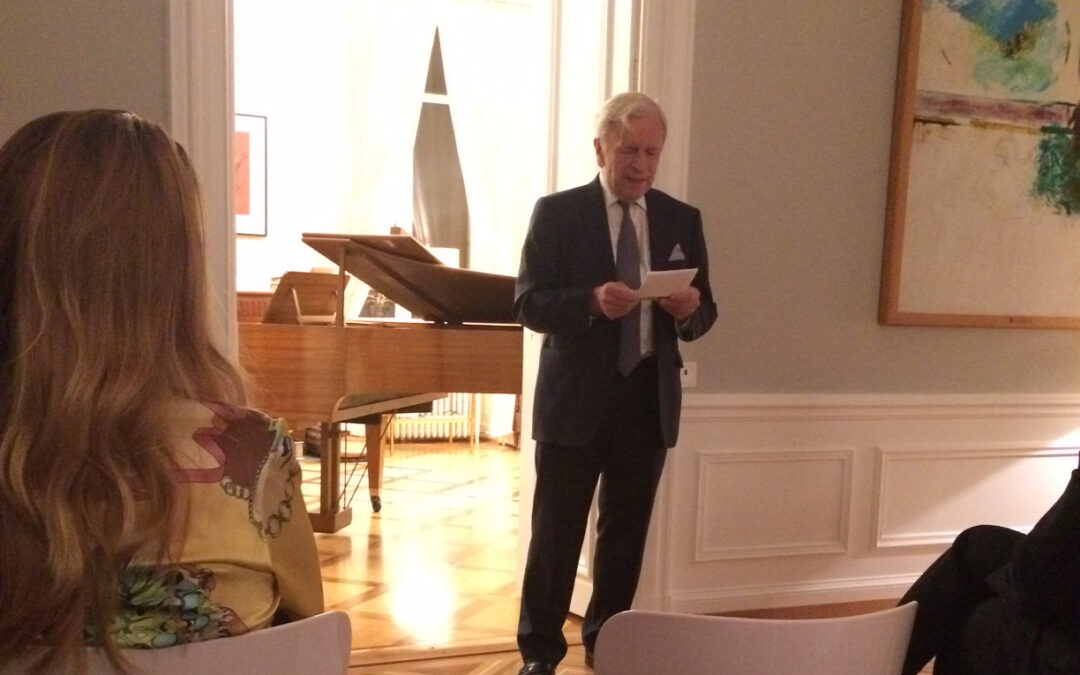
The ICJ started its 60th anniversary in Geneva with an evening gala hosted by Ambassador Julian Braithwaite, at his residence on 18 October 2018. A moving speech by Sir Nicolas Bratza (photo), ICJ Commissioner and Executive Committee member, on the importance of the defence of the rule of law opened the evening.
It was followed by a magnificent concert by Menuhin Academy virtuoso, violinist Vasyl Zatsikha. A magical evening.
The speech of Sir Nicolas Bratza
“I feel very privileged to have been asked to say a few words by way of introduction to the speech of the Secretary General of the ICJ.
May I begin by expressing on behalf of us all the warmest thanks to the British Ambassador for hosting this very special celebration of the 60th anniversary of the ICJ in its home in Geneva.
Anniversaries are always important occasions and never more so than when they mark a milestone in the life of a remarkable organization that has throughout its existence worked tirelessly to safeguard the rule of law and human rights and that has done so, in particular, by protecting and defending the independence of judges and lawyers.
My association with the ICJ has been relatively brief but for many years I have admired its work from afar, as a member of the European Commission of Human Rights for five years and as a judge of the Strasbourg Court, for fourteen.
The Court and the ICJ share the common purpose – to protect the fundamental principles of democracy, the rule of law and human rights.
Without the independent and impartiality of judges, both national and international, those principles would be meaningless and might as well have been written on water.
With the alarming growth of populism in countries across the world, the threats to the independence of the judiciary are regrettably as real today as they have been at any time.
In the international Court of which I was a member, judges are nominated by the States from which they are drawn.
But they are in no sense representatives of those States and are not infrequently faced with having to decide cases, sometimes cases of acute sensitivity, against their own countries.
The pressures on judges of the Court are often intense and there are notorious examples where the courage shown by a judge in maintaining his or her rigorous independence has come at a cost, the judge being punished by not being renominated by the State, by returning to the country at the end of their mandate without employment or means of livelihood, or by being unable to return safely to their home at all.
But if the position of the international judge is difficult enough, that of the national judge in certain States, including member States of the Council of Europe, is far worse, their independence and security, both physical and professional, being under constant threat.
In the 1990s and in the early years of this century, the signs were promising. One was able to witness a slow but steady improvement in adherence to the rule of law on the part of new democracies.
This was in no small measure due to the work of organizations such as the ICJ which, through its writings, seminars and training of judges and lawyers worldwide, did so much to strengthen and support judicial independence and to expose the most flagrant examples of abuse and undermining of that independence.
I regret to say that in more recent years the landscape has become much darker, with open and insidious attacks on members of the judiciary, the arbitrary removal of judges from their posts and measures taken to curtail the powers of judges and courts or to undermine their authority and independence.
In my official visits to member States as President of the Strasbourg Court, I met several judges who voiced their deep concern about the steps being taken both by the legislature and the executive to compromise their independence and to diminish their authority. It is not only in the new democracies that such a phenomenon has become apparent.
There has been a growing trend in many parts of Europe to undermine the standing and authority of the judiciary by outspoken attacks on judges for unpopular decisions, by members of the executive, by parliamentarians and by the media.
It is these challenges to judicial independence and to the rule of law that make the role of the ICJ and the continued support of the diplomatic community not only more relevant but more vital than they have ever been.
It is with pride and pleasure that I wish the ICJ a very happy anniversary on this its first 60 years of life in this great city.
But I combine this with a fervent hope that, with the support of us all, the ICJ is able to continue its extraordinary work for the next 60 years and far beyond. The protection of the rule of law and human rights depend on it.”
Oct 23, 2018 | Multimedia items, News, Video clips
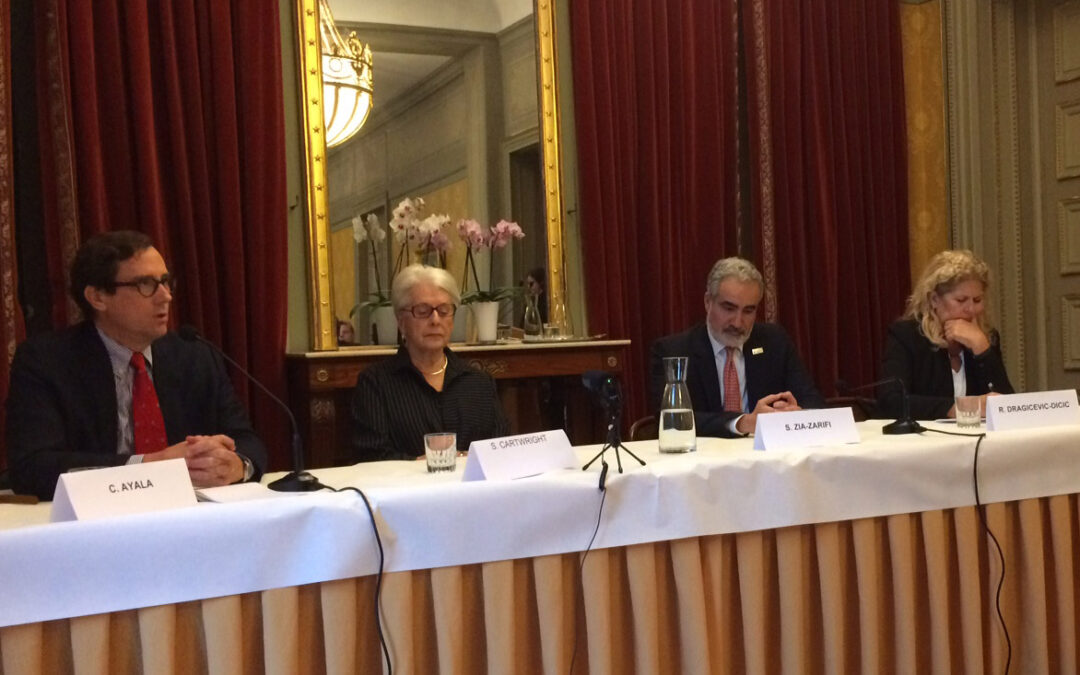
At an event at the city’s Palais Eynard, prominent ICJ Commissioners discussed the supremacy of the Rule of Law and also why it is important to be in Geneva. Watch the video.
The Executive Committee (ExCo), representing the whole Commission of Jurists, participated in the event.
Sam Zarifi, ICJ Secretary General, opened the event by reiterating the importance for the ICJ to be headquartered in Geneva, not only for the UN and international community but also for the city’s and canton’s legal and human rights community.
“It is absolutely clear that we live at a moment in the world when lawyers, judges, jurists are under attack and it is important for the legal community across the world, regardless of borders, regardless of languages, regardless of legal systems, to come together to defend the notion of the rule of law and defend the security and well-being of lawyers and jurists around the world.”
Carlos Ayala, ICJ’s Vice-President, said the ICJ was a unique organization working in the field of the Rule of Law, not as an isolated notion but within the framework of Human Rights and democracy.
He explained how the ICJ is structured and working around the world and insisted on the impact the ICJ is having through its activities.
He said that the organization’s legal outputs were used to have an impact on the overall human rights situations, cases, court decisions, and in training judges, lawyers, prosecutors and others.
Radmila Dragicevic-Dicic, also ICJ’s Vice-President, insisted on how it is important to share experiences about human rights issues and finding solutions to protect different rights.
She gave her personal example of being a judge in former Yugoslavia and Serbia to show how with tenacity and courage one can help establish an independent judiciary even in some of the hardest situations.
She testified how she was helped by the ICJ and Switzerland in her fight for justice.
“If you fight for independence of judges and lawyers in your country, you fight for judges and lawyers everywhere,” she added.
Dame Silvia Cartwright, ICJ Commissioner and ExCo member from New Zealand, was the first woman appointed to the High Court in New Zealand and she was also Governor General of New Zealand.
She said that she was privileged to come from a country that has always promoted and protected the Rule of Law but that unfortunately many recent examples showed that this endorsement could change overnight.
Very active in the fight for women’s rights she said how through her professional work she realized the terrible impact that the Khmer Rouge’s regime in Cambodia and civil war in Sri Lanka had on women.
“Generally speaking I’m quite pessimistic because I think we have reached another stage of the cycle that seems to occur every couple of generations where we are heading towards a more fascist world. So this is the time when human rights must be protected when we must fight to maintain the norms we have struggled for so long,” she said.
Watch the full event here:
https://www.facebook.com/ridhglobal/videos/335212527229422/
Oct 5, 2018 | News
2018 marks the 60th anniversary of the ICJ’s move to Geneva thanks to the great Swiss jurist Jean-Flavien Lalive, who was ICJ’s Secretary General in 1958.
This makes the ICJ one of the earliest international organizations to establish its headquarters in Geneva.
At the 1959 ICJ Congress in New Delhi, Dr. Lalive helped breathe new life into the rule of law and human rights.
The Delhi Declaration is, to date, a fundamental instrument interpreting the rule of law as a living concept, and underscoring the primary role of lawyers in its safeguard and in the advancement of human rights.
The ICJ plays a unique and preeminent role as a non-governmental organization seeking to defend human rights and the rule of law worldwide.
The ICJ will mark this event with two major initiatives:
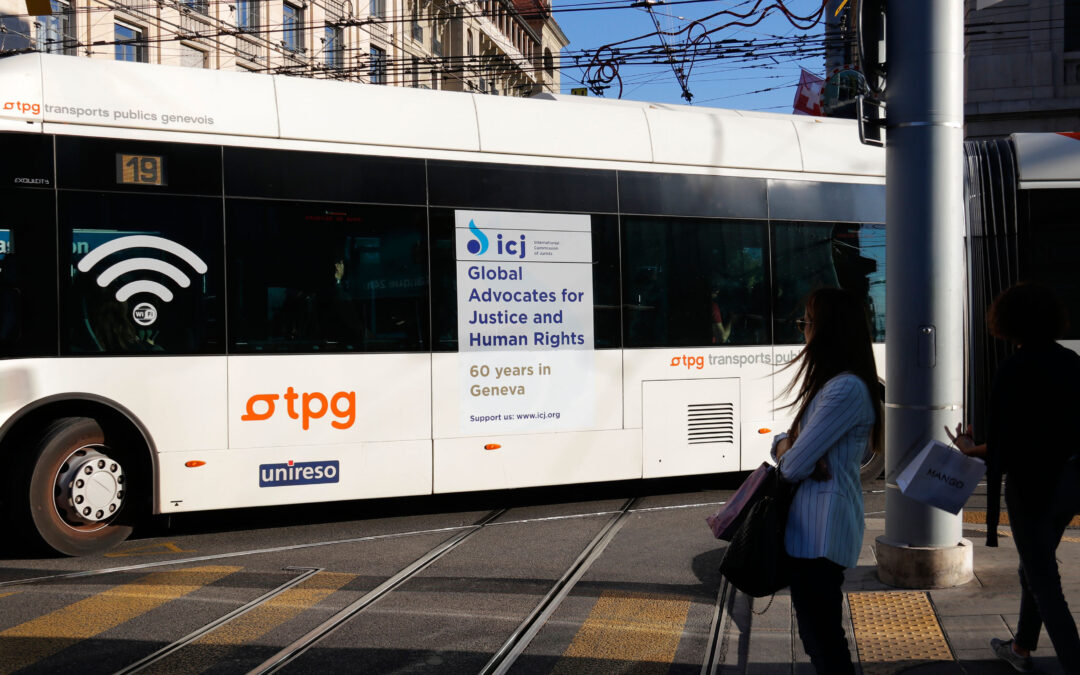
- A visibility campaign from 26th September to 9th October: the TV screens on the Geneva public transport network and five vehicles will carry the slogan “Global Advocates for Justice and Human Rights – 60 years in Geneva”
- The launch of the “60th Anniversary Appeal” to all lawyers in the Republic and canton of Geneva to support the ICJ and, in turn, their less privileged colleagues, victims of persecution on five continents.
“Geneva can be proud of its image as the world human rights capital. It is a beacon for justice advocates around the world. We must continue to make it shine,” said Sam Zarifi, Secretary General of the ICJ.
“Through its 60-year history, the ICJ has contributed significantly to Geneva’s human rights record: the campaigns that led to the creation of the post of UN High Commissioner for Human Rights in 1993 and the UN Human Rights Council in 2006, as well as the adoption of the United Nations Convention against Torture in 1984 are some emblematic examples,” said Olivier Coutau, Head of La Genève Internationale.
“In the face of repeated attacks on human rights, the world needs, more than ever the ICJ’s competent, rigorous and effective defense of the rule of law,” Sam Zarifi added.
The Republic and canton of Geneva support the ICJ 60th Anniversary Appeal.
Additional information
The international reputation of the ICJ rests on these pillars:
- 60 Commissioners – eminent judges and lawyers – from all regions of the world and all legal systems – with unparalleled knowledge of the law and human rights;
- Cooperating with governments committed to improving their human rights performance;
- Effective balance of diplomacy, constructive criticism, capacity building, and if necessary, ‘naming and shaming’;
- Unmatched direct access to national judiciaries, implementing international standards and improved legislation impacting millions;
- Guiding, training and protecting judges and lawyers worldwide to uphold and implement international standards;
- Working for access to justice for victims, survivors and human rights defenders, in particular from marginalized communities;
- Following a strict result based management in project delivery.
In recognition of this effective approach, the ICJ has been awarded, during its long history, some of the most prestigious international awards: the Council of Europe Human Rights Prize, the United Nations Award for Human Rights, Erasmus Prize, Carnegie Foundation Wateler Peace Prize.
In 2018, the ICJ provided local trainings on five continents to assist 4,300 judges, lawyers and prosecutors strengthen their ability to protect and promote fundamental rights.
The ICJ has consultative status with the United Nations Economic and Social Council, UNESCO, the Council of Europe and the African Union.
Contact :
Michaël W. Sombart, Director Philanthropy & Strategic Partnerships, t: +41 22 979 38 31 ; m: +41 77 965 98 45 ; e: michael.sombart(a)icj.org
Sep 28, 2018 | Advocacy, Non-legal submissions
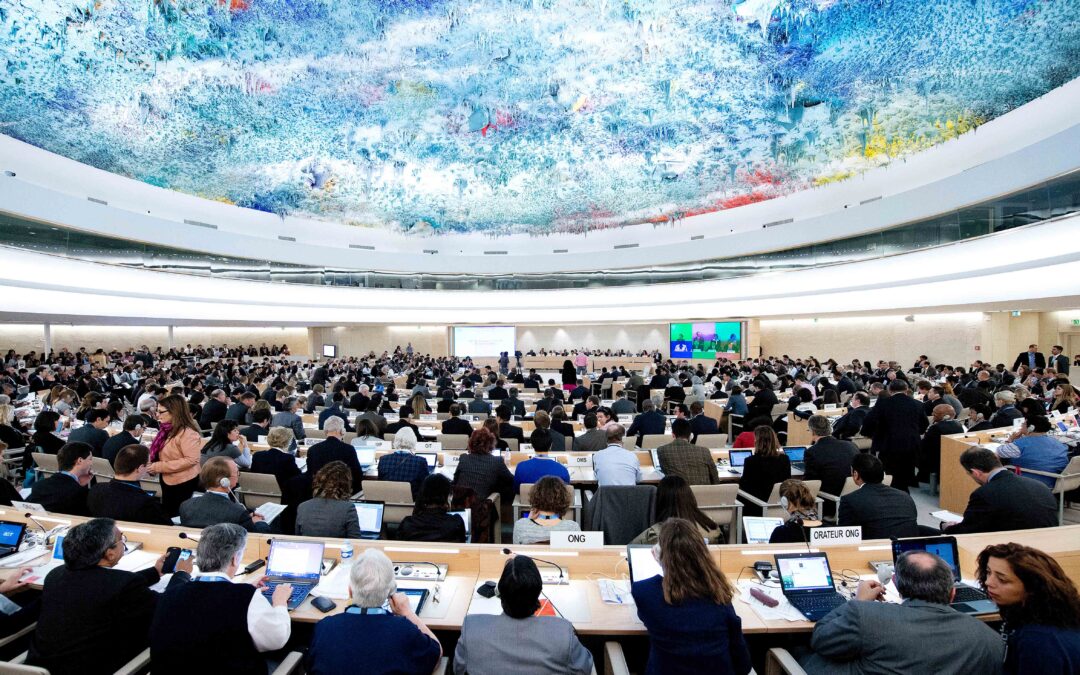
The ICJ joined other civil society organisations in addressing the UN Human Rights Council, on the successes and failures of its 39th session, concluding today.
The statement, read by International Service for Human Rights (ISHR), was as follows:
“This session, the Council adopted landmark resolutions on several country situations, further enhancing its contribution to the protection of human rights.
On Myanmar, we welcome the creation of the independent investigative mechanism, which is an important step towards accountability for the horrific crimes committed in Myanmar, as elaborated in the FFM’s report to this session. The overwhelming support for the resolution, notwithstanding China’s shameful blocking of consensus, was a clear message to victims and survivors that the international community stands with them in their fight for justice.
On Yemen, the Council demonstrated that principled action is possible, and has sent a strong message to victims of human rights violations in Yemen that accountability is a priority for the international community, by voting in favour of renewing the mandate of the Group of Eminent Experts to continue international investigations into violations committed by all parties to the conflict.
Furthermore, we welcome the leadership by a group of States on the landmark resolution on Venezuela, and consider it as an important step for the Council applying objective criteria to address country situations that warrant its attention. The resolution, adopted with support from all UN regions, sends a strong message of support to the Venezuelan people. By opening up a space for dialogue at the Council, the resolution brings scrutiny to the tragic human rights and humanitarian crisis unfolding in the country.
While we welcome the renewal of the mandate of the Commission of Inquiry (CoI) on Burundi, to continue its critical investigation and work towards accountability, however we regret that the Council failed to respond more strongly to Burundi’s record of non-cooperation and attacks against the UN human rights system.
We also welcome the Council’s adoption of the resolution on Syria, which among other things condemns all violations and abuses of international human rights law and all violations of international humanitarian law committed by all parties to the conflict.
However, on other country situations including China, Sudan, Cambodia and the Philippines, the Council failed to take appropriate action.
On Sudan, we are deeply concerned about the weak resolution that envisions an end to the Independent Expert’s mandate once an OHCHR office is set up; a “deal” Sudan has already indicated it does not feel bound by, and which is an abdication of the Council’s responsibility to human rights victims in Sudan while grave violations are ongoing. At a minimum, States should ensure the planned country office monitors and publicly reports on the human rights situation across Sudan, and that the High Commissioner is mandated to report to the Council on the Office’s findings.
We also regret the lack of concerted Council action on the Philippines, in spite of the need to establish independent international and national investigations into extrajudicial killings in the government’s ‘war on drugs’, and to monitor and respond to the government’s moves toward authoritarianism.
In addition, we regret the Council’s weak response to the deepening human rights and the rule of law crisis in Cambodia, failing to change its approach even when faced with clear findings by the Special Rapporteur demonstrating that the exclusive focus on technical assistance and capacity building in the country is failing.
We share the concerns that many raised during the session, including the High Commissioner, about China’s own human rights record, specifically noting serious violations of the rights of Uyghurs and other predominantly Muslim minorities in Xinjiang province. It is regrettable that States did not make a concrete and collective call for action by China to cease the internment of estimates ranging up to 1 million individuals from these communities.
On thematic resolutions, we welcome the adoption of the resolution on equal participation in political and public affairs but would have preferred a stronger endorsement and implementation of the Guidelines.
The resolution on safety of journalists, adopted by consensus, sets out a clear roadmap of practical actions to end impunity for attacks. Journalism is not a crime – yet too many States in this room simply imprison those that criticize them. This must end, starting with the implementation of this resolution.
We welcome the adoption by consensus of the resolution on preventable maternal mortality and morbidity and human rights in humanitarian settings. Women and girls affected by conflict have been denied accountability for too long. The implementation of this resolution will ensure that their rights, including their sexual and reproductive health and rights, are respected, protected and fulfilled.
Finally, the Council’s first interactive dialogue on reprisals was an important step to ensure accountability for this shameful practice, and we urge more States to have the courage and conviction to stand up for defenders and call out countries that attack and intimidate them.”
Signatories:
- The African Centre for Democracy and Human Rights Studies (ACDHRS)
- Amnesty International
- Article 19
- Center for Reproductive Rights
- CIVICUS
- DefendDefenders
- FIDH
- Forum Asia
- Human Rights House Foundation (HRHF)
- Human Rights Watch
- International Commission of Jurists
- International Service for Human Rights (ISHR)