Apr 28, 2017 | Multimedia items, News, Video clips
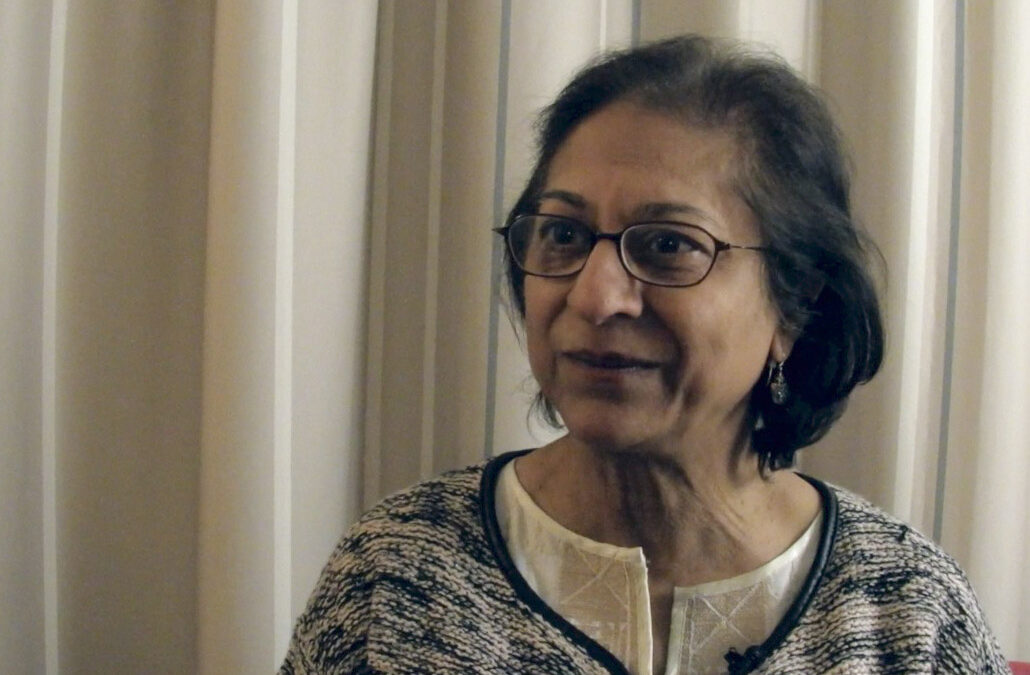
Honorary Member of the ICJ, Asma Jahangir, talks of her experiences as part of the ICJ’s ongoing profile series on women human rights defenders.
Asma Jahangir became interested in human rights legal work after having witnessed the frequent arrests of her father, an outspoken critic of military dictatorships, and seeing the courtroom as a place where justice could be accessed. From these early experiences, Asma identified the importance of rule of law but came to understand that this was something that went far beyond the courtrooms of Pakistan.
As a married women, her in-laws had concerns about her practicing law in a mixed firm so she co-founded Pakistan’s first all-female law firm. Initially the firm was viewed as a hobby but Asma and her other co-founders persevered and the firm still thrives today.
Ms Jahangir spoke about the challenges she faced as a female lawyer where courts and judges were at first patronizing towards her and then became angry at her as she continued to present them with cases that were challenging for them. She worked on a number of landmark cases including about whether women could get married without their fathers’ permission, be entitled to family maintenance and whether women should be judged according to religious or codified law.
Women in Pakistan face many issues in accessing justice, Ms Jahangir said. They lack resources, if they are able to access the courts they are frequently exploited by male lawyers and they encounter prejudice in their cases. In addition many laws are simply discriminatory, however women have been challenging these and will continue to do so.
There has been progress in family law in Pakistan, particularly in relation to the procedures if not the substance, yet Pakistan remains a long way from having equality in the family law framework.
Asma noted that it can be hard to engage men in women’s rights issues but commented that many men who had not considered giving certain rights to their wives had become a lot more conscious about women’s rights issues as their daughters had grown up. Many of her colleagues now ask for internships for their daughters at her law firm and admit how narrow-minded they had previously been in relation to women’s rights and equality.
From 2004 to 2010, Ms Jahangir served as the UN Special Rapporteur on Freedom of Religion and explained that she worked with the Special Rapporteur on Freedom of Expression to address the delicate balance in managing freedom of religion and freedom of expression.
Freedom of expression is currently under threat around the world, Asma commented, and is being undermined in the name of a variety of reasons including security, religion and tradition or social norms. Asma said that freedom of expression is fundamental to basic human rights because stopping freedom of expression stops people from thinking.
“Self-censorship is a by-product of undermining freedom of expression and self-censorship by itself dis-informs people, brings out irrelevant issues, and suppresses the more relevant issues.”
Ms Jahangir told the ICJ that in the course of her work as a human rights activist she has been threatened, put under house arrest and imprisoned. However, rather than deterring her, Asma’s experience in jail made her stronger: “It made every woman who went to jail stronger and more resolute that we want rights.”
There was a particular case that had a strong impact on Asma, which was when she worked in defence of a child who had been accused of blasphemy and was sentenced to death. The initial verdict against the boy knocked her confidence as a lawyer, but senior colleagues encouraged her and she continued with the case, taking this to appeal.
This was a very contentious case that attracted a lot of negative attention against Ms Jahanagir. People claimed she was anti-Muslim and, as she argued for the defendant, crowds gathered outside the court calling for her execution. At one point opposing lawyers asked the judges if they could simply close the case but the judges said that if Asma was prepared to keep arguing they were prepared to hear her arguments.
Asma explained that she was inspired to continue by the defendant himself, a boy of around 14 years of age, who, when given the opportunity to run away whilst on bail, decided to stay and continue the trial rather than risk others being harmed in retaliation if he were to flee. She felt that even if she had to give her life to defend this child then it would be worth it. Ultimately the case was decided in the boy’s favour and he was acquitted.
She advised young women interested in a career as a human rights lawyer not to label themselves as ‘human rights lawyers’ rather than simply ‘lawyers’ or they will not be taken seriously. Asma said that “I think that life where you don’t have dignity and where you don’t fight for people’s dignity is a wasted life.”
Watch the interview:
The series of profiles introducing the work of ICJ Commissioners and Honorary Members on women’s rights was launched on 25 November 2016 to coincide with the International Day to Eliminate Violence against Women and the first day of the 16 Days of Activism Against Gender-Based Violence Campaign.
Mar 27, 2017 | Multimedia items, News, Video clips
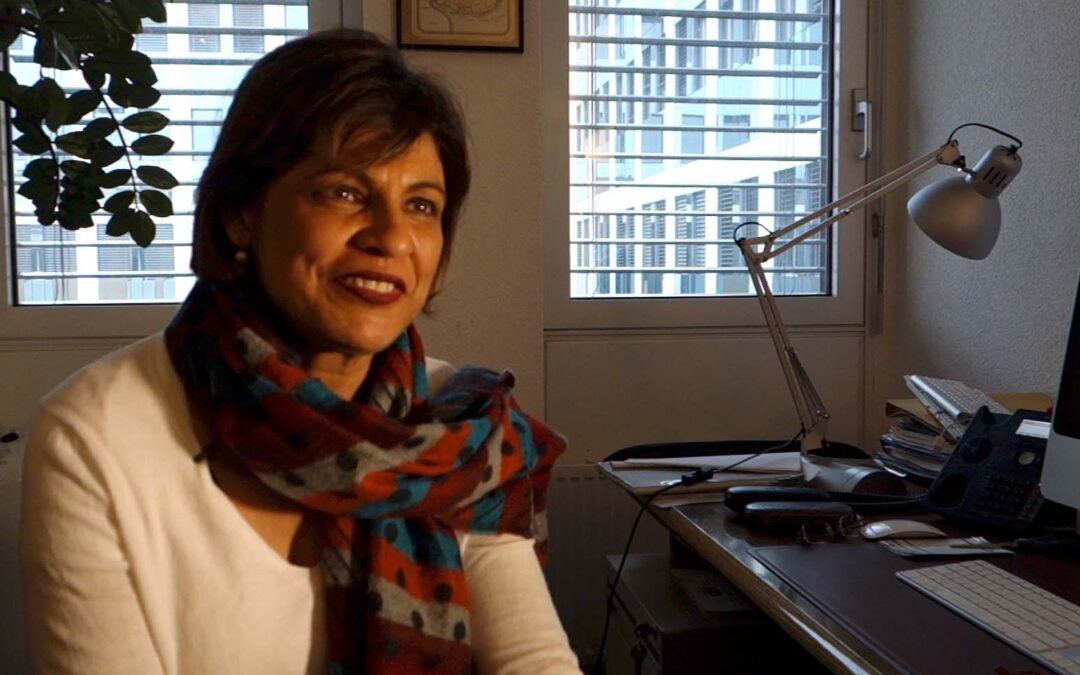
The ICJ continues its series of women’s rights defender profiles with an interview with Imrana Jalal, an ICJ Executive Committee member, focussing on her motivations for women’s rights work.
Mar 7, 2017 | Advocacy, Non-legal submissions
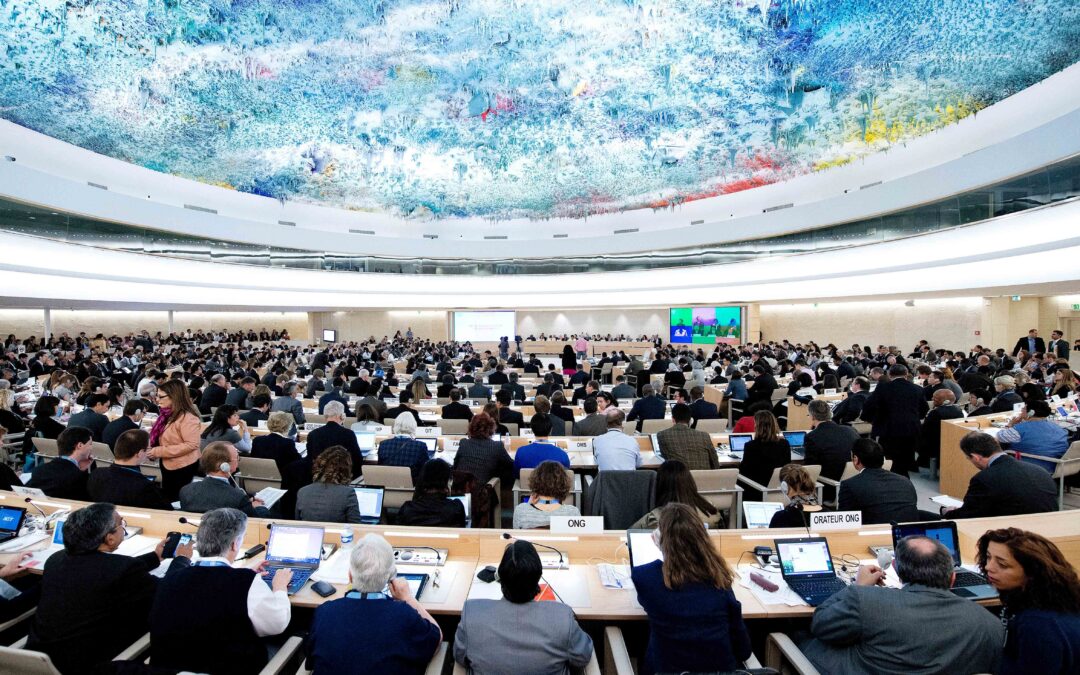
Today at the UN Human Rights Council the ICJ expressed concerns about violence and other wrongs against children in times of armed conflict and peacetime.
The ICJ statement was delivered during an interactive dialogue with the Special Representatives of the Secretary General on Violence against Children and for Children and Armed Conflict.
The ICJ thanked the Special Representatives for their annual reports (Violence against Children UN doc.A/HRC/34/45-ENG and Children and Armed Conflict UN doc.A/HRC/34/44-ENG) and then continued as follows:
We welcome the renewed commitment of States, via the Sustainable Development Goals (in particular SDG 5.2 and 5.3 and SDG 16.2 and 16.3), to eliminating violence against children and ensuring access to justice for everyone by 2030.
However, as the Special Representative for Violence against Children’s report noted, we must ensure that protecting children from violence is not simply an ideal but is realized in practice.
The ICJ is concerned about systemic problems where States agree in principle to protect children from violence but disagree on fundamental definitions of ‘children’ and ‘violence’.
We agree with the Special Representative for Children and Armed Conflict’s assessment that States must close any legal lacunae that fail to implement the almost universally accepted definition of ‘child’ as everyone below the age of 18.
We ask that all forms of violence against children be condemned even where some violent practices, such as child marriage or female genital mutilation, were once considered culturally acceptable.
We welcome efforts undertaken to prevent violence against children and protect children in armed conflict to ensure their human rights are protected.
However, rights protections are meaningless without accountability and so we would like to ask which measures should be put in place to eradicate impunity and ensure access to justice for children who have suffered violence and other wrongs in times of armed conflict and otherwise?
The statement can be downloaded in PDF format here: HRC34-OralStatement-violence against children+children armed conflict-Advocacy-2017
Feb 27, 2017 | Multimedia items, News, Video clips
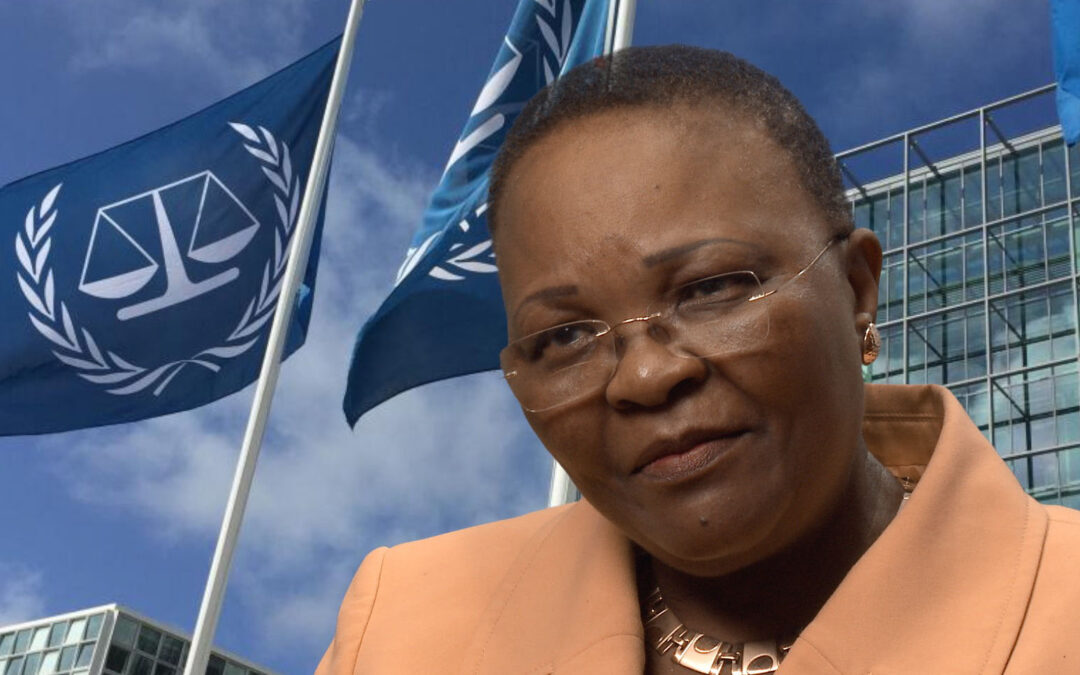
The ICJ continues it’s monthly profile series on women’s rights defenders with an interview with ICJ Commissioner and International Criminal Court Justice Sanji Monageng.
Justice Monageng told the ICJ that her interest in women’s rights began when she went through her own divorce and encountered the injustices that Botswana women suffered. This motivated her to pursue a career in law and align herself with the women’s rights movement that was establishing itself in southern Africa.
She became the Founder and Chief Executive of the Law Society in Botswana, a Magistrate in Botswana and High Court Judge in the Gambia and Swaziland. She was elected a Commissioner of the African Commission on Human and Peoples’ Rights and served as Chair of the Commission. She has been a Judge of the International Criminal Court since 2009 and served as First Vice-President between 2012-2015.
Justice Monageng commented that in Botswana, and elsewhere in southern Africa, women were at a serious disadvantage when it came to access to justice because of cultural, customary and religious restraints as well as economic inequality.
For example, up until only a few years ago women in Botswana were unable to inherit their parent’s property, on the basis of customary law, but a progressive judge was not afraid to challenge this and when this judgement was supported this led to a real change in the lives of women.
Sanji spoke of the importance of a strong civil rights movement and noted how instrumental this had been in Africa in leading the agenda to promote progressive rights protection for women. The African Commission on Human and Peoples’ Rights has a Special Rapporteur on Women and the Protocol to the African Charter on Human and Peoples Rights on the Rights of Women in Africa (the Maputo Protocol) has been hailed as the best in the world.
At the International Criminal Court (the ICC) there is a coalition of some 2,500 NGOs that work very closely with the court and have been instrumental in driving key aspects of the Court’s work including addressing sexual violence and ensuring victim and women’s participation. ‘Without civil society, without NGOs, and we have witnessed very credible civil society organisations’, Sanji says, ‘we cannot move.’
However, Justice Monageng commented that the ICC has not done very well in prosecuting sexual and gender based violence so far but acknowledges that the Court is still young and that progress is being made.
The new Chief Prosecutor, Fatou Bensouda, has undertaken a lot of endeavours to promote this aspect of the Court’s mandate such as creating a policy on sexual violence and gender issues, establishing a dedicated unit to address these crimes and appointing the highly qualified Brigid Inder as her Special Gender Advisor. Sanji commented that it is now evident in the cases she sees as a judge that a lot more attention is being paid to sexual violence.
Justice Monageng suggests that young women interested in defending women’s rights must internalize the importance of human rights. They should start associating themselves with women’s rights organizations even if only in a small way.
Defending women’s rights is difficult work and those that are interested in this must be prepared for criticism, and other unpleasantness but this work needs to be done. ‘The world is upside down and human rights are forgotten in most instances’, Sanji says, so she looks forward to girls joining the women’s rights movement.
Watch the interview:
The series of profiles introducing the work of ICJ Commissioners and Honorary Members on women’s rights was launched on 25 November 2016 to coincide with the International Day to Eliminate Violence against Women and the first day of the 16 Days of Activism Against Gender-Based Violence Campaign.
Jan 31, 2017 | Multimedia items, News, Video clips
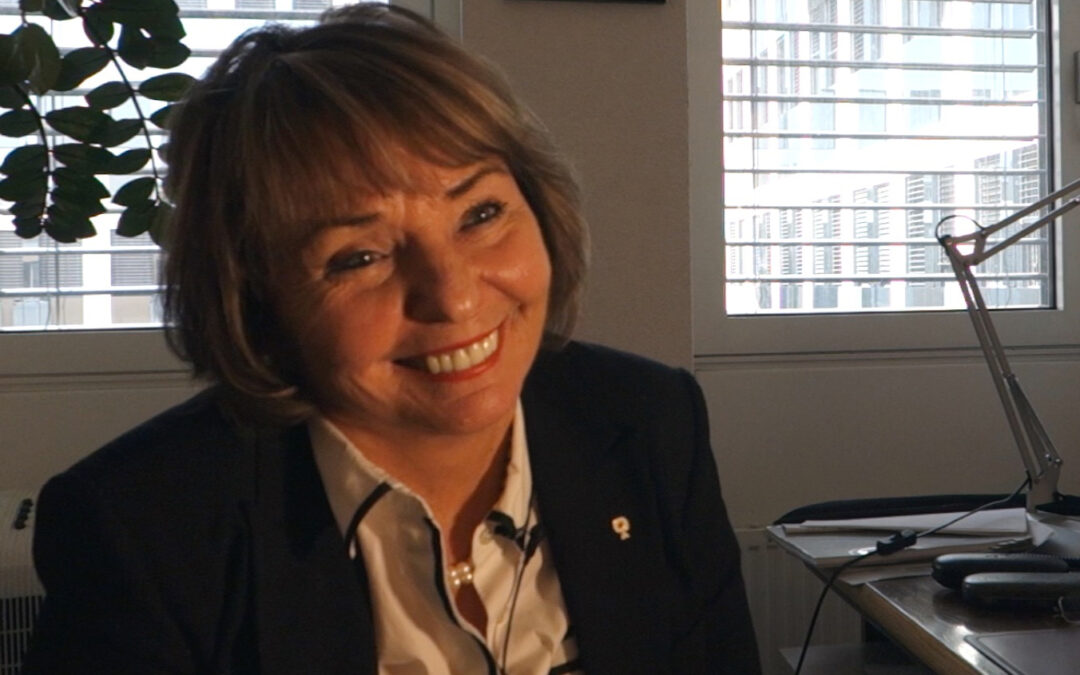
The ICJ continues its series of profiles of ICJ’s women Commissioners with an interview with ICJ Vice-President Michèle Rivet.
Michèle Rivet was a judge for 30 years. Previously a Children’s Judge, she was appointed the first President of the Quebec Human Rights Tribunal when it was first established in 1990 and remained in that position until 2010.
In the interview she explains how the Human Rights Tribunal was constituted and how the Tribunal gave itself the mission to develop jurisprudence on equality and non-discrimination by referring to the fundamental international standards elaborated in the ICCPR and the ICESCR, by giving them the broadest interpretation possible.
A key goal of the Tribunal was to ensure that it was as accessible and as effective as possible, so that the people who came to the Tribunal could express themselves freely. Careful measures were taken to ensure that the Tribunal would work well and to ensure that anyone putting questions or issues to the Tribunal could know that the judges were listening to them and would provide an answer.
Michèle spoke of the advances that were achieved in the Tribunal. Some of the most significant decisions handed down by the Tribunal refer to cases of multi-faceted systemic discrimination. Justice Rivet explained that discrimination is about daily life: for example it may be a woman who is fired because she is pregnant, or it could be about a homosexual person who is refused accommodation.
A particular case referred to a large Canadian gas company, a big employer in Quebec, where women were never being appointed to certain posts, as there were a whole series of barriers at the point of recruitment, at the level of tests, and other conditions. After a series of profound reflections, evidence gathering and a long hearing the Tribunal reached the decision that the five women plaintiffs had been discriminated against.
However, the Tribunal also went further in its judgement by requesting that an equal access employment programme be implemented for the whole staff. The Court of Appeal upheld the decision on appeal and that decision marked a real victory for women in the recognition of their rights.
Michèle considers that the ICJ, with its mandate to promote the rule of law, acts as a laboratory of great ideas and carries out fundamental and far-reaching work to advance the rights for those who otherwise would not be able to speak.
Those who work in the field of human rights form a global village, said Michèle, and members have a duty to help women victims of violence: those forced to marry when they are 13 years old, those forced to keep their children because abortion is not an option and all those who are battered or disfigured by relatives because they dare to leave the home.
“This eventually led to the establishment of an international community of women and of all those who are fighting for equality, and for a society where everyone is fully integrated,” she said.
Justice Rivet considers herself privileged to work in the field of human rights as it is such rewarding work, and although it can be also be very challenging she says “we must all walk together on the long march towards equality.”
Watch the interview:
The series of profiles introducing the work of ICJ Commissioners and Honorary Members on women’s rights was launched on 25 November 2016 to coincide with the International Day to Eliminate Violence against Women and the first day of the 16 Days of Activism Against Gender-Based Violence Campaign.