Sep 10, 2019 | News
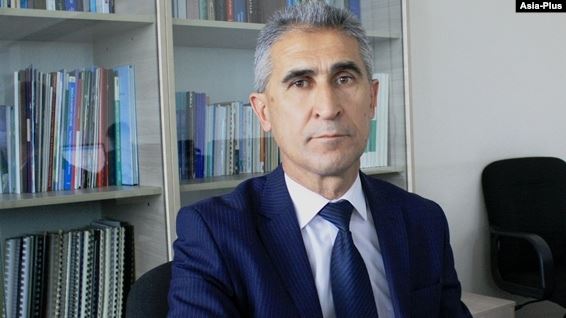
The ICJ today expressed concern that a Government anti-corruption agency has engaged in acts of intimidation against the Chairperson of the Union of the Lawyers of the Republic of Tajikistan, Saidbek Nuritdinov, and 15 other lawyers.
The intimidation apparently relates to the lawyers’ defence of Abdulaziz Abdurahmonzoda, a lawyer facing trial on charges of fraud, who was allegedly ill-treated in detention by officers of the city Department of the Agency for Financial Control and Combating Corruption of the Republic of Tajikistan (Anti-Corruption Agency).
After the lawyers representing Abdurahmonzoda alleged that he had been ill-treated, the judge of the Sino district of Dushanbe city hearing the case, Ahmadzoda Farogat, requested the Prosecutor General’s Office to investigate the allegations.
Following the initiation of the inquiry of the allegations of ill-treatment, the Head of the Anti-Corruption Agency of Dushanbe, allegedly sent requests to a number of district courts of Dushanbe to obtain information about civil and criminal cases in which Saidbek Nuritdinov had participated as a lawyer.
The requests are said to seek information such as the names and, place of residence of clients: subject matter of civil cases, and details of the charges against his previous clients. In addition, it was reported to the ICJ that Judge Akhmadzoda Farogat, transmitted a list of the fifteen lawyers and copies of their official orders, the documents authorizing the representation of the lawyer, to the Anti-Corruption Agency at its request.
The ICJ notes, that while this information is not confidential per se, previous such investigations of the Anti-corruption Agency have led to criminal prosecution and conviction of lawyers.
“In this case, representation of a lawyer subject to criminal proceedings was undertaken by a group of his colleagues, including the head of the association of lawyers, in line with professional ethics, said Temur Shakirov, Senior Legal Adviser of the ICJ. “Such representation is consistent with international standards on the role of lawyers as well as national law of Tajikistan”.
“If the investigation is related to the lawyers’ representation in the case of Abdurahmonzoda, it would constitute a means of intimidation of the lawyers. And as such it should be ceased, and the lawyers should be able to continue to act freely and diligently in accordance with the national law and international law and standards on the role of lawyers”, Shakirov added.
Background
The criminal case against lawyer Abdulaziz Abdurahmonzoda was initiated under article 247.2, of the Criminal Code (fraud) on 17 April 2019. At the court hearings observed by the ICJ, Abdurahmonzoda insisted on his innocence and alleged breaches of the criminal procedure in course of the preliminary investigation: initiation of a criminal case without legal grounds (the case was said to lack the victim’s statement about the fraudulent actions committed on the part of Abdurahmonzoda); violation of the procedure of the preliminary investigation and submission to the court of evidence knowingly obtained by illegal means. The ICJ is observing the trial.
According to the UN Basic Principles on the Role of Lawyers, governments “shall ensure that lawyers are able to perform all of their professional functions without intimidation, hindrance, harassment or improper interference” and they should not “suffer, or be threatened with, prosecution or administrative, economic or other sanctions for any action taken in accordance with recognized professional duties, standards and ethics.”(Principle 16).
Furthermore, interference or obstruction of lawyer’s activity is prohibited by the Law of the Tajikistan on Lawyers and Lawyers’ Activities. According to the law, a lawyer cannot be held liable for any opinion expressed by him/her as part of his/her lawyers’ activity, with the exception of actions that may constitute a crime. The request from lawyers or lawyer’s unions of information related to the provision of legal assistance in specific cases is not allowed.
According to the Draft Universal Declaration on the Independence of Justice (“Singhvi Declaration”), enable the Bar Association to fulfil its function of preserving the independence of lawyers, they should “be informed immediately of the reason and legal basis for the arrest or detention of any of its members or any lawyer practising within its jurisdiction”. In these cases, bar associations are “ entitled to be represented by its president or nominee to follow the proceedings and in particular to ensure that professional secrecy and independence are safeguarded”.
Sep 3, 2019 | Advocacy, News
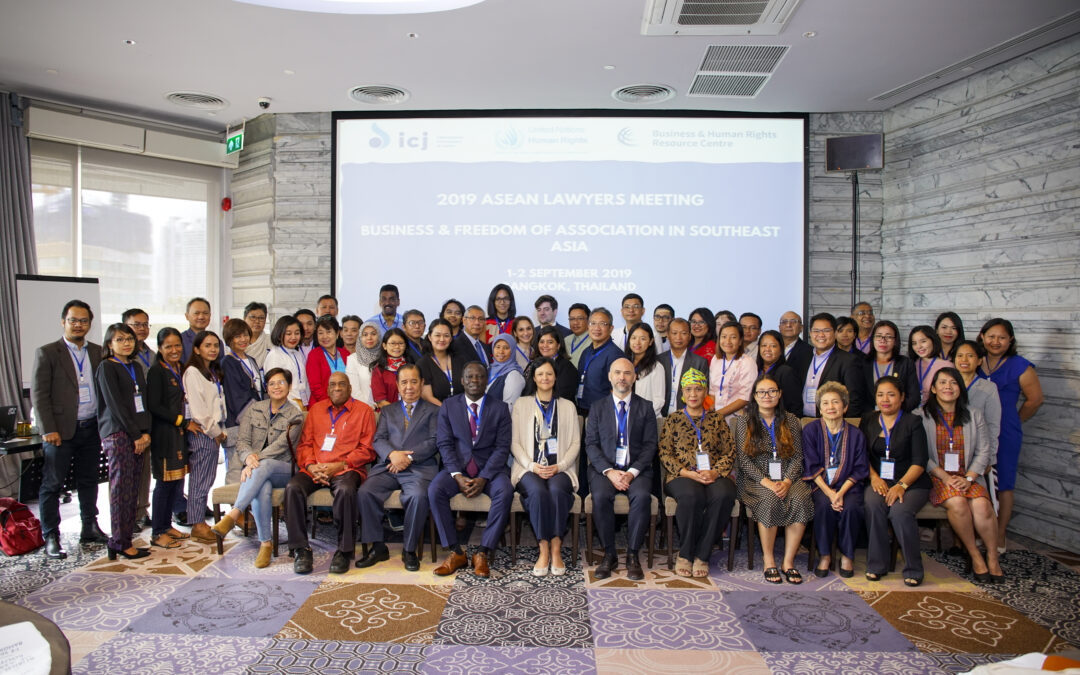
From 1 and 2 September 2019, the UN Special Rapporteur on freedom of association and assembly, Clément Nyaletsossi VOULE, and lawyers and trade union representatives met and discussed challenges faced in Southeast Asia on exercising the right to freedom of association of workers.
The event was organized by the ICJ together with Business & Human Rights Resource Centre (BHRRC), and supported by the Office of the United Nations High Commissioner for Human Rights (OHCHR).
At the meeting’s conclusion, the participants reached a consensus to work for the development regional guidelines on freedom of association of workers in the ASEAN and agreed to form a Working Group that would be tasked to develop these guidelines. The Working Group nominated by the participants is composed of trade union representatives at the national level, lawyers, among other experts.
In his keynote speech, the Special Rapporteur emphasized that freedom of association is a fundamental right for all workers without which they lack the power to fight discrimination and injustice in the workplace. He also explained the link between the rights to freedom of association and expression, “Freedom of association is closely related to freedom of expression as they both represent opening up of space for dialogue and an enabling environment where unions can participate freely.”
The participants at the meeting were practicing lawyers from Southeast Asia focusing on labor and employment and trade unions leaders and representatives. Other participants included representatives from human rights organizations addressing business and human rights and the right to freedom of association; the ASEAN Secretariat; the International Labor Organization (ILO), the ASEAN Trade Union Council (ATUC), and the International Trade Union Confederation (ITUC).
“Shrinking political and civic space combined with inequality and social marginalization are key challenges at the heart of business-related human rights violations in Southeast Asia,” said Katia Chirizzi, Deputy Regional Representative for UN Human Rights. “Governments must implement their obligations to respect, protect and promote human rights in relation to business activities. It is equally critical to ensure that businesses meet their responsibilities to respect human rights.”
During the meeting, the participants also discussed the role of women in labour organizing and the additional challenges women face when they exercise the right to freedom of association in the workplace. Betty Yolanda, Asia Regional Manager of the Business and Human Rights Resource Center (BHRRC) said: “Women workers face multiple forms of discrimination and challenges. They are fighting for their rights as workers in the company and at the same time they are also fighting the patriarchy.”
The participants identified common challenges confronted in the region where workers’ rights to freedom of association face legal and physical limitations. Migrant workers, women workers and workers in Special Economic Zones (SEZs) were identified as being particularly at risk in exercising their rights.
“It is crucial that we discuss these challenges openly and with all stakeholders, particularly issues that affect those who work in the informal sector, and other vulnerable communities such as migrant workers. Special investment frameworks, special economic zones and other government-led initiatives meant to attract foreign investment potentially create new opportunities to increase transparency and accountability. Unfortunately, they are more often used to justify lowering human rights standards, or impose new restrictions that act to limit workers and communities abilities to express their grievances or exercise their rights to association,” said Frederick Rawski, ICJ’s Regional Director for Asia and the Pacific.
Contact:
Boram Jang, International Legal Adviser, Asia & the Pacific Programme, e: boram.jang(a)icj.org
Jul 21, 2019 | News
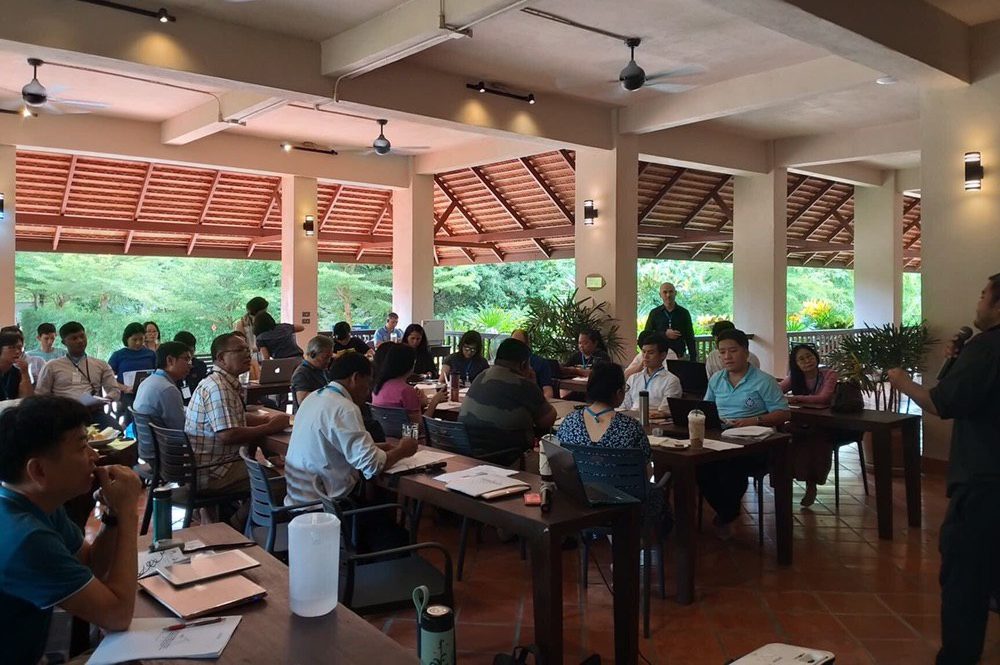
Today, the ICJ hosted a discussion on Thailand’s legal frameworks on corporate accountability for outbound investments in Chiang Mai, Thailand. The forum was co-organized with Earth Rights International.
Lawyers, members of civil society organizations and academics from Cambodia, Laos, Myanmar, and Thailand attended the discussion.
Participants discussed:
- corporate civil, criminal and administrative liability and in particular, the applicable laws governing the prosecution and adjudication of human rights abuses committed by Thai corporations and gaps in Thailand’s legal frameworks. The meeting also looked into recommendations to strengthen Thailand’s domestic laws to increase access to justice for victims of human rights abuses committed by Thai corporations in the context of their business activities abroad, particularly on issues such as: limited liability of shareholders and the “corporate veil” in relation to the responsibilities of Thai corporations, the complexity of laws governing joint ventures, and challenges in bringing state-owned enterprises to justice;
- jurisdiction of Thai courts in civil, criminal and administrative cases where de facto and de jure foreign subsidiaries of a Thai corporation were involved in wrongful acts or omissions abroad, and problems posed by statutes of limitation;
- tools for preventing human rights abuses by corporations such as Human Rights Due Diligence (HRDD), Transboundary environmental impact assessments (EIA), Corporate Social Responsibility (CSR) measures, and the Duty of Care principle under tort law; and
- the role of other related actors to prevent and mitigate human rights risks, including the National Human Rights Commission of Thailand (NHRCT), National Contact Points (NCPs), financial institutions and securities institutions, and provided recommendations to strengthen mandates of such organizations which would allow them to provide better protection for individuals and communities who may be affected by outbound investments.
This discussion will provide the foundation for further work and analysis by the ICJ regarding Thailand’s legal frameworks on corporate accountability for outbound investments. It will also provide the basis for ICJ strategic advocacy at the national level.
Jun 27, 2019 | Advocacy, Non-legal submissions
The ICJ highlighted the role of women in ensuring respect for human rights in relation to businesses, in a statement to the UN Human Rights Council today.
In an oral statement made during an interactive dialogue with the Working Group on Discrimination Against Women and the Working Group on the issue of human rights and transnational corporations and other business enterprises, the ICJ stated as follows (check against delivery):
The International Commission of Jurists (ICJ) welcomes the report of the Working Group on the issue of human rights and transnational corporations and other business enterprises, and agrees that despite years of progress, women continue to experience multiple forms of discrimination. Women’s voices continue to be unheard and they face insurmountable challenges as they use these voices to access justice on behalf of their communities.
We have seen numerous cases where women lead their communities in protesting abuses committed by business enterprises. Many of these communities are located in remote areas, far from courts or other mechanisms that could be used by them to seek justice. The women who lead these communities often do not identify as women human rights defenders. They see themselves as mothers protecting the health of their families or the land from which they grow their food and earn their living. Because of where these communities are located, local government authorities play a significant role on whether or not these women are heard or are able to access justice.
The women farmers of Kendeng in Indonesia, for instance, have been protesting the operation of a cement factory in their area, which contaminate their water and land. In 2016, the Supreme Court of Indonesia had already ruled in favor of these women farmers and their community, and ordered the revocation of the cement factory’s permit. To this day, however, the cement factory continues to operate, ignoring the final order of the Supreme Court. The Kendeng women farmers have raised the non-implementation of the Supreme Court’s order with the Governor of Central Java and the Indonesian government, but their voices remain unheard.
In the Philippines, the women community leaders of Pio V. Corpus, Masbate, have been protesting plans to establish a cement factory and a coal-fired power plant in their town. They allege that their local government leaders approved plans for this factory and power plant without consultation and in blatant disregard of the disastrous impact these would have on the environment and people’s health.
Mr. President, we join the Working Group in urging States and business enterprises to ensure meaningful participation of potentially affected women in all stages of human rights due diligence. We also urge States to take measures to ensure that women – wherever they may be located – are able to access justice for abuses committed by business. Finally, we recommend that local government authorities be made aware of the Guiding Principles and able to integrate the gender framework and guidance in discharging their human rights responsibilities.
Thank you.

Jun 1, 2019 | Advocacy
In July 2018, it was published the “zero draft” of a proposed first universal treaty addressing business and human rights. The document was authored by Ecuador’s Ambassador in Geneva acting as chair of the Intergovernmental Working Group (IGWG) in charge of drafting the instrument.
The draft is strongly focused on issues of legal accountability of business enterprises and access to justice and remedy for those who allege harm by a business enterprise. The draft was presented and discussed in “first reading” by States and observers during the fourth session of the IGWG in October 2018.
In this document, the ICJ presents its comments to the zero draft. This commentary is not intended as a comprehensive assessment of the draft, but it rather addresses select provisions of priority concern to the ICJ on first reading. It contains recommendations on the way to strengthen them in accordance with human rights and rule of law principles.
Universal-Comments Draft Treaty BHR-Advocacy-2019-ENG (full text, in PDF)