May 13, 2014 | News
An ICJ Mission to assess the respect of social rights in the Peruvian agro-export industry concluded a field visit to the country with bleak preliminary conclusions.
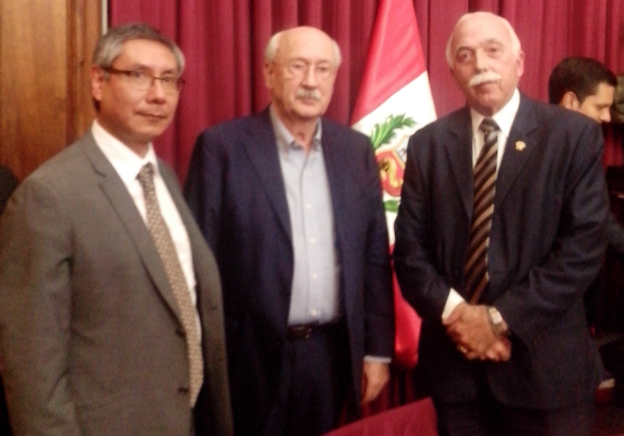
The Mission of observers, which included Philippe Texier and lawyers Alberto L. Gomez Z. and Carlos Lopez, focused their assessment in the Valley of Ica, south of Lima. On Wednesday 7 May, the Mission shared their visit conclusions with the Sub-committee on Labour and Social Security of the Peruvian Parliament.
Philippe Texier, former judge at the Court of Cassation of France and former chair of the UN Committee on Economic, Social and Cultural Rights, told the Parliamentary Sub-committee that conditions of work in the agroexport industry are precarious, allow cases of child labour and fall generally short of international standards accepted by Peru through international conventions.
The final report of the Mission panel will be released at a later stage after additional research and consultation is carried out.
While in Peru, the panel held meetings in Lima and in Ica with a wide range of trade unions, labour and health authorities, local NGOs, experts, individual workers and even working children.
The experts also paid visits to the field to see workers and children, were interviewed by IDL Radio and made a presentation of preliminary conclusions to the Parliamentary Sub-Committee on Labour and Social Security.
The agro-export industry in Peru mainly produces asparagus, mangoes, avocado pears, paprika and grapes, most of which is exported to Europe and North America.
It has experienced exponential growth during the last decade, where important national and international investments were made in this industry.However, economic growth has not been matched with improvements in social conditions of workers and the local population.
Contact:
Carlos Lopez, Director, Business and Human Rights, carlos.lopez(a)icj.org +41 22 979 3816
Apr 17, 2014
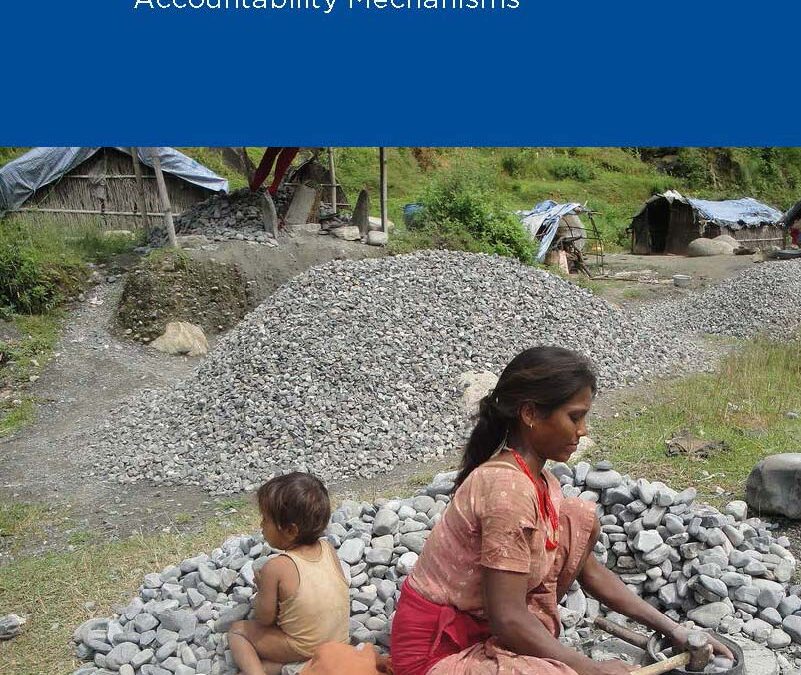
The conduct of international financial institutions (IFIS) often has a substantial, sometimes adverse, impact on the enjoyment of human rights of persons affected directly or indirectly by their activities.
Apr 7, 2014 | Events, News
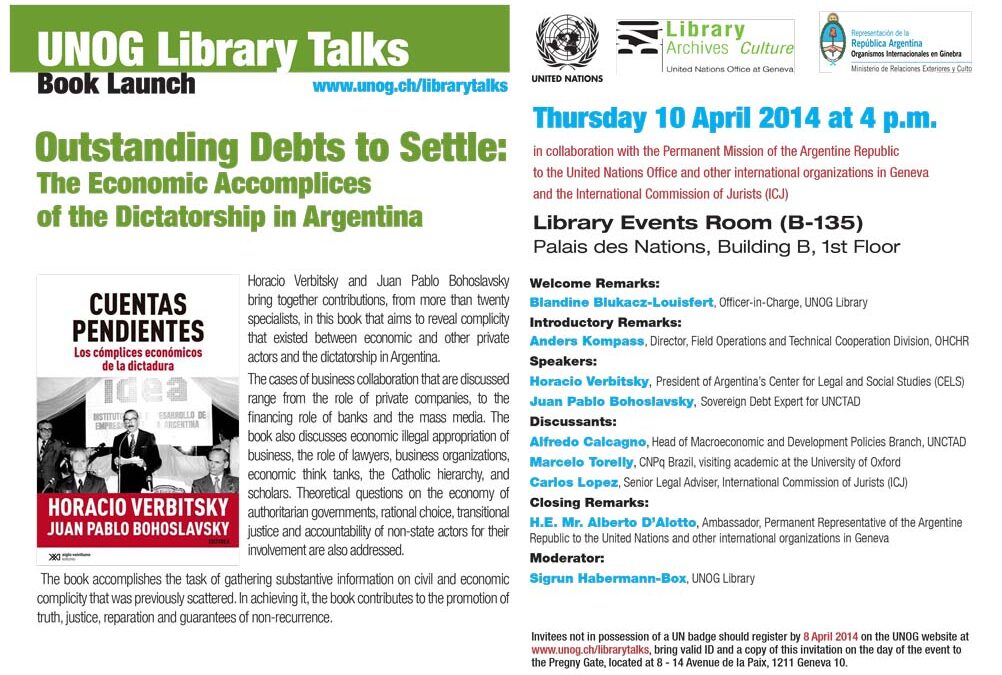
This is the English title of a book by Horacio Verbitsky and Juan Pablo Bohoslavsky, with contributions from more than twenty specialists, which reveals complicity between private actors and the dictatorship in Argentina.
The book will be launched on 10 April at 4 pm (16.00)in the Library Events Room (B-135) at the Palais des Nations, Building B, 1st floor, in Geneva.
Carlos Lopez, ICJ Senior Legal Adviser on Business and Human Rights will be among the discussants at the event. He contributed one chapter of the book, on corporate complicity.
The cases of business collaboration discussed in the book range from the role of private companies, to the financing role of the banks and the mass media.
The book also discusses economic illegal appropriation of business, the role of lawyers, business organizations, economic think tanks, the Catholic hierarchy, and scholars.
UNOG-launch book corporate complicity in Argentina-news-events-2014 (full invitation in pdf or you can also enlarge the picture)
Mar 28, 2014
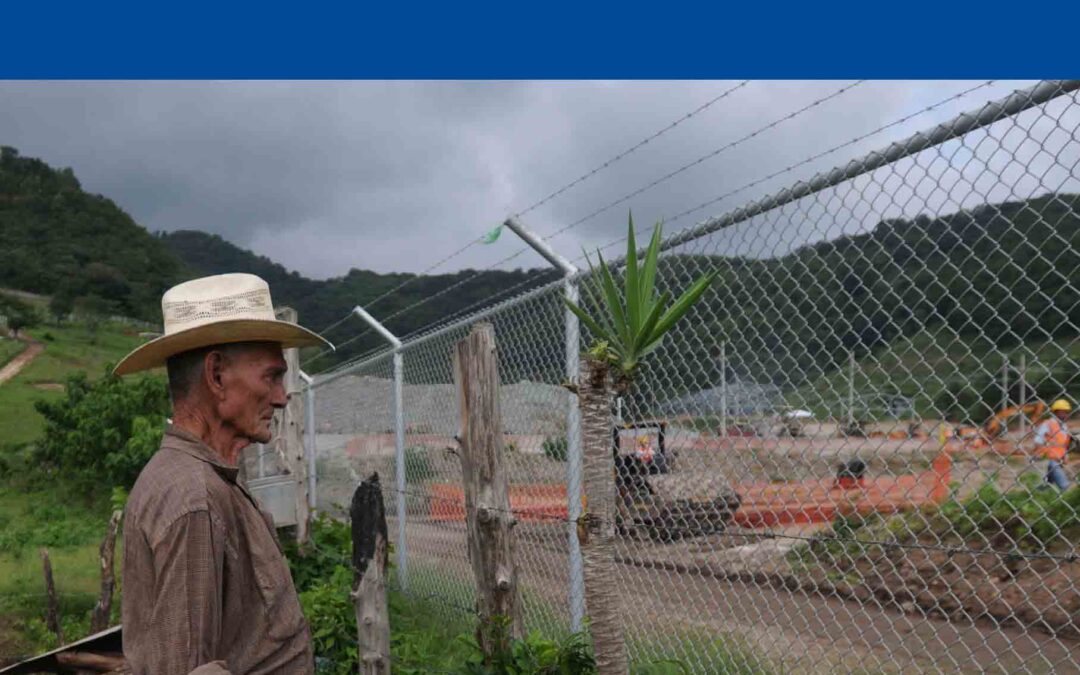
La CIJ ha publicado un informe que analiza el sistema jurídico y judicial de Guatemala en relación con las obligaciones y responsabilidades de las empresas.
El informe se enfoca en las vías de recursos legal existentes en virtud del derecho constitucional, derecho laboral, derecho civil y derecho penal, y examina casos concretos como ejemplos de su aplicación.
El informe identifica las deficiencias estructurales, institucionales, normativas, económicas, políticas y sociales en los sistemas jurídicos y judiciales del país que dificultan el acceso a la justicia para las víctimas de abusos de los derechos humanos cometidos por los negocios.
Las limitaciones y los obstáculos para acceder a la justicia son especialmente graves en relación con los pueblos indígenas en un país donde estos han sido históricamente discriminados.
El informe recomienda un conjunto de medidas para fortalecer la independencia del poder judicial, la reforma de varias leyes, el fortalecimiento de las instituciones estatales de protección, el fomento del diálogo entre las partes interesadas y un mayor respeto a los derechos de los defensores de los derechos humanos.
Guatemala – empresas y violaciones a los derechos humanos – report – 2014-spa (Informe en PDF)
Contacto:
Carlos Lopez, Director, Business and Human Rights, carlos.lopez(a)icj.org, +41 22 979 3816
Ramón Cadena, Director, Central America, ramon.cadena(a)icj.org, +50 22 335 3325
Mar 17, 2014 | Advocacy, Non-legal submissions
The ICJ made an oral statement at the UN Human Rights Council, on the need for fundamental reform of the legal system in Myanmar.
The oral statement was delivered during an interactive dialogue with the Special Rapporteur on human rights in Myanmar.
While noting some progress on legal reform to establish the rule of law during Myanmar’s economic and political transition, the ICJ noted that reforms are fragile and legal obstacles continue to block improvements to the extremely poor state of the rule of law and respect for human rights.
The ICJ considers that Myanmar’s judiciary is not yet independent. State authorities continue to exert improper influence on politically sensitive cases.
The ICJ was therefore deeply disappointed to hear the Representative of Myanmar state during the Council session that the Government rejected as “intrusive and prescriptive, infringing upon the national sovereignty” the Special Rapporteur’s basic recommendation that “the Government … Initiate fundamental reforms to establish a judiciary that is impartial and independent, including from the direct control of the Government and the military”.
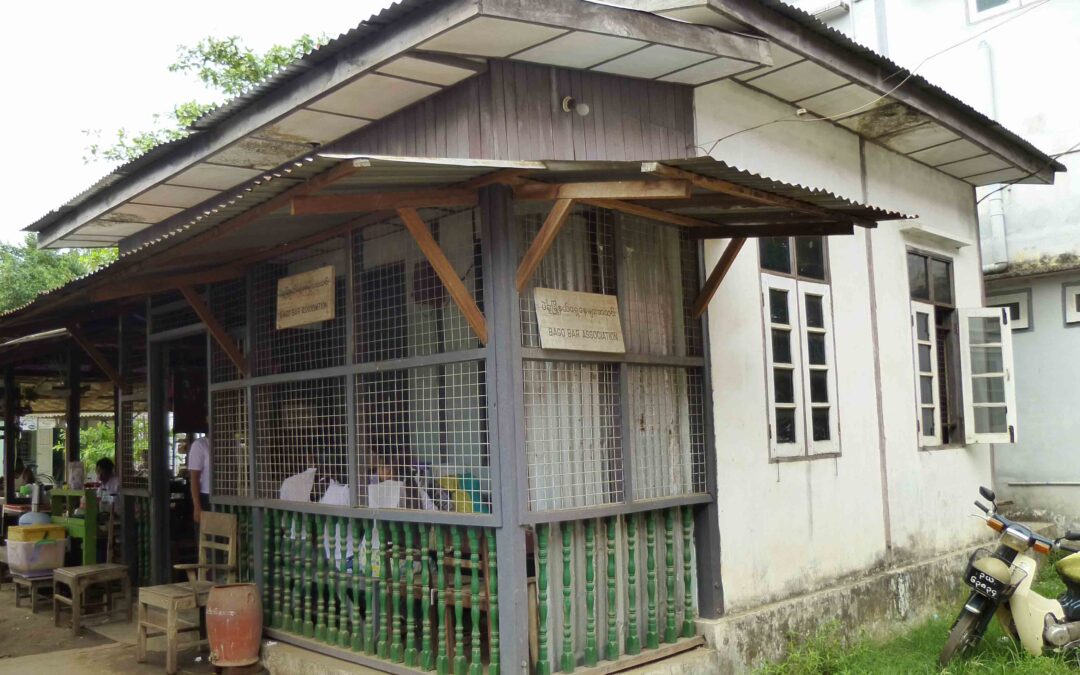
Systemic problems affect the independence of lawyers, including the poor state of legal education and undue restrictions on licensing. Lawyers in Myanmar lack an independent Bar Council.
The ICJ stressed the need for Myanmar to ratify and implement all core human rights treaties, to cooperate with international human rights mechanisms, and to agree to the establishment of an OHCHR office in the country. At the same time, ICJ emphasised the continued need for a robust mandate for the UN Special Rapporteur on Myanmar.
The full statement may be downloaded in PDF: Advocacy-UN-HRC25-Myanmar-OralStatement-032014
The report of the Special Rapporteur is available here in Word format: SR Myanmar Report March 2014
For further information, please see the recent ICJ report Right to Counsel: The Independence of Lawyers in Myanmar (click to download PDF).