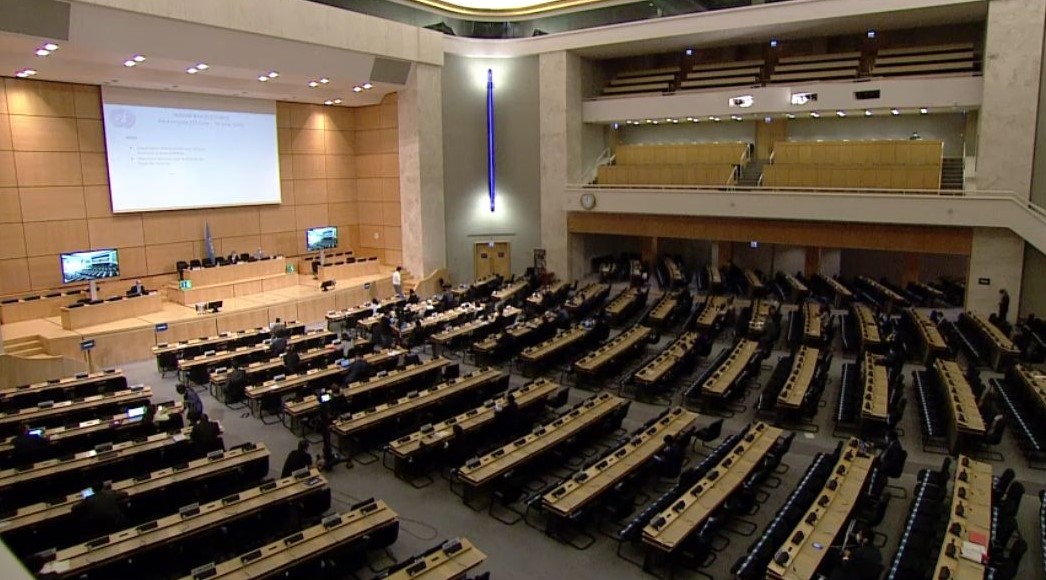
UN Human Rights Council: achievements and omissions of the 44th session
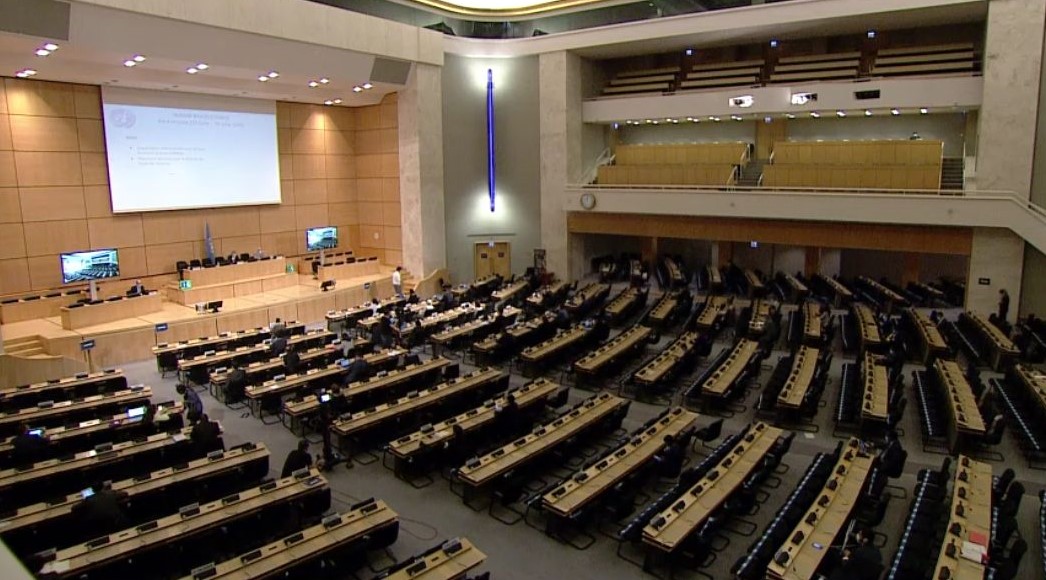
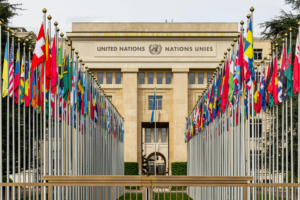
The ICJ today joined other NGOs in highlighting the achievements and omissions of the 44th regular session of the UN Human Rights Council in Geneva, 30 June – 17 July 2020.
The following statement was delivered, at the closing of the session, by the International Service for Human Rights (ISHR), on behalf of the group of leading human rights NGOs:
“Madame President,
The 44th session of the UN Human Rights Council began with China’s imposition of legislation severely undermining rights and freedoms in Hong Kong. Within days, there were reports of hundreds of arrests, some for crimes that didn’t even exist previously. We welcome efforts this session by a growing number of States to collectively address China’s sweeping rights abuses, but more is needed. An unprecedented 50 Special Procedures recently expressed concerns at China’s mass violations in Xinjiang, Hong Kong and Tibet, suppression of information in the context of Covid-19, and targeting of human rights defenders across the country. The Council should heed the call of these UN experts to hold a Special Session and create a mechanism to monitor and document rights violations in the country. No state is beyond international scrutiny. China’s turn has come.
The 44th session also marked an important opportunity to enable those affected directly by human rights violations to speak to the Council through NGO video statements.
Amnesty’s Laith Abu Zeyad addressed the Council remotely from the occupied West Bank where he has been trapped by a punitive travel ban imposed by Israel since October 2019. We call on the Israeli authorities to end all punitive or arbitrary travel bans.
During the interactive dialogue with the Commission of Inquiry on Syria, victims’ associations and families of victims highlighted the human rights violations occurring in detention centers in Syria. We welcome the efforts by some States to underline their demands and welcome the adoption of the Syria resolution on detainees and urge the Syrian government to take all feasible measures to release detainees and provide truth to the families, noting the important pressure needed by Member States to further call for accountability measures for crimes committed in Syria.
Collette Flanagan, Founder of Mothers against Police Brutality, also delivered a powerful video statement at the Council explaining the reality of racist policing in the United States of America. We fully support victims’ families’ appeals to the Council for accountability.
We hope that the High Commissioner’s report on systemic racism, police violence and government responses to antiracism peaceful protests will be the first step in a series of meaningful international accountability measures to fully and independently investigate police killings, to protect and facilitate Black Lives Matter and other protests, and to provide effective remedy and compensation to victims and their families in the United States of America and around the world.
We appreciate the efforts made by the Council Presidency and OHCHR to overcome the challenges of resuming the Council’s work while taking seriously health risks associated with COVID-19, including by increasing remote and online participation. We recommend that remote civil society participation continue and be strengthened for all future sessions of the Council.
Despite these efforts, delays in finalising the session dates and modalities, and subsequent changes in the programme of work, reduced the time CSOs had to prepare and engage meaningfully. This has a disproportionate impact on CSOs not based in Geneva, those based in different time zones and those with less capacity to monitor the live proceedings. Other barriers to civil society participation this session included difficulties to meet the strict technical requirements for uploading video statements, to access resolution drafts and follow informal negotiations remotely, especially from other time zones, as well as a decrease in the overall number of speaking slots available for NGO statements due to the cancellation of general debates this session as an ‘efficiency measure.’
We welcome the joint statement led by the core group on civil society space and endorsed by cross regional States and civil society, which calls on the High Commissioner to ensure that the essential role of civil society, and States’ efforts to protect and promote civil society space, are reflected in the report on impact of the COVID-19 pandemic presented to the 46th Session of the HRC. We urge all States at this Council to recognise and protect the key role that those who defend human rights play.
These last two years have seen unlawful use of force perpetrated by law enforcement against peaceful protesters, protest monitors, journalists worldwide, from the United States of America to Hong Kong, to Chile to France , Kenya to Iraq to Algeria, to India to Lebanon with impunity.
We therefore welcome that the resolution “the promotion and protection of human rights in the context of peaceful protests” was adopted by consensus, and that the Council stood strongly against some proposed amendments which would have weakened it. We also welcome the inclusion in the resolution of a panel during the 48th session to discuss such events and how States can strengthen protections. We urge States to ensure full accountability for such human rights violations as an essential element of the protection of human rights in the context of protests. The current context has accelerated the urgency of protecting online assembly, and we welcome that the resolution reaffirms that peaceful assembly rights guaranteed offline are also guaranteed online. In particular, we also commend the resolution for calling on States to refrain from internet shutdowns and website blocking during protests, while incorporating language on the effects of new and emerging technologies, particularly tools such as facial recognition, international mobile subscriber identity-catchers (“stingrays”) and closed-circuit television.
We welcome that the resolution on “freedom of opinion and expression” contains positive language including on obligations surrounding the right to information, emphasising the importance of measures for encryption and anonymity, and strongly condemning the use of internet shutdowns.. Following the High Commissioner’s statement raising alarm at the abuse of ‘false news’ laws to crackdown on free expression during the COVID-19 pandemic, we also welcome that the resolution stresses that responses to the spread of disinformation and misinformation must be grounded in international human rights law, including the principles of lawfulness, legitimacy, necessity and proportionality. At the same time, we are concerned by the last minute addition of language which focuses on restrictions to freedom of expression, detracting from the purpose of the resolution to promote and protect the right. As we look to the future, it is important that the core group builds on commitments contained in the resolution and elaborate on pressing freedom of expression concerns of the day, particularly for the digital age, such as the issue of surveillance or internet intermediary liability, while refocusing elements of the text.
The current context has not only accelerated the urgency of protecting assembly and access to information, but also the global recognition of the right to a safe, clean, healthy and sustainable environment. We welcome the timely discussions on ”realizing children’s right to a healthy environment” and the concrete suggestions for action from panelists, States, and civil society. The COVID-19 crisis, brought about by animal-to-human viral transmission, has clarified the interlinkages between the health of the planet and the health of all people. We therefore support the UN Secretary General’s call to action on human rights, as well as the High Commissioner’s statement advocating for the global recognition of the human right to a safe, clean, healthy and sustainable environment – already widely reflected at national and regional levels – and ask that the Council adopts a resolution in that sense. We also support the calls made by the Marshall Islands, Climate Vulnerable Forum, and other States of the Pacific particularly affected and threatened by climate change. We now urge the Council to strengthen its role in tackling the climate crisis and its adverse impacts on the realization of human rights by establishing a Special Rapporteur on Human Rights and Climate Change, which will help address the urgency of the situation and amplify the voices of affected communities.
The COVID crisis has also exacerbated discrimination against women and girls. We welcome the adoption by the Council of a strong resolution on multiple and intersecting forms of discrimination against women and girls, which are exacerbated in times of a global pandemic. The text, inter alia, reaffirms the rights to sexual and reproductive health and to bodily autonomy, and emphasizes legal obligations of States to review their legislative frameworks through an intersectional approach. We regret that such a timely topic has been questioned by certain States and that several amendments were put forward on previously agreed language.
The Council discussed several country-specific situations, and renewed the mandates in some situations.
We welcome the renewal of the Special Rapporteur’s mandate and ongoing scrutiny on Belarus. The unprecedented crackdown on human rights defenders, journalists, bloggers and members of the political opposition in recent weeks ahead of the Presidential election in August provide a clear justification for the continued focus, and the need to ensure accountability for Belarus’ actions. With concerns that the violations may increase further over the next few weeks, it is essential that the Council members and observers maintain scrutiny and pressure even after the session has finished.
We welcome the extension of the mandate of the Special Rapporteur on Eritrea. We urge the government to engage, in line with its Council membership obligations, as the Special Rapporteur’s ‘benchmarks for progress’ form a road map for human rights reform in the country.
We welcome the High Commissioner report on the human rights situation in the Philippines which concluded, among other things, that the ongoing killings appear to be widespread and systematic and that “the practical obstacles to accessing justice in the country are almost insurmountable.” We regret that even during this Council session, President Duterte signed an Anti Terrorism Law with broad and vague definition of terrorism and terrorists and other problematic provisions for human rights and rule of law, which we fear will be used to stifle and curtail the rights to freedom of opinion and expression, to freedom of peaceful assembly and of association. Also during this session, in a further attack on press freedom, Philippine Congress rejected the franchise renewal of independent media network ABS-CBN, while prominent journalist Maria Ressa and her news website Rappler continue to face court proceedings and attacks from President Duterte after Ressa’s cyber libel conviction in mid-June. We support the call from a group of Special Procedures to the Council to establish an independent, impartial investigation into human rights violations in the Philippines and urge the Council to establish it at the next session.
The two reports presented to the Council on Venezuela this session further document how lack of judicial independence and other factors perpetuate impunity and prevent access to justice for a wide range of violations of civil, cultural, economic, political, and social rights in the country. We also urge the Council to stand ready to extend, enhance and expand the mandate of the Independent International Fact-Finding Mission when it reports in September.
We also welcome the report of the Special rapporteur on the human rights situation in the Palestinian Territory occupied since 1967 and reiterate his call for States to ensure Israel puts an end to all forms of collective punishment. We also reiterate his call to ensure that the UN database of businesses involved with Israeli settlements becomes a living tool, through sufficient resourcing and annual updating.
We regret, however, that several States have escaped collective scrutiny this session.
We reiterate the UN Special Rapporteur Agnes Callamard’s call to pressure Saudi Arabia to release prisoners of conscience and women human rights defenders and call on all States to sustain the Council’s scrutiny over the situation at the September session.
Despite calls by the High Commissioner for prisoners’ release, Egypt has arrested defenders, journalists, doctors and medical workers for criticizing the government’s COVID-19 response. We recall that all of the defenders that the Special Procedures and the High Commissioner called for their release since September 2019 are still in pre-trial detention. The Supreme State Security Prosecution and ‘Terrorism Circuit courts’ in Egypt, are enabling pre-trial detention as a form of punishment including against human rights defenders and journalists and political opponents, such as Ibrahim Metwally, Mohamed El-Baqer and Esraa Abdel Fattah, Ramy Kamel, Alaa Abdel-Fattah, Patrick Zaky, Ramy Shaat, Eman Al-Helw, Solafa Magdy and Hossam El-Sayed. Once the terrorism circuit courts resumed after they were suspended due to COVID-19, they renewed their detention retroactively without their presence in court. It’s high time the Council holds Egypt accountable.
As highlighted in a joint statement of Special Procedures, we call on the Indian authorities to immediately release HRDs, who include students, activists and protest leaders, arrested for protesting against changes to India’s citizenship laws. Also eleven prominent HRDs continue to be imprisoned under false charges in the Bhima Koregaon case. These activists face unfounded terror charges under draconian laws such as sedition and under the Unlawful Activities (Prevention) Act. While we welcome that Safoora Zargar was granted bail on humanitarian grounds, the others remain at high risk during a COVID-19 pandemic in prisons with not only inadequate sanitary conditions but also limited to no access to legal counsel and family members. A number of activists have tested positive in prison, including Akhil Gogoi and 80-year-old activist Varavara Rao amid a larger wave of infections that have affected many more prisoners across the country. Such charges against protestors, who were exercising their rights to freedom of peaceful assembly must be dropped. We call on this Council to strengthen their demands to the government of India for accountability over the excessive use of force by the police and other State authorities against the demonstrators.
In Algeria, between 30 March and 16 April 2020, the Special rapporteur on freedom of opinion and expression, freedom of peaceful assembly and of association, human rights defenders, issued three urgent appeals in relation to cases involving arbitrary and violent arrests, unfair trials and reprisals against human rights defenders and peaceful activists Olaya Saadi, Karim Tabbou and Slimane Hamitouche. Yet, the Council has been silent with no mention of the crackdown on Algerian civil society, including journalists.
To conclude on a positive note, we welcome the progress in the establishment of the OHCHR country office in Sudan, and call on the international community to continue to provide support where needed to the transitional authorities. While also welcoming their latest reform announcements, we urge the transitional authorities to speed up the transitional process, including reforms within the judiciary and security sectors, in order to answer the renewed calls from protesters for the enjoyment of “freedom, peace and justice” of all in Sudan. We call on the Council to ensure continued monitoring and reporting on Sudan.”
Endorsements:
- International Service for Human Rights
- DefendDefenders (East and Horn of Africa Human Rights Defenders Project)
- Center for Reproductive Rights
- Franciscans International
- The Syrian Legal Development Programme
- Egyptian Front for Human Rights (EFHR)
- CIVICUS: World Alliance for Citizen Participation
- International Movement Against All Forms of Discrimination and Racism (IMADR)
- International Lesbian and Gay Association (ILGA World)
- Centro de Estudios Legales y Sociales (CELS)
- Asian Forum for Human Rights and Development (FORUM-ASIA)
- Commonwealth Human Rights Initiative (CHRI)
- ARTICLE 19
- International Federation for Human Rights (FIDH)
- Cairo Institute for Human Rights Studies (CIHRS)
- IFEX
- Association for Progressive Communications
- International Commission of Jurists (ICJ)
- Amnesty International
(an abbreviated version of the statement was read aloud at the Council session, due to the limited time available)