Jun 29, 2016 | Advocacy, Non-legal submissions
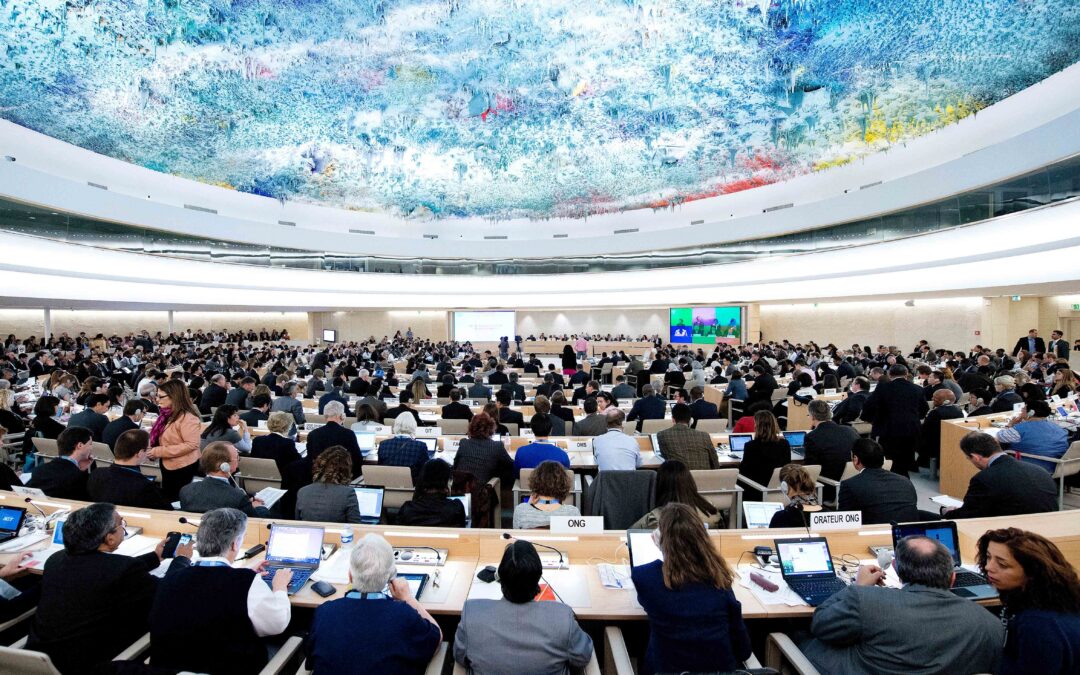
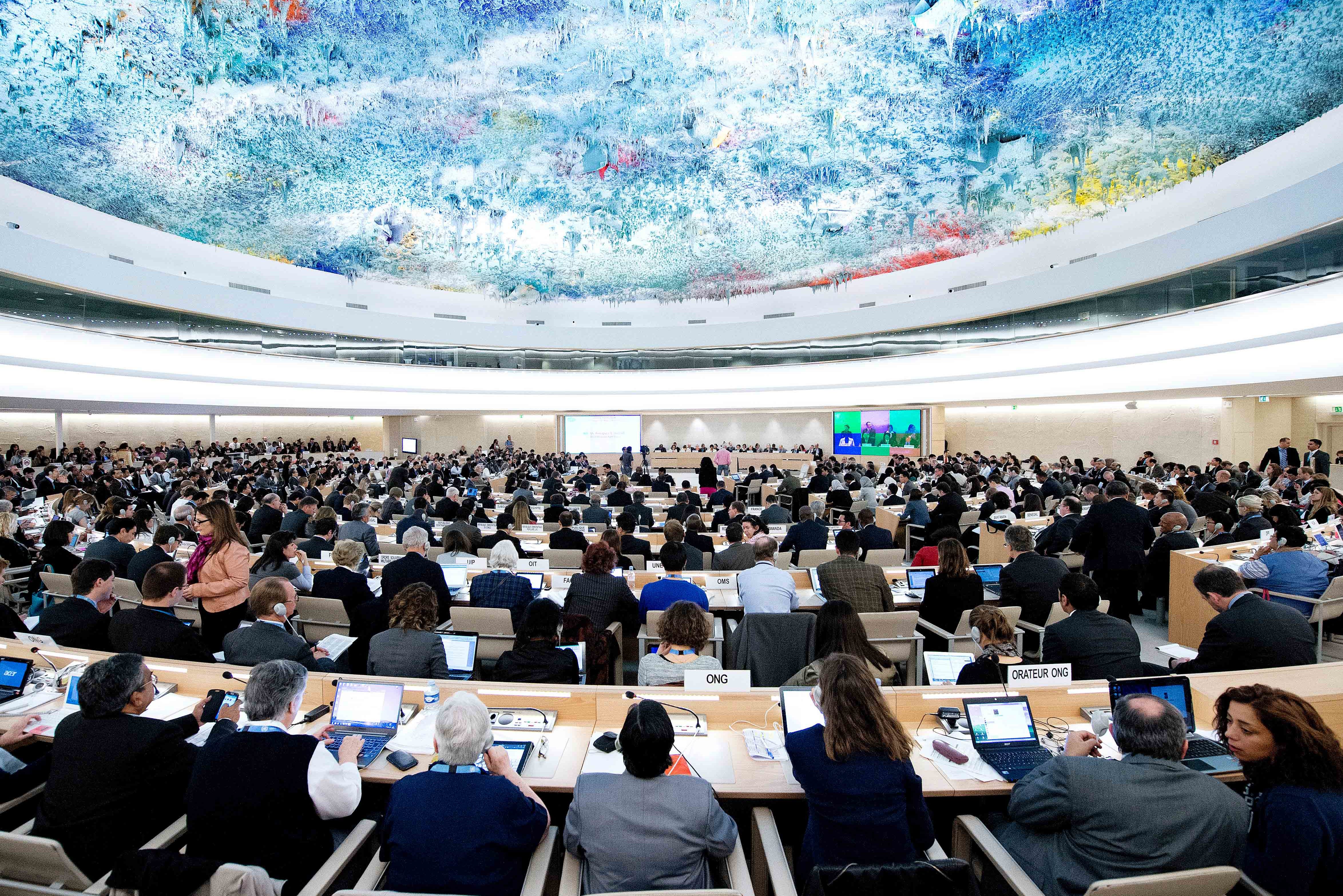
The ICJ, joined by FIDH, Franciscans International, and IMADR, today delivered a statement to the UN Human Rights Council.
The statement was on the situation of Rohingya Muslims in Myanmar, and on the need for active participation by international judges in the judicial mechanism to be adopted in Sri Lanka as part of the process of accountability and reconciliation.
The organizations stated, during general debate on an oral update on Sri Lanka from the High Commissioner for Human Rights, and the Commissioner’s report on the situation of Rohingya in Myanmar, that:
The Government of Myanmar has persecuted the Rohingya, refused to extend basic citizenship rights, and Parliament passed legislation entrenching discrimination such as the Race and Religion Protection laws. This has displaced thousands within Rakhine State and driven the Rohingya to sea and neighbouring countries. The ICJ, FIDH, Franciscans International and IMADR call on Myanmar:
- to repeal the 1982 Citizenship Law or amend it in accordance with the recommendations of the Special Rapporteur, to grant Rohingya full citizenship and accompanying rights;
- to develop a citizenship plan based on non-discrimination;
- to reject the Rakhine State Action Plan in its current form;
- to repeal laws that discriminate against ethnic and religious minorities;
- to diligently prosecute all acts of violence fuelled by discrimination, and hate speech that incites discrimination, hostility or violence; and
- to improve basic living conditions for the Rohingya and Arakanese in Rakhine State by enhancing protection of their economic, social, and cultural rights.
We welcome recent initiatives by the Government of Sri Lanka towards implementing Resolution 30/1, including the establishment of an Office of Missing Persons, and ratification of the Convention for the Protection of All Persons from Enforced Disappearance.
However, many of the commitments in the resolution remain unfulfilled. The other three transitional justice mechanisms envisioned by the resolution – an office of reparation, a truth-seeking commission, and a judicial mechanism – are yet to be established.
We call on Sri Lanka to implement, without delay, all elements of Resolution 30/1, including particularly the establishment of a credible judicial mechanism with full participation of international judges, prosecutors and lawyers. We agree that international participation is “a necessary guarantee for the independence and impartiality of the process in the eyes of the victims” (High Commissioner’s Oral Update, A/HRC/32/CRP.4, paragraph 32).
Rapid progress on this and other key elements of the resolution is essential to the credibility of the overall process of transition in Sri Lanka.
The statement can be downloaded in full, in PDF format, here: HRC32-OralStatement-SriLankaMyanmar-2016
Jun 29, 2016
The ICJ has joined a group of 244 civil society organizations, spanning across all regions of the world, to call on States at the UN Human Rights Council to cosponsor the resolution on civil society space.
The groups also call to vote against amendments proposed by the Russian Federation that would weaken it, and to vote in favour of the resolution itself.
The vote is expected to take place later this week.
The draft resolution, presented by a cross-regional group of States comprising of Chile, Ireland, Japan, Sierra Leone, and Tunisia, was developed through broad consultation with States and civil society and in the past was adopted by consensus.
The draft resolution welcomes the adoption of the 2030 Agenda for Sustainable Development, and recognizes the key role of civil society in achieving the goals. Once adopted, the resolution will be a substantive contribution to the Council’s work to protect civil society space.
However, fifteen amendments tabled by the Russian Federation seek to remove these essential elements from the draft resolution, and insert language to justify illegitimate restrictions on civil society that would undermine the protections of international human rights law. Many of the amendments challenge previously agreed HRC or General Assembly language.
If adopted, the amendments would undermine international efforts to safeguard space or civil society, including because they would effectively:
- Reject the expert guidance and practical recommendations made by the UN High Commissioner on Human Rights on civil society space, including to remove substantive recommendations to states on ensuring: a supportive legal framework for civil society and access to justice; public and political environment for civil society; access to information; public participation of civil society actors, and human rights education;
- Remove or otherwise limit commitments to protect and promote the right to freedom of association, in particular civil society’s right to access resources for its vital work, and to be free of arbitrary registration and reporting requirements that seek to hinder the work and safety of civil society;
- Remove references to the gravity of threats civil society faces, including illegitimate restrictions to their rights to freedom of expression, association and peaceful assembly, as well as reprisals against those seeking to cooperate or cooperating with the United Nations and other international bodies;
- Narrow the understanding of “minority groups”, by seeking to include only a limited and under-inclusive list of protected characteristics to the exclusion of others recognised under international human rights law;
- Remove reference to the term “human rights defenders”, as well as previous work of the HRC on their protection;
- Remove concerns that restrictions on civil society may limit the United Nations in achieving its purposes and principles, and removing the emphasis on the Universal Periodic Review as an important mechanism to create space for civil society.
The full letter and list of organizations can be downloaded in PDF format here: HRC32-OpenLetter-CivilSocietySpace-2016-EN
Jun 27, 2016 | Advocacy, Non-legal submissions
The ICJ today joined 567 other organisations, from 142 countries, in a statement to the UN Human Rights Council calling on the Council to create an Independent UN Expert to address discrimination and violence against persons based on sexual orientation and gender identity.
The statement can be downloaded in full here: HRC32-OralStatement-Item8-SOGI-2016-ENG
Jun 26, 2016
Nepal’s new anti-torture bill is a welcome effort, but it must be revised to comply fully with international human rights law, the ICJ said in a briefing paper released today.
“Nepal’s anti-torture bill is a significant development, and has the potential to be an important step towards countering the systemic impunity for gross human rights violations in the country,” said Sam Zarifi, ICJ’s Asia Director.
“It is therefore crucial that the Bill be revised to fully comply with international human rights law,” he added.
In a 37-paged briefing paper released today, the ICJ has analyzed the Torture and Cruel, Inhuman or Degrading Treatment (Control) Bill, 2014 against relevant international law and standards, finding that several provisions of the bill are inconsistent with Nepal’s international obligations.
Major problems include the definition and scope of torture and other ill-treatment in the Bill, the existence of a limitation period for filing complaints, the disproportionately low severity of penalties imposed, and the failure to provide access to effective remedies and reparations for victims.
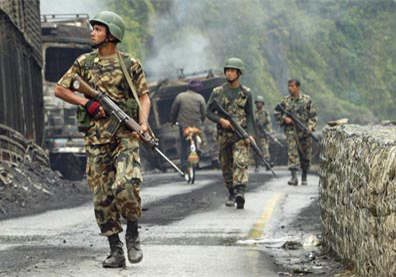
The briefing paper is released at a time when the United Kingdom is prosecuting a Nepali military officer, Colonel Kumar Lama, for allegations of torture and other ill-treatment during Nepal’s decade long internal armed conflict (photo).
“There are several other instances of torture and other human rights abuses during the conflict era that remain uninvestigated. It is high time that Nepal puts in place a strong anti-torture law that challenges entrenched impunity and enables victims to seek justice and accountability,” Zarifi said.
To this end, the ICJ has made a serious of recommendations in the briefing paper, which include:
- Revising the Bill to reflect the definition of torture and cruel, inhuman and degrading punishment in a manner consistent with the Convention against Torture and other international instruments
- Increasing the maximum penalty provided in the Bill, and providing for enhanced punishment for the supervising officer when he / she is complicit in torture
- Removing the limitation period for filing complaints and lodging cases
- Removing any penalties for the alleged filing of “fake” complaints
- Ensuring the right to all forms of reparation, not only compensation, when there are reasonable grounds to believe that torture or ill-treatment has taken place, and irrespective of the existence or outcome of a judicial proceeding
- Including a provision enabling authorities in Nepal to prosecute individuals accused of torture and ill-treatment, irrespective of their nationality and where the crime was committed
- Revising the Bill to be fully consistent with the international principle of non-refoulement, which prohibits the extradition, deportation, expulsion or removal in any other way of a person to a territory where there is a real risk of torture or other ill-treatment
- Placing obligations on specific State institutions to establish preventive programs for torture and monitoring their implementation.
Nepal-Torture Bill-Advocacy-Analysis Brief-2016-ENG (full text in PDF)
Jun 25, 2016 | Advocacy
The ICJ today published a General Guidance aimed at assisting judges and others in the justice sector to effectively incorporate a gender perspective in their work.
The General Guidance is especially significant as it reaffirms that customs and traditions should not be invoked to justify discrimination against women.
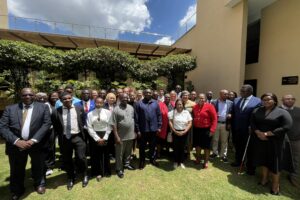
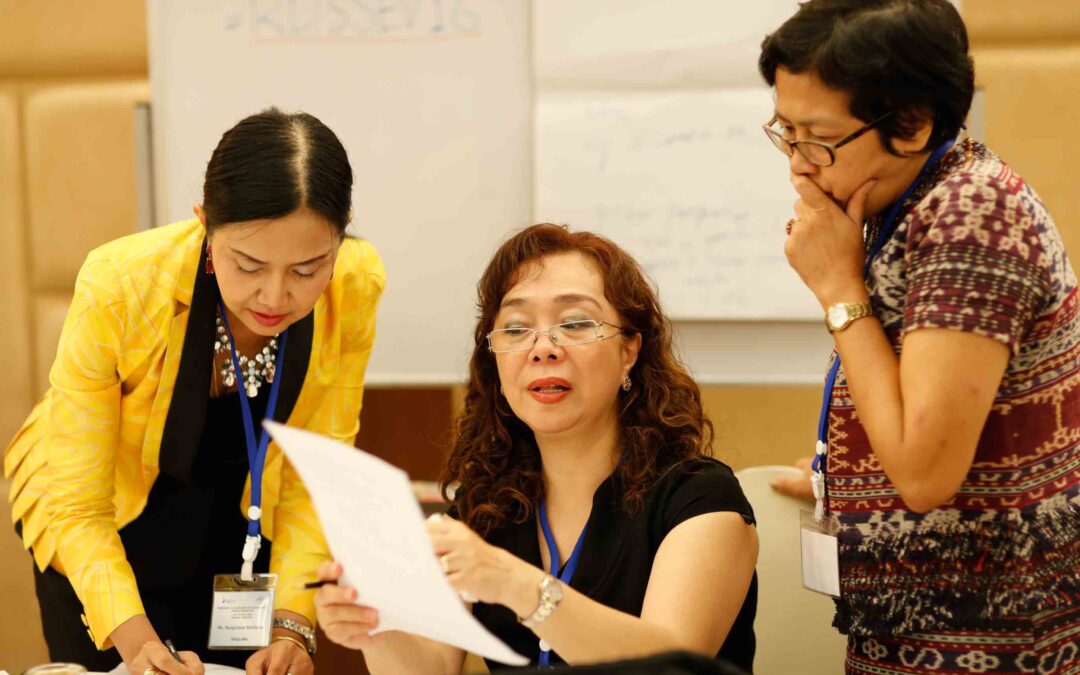
The Bangkok General Guidance for Judges in Applying a Gender Perspective was discussed and adopted by judges from Philippines, Thailand, Timor Leste, and Indonesia, at a gathering in Bangkok from 24 to 25 June 2016, hosted by the ICJ and UN Women.
During the workshop, judges from the four Southeast Asian countries deliberated extensively how best to assist judges in employing a gender perspective in deciding cases before them.
“The Bangkok General Guidance can make a powerful contribution towards achieving gender equality under the law in Southeast Asia,” said Sam Zarifi, Regional Director for Asia and the Pacific at the ICJ. “It is crucial that judges now work to implement this General Guidance in their home countries.”
The idea to initiate the development of th Bangkok General Guidance emerged from the ASEAN Regional Dialogue on Judging with a Gender Perspective, which was held in Jakarta, Indonesia in 2015.
The Supreme Court of the Philippines offered to take the lead on the project during that regional judicial dialogue.
“Women have a right to equal treatment and equal protection and non-discrimination under the law. It is our responsibility as judges to ensure that women receive equal treatment in law and in practice,” said Justice Teresita de Castro of the Supreme Court of the Philippines.
Judges attended several sessions over the course of the two-day workshop, participating in exercises focused on identifying and addressing gender stereotypes.
“Women in the region face many obstacles in accessing justice,” said Roberta Clarke, Regional Director for Asia and the Pacific at UN Women.
“But judges may be either unaware of these issues or unsure how to address these issues through the legal process,” she added.
The Bangkok General Guidance will make judges aware of means to consider evidence without resorting to gender stereotypes and decide cases based on the principle of equality recognized under international human rights standards, including the Convention on the Elimination of All Forms of Discrimination against Women (CEDAW).
Recommendations for institutional policies that should be adopted by courts to help them become more gender sensitive and gender responsive are also set out in the General Guidance.
Contact:
Emerlynne Gil, Senior International Legal Adviser for Southeast Asia, t: +66840923575 ; e: emerlynne.gil@icj.org
Southeast Asia-Bangkok-Guidance-Advocacy-2016-ENG (full PDF, in English)
Southeast Asia-Bangkok-Guidance-Advocacy-2016-BUR (full PDF, in Burmese)
Southeast Asia-Bangkok-Guidance-Advocacy-2016-MON (full PDF, in Mon language)
Southeast Asia-Bangkok-Guidance-Advocacy-2016-SHAN (full PDF, in Shan language)