Nov 25, 2013 | Agendas, Events
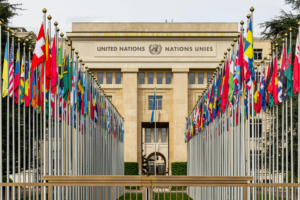
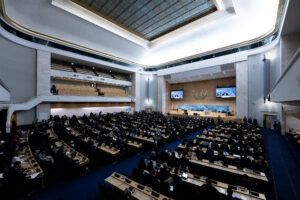
This is the title of a book to be launched on Monday 2 December at the UN in Geneva, in partnership with the Permanent Mission of Ecuador, and the ICJ.
Do the ‘Respect, Protect, and Remedy Framework and the Guiding Principles on Business and Human Rights adequately address the challenges concerning the human rights obligations of business?
This book engages critically with these important developments. The chapters in the book revolve around four key issues: the process and methodology adopted; the source and justification of corporate human rights obligations; the nature and extent of such obligations; and the implementation and enforcement thereof.
In addition to highlighting several shortcomings of the Framework and the Guiding Principles, the contributing authors also outline a vision for the twenty first century in which companies have obligations to society that go beyond the responsibility to respect human rights.
Ian Seiderman, ICJ’s Legal and Policy Director, will be one of the discussants.
Invitation UNOG Business-event-2013 (full text in pdf)
Nov 24, 2013 | News
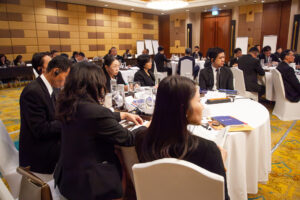
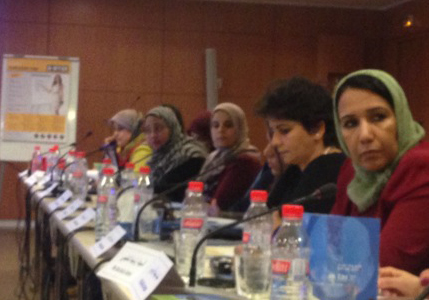
Women judges and lawyers from across the Middle East and North Africa participated in the ICJ Colloquium on Women and the Judiciary in MENA on 22 and 23 November in Tunis.
The event brought together women of different generations from a range of countries including Bahrain, Egypt, Kuwait, Libya Morocco, Palestine and Tunisia.
They discussed the significant personal and professional challenges faced by women judges and lawyers in the region.
Sharing their personal testimonies and experiences, participants underscored the specific challenges which arise for women judges and lawyers in situations of transition, conflict and occupation or in contexts where women’s participation in the judiciary is not possible or subject to significant restrictions.
They identified recommendations for change and highlighted the need for increased cross-regional support networks and opportunities for dialogue and joint action.
The Colloquium marks the initial phase of an ICJ initiative to support women judges, lawyers and human rights defenders in the Middle East and North Africa as agents of change.
Nov 22, 2013
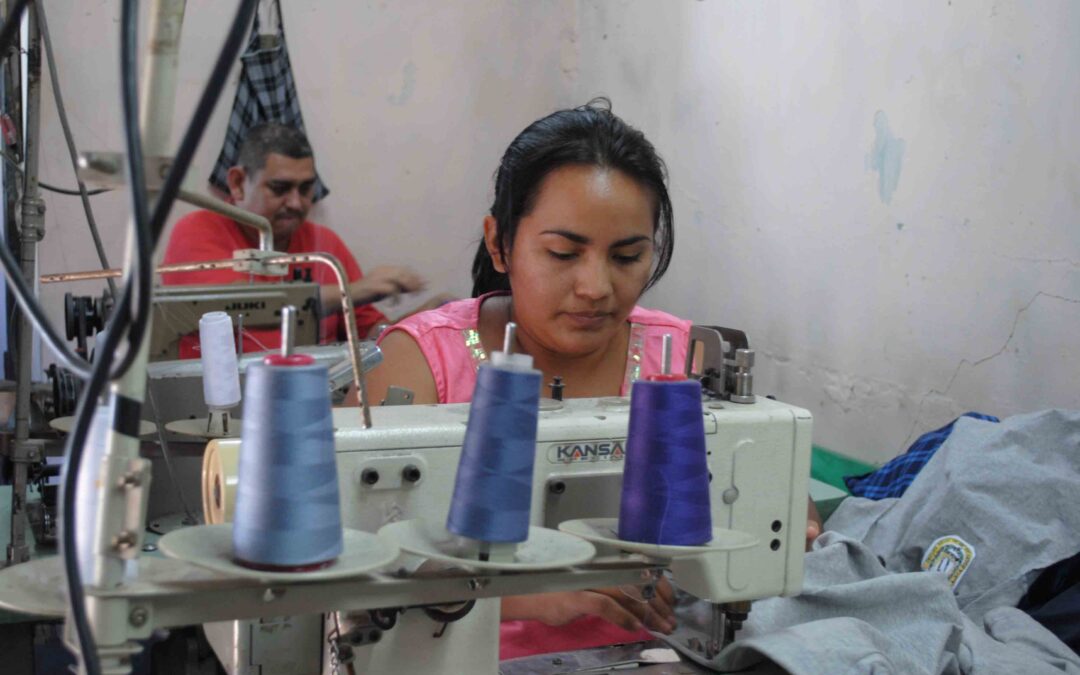
The ICJ’s submission is based on an ICJ study that was released in early October 2013, after a year of research and consultations in El Salvador.
Provided to the UN Committee on Economic, Social and Cultural Rights (CESCR), the submission suggests main issues of concerns and questions that should be clarified in the upcoming dialogue between the CESCR and the State of El Salvador regarding the implementation of the International Covenant on Economic, Social and Cultural Rights in the country.
During its meeting on 2-6 December 2013, the CESCR’s Pre-Sessional Working Group will adopt a list of issues on El Salvador.
These issues will be put to the Salvadorian Government for formal response ahead of the CESCR’s full examination of the third, fourth and fifth combined reports of El Salvador in April/May 2014.
The ICJ study deals with access to justice and analyses the availability and effectiveness of remedies in cases of violations of economic, social and cultural rights.
Among others, the study highlights the lack of constitutional guarantee of certain ESC rights, the length of judicial procedures and the inadequacy of sanctions, especially in the case of breaches of the labour code by employers, and the comprehensive prohibition of abortion, even in cases in which the life and health of the mother is at risk.
El Salvador-ICJ Submission ESCR-advocay-legal submission-2013 (full text in pdf)

Nov 21, 2013 | Communiqués de presse, Nouvelles, Publications, Rapports
La CIJ a appelé aujourd’hui les autorités marocaines à assurer une réforme globale et significative du pouvoir judiciaire.
Cette déclaration intervient alors que la CIJ vient de conclure une mission de haut niveau au Maroc et de lancer son rapport «Réformer le système judiciaire au Maroc », le 21 Novembre 2013.
La CIJ a déclaré que les réformes devraient viser à mettre fin à toute forme d’influence ou de contrôle abusif du pouvoir exécutif sur les affaires judiciaires.
Elle a appelé au renforcement de l’autorité du Conseil Supérieur du Pouvoir Judiciaire (CSPJ) nouvellement créé, sur tous les aspects relatifs à la carrière des juges et des procureurs.
La CIJ a souligné que le Ministère Public devrait être séparé du pouvoir judicaire et qu’il devrait conduire ses activités de manière objective et impartiale, et en défense des droits de l’homme.
L’organisation a également demandé à ce que la compétence des tribunaux militaires soit limitée au personnel militaire pour manquement à la discipline militaire, et qu’en aucun cas ces tribunaux ne devraient être utilisés pour juger des crimes constituant des violations des droits de l’homme.
Morocco – Réforme judiciaire – News-press release-2013-Fr (Texte complet en PDF)
Maroc – Réformer le système judiciaire-publications-rapport RESUME-2013-fr (Résumé du rapport en PDF)

Nov 21, 2013
The ICJ today called on the Moroccan authorities to ensure comprehensive and meaningful reform of the judiciary.
The statement comes as the ICJ concluded a high-level mission to Morocco and launched its report Reforming the Judiciary in Morocco, on 21 November 2013.
The ICJ said that reforms should aim at putting an end to any form of undue influence or control by the executive over judicial matters. It called for the reinforcement of the authority of the newly established Conseil Supérieur du Pouvoir Judiciaire (CSPJ) over all aspects of the careers of both judges and prosecutors.
The ICJ stressed that the Office of the Public Prosecutor (OPP) should be kept independent of the judiciary and that it must carry out its activities objectively, impartially and in defence of human rights.
The organization also urged that the jurisdiction of military courts be restricted to military personnel for breaches of military discipline, and that by no means should military courts be used to try crimes consisting of human rights violations.
“The ICJ welcomes efforts by the Moroccan authorities to expand the competencies of the CSPJ over matters relating to the career of judges, including their nomination, promotion and disciplinary proceedings,” said Justice Kalthoum Kennou, ICJ Commissioner and judge at the Tunisian Cassation Court. “However, in elaborating the new laws relating to the judiciary, the Moroccan authorities must ensure that the legislation does not undermine, but instead reinforces, the independence of the judiciary in a manner that makes it an effective authority for the fair administration of justice.”
The ICJ emphasized that the new laws should provide clear and objective criteria for the members of the CSPJ who are either elected or appointed by the King and should ensure that the CSPJ has financial and administrative autonomy and plays a meaningful role in budgeting for the judiciary.
The organization also called for the elaboration and adoption of a comprehensive code of judicial ethics, in line with international standards, to serve as basis to ensure judicial accountability in Morocco.
The ICJ said that it considered that the reform of the judicial system in Morocco must include the reform of the OPP.
The Minister of Justice should have no authority over the OPP, including the careers of individual prosecutors. Since prosecutors are part of the judicial corps, guarantees of security of tenure should be extended to prosecutors.
The nature and scope of any power by hierarchical superiors to issue written instructions to prosecutors should be defined in law. Political authorities should be precluded from issuing instructions pertaining to individual cases, such as those aimed at preventing an investigation from proceeding to court.
The ICJ also indicated that meaningful reform of the judiciary must include the military justice system.
“The Moroccan authorities must ensure that civilians are not tried before military courts and that the jurisdiction of these courts is limited to trials of members of the military in cases involving alleged breaches of military discipline,” said Said Benarbia, Senior Legal Adviser for the Middle East and North Africa (MENA) Programme of the ICJ. “Where military courts are used, they must respect all aspects of the right to a fair trial, including the requirement of adequate time and facilities for the preparation of defence, access to materials that the prosecution intends to rely on in court, and the right of appeal of the conviction and sentence by the military court to a higher civilian tribunal.”
Contact:
Said Benarbia, ICJ Senior Legal Adviser of the Middle East and North Africa Programme, tel: 41 22 979 38 17, e-mail: said.benarbia@icj.org
Additional information:
During its mission, the delegation met with: Mr. Mustapha Ramid, Minister of Justice; Mr. Driss Dahak, Secretary General of the Government; Mr. Karim Ghellab, President of the House of Deputies; Mr. Mohamed Cheikh Biadillah, President of the House of Counsellors; Mr. Mustapha Farès, President of the Cassation Court; Mr. Abdelhalim Wahbi, President of the Commission on Justice, Legislation and Human Rights of the House of Deputies. The ICJ also met with representatives of the judiciary, the legal profession and civil society.
The delegation was composed of Kalthoum Kennou, ICJ Commissioner and judge at the Cassation Court in Tunisia, Said Benarbia, Senior Legal Adviser for the MENA Programme of the ICJ and Laura Torre, Programme Officer for the MENA Programme.
Morocco-Reforming the Judiciary-publications-reports-2013 (full text in pdf)