Nov 21, 2013 | Articles, Nouvelles, Publications
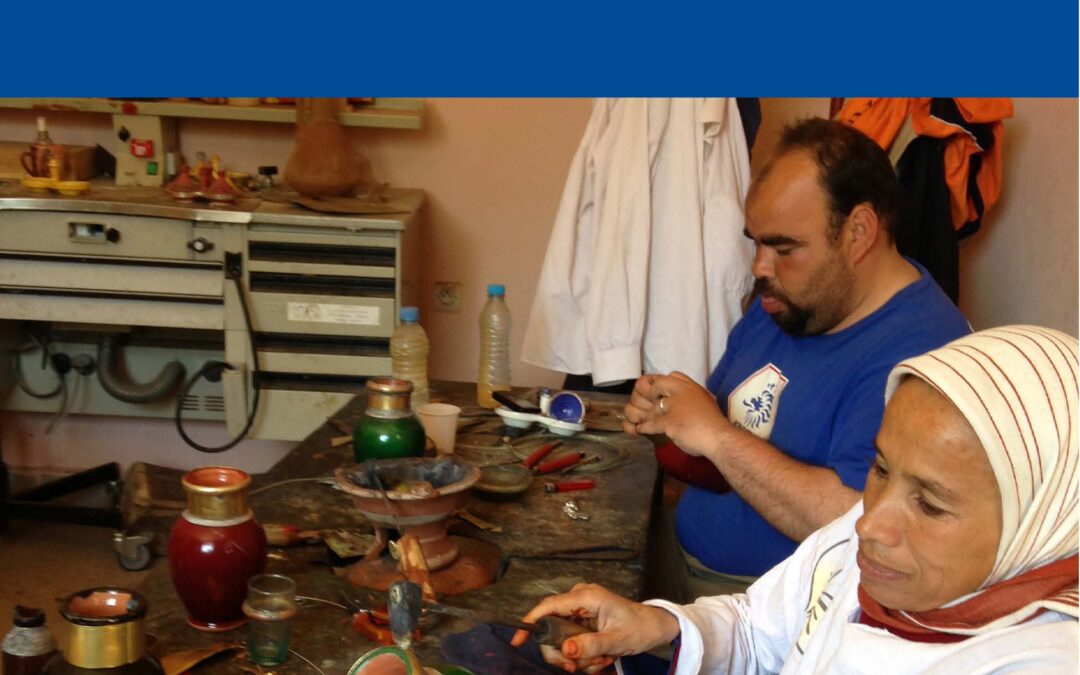
Ce nouveau rapport de la CIJ sur accès à la justice pour les droits économiques, sociaux et culturels au Maroc a été présenté à l’issue d’une mission de quatre jours dans le pays. Il a largement bénéficié des informations et discussions collectées et menées au cours d’un processus entamé en 2012.
Le rapport souligne que les provisions de la Constitution de 2011 devraient contribuer à garantir les droits économiques, sociaux et culturels.
Mais il identifie aussi un certain nombre de lacunes qui privent de nombreux(ses) Marocain(e)s d’accès à la justice en cas de violation de ces droits.
Un atelier organisé en collaboration avec l’Organisation marocaine des droits humains en septembre 2012 et une mission de recherche organisée conjointement par les programmes DESC et MENA de la CIJ en avril 2013 ont été l’occasion de consulter des acteurs pertinents, qu’ils soient utilisateurs ou au service de la justice.
Morocco-Access to Justice ESCR-publications-report-2013-Fr (full text in French, pdf)
Nov 21, 2013
The new ICJ study on access to justice for economic, social and cultural rights in Morocco was presented during a 4-day mission in this country.
The study welcomes the provisions of the 2011 Constitution that should contribute to better guarantee and protect economic, social and cultural rights (ESCR).
It also welcomes a number of recent social policies initiated to improve access to important social services and goods, especially to the benefit of disadvantaged and marginalized sectors of the Moroccan society.
But the report also identifies and describes significant gaps and issues in the normative, institutional and remedial frameworks that deprive many Moroccans from accessing justice in cases of violations of ESCR, and from enjoying their right to an effective remedy when facing such violations.
The ICJ is especially concerned at the prevalence of legal provisions that discriminate against women in areas that are fundamental to ESCR, such as inheritance, or family law.
The inaccessibility of judicial remedies for victims of violations of ESCR for procedural reasons, and the weakness of sanctions in certain cases of abuses of ESCR (for ex. in labour matters) is another area of concern.
In the coming months, the ICJ will continue to promote and discuss the findings of the study, which is the result of over a year of research and consultations on the advances and obstacles in the access to justice for alleged victims of ESCR in Morocco – a country that has initiated deep legal reforms.
Beside civil society actors, the new publication was handed over to several public authorities, including the Minister of Justice, the President of the Cour de Cassation, the Ombudsman, the President of the Human Rights Commission of the Parliament and the Secretary General of the Government.
Morocco-Access to Justice ESCR-publications-report-2013-ara (full text in Arabic, pdf)
Nov 20, 2013
The Bangladesh Government must repeal or amend the newly amended Information and Communication Technology (ICT) Act because it is being used to assault freedom of expression and freedom from arbitrary detention, the ICJ says.
The ICT Act, as amended on 6 October 2013, has been used to arbitrarily detain Nasiruddin Elan, Director of prominent human rights organization Odhikar, who was denied bail by the cyber crimes tribunal on 6 November 2013.
His appeal to the High Court division of the Supreme Court has been set for 24 November 2013.
Adilur Rahman Khan, Odhikar’s Secretary, has also been charged under the ICT Act.
The Government has accused the two of deliberately distorting the number of protestors killed in a police crackdown on the Islamist party, Hefazat-i-Islam, in May this year.
“The original ICT Act already served to undermine human rights, but the new amendments make the law nothing short of draconian”, said Sam Zarifi, ICJ’s Asia director. “The Government has used the newly amended Act to try to silence peaceful critics and civil society like Odhikar, in clear violation of international law.”
In a briefing paper issued today (see below), the ICJ analyzes the Information and Communication Technology (amendment) Act, 2013, and points out its serious deviations from international law, including: the amendments make many offences under the Act non-bailable; they allow the police to make arrests without a warrant; they impose a severe minimum prison sentence of seven years for offences under the Act; and they increase the maximum penalty for offences under the law from ten to 14 years’ imprisonment.
Provisions of the original ICT Act, particularly section 57, are also incompatible with Bangladesh’s obligations under Article 19 of the International Covenant on Civil and Political Rights (ICCPR), which Bangladesh ratified on 6 September 2000: the offences prescribed are vague and overbroad; the restrictions imposed on freedom of opinion and expression go beyond what is permissible under Article 19(3) of the ICCPR; and the restrictions are not necessary and proportional to achieve a legitimate purpose.
“The overbroad, vaguely defined offences combined with disproportionate penalties stifle public discourse, especially any criticism of the Government,” Zarifi added. “With elections coming up, it is crucial to defend the right to freely express opinions and exchange views—something the ICT Act seeks to restrict.”
Mahmudur Rahman, acting editor of a Bengali newspaper critical of the Government, has also been arbitrarily detained under the Act for publishing transcripts of a Skype conversation between former International Crimes Tribunal Chairman, Justice Muhammad Nizamul Huq, and a Bangladeshi legal expert, Ahmed Ziauddin.
The records revealed information casting doubt on the independence of the International Crimes Tribunal.
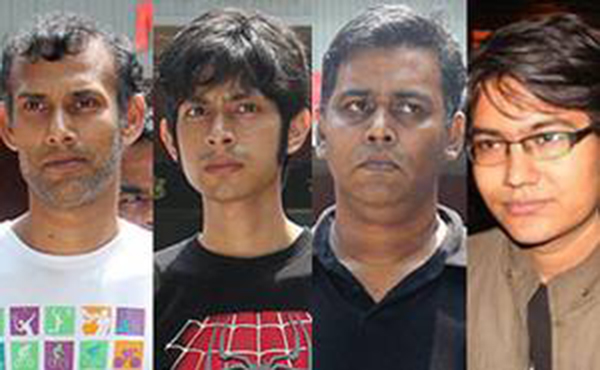
Four bloggers (photo), Asif Mohiuddin, Subrata Adhikari Shuvo, Moshiur Rahman Biplob and Rasel Parvez, are also facing trial under section 57 of the ICT Act for allegedly making derogatory comments about Islam and ‘hurting’ religious sentiment.
“The amended ICT Act reflects a further attack on the rule of law and respect for human rights in Bangladesh,” said Zarifi. “The Government must immediately take steps to either repeal the Act or to modify it in line with international law and standards.”
Contact:
Sam Zarifi, ICJ Asia-Pacific Regional Director, (Bangkok), t: +66 807819002; email: sam.zarifi(a)icj.org
Ben Schonveld, ICJ South Asia Director, (Kathmandu), t: +977 14432651; email: ben.schonveld(a)icj.org
Reema Omer, ICJ International Legal Advisor, (Lahore), t: +923214968434; email: reema.omer(a)icj.org
Bangladesh-ICT Brief -Advocacy-Analysis brief-2013 (full text in pdf)

Nov 19, 2013
Despite progress for many women in Botswana, access to justice remains a challenge, a new ICJ report says.
Launched today, Women’s Access to Justice in Botswana: Identifying the Obstacles and Need for Change, assesses some of the challenges faced by women in Botswana when seeking justice and legal protection for human rights abuses and other wrongful conduct.
It underlines that a range of practical barriers and legal impediments continue to combine to undermine the ability of women to seek legal redress for such abuses.
“Although Botswana has implemented a number of important measures to advance gender equality, for many women justice remains an abstract ideal rather than a practical reality,” said Leah Hoctor ICJ Senior Legal Advisor on Women’s Human Rights. “Over the coming years further concerted action is needed.”
The report outlines a series of effective and meaningful steps that Botswana can take to ensure laws and procedures support and advance women’s ability to assert their rights.
“This report provides a wide range of stakeholders, including government actors, the judiciary, civil society representatives and the legal profession with important guidance as to the action now necessary,” said Arnold Tsunga, Director of the ICJ’s Africa Programme.
Contact:
Leah Hoctor: leah.hoctor(a)icj.org
Arnold Tsunga: arnold.tsunga(a)icj.org
ICJ Women’s Access to Botswana-publications-2013 (download in pdf)
Nov 18, 2013 | News
Following its mission to Tajikistan on 10-13 November, the ICJ called on the Tajikistan authorities to reconsider provisions of a draft law which could undermine the independence of the legal profession.
The draft Law on Lawyers’ Activities and Advokatura would allow the Ministry of Justice a significant role in regulating entry to the profession.
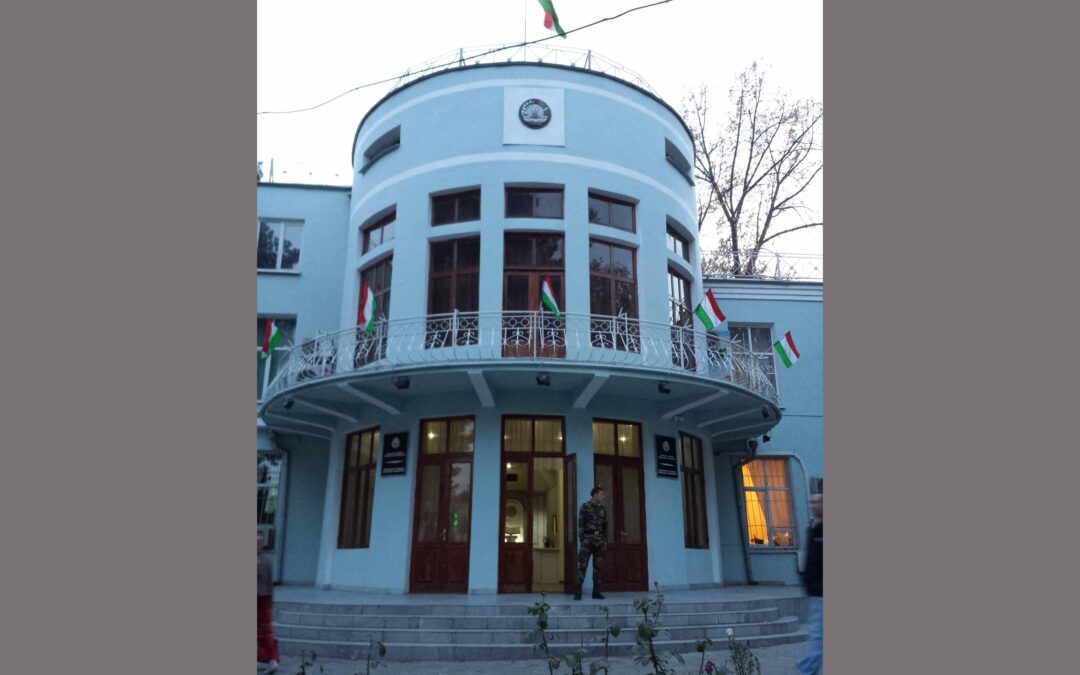
In particular, the Qualification Commission for lawyers, which would be responsible for access to the profession, would operate under the Ministry of Justice (picture).
It would be chaired by a deputy Minister, and would also include five lawyers, one representative of Parliament, one legal academic, and one other representative of the Ministry of Justice.
It is particularly worrying that all lawyers would be required to go through a new qualification process, carried out by this Commission, within one year of the new law coming into force.
“The draft law would bring welcome reforms, unifying a divided profession under a single, independent, Union of Lawyers. However, the value of these reforms would be undermined, since every lawyer would have to go through a new qualification process, the nature of which is not yet clear, administered by a body under the Ministry of Justice,” said Judge Egbert Myjer, Commissioner of the ICJ.
“The procedure would risk cleansing the profession of independent lawyers and leading to de facto domination of the profession by the Ministry of Justice, contrary to the UN Basic Principles on the Role of Lawyers,” he added.
Under international standards on the role of lawyers, independent self-governing professional associations of lawyers should be established, and should have sufficient powers to regulate the profession, including control of the qualification of lawyers.
The ICJ emphasized that at present there is a lack of consistency in the varied qualification procedures in the different sections of the legal profession in Tajikistan, which impedes high professional standards.
This should be addressed through a unified, independent and rigorous qualification process administered by the profession itself, in line with international standards, and as recommended by the UN Human Rights Committee, the International Bar Association and the ICJ.
The ICJ heard consensus from lawyers’ associations in Tajikistan that the proposed role of the Ministry of Justice would impair the effective and independent work of lawyers.
The lawyers’ associations added that these concerns were not taken into account in the drafting process.
In response to criticism by the UN Human Rights Committee earlier this year, the Minister of Justice stated that the Qualification Commission would only be placed under the Ministry for Justice for a transitional period.
This is not reflected in the current draft law. However, the authorities reassured the ICJ that the role of the Ministry of Justice in qualification was not intended to be permanent.
The ICJ mission to Tajikistan took place from 10 to 13 November. It was led by Justice Egbert Myjer, an ICJ Commissioner and former judge of the European Court of Human Rights, and also included ICJ staff members Róisín Pillay, Director of the Europe Programme of the ICJ, and Temur Shakirov, Legal Advisor of the Europe Programme.
The mission included a roundtable discussion with lawyers’ associations of Tajikistan, as well as meetings with representatives of the judiciary, the Ombudsman, and the National Legislative Centre and NGOs.
On 14 November, ICJ staff members met with the first deputy Minister of Justice.
The ICJ mission followed its report on the Independence of the Legal Profession in Central Asia, which analysed the law and practice of each of the five Central Asian states, including Tajikistan, in light of international law and standards, and made recommendations on the principles that should guide reform of the legal profession.
Contact:
Róisín Pillay, Director, ICJ Europe Programme, roisin.pillay(a)icj.org
Temur Shakirov, Legal Adviser, ICJ Europe Programme, temur.shakirov(a)icj.org
Tajikistan-ICJ Mission-news-web story-2013 (full text in pdf)
Tajikistan-ICJ Mission-news-webs story-2013-rus (full text in pdf)