Apr 2, 2021 | News
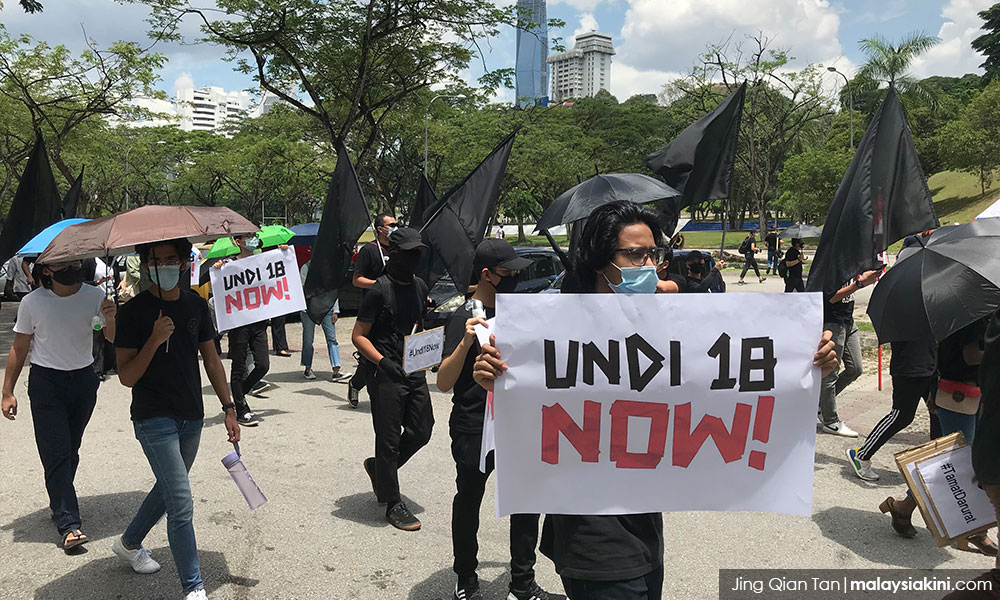
The ICJ today called on the Malaysian authorities to drop their criminal investigations of at least 11 participants in the peaceful Undi18 protests.
The Dang Wangi district police opened investigations against Dato’ Ambiga Sreenevasan, an ICJ Commissioner, and at least ten other individuals including Simpang Renggam MP Maszlee Malik, Petaling Jaya MP Maria Chin Abdullah, and Segambut MP Hannah Yeoh in relation to the wholly peaceful and socially distanced Undi18 protest rally held on 27 March 2021.
They are being investigated for alleged violations of section 9(5) of the Peaceful Assembly Act 2012 (‘PAA’) and Regulation 11 of the Prevention and Control of Infectious Diseases (Measures Within Infected Local Areas) (Conditional MCO) (No. 4) Regulations 2021 (‘MCO No. 4 Regulations’).
The ICJ said that the application of these laws against the protestors would not be consistent with international law and standards on freedom of expression and peaceful assembly.
The ICJ said that the investigations seem intended to harass and intimidate those who would exercise their rights to free expression and peaceful assembly.
If charged and convicted, violations of the PAA could result in a fine of up to RM$10,000 (approx. USD 2,410). Violations of the MCO No. 4 Regulations may result in a prison term of up to six months and/or a fine of RM$10,000 (approx. USD 2,410).
The ICJ reiterated its previous call for Malaysian legislators to reform the PAA, which imposes unjustifiably burdensome restrictions carrying excessive penalties on the exercise of freedom of expression and assembly.
Contact
Boram Jang, International Legal Adviser, Asia & the Pacific Programme, e: boram.jang(a)icj.org
Background
In July 2019, the Malaysian Parliament unanimously voted to lower the voting age from 21 to 18 years old.
On 25 March 2021, the Election Commission announced that it would postpone the implementation of this new rule from July 2021 to September 2022 at the latest. The Commission cited the COVID-19 lockdowns as a reason for the delay. This would affect the ability of 1.2 million people to vote, if elections are called later this year.
On 27 March 2021, hundreds of individuals gathered peacefully in front of Malaysia’ Parliament building to protest this delay. It was reported that the protestors were wearing face masks and trying to observe physical distancing, with some protestors donning full personal protective equipment.
On 29 March 2021, 11 individuals were summoned for questioning for alleged violations under section 9(5) of the PAA and Regulation 11 of the MCO No. 4 Regulations.
On 30 March 2021, eight of them gave their statements at the Dang Wangi police station in Kuala Lumpur. Four others, including Dato’ Ambiga Sreenevasan, will give their statements on 2 April 2021.
Section 9(5) of the PAA imposes a requirement for a five-day notice of an assembly to the Officer in Charge of the Police District. Failure to do so may result in a fine not exceeding RM$10,000 (approx. USD$2,410). Section 21A also allows the police to issue compounds of up to RM$5,000 instead of a charge being proffered subject to the written consent of the Public Prosecutor.
Regulation 11 of the MCO No. 4 permits the gathering or involvement in a gathering subject to any directions issued by the Director General. Regulation 17 states that failure to comply may result in a fine not exceeding RM$1,000 (approx. USD$241), imprisonment for a term not exceeding six months, or both. Additional emergency laws have raised the potential fine that may be imposed to up to RM$10,000 (approx. USD$2,410).
Apr 1, 2021 | Agendas, Events, News
Migrants and asylum seekers must be provided adequate procedural guarantees in asylum procedures and in immigration detention, a group of experts and judges asserted during a seminar for Greek and Italian judges held by the ICJ, Scuola Superiore Sant’Anna (SSSA), and Greek Council for Refugees (GCR) on 29-31 March.
Asylum applicants should have access to adequate information about the procedure and their entitlements in a language they understand, access to a reliable communication system with the authorities, the availability of interpreters, access to legal aid, and reasoned decisions, experts said during the seminar, held in the framework of the FAIR plus project. Speakers further emphasized that immigration detention must be subject to automatic review by an independent body with a power to release detainees, especially when removal is no more an option.
More than 30 judges from Italy and Greece came together for this event to discuss procedural guarantees for migrants and asylum seekers, related to the safe third country concept, the access to legal assistance and interpretation, safeguards related to immigration detention, and procedural guarantees in the asylum procedure, especially in the accelerated procedures.
A summary of the discussions
On the first day, the judges exchanged overviews of national systems and presented some specific questions regarding the Italian and the Greek systems. Following the discussion on the safe third country concept and its implementation in Greece, an Italian judge presented recent developments in the Italian case-law, and the role of the judge, country of origin information, accelerated procedures, the length of procedures and the question of credibility assessment.
On the second day, the discussion related to the impact of Covid-19 pandemic on the rights of migrants and asylum seekers took place. The situation in Greece and in Italy was described by judges, in particular in relation to the access to the asylum procedure, the lawfulness of detention, the right to health and the question of access to a personal hearing when some of the hearings take place electronically.
An overview of the situation of immigration detention in Italy and Greece was presented by an Italian lawyer and an expert from UNHCR Greece. Speakers highlighted that in cases when people cannot be returned, they should not be kept in detention without a legal basis.
Accelerated procedures in law and in practice in both countries have been introduced by UNHCR Greece and Italy were addressed through a case-study and discussion, covering mainly the specific needs in accelerated procedures, automatic suspensive effect of appeals, and time limits in the accelerated procedures.
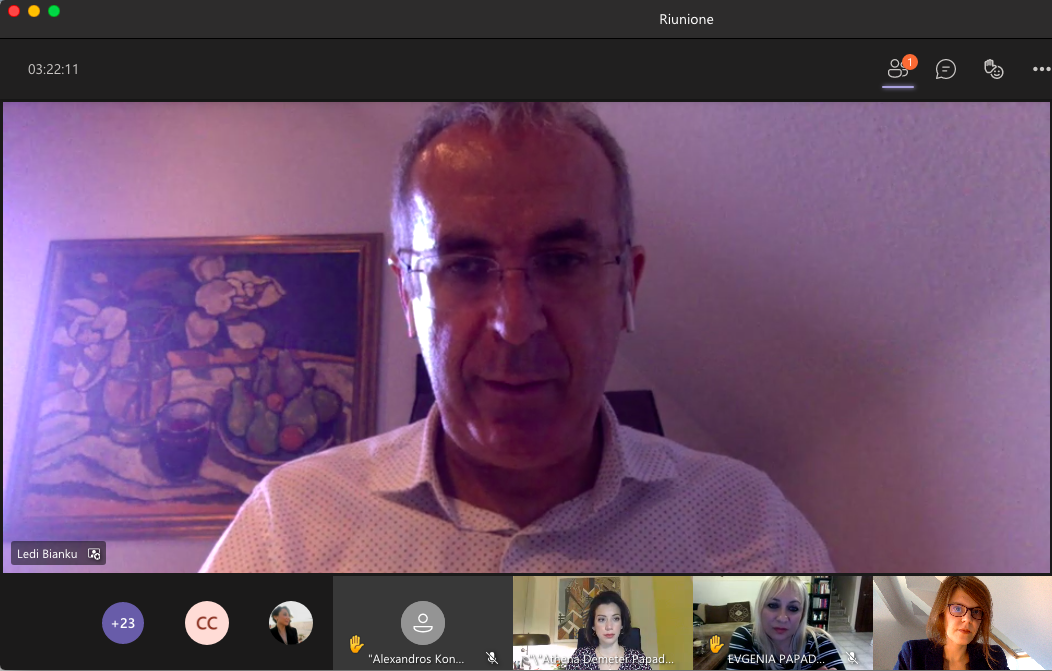
Finally on the last day, two lectures were delivered by Ledi Bianku, a former judge of the European Court for Human Rights, and an Associate Professor at the University of Strasbourg. First, looking into the guarantees in asylum and migration proceedings, Ledi Bianku stressed the need to always provide asylum applicants adequate information about the procedure and their entitlements in a language they understand, access to a reliable communication system with the authorities, the availability of interpreters, access to legal aid, and reasoned decisions in order to provide access to an effective remedy. In the second part of his intervention, Mr. Bianku discussed the detention of migrants, where he stressed the need for automatic review of detention, especially when removal is no more an option, by an independent body with a power to release.
The FAIR plus project is a judicial training and cooperation project supported by the European Union’s Justice programme, focusing on four countries Ireland, Greece, Italy and the Czech Republic. The aim of the project is to contribute to better judicial protection of the fundamental rights of migrants across the EU. Within the project the ICJ and partners are drafting of training materials and relevant legal briefings, implement training of the existing judicial trainers in the target countries, conduct four national trainings, two transnational seminars, and an international roundtable. The project is implemented in collaboration with national partners: Immigrant Council of Ireland (ICI), Scuola Superiore Sant’Anna (SSSA), Greek Council for Refugees (GCR) and Forum for Human Rights (Czech Republic).
Please find the agenda here.
Apr 1, 2021
An opinion piece by Mathuri Thamilmaran, ICJ National Legal Adviser in Sri Lanka.
On 1 March 2021, President Gotabaya Rajapaksa elicited considerable public interest through a single tweet. In his tweet commemorating Zero Discrimination Day, he declared his intent to ‘secure everybody’s right to live life with dignity regardless of age, gender, sexuality, race, physical appearance and beliefs’.[1]
According to reports, the tweet made history as the first public acknowledgment by a South Asian Head of State of everyone’s right not to be discriminated against on the basis of sexuality and gender, thus affirming, effectively, one’s right to live life with dignity regardless of sexual orientation, gender identity or expression. It comes at a time when the President has initiated the drafting process of a new Constitution and a first draft is expected soon.
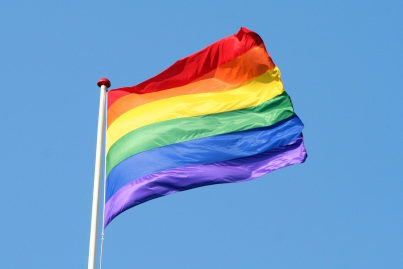
The tweet has opened up a much-needed conversation on sexual orientation, gender identity and expression (SOGIE) in Sri Lanka, particularly regarding the Government’s obligation to ensure that lesbian, gay, bisexual and transgender (LGBT) people are not discriminated against in law or practice.
As it stands, the Sri Lankan Constitution guarantees the right to equality before the law and equal protection of the law of all persons (Article 12). It also prohibits discrimination on the grounds of race, religion, language, caste, sex, political opinion and place of birth.
Notably, therefore, the Constitution does not prohibit discrimination on the grounds of sexual orientation or gender identity and/or expression.
Sections 365 and 365A of Sri Lanka’s Penal Code (1883) criminalize “carnal intercourse against the order of nature” and “acts of gross indecency”, respectively. Both sections have been used to criminalize consensual same-sex sexual relations, albeit the Penal Code does not provide a definition of the terms used by those sections. Those convicted of the ‘crime’ may face up to ten years’ imprisonment.
Section 399 of the Penal Code criminalizes “gender impersonation”, and has often been used against transgender persons with cases being filed against them “for misleading the public”. Further, the loitering provisions of the Vagrants Ordinance (1842) have been used to intimidate, extort, detain and interrogate individuals whose appearance do not conform to gender norms.
In addition, Article 16 of the Constitution states that ‘existing written law and unwritten law shall be valid and operative notwithstanding any inconsistency’ with the provisions of the Fundamental Rights chapter.
As a result, judicial review of existing laws, such as the Penal Code and Vagrants Ordinance, is precluded, thereby shielding the authorities from any scrutiny, including in cases that have given rise to abuse allegations. These provisions have all contributed to an increase in human rights violations by police officers against LGBT persons.
Just last year, a special investigation by a local newspaper found that inhumane methods, including flogging and anal/vaginal examinations, which amount to torture or other ill-treatment, were being used against LGBT people by Sri Lankan authorities to obtain “evidence” of same-sex sexual relations. There had also been instances where H.I.V. tests had been ordered by courts and their results publicly revealed in court, a clear violation of the right to privacy of the individuals concerned.
Following these revelations, the Minister of Justice, Hon. Ali Sabry, made an official statement that he had instructed the relevant authorities to stop such harmful practices while also reiterating his belief in non-discrimination on the basis of ‘gender, sexual preference or identity’. Further, it was reported that as recently as this month, judges were warning the police not to harass transgender persons by misusing the laws and to treat them with dignity.
In 2014, the then Sri Lankan government made representation before the UN Human Rights Committee that Article 12 of the Constitution included non-discrimination on the basis of sexual orientation and gender identity, but, as seen above, explicit provisions and application of the law seem to negate this argument.
Furthermore, in 2017, during its Universal Periodic Review at the Human Rights Council, Sri Lanka committed to taking steps to end discrimination on the basis of sexual orientation and gender identity. Since then, however, attempts to include SOGIE in the National Action Plan on Human Rights have been dropped due to opposition within the Cabinet.
Sri Lanka’s neighbours in South Asia have made progressive strides, with both India and Bhutan having decriminalized consensual same-sex sexual relations in recent years. Bhutan’s penal code provision regarding ‘sex against the order of nature’ had been enacted only in 2004 but activism and the recognition that the law would dissuade those in same–sex relations from actively seeking treatment for H.I.V. led to the decision to decriminalize.
In 2018, the Indian Supreme Court read down section 377 of the Indian penal code which was used to criminalize consensual same-sex sexual relations, and stated that its application to consensual relations between LGBT persons was unconstitutional as it was in violation of certain fundamental rights, including the right to equality.
In 2018, Pakistan enacted a law recognizing the human rights of transgender people, including the right to legal recognition of one’s preferred gender identity. Among other things, the understanding that most of the discriminatory legal provisions were remnants of British colonial rule and the need to move past such influence has led to these developments.
In Sri Lanka, homophobia is primarily seen as cultural issue, but there are indications that times are changing. Sections of the media now allow more space for discussions of LGBT persons’ human rights, even covering Pride events, while a Supreme Court judgment in 2016 noted that ‘consensual sex between adults should not be policed by the state nor should it be grounds for criminalisation’.
If a discriminatory law passed as late as 2004 can be discarded by Bhutan, then surely Sri Lanka too can follow its neighbours and break free from its colonial era shackles and guarantee equality for LGBT persons.
It is time that Sri Lanka steps up to fulfil its international human rights obligations by ensuring equality to all persons, including LGBT people, and that it delivers on the expectations raised by the President’s tweet and previous public pronouncements. Last year the President appointed an ‘Expert Committee’ to undertake the drafting of a new Constitution.
The inclusion of SOGIE as prohibited discrimination grounds in the Fundamental Rights protection provided by the (new) Constitution would be a first step in fulfilling the state’s international law commitments as well as rebuilding its relationship with LGBT people.
[1] https://twitter.com/GotabayaR/status/1366258501886955526
SriLanka-SOGI discrimination-News-opeds-2021-TAM (version in Tamil)
SriLanka-SOGI discrimination-News-opeds-2021-SIN (version in Sinhala)
Apr 1, 2021 | News
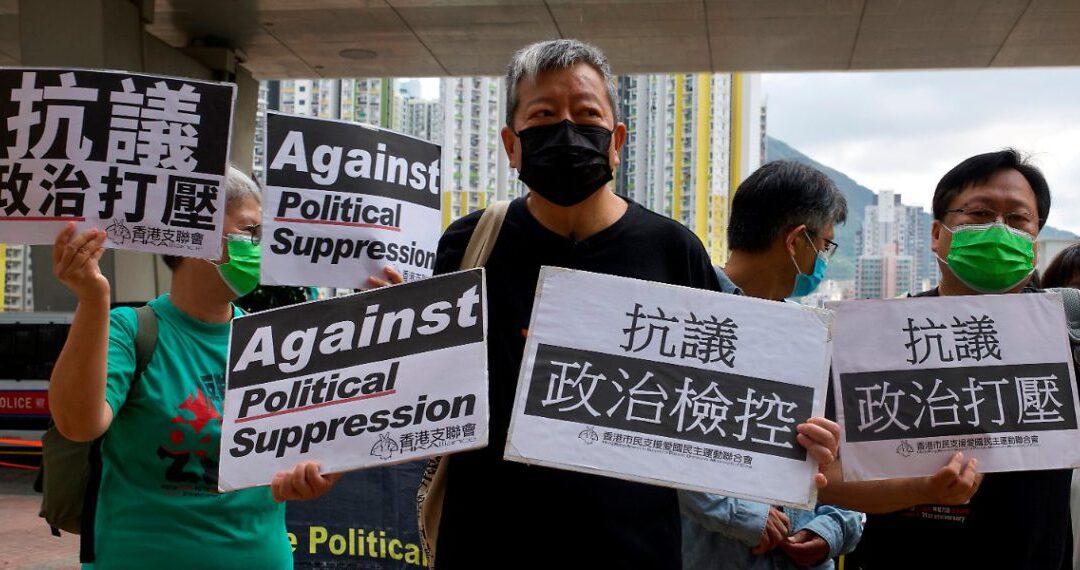
The conviction of political activists Martin Lee, Margaret Ng, Jimmy Lai, Lee Cheuk-yan, Albert Ho, Leung Kwok-hung, Cyd Ho for their role in organizing public protests in 2019 delivers a massive blow to human rights and the rule of law in Hong Kong, said the ICJ.
“These convictions are the latest attack on the already weakened standing of the rule of law and democracy in Hong Kong,” said Ian Seiderman, the ICJ’s Legal and Policy Director.
The defendants were convicted by West Kowloon Magistrates’ Court on joint charges of organizing an unauthorized assembly under section 17A(3)(b)(i) of the Public Order Ordinance Cap. 245 and knowingly taking part in an unauthorized assembly under section 17A(3)(a) of the same Ordinance. Two other defendants, Au Nok-hin and Leung Yiu-chung, pleaded guilty in February before the trial began. They face up to five years in prison. Their sentences will be handed down at a later date.
“These prosecutions and convictions constitute persecution of human rights defenders, journalist, and politicians through abusive legal process. The unauthorized assembly provisions of the Public Order Ordinance has been used to silence lawful expressions of on matters of public concern,” said Ian Seiderman.
The Hong Kong SAR, though not the rest of the People’s Republic of China, is legally bound by the International Covenant on Civil and Political Rights (ICCPR), which guarantees to the right to freedom of assembly and expression. The ICCPR continues to be in force in Hong Kong by virtue of Article 39 of the Basic Law. The United Nations Human Rights Committee has repeatedly expressed concern that charging people under the Public Order Ordinance against peaceful protesters in Hong Kong stands to violate their human rights under the ICCPR.
The ICJ has previously pointed out that imposing criminal charge on people exercising their right of peaceful assembly who fail to comply with a procedural requirement, such as notification, unduly restricts freedom of peaceful assembly by adding unnecessary barriers to public gatherings. Furthermore, the sentencing guidelines of the Ordinance, which include the possibility of a peaceful participant of a public assembly being sentenced to five years in prison if the organizers fail to comply with the notification requirement, are extreme, disproportionate and open to abuse.
Background
On 12 August 2019 the Civil Human Rights Front (CHRF) submitted a Notification of Intention to hold a public meeting and procession, informing the police of the intention to hold a public assembly on 18 August 2019 starting from Victoria Park and ending at Chater Road, and a second public assembly at Chater Road. The police objected to the public procession from the Park to Chater Road. The CHRF appealed against the police decision and after an appeal hearing convened by the Appeal Board on 16 August 2019, the Board upheld the police decision and dismissed the appeal lodged by CHRF.
The CHRF held a press conference on 17 August 2019 wherein they said the police had not arranged for the dispersal of crowds from Victoria Park so pro-democracy legislators and other influential activists would be assisting the crowds to disperse safely to nearby MTR stations. On 18 August 2019 during the public assembly at Victoria Park and the defendants carried a long banner out of Victoria Park Gate 17 and led a procession of people to Chater Road, Central. The route taken followed the previously proposed route of the banned public procession. The procession finished at Chater Road with the defendants laying the long banner down on the road.
Contact
Boram Jang, International Legal Adviser, Asia & the Pacific Programme, e: boram.jang(a)icj.org
See also

Mar 31, 2021
For International Transgender Day of Visibility, the ICJ launched a report setting out an overview of States’ legal obligations under the international human rights framework in relation to issues of sexual orientation, gender expression and gender identity, and an analysis of the human rights situation of LGBT persons in Colombia, Malaysia and South Africa.
The 60-page report, Invisible, Isolated, and Ignored: Human Rights Abuses Based on Sexual Orientation and Gender Identity/Expression in Colombia, South Africa and Malaysia, was launched through a discussion facilitated by The Cheeky Natives, a literary podcast, with four activists from the three countries on which the report focussed. The activists discussed the content of the report through the lens of their own experience of working with LGBT persons in the respective countries
“As a country, South Africa has possibly one of the most progressive constitutions in the world. It explicitly names sexual orientation. We recognise civil unions; we have a legal gender recognition law. On paper, we are beautiful. In practice, I think we have continuously failed to actualise these rights: access to education, access to healthcare, access to anything that is a general need for every other human being has not been the same for LGBTI people and as marginalised as LGBTI people are in the country, Trans people sit on the margins of that marginalisation,” said Akani Shimange, Director of Matimba, a South African organisation which advocates for kids and teenagers that are transgender or/and gender variant to have happy and healthy lives.
The report aims to offer an overview of different contexts and issues relevant to the respect, protection and promotion of the human rights of LGBT people through a human rights-based analysis and, in so doing, it aims to support lawyers working to enhance protection for the human rights of LGBT persons within their challenging domestic legal frameworks.
“To this day, discrimination and abuse on the basis of sexual orientation and gender identity remain rampant around the world. It is important to listen to accounts of LGBT persons who constantly face criminalization, lack of acceptance and continued violence in a climate of impunity exacerbated by the COVID-19 outbreak. This report considers these obstacles, and also makes recommendations to overcome them,” said Sam Zarifi, Secretary General of the ICJ.
The report provides support to the work of LGBT human rights defenders working on human rights issues, as well as assisting policymakers to better understand the impact of law and policy on the human rights of LGBT persons globally.
In addition, the report makes country-specific recommendations to enhance respect, protection and promotion of the human rights of LGBT persons with a view to ameliorating their lives. In Malaysia, where the laws are considerably different from the more progressive Colombian and South African legal frameworks, the recommendations mostly focused around the decriminalization of same-sex consensual conduct and abolition of all laws that criminalize sexual orientation and gender diverse identities as these laws threaten the safety and security of LGBT people and also detrimentally affect the ability of LGBT persons to exercise and enjoy their human rights without discrimination.
As for the Colombian and South African recommendations, the emphasis was on ensuring LGBT persons’ effective access to and enjoyment of existing rights, as well as conducting training programmes on the human rights of LGBT persons based on national and international human rights standards. Additionally, the report calls for programmes to raise awareness about harmful stereotypes, including the use of pejorative language, directed at LGBT persons. In particular, with respect to South Africa, the report documented the limitation on the enjoyment of human rights that have arisen as a consequence of making medical interventions and medical reports mandatory for gender marker change.
Contact
Nokukhanya (Khanyo) Farisè, Legal Adviser (Africa Regional Programme), e: nokukhanya.farise(a)icj.org
Tanveer Jeewa, Legal and Communications Officer (Africa Regional Programme), e: tanveer.jeewa(a)icj.org
Download
Colombia-SouthAfrica-Malaysia-SOGIE-Publications-Reports-Thematic reports-2021-ENG