Mar 31, 2021 | Новости, Пресс-релизы, Событие, Статьи
Ташкент, 25 Марта 2021 года – Сегодня Международная комиссия юристов (МКЮ), Региональное отделение Верховного комиссара ООН по правам человека (УВКПЧ) для Центральной Азии и Высшая школа судей Республики Узбекистан (ВШС) проводят заключительную конференцию по реализации международного права по экономическим, социальным и культурным правам на национальном уровне в Узбекистане. Данное мероприятие является завершающим в трехлетнем проекте «Усиление роли гражданского общества в продвижении стандартов в области экономических, социальных и культурных прав» (ACCESS), реализуемым Международной комиссией юристов при финансовой поддержке Европейского Союза.
Участники обсудят препятствия на пути к осуществлению экономических, социальных и культурных (ЭКС) прав в Узбекистане и способы усиления защиты этих прав посредством доступа к правосудию и средствам правовой защиты. Обсуждения будут направлены на усиление имплементации международного права в отношении ЭСК прав, включая права на жилище, здравоохранение и права на равную защиту в рабочем месте, а также на обеспечение того, чтобы система правосудия гарантировала эффективную защиту и средства правовой защиты в случае их нарушения.
В итоговой конференции примут участие УВКПЧ по Центральной Азии, ВШС, Ташкентский государственный юридический университет, Общенациональное движение «Юксалиш», национальные и международные эксперты.=
«Это очень важный проект, который был своевременным, но и сложным для реализации в период пандемии COVID-19. В частности, было подходящее время для повышения осведомленности об экономических, социальных и культурных правах. Проект проводится во время важных реформ правительства Республики Узбекистан, он посвящен продвижению прав человека и верховенства закона, что также является важной частью нашей Стратегии ЕС в Центральной Азии,» отметила г-жа Шарлот Адриан, Посол Европейского Союза в Республике Узбекистан.
Ришард Коменда, региональный представитель Управления ООН по правам человека в Центральной Азии отметил, что «этот проект по продвижению экономических, социальных и культурных прав в Узбекистане был и остается весьма актуальным и необходимым, в том числе для распространения правовых знаний о правах человека среди юристов и представителей гражданского общества. Реализация данного проекта в период проводимых в стране реформ и участие экспертов ООН из комитетов ООН по правам женщин (CEDAW) и по правам ребенка (CRC), делает проект особенно эффективным, уникальным и своевременным.»
«Узбекистан имеет прочную правовую основу для выполнения своих обязательств по защите экономических, социальных и культурных прав. Но для реализации вего потенциала законодательства на практике людям, чьи права нарушаются, необходим эффективный доступ к системе правосудия, а суды должны применять права, изложенные в международном праве,» – сказала Роушин Пиллэй, директор программы Европа и Центральной Азии МКЮ. «Мы рады поделиться нашими рекомендациями направленные на обеспечение экономических и социальных прав людей, гарантированных международным правом, защищены на практике, в том числе через систему правосудия. Я с нетерпением жду обсуждения с национальными и международными партнерами во время нашего заключительного мероприятия» – добавила она.
«Этот проект является ярким примером международного сотрудничества Высшей школы судей, которое полностью соответствует ее приоритетам. Безусловно, реализация международного права об экономических, социальных и культурных правах на национальном уровне в Узбекистане является одним из важнейших национальных приоритетов, что требует активного взаимодействия между государственными органами, академическими кругами и экспертным сообществом и, конечно же, сотрудничества с международными организациями» – сказал Хожи-Мурод Исаков, директор Высшей школы судей при Высшем судейском совете Республики Узбекистан.
Для получения более подробной информации, пожалуйста, свяжитесь с:
Дилфуза Куролова, Консультант Международной комиссии юристов по правовым вопросам (МКЮ),
E-mail: dilfuza.kurolova@icj.org
Программа мероприятия на русском языке.
Программа мероприятия на английском языке.
Mar 31, 2021 | News
Today, the ICJ submitted recommendations to Thailand’s Office of the Council of State concerning the Draft Act on the Operation of Not-for-Profit Organizations B.E. … (‘Draft Act’), which is scheduled for public consultation between 12 and 31 March 2021.
The ICJ urged that the Draft Act be repealed in its entirety or substantially revised in order to ensure compliance with Thailand’s international legal obligations.
The ICJ is concerned that the law, if adopted, would pose onerous and unwarranted obstacles to many civil society organizations in Thailand, including human rights NGOs, in carrying out their work. In its submission, the ICJ underscores the imprecise and overbroad language of the draft law, which would allow for abusive and arbitrary application by the Thai authorities on “Not-for-Profit Organizations” (NPOs). In particular, it provides for discriminatory restrictions on organizations that receive foreign funding.
“It is well-established in international law and standards that any registration of NPOs should be voluntary and that no law should outlaw or delegitimize activities in defence of human rights on account of the origin of funding,” said Ian Seiderman, ICJ’s Legal and Policy Director.
Violators of the Draft Act would risk having their registration revoked. The Draft Act also imposes liability of criminal punishment on those who operate without registration with imprisonment not exceeding five years or fined not exceeding 100,000 THB (approx. 3,200 USD), or both.
“In cases of registration revocation, the legal recourse available for NPOs to challenge such decisions involves lengthy and burdensome administrative and judicial proceedings, which would normally take years to reach a conclusion. Proceedings of this kind will be untenable for some organizations and will deal a fatal blow to the essential work of many human rights defenders,” said Ian Seiderman.
The Draft Act also provides sweeping powers to government authorities to monitor activities, search and seize electronic data of NPOs without any court warrant, in violation of the rights to privacy.
Background
Thailand is a State party to the International Covenant on Civil and Political Rights (ICCPR), which requires States to respect and protect, inter alia, the right to freedom of association, expression, peaceful assembly, the right to take part in the conduct of public affairs, the right to privacy and the right to an effective remedy. Thailand may impose limitations on NPOs only in narrow circumstances and subject to strict conditions as set out in the ICCPR.
On 23 February 2021, Thai Cabinet approved in principle the Office of the Council of State’s proposal to enact a law aims to provide oversight on NPOs’ operations.
The draft law is currently under consideration of the Council of State for legal review. Public consultation is currently carried out by the Office, only via their online platform. Members of the public were expected to have registered any concerns about the Draft Act through the website of the Office, by post or by email, between 12 to 31 March 2021 – a considerably tight period of time.
The draft law will then be resubmitted to the Cabinet, then presented to the Parliament.
Download
Recommendations in English and Thai (PDF)
Mar 30, 2021 | News
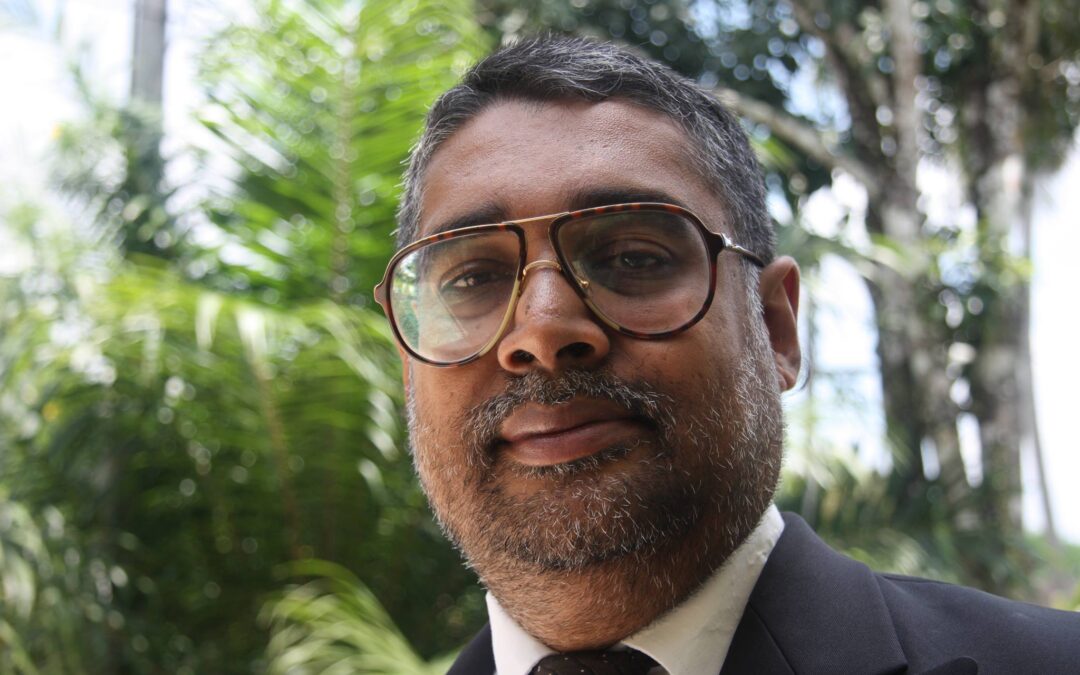
The ICJ today called for the reform of the country’s law on contempt of court to prevent their abuse and for the withdrawal of the contempt action filed against human rights lawyer Charles Hector.
Charles Hector faces potential contempt of court charges over a letter he sent to an officer of the Jerantut District Forest Office, as part of trial preparation. He is currently representing eight inhabitants of Kampung Baharu, a village in Jerantut, Pahang, in their civil lawsuit against two logging companies, Beijing Million Sdn Bhd and Rosah Timber & Trading Sdn Bhd.
The companies applied for leave to commence contempt of court proceedings against Charles Hector and the defendants. They claim that his letter violates an interlocutory injunction order prohibiting the villagers and their representatives from interfering with or causing nuisance to their work.
“Charles Hector is being harassed and intimidated through legal processes for carrying out his professional duties as a lawyer and gathering evidence in preparation for trial. The Malaysian authorities must act to protect human rights lawyers from sanctions and the threat of sanctions for the legitimate performance of their work,” said Ian Seiderman, the ICJ’s Legal and Policy Director.
The harassment of Charles Hector through legal processes violates international standards such as the UN Basic Principles on the Role of Lawyers that make clear that lawyers must be able to perform their professional functions without intimidation, hindrance, harassment or improper interference.
Contempt of court, whether civil or criminal, may result in imprisonment and fines. Malaysia’s contempt of court offense is a common law doctrine and not codified statutorily.
“Fear of contempt charges stands to cast a chilling effect on the work of human rights lawyers and defenders. This further reinforces how Malaysia’s contempt of court doctrine needs to be urgently reformed as it is incompatible with international human rights law and standards,” said Seiderman.
The ICJ calls for the reform of Malaysia’s contempt of court doctrine to ensure clarity in definition, consistency in procedural rules and sentencing limits pertaining to criminal contempt cases. This reform should be in line with recommendations by the Malaysian Bar that the law of contempt be codified statutorily to provide clear and unequivocal parameters as to what really constitutes contempt.
Background
In September 2019, the two logging companies reportedly obtained approvals from the Jerantut District Forest Office to carry out logging in the Jerantut Tambahan Forest Reserve. The eight villagers are from a community many of whose residents have been protesting against the logging. The villagers depend on the forest reserve for clean water and their livelihoods.
On 14 July 2020, the companies filed a writ of summons against the eight villagers in the Kuantan High Court. The writ stated that the plaintiffs had applied for an injunction order to stop the defendants from preventing the companies’ workers from carrying out their works and spreading “false information” online.
On 5 November 2020, the companies successfully obtained an interlocutory injunction order. It was reported that the injunction order prohibits the defendants and their representatives from interfering with the approval given to the plaintiffs by the District Forest Office or causing nuisance to the work of the plaintiffs in any manner whatsoever, including physically, online or by communication with the authorities.
On 17 December 2020 Charles Hector sent a letter on behalf of his clients to Mohd Zarin Bin Ramlan, an officer of the Jerantut District Forestry Office, seeking clarifications on a letter sent by the office on 20 February 2020.
The logging firms contend that the letter violated the injunction order. In January 2021, the companies filed an ex parte application for leave to commence contempt of court proceedings against Charles Hector and the eight villagers.
The hearing was postponed until 25 March 2021 at the Kuantan High Court. On 25 March 2021, the plaintiff’s lawyer opposed the presence and participation of Charles Hector’s lawyer on the grounds that it was an ex parte application, which was contested by Charles Hector’s lawyer. The Court decided to adjourn the hearing to 6 April 2021.
Contact
Boram Jang, International Legal Adviser, e: boram.jang(a)icj.org
Mar 30, 2021
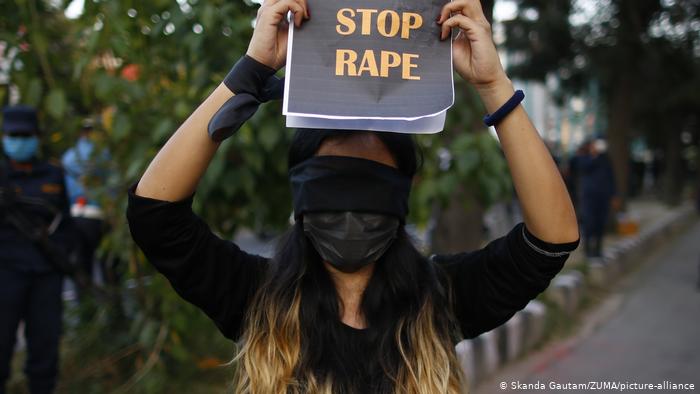
An opinion piece by Laxmi Pokharel and Boram Jang, International Commission of Jurists Legal Advisors on Access to Justice for Women
In February 2021 hundreds of demonstrators in Kathmandu dressed in white mourning clothes and staged a mock funeral depicting the “death of justice” in Nepal. It came as a response to a lack of prompt and effective investigation in the rape and killing of a teenage girl. Bhagirathi Bhatta, 17, went missing on 4 February while she was going home from school. Her body was found a day later in a gorge near her village in Baitadi district in western Nepal. There was good evidence to suspect that she had been raped and then strangled.
Similar cases of killings after rape or sexual violence of minors have been reported over the past few years in Nepal and most of the perpetrators remain at large. The rape and killing of Nirmala Panta is another example. Despite public outrage, leading to several days of protests in Kanchanpur, those responsible for the case are yet to be identified. There has been a pattern of police negligence and abuses in the investigation, including the alleged mishandling of evidence and the wrongful arrest after which an innocent person was coerced to “confess” to the crime. Meanwhile, the actual perpetrator has so far escaped justice. This impunity enables not only the perpetuation of similar violence but also erodes public trust in the justice system.
Nepal’s Culture of Impunity for Rape and sexual violence
Nepalese society has been witnessing widespread sexual and gender-based violence (SGBV) against women for a long period of time. The increased number of cases of SGBV against women, including rape cases, in recent years is not just a matter of criminal law. Women who are subjected to SGBV are denied the right to a dignified life, reflected in the guarantees of the Nepalese Constitution and law and international human rights instruments.
The 2015 Constitution guarantees the rights against sexual violence as a fundamental right. The Article 38(3) states, “No woman shall be subjected to physical, mental, sexual, psychological or other forms of violence or exploitation on grounds of religion, social, cultural tradition, practice or on any other grounds. Such act shall be punishable by law, and the victim shall have the right to obtain compensation in accordance with the law.”
Nepal’s Penal Code has recently increased the sentence to those involved in rape from seven-year to life imprisonment. Sex without consent, including marital rape, is also criminalized by the Criminal Code of Nepal, consistent with international law. Despite the Constitutional guarantees, instances of rape are increasing in Nepal. Many cases of rape and sexual violence go unreported to police because of social stigma, lack of trust in the justice system, and lack of protection of victims. Even so, the statistics in 2019/20 police received reports of 2144 cases whereas 1480 cases were reported in 2017/18. In addition, there has been a spike in rape cases during the COVID – 19 pandemic, including a gang rape of a migrant woman in quarantine.
Media reports show that police are reluctant to file First Information Reports (FIRs) in many rape cases. Where a case is registered, victims are often compelled to involve in the out of court settlement, especially in those cases where such crimes are committed by people in power or committed by those under their protection. The few women who decide to fight for justice do not find usually a favorable environment in the State institutions, including the police stations and courts, due to prevalent social- cultural attitudes internalizing gender stereotypes.
Impunity for perpetrators contributes to perpetuation of sexual and GBV in Nepal. During her visit to Nepal in 2018, the UN Special Rapporteur on violence against women also expressed grave concern about reports suggesting that numerous cases related to sexual violence and the killing of women and girls had resulted in impunity for the perpetrators, despite referrals to the police or a court for redress.
In 2017, the National Human Rights Commission organized a public event inviting different stakeholders that describing how past impunity perpetuates present impunity. Despite credible evidence, those cases of rape and sexual violence during conflict, hardly any case has been thoroughly investigated with the objective of bringing those responsible to justice.
The refusal of State authorities to acknowledge the prevalence of SGBV during the conflict is reflected in the way it defined victims for the interim relief program (IRP). For example, the victims of SGBV and torture are excluded from the definition of conflict victims having access to IRP. This exclusion continues to be reflected in other policies of the state.
Statute of Limitation for Rape is Unreasonably Short
Statute of limitation often prevents women from accessing justice, as it has been made unreasonably short in the Penal Code. The statute of limitation for rape and other forms of sexual violence does not factor in the fear and stigma faced by victims.
Furthermore, although the statute of limitation period for rape and other forms of sexual violence has recently been extended from 35 days to one year in the Penal Code, this period is still too short. The Committee on the Elimination of Discrimination Against Women, in its 2018 concluding observation on Nepal’s sixth periodic report, raised concerns about the statute of limitations, underscoring that failed to take into account the stigma that women and girls face when reporting cases of sexual and gender-based crimes. The Committee said it fosters impunity for such crimes and recommended that the Government “repeal the statute of limitations provisions on the registration of cases of sexual violence in all contexts to ensure effective access for women to justice for the crime of rape and other sexual offences.”; However, the statute of limitation remains on the books in Nepal’s Criminal Code.
The statute of limitations does not comply with Nepal’s obligations under international law, and in particular, disregards the situation of children who are victims of rape and who will typically need more time to tell their stories. Although the law does not require victims to file an FIR as the police can initiate investigation ex-officio, hardly any cases have been investigated by police without victims having themselves reported the case. Thus, too short statute of limitation periods for rape cases impedes access to justice for survivors, particularly in relation to child victims who may find it difficult to raise a complaint before they reach the age of majority and for whom the long-lasting effects of rape and sexual violence are especially acute.
Furthermore, this extended time period still prevents victims of rape during the armed conflict to file cases against perpetrators, because these incidents have occurred more than a decade ago. Many of those instances of rape were crimes under international law that cannot be subject to statutes of limitations. Therefore, the statute of limitations for filing a rape case is contrary to the right to an effective remedy as ensured by Article 2(3) of the International Covenant on Civil and Political Rights (ICCPR).
The Government has taken some positive steps, including an amendment to laws, providing provision for fast track system while handling VAW cases, but the gap between the formal protection and the efforts to provide justice in reality continue to hinder access to justice for victims.
To ensure access to justice for victims and survivors of SGBV and end the culture of impunity, the Government should repeal the statute of limitations provisions on the registration of cases of sexual violence in all contexts, including cases relating to rape and sexual violence perpetrated during the conflict. Those committing SGBV should not be offered political protection and the willful negligence of police to investigate crimes must lead to the accountability of the responsible police officers providing the possibility of reinvestigation on the case.
Furthermore, the Government should also take necessary measures for the effective implementation of a provision of fast track court and continuous hearing in SGBV case to end lengthy and ineffective court procedures. While these measures alone will not bring an end to the scourge of rape and sexual violence, they are a critical first step in bringing redress to survivors.
First published in The Himalayan Times in English and Nagarik News in Nepali.
Mar 29, 2021
The ICJ recently submitted an amicus curiae brief to the Inter-American Court of Human Rights in the case of Manuela v. El Salvador.
The ICJ’s written submissions to the Inter-American Court of Human Rights focused on the right to respect for and protection of information about one’s health under both the Convention on Human Rights and Biomedicine and the case-law of the European Court of Human Rights. In particular, the ICJ observed that the right to private life guarantees respect for and protection of information about one’s health, such as personal and medical data, including relating to an abortion, to one’s sexual life and references to one’s health treatment.
For more information about the case, see https://reproductiverights.org/press-room/inter-american-commission-human-rights-filed-case-manuela-vs-el-salvador-inter-american
Salvador-Manuela amicus brief-Advocacy-legal submission.2021-ENG (Amicus brief in PDF, English)
Salvador-Manuela amicus brief-Advocacy-legal submission.2021-SPA (Amicus brief in PDF, Spanish)