Apr 9, 2021 | Editorial, Noticias
Una opinión editorial de Carlos Lusverti, Consultor de la CIJ para América Latina
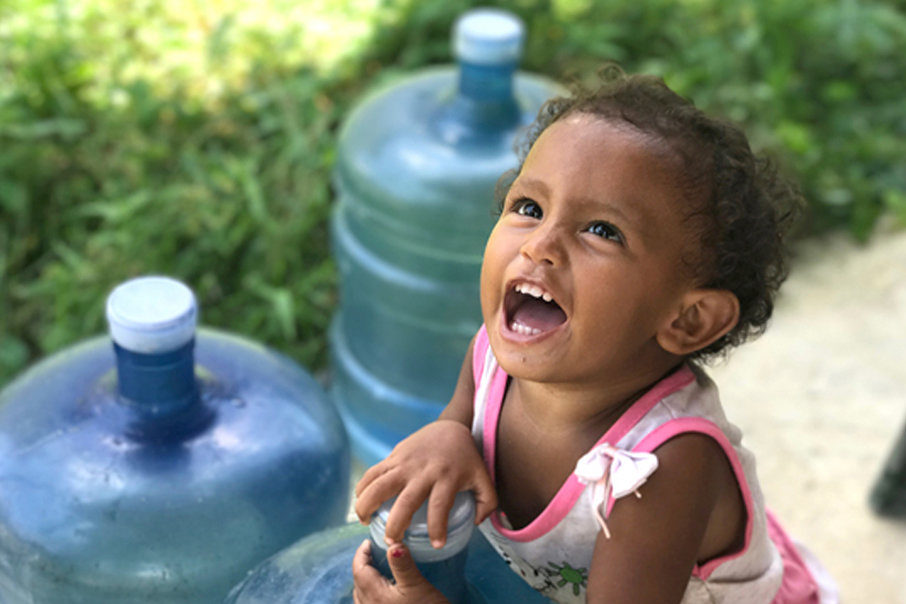
El acceso al agua potable y saneamiento es un derecho humano, sin embargo, millones de personas en Venezuela no tienen este derecho protegido o garantizado.
Una de las más importantes medidas preventivas que la Organización Mundial de la Salud ha recomendado para evitar la trasmisión del virus SARS-CoV2 es el frecuente lavado y desinfección de manos. A pesar de esto, en Venezuela millones de personas no pueden hacerlo.
En 2018, al menos el 82% de la población no recibía servicio continuo de agua y el 75% de los centros de salud públicos informó tener problemas con el suministro de agua. La Comisión Internacional de Juristas (CIJ) ha señalado problemas similares sobre el impacto de la pandemia del COVID-19 en otros lugares del mundo, por ejemplo en India y Sudáfrica, aunque la escasez de agua sigue siendo especialmente aguda en Venezuela.
En 2020, el Observatorio Venezolano de Servicios Públicos informó que el 63.8% de la población consideraba que el servicio de agua era inadecuado para enfrentar la pandemia de COVID-19 y solo el 13.6% de la población en ciudades tenía suministro regular de agua.
La Oficina de la ONU para la Coordinación de Asuntos Humanitarios (OCHA) recientemente informó que varias regiones en Venezuela tenían un acceso limitado al agua, señalando que “existía una necesidad urgente de asegurar una necesidad crítica de garantizar servicios adecuados de agua, saneamiento e higiene en salud, nutrición, instalaciones de educación y protección” (Traducción propia).
Incluso antes del inicio de la pandemia por COVID-19, el país ya estaba enfrentando una “emergencia humanitaria compleja” (una crisis humanitaria donde existe un considerable colapso de la autoridad que en Venezuela no es resultado de un desastre ambiental ni un conflicto armado), donde la falta de acceso al agua afecta al menos 4.3 millones de personas.
Impactos de la falta de agua en un sistema de salud en crisis
El agua es indispensable para el consumo doméstico, para cocinar y limpiar; también es necesaria para la protección efectiva del derecho a la salud, que ocupa un lugar central para frenar la pandemia de COVID-19. Los hospitales y otros establecimientos de salud en Venezuela tienen un acceso limitado al agua y sufren cortes del servicio eléctrico, lo cual afecta a la mayoría de los servicios de salud incluyendo las pruebas sobre COVID-19 y su tratamiento.
De acuerdo con el índice Global de Seguridad Sanitaria que evalúa las capacidades de seguridad sanitaria mundial, Venezuela ocupó el puesto 176 entre 195 países en 2019. Esto evidencia el inmenso problema que tenía el sistema de salud para abordar la devastadora emergencia de salud causada por la pandemia de COVID-19; este problema solo se exacerba por el limitado acceso limitado al agua en los establecimientos de salud.
La escasez de agua en establecimientos de salud contribuye a crear un ambiente insalubre y antihigiénico. Los centros de salud, al igual que los hogares, no pueden ser adecuadamente higienizados debido a la falta de agua y a la carencia de artículos de limpieza.
Esto incrementa drásticamente los riesgos para los trabajadores de la salud, los pacientes y, en consecuencia, para sus familias, así como para la comunidad y el público en general. Algunos servicios de salud críticos, como las instalaciones de diálisis y la cirugía en hospitales públicos, han sido cerrados o restringidos debido a condiciones insalubres, lo que ha venido limitando el acceso a los servicios de salud y ha amenazado el derecho a la salud de las personas en el país.
Human Rights Watch (HRW) ha descrito cómo las restricciones en el acceso al agua en los hospitales se han convertido en un problema creciente desde 2014. Estas restricciones pueden variar desde “fin[es] de semana y, en otras ocasiones, directamente no llega por cinco días”. HRW también encontró que “[l]a negativa a publicar datos epidemiológicos por parte de las autoridades debilita significativamente su capacidad de respuesta ante la pandemia.”
Bajo estas condiciones, los trabajadores sanitarios no pueden atender de forma segura a los pacientes de COVID-19 o disfrutar de su derecho a condiciones seguras e higiénicas de trabajo. De acuerdo con la organización Programa Venezolano de Educación Acción en Derechos Humanos (PROVEA), al menos 332 trabajadores de la salud en Venezuela han fallecido desde el comienzo de la pandemia de COVID-19 debido a la falta de equipos de protección personal y otras medidas sanitarias.
Protestas Públicas
Las compañías estatales encargadas del servicio de agua no publican ninguna clase de informes relacionados con la calidad del agua, a pesar de que las ONG locales les han requerido esa información. A través de los años se han realizado varios proyectos para mejorar la calidad del acceso al agua, algunos con financiamiento de entes internacionales como el Banco Interamericano de Desarrollo, pero las autoridades del país no han dispuesto información pública al respecto. Según Transparencia Venezuela ninguno de estos proyectos está actualmente operativo en el país.
La Alta Comisionada para los Derechos Humanos de Naciones Unidas dijo el 11 de marzo de 2021 que “el acceso a los servicios básicos, como la asistencia médica, el agua, el gas, los alimentos y la gasolina, ya escaseando, se ha visto aún más limitado por el efecto de la pandemia. Esto ha generado protestas sociales y ha agravado la situación humanitaria.”
En 2020, según el Observatorio Venezolano de Conflictividad Social, en medio de la pandemia de COVID-19 y las restricciones de encierro obligatorio, al menos 1833 protestas se realizaron en todo el país reclamando por agua potable. Frecuentemente, las autoridades resolvían estas demandas enviando agua en camiones cisterna.
La frágil situación contribuyó y agravó la falta de acceso al agua potable en el país y las condiciones de vulnerabilidad en las que viven las personas las ha obligado a salir a las calles a reclamar sus derechos en medio de la pandemia. Las protestas públicas en tiempos de pandemia crean riesgos de contraer COVID-19.
Además, en la actual situación de derechos humanos de Venezuela también plantea riesgos de detención arbitraria y uso excesivo de fuerza, que se han vuelto prácticas comunes por parte de las autoridades.
Defendiendo del derecho al agua y al saneamiento en Venezuela
Venezuela es parte del Pacto Internacional de Derechos Económicos, Sociales y Culturales y de la Convención Internacional sobre los Derechos del Niño. Ambos tratados establecen obligaciones relacionadas con el derecho al agua y al saneamiento. El Comité de Derechos Económicos, Sociales y Culturales ha descrito el derecho al agua como “una de las condiciones fundamentales para la supervivencia” y ha aclarado que los Estados deben priorizar el acceso a los recursos hídricos para prevenir “el hambre y las enfermedades“. No cualquier suministro de agua cumple con este estándar: el acceso al agua debe ser “suficiente, salubre, aceptable, accesible y asequible“.
En el contexto de la pandemia de COVID-19, el Comité ha recordado a los Estados que el derecho al agua debe incluir agua, jabón y desinfectante para todos, de forma continua. Por lo tanto, los Estados deben hacer inversiones adecuadas en los sistemas de agua y saneamiento, incluyendo el uso de la cooperación internacional para ese fin, para contrarrestar efectivamente las pandemias mundiales y mitigar el impacto de la pandemia sobre personas que viven en condiciones vulnerables.
La falta de acceso al agua es un problema de larga data en Venezuela. Las autoridades deben combinar la acción de asistencia inmediata con políticas de largo plazo para garantizar el derecho al agua potable y al saneamiento en el país, de acuerdo con estándares internacionales. Esto incluye la existencia de un mecanismo de monitoreo independiente sobre el suministro de agua en el país.
Durante la pandemia de COVID-19, las autoridades venezolanas deben implementar urgentemente políticas de emergencia para suministrar agua potable en todas las áreas con escasez de agua, sin ningún tipo de discriminación. Se debe dar prioridad a la garantía del acceso al agua en los centros de salud y al suministro de jabón, materiales de limpieza y desinfectante para manos.
Finalmente, las autoridades venezolanas deben adoptar políticas transparentes de acceso a la información pública, de manera completa y oportuna, que permitan comprender la situación epidemiológica y los datos sobre la calidad y accesibilidad del agua.
Esta opinión editorial fue originalmente publicada en el Blog de la Fundación para el Debido Proceso “JUSTICIA EN LAS AMÉRICAS”.
Apr 9, 2021
An opinion piece by Carlos Lusverti, ICJ Latin America consultant.
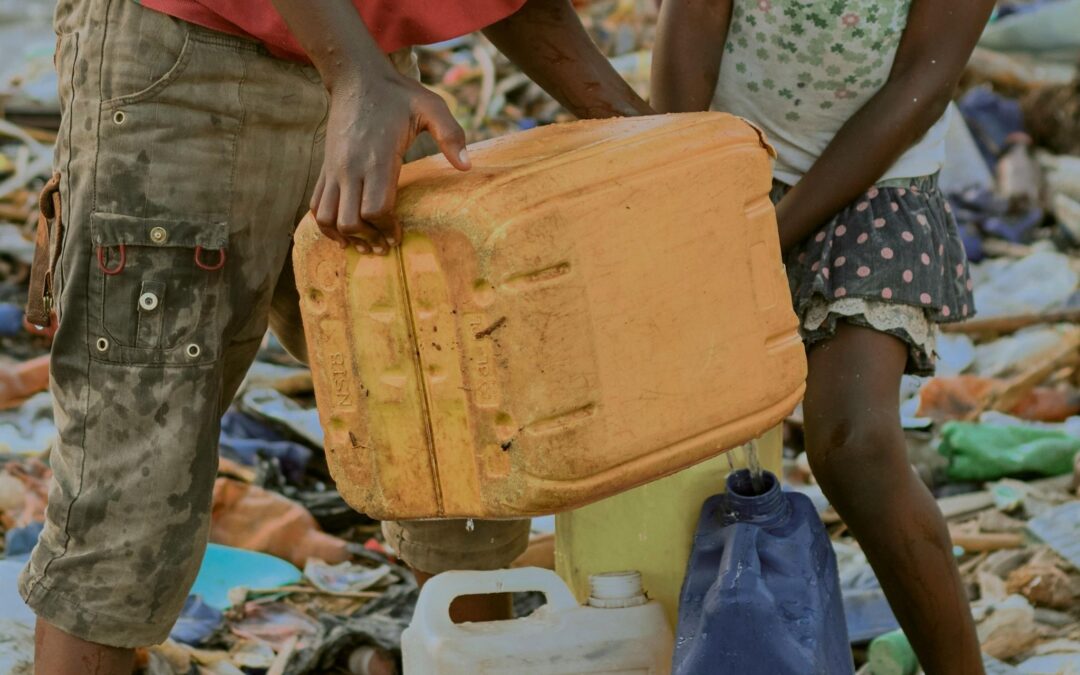
Access to safe water and sanitation is a human right, yet millions of persons in Venezuela do not have this right protected or guaranteed in the country.
One of the most important preventive measures that the World Health Organization recommends to avoid the transmission of the SARS-CoV2 virus is for people to constantly wash and sanitize hands. Despite this, millions of people cannot do this in Venezuela.
In 2018, at least 82% of the population did not receive continuous water service and 75% of public healthcare centers reported problems accessing the water supply. Similar issues have been raised by the ICJ with respect to the impact of the COVID-19 pandemic elsewhere, for example in India and South Africa.
Yet water scarcity remains particularly acute in Venezuela. In 2020, the Venezuelan Observatory of Public Services reported that 63.8% of the population considered the water service to be inadequate in the face of the COVID-19 pandemic, and a mere 13.6% of the population in cities had a regular water supply.
The United Nations Office for the Coordination of Humanitarian Affairs (OCHA) has recently reported that several regions inside Venezuela had limited access to water, indicating that “there [was] a critical need to ensure adequate water, sanitation and hygiene services in health, nutrition, education and protection facilities”.
Even before the COVID-19 pandemic arrived, the country already was facing a “complex humanitarian emergency” (a humanitarian crisis where there is a considerable breakdown of authority that in Venezuela is not due to an environmental disaster or armed conflict), and the lack of access to water affected at least 4.3 million persons.
Impacts of the lack of water on a healthcare system in critical condition
While water is needed for home consumption, cooking and cleaning, it is also required for effective protection of the right to health, which is at the very core of halting the COVID-19 pandemic. Hospitals and other healthcare facilities in Venezuela have limited access to water and suffer from electricity shortages, which affects the provision of most health services including COVID-19 testing and treatment.
According to the Global Health Security Index on the assessment of global health security capabilities, Venezuela was ranked 176th out of 195 countries in 2019.
This evidences the immense problem the healthcare system has had in addressing the devastating health emergency caused by the COVID-19 pandemic, a problem which is only exacerbated by limited access to water in health facilities.
Water shortages in health facilities contribute to an unsanitary and unhygienic environment. Healthcare centers, like homes, cannot be properly sanitized due to the lack of water and the lack of cleaning supplies. This dramatically increases the health risk for healthcare workers, patients and, consequently, their families, communities and the general public.
Some critical health services such as dialysis and surgery facilities in public hospitals have been closed or restricted due to unsanitary conditions limiting the general access to health services and threatening the right to health of persons in the country.
Human Rights Watch (HRW) has described how the restriction on access to water in hospitals has been a growing problem since 2014. This situation could vary from “an entire weekend and at other times lasting as long as five days”. HRW also found that the response of the Venezuelan authorities to COVID-19 “is severely undermined by [the authorities’] failure to publish epidemiological data, which is critical to address a pandemic.”
Under these conditions, healthcare workers cannot safely attend to COVID-19 patients, or enjoy their own rights to safe and healthy working conditions. According to Programa Venezolano de Educación Acción en Derechos Humanos (PROVEA), at least 332 health workers in Venezuela have died since the beginning of the COVID-19 pandemic due to lack of personal protective equipment and other health measures.
Public Protests
State owned companies in charge of water services do not publish any kind of reports related to water quality, even though local NGOs have requested such information.
Throughout the years, several projects, including some with international funding such as from the Inter-American Development Bank, have been established to improve the quality of access to water, but no information about it is publicly available by the country authorities. Transparencia Venezuela has reported that none of these projects are currently active in the country.
The UN High Commissioner for Human Rights said on 11 March 2021 that “access to basic services like medical assistance, water, gas, food, petrol, has continued to be scarcer, and [that] [t]his contributed to sparking social protests, and severely compounded the humanitarian situation”.
In 2020, in the midst of the COVID-19 pandemic and the lockdown restrictions, at least 1,833 different protests have taken place around the country demanding potable water, according to the Venezuelan Observatory of Social Conflict. Usually authorities resolve the demands by sending water in trucks.
The fragile situation – contributed to and worsened by the lack of access to safe water in the country and the vulnerable conditions in which people live – has compelled them to go into the streets to demand their rights in the middle of a pandemic. Public protests in the time of pandemic create risks of contracting COVID-19. And in the present human rights climate of Venezuela it also poses risks of arbitrary detention and excessive use of force, which are now common practices by the authorities.
Upholding the right to water and sanitation in Venezuela
Venezuela is party to the International Covenant on Economic, Social and Cultural Rights and the Convention on the Rights of the Child. Both treaties establish obligations related to the right to water and sanitation. The Committee on Economic, Social and Cultural Rights has described the right to water as “one of the most fundamental conditions for survival” and has clarified that States must prioritize access to water resources for preventing “starvation and disease”. Not just any water provision meets this standard: water must be “sufficient, safe, acceptable, physically accessible and affordable”.
In the context of the COVID-19 pandemic, the Committee has reminded States that the right to water must be understood to include water, soap and sanitizer for all, on a continuous basis. Thus, States must make adequate investment in water and sanitation systems, including utilizing international cooperation to that end, to effectively counter global pandemics and to mitigate the impact of the Covid-19 pandemic on persons living under vulnerable conditions.
Lack of access to water is a long-standing issue in Venezuela. The authorities should combine immediate relief action and long-term policies to guarantee the right to safe water and sanitation in the country in accordance with international standards. There should be an independent monitoring mechanism of water supply in the country.
During the COVID-19 pandemic, Venezuelan authorities must urgently implement emergency policies to provide safe water in all water-scarce areas without any type of discrimination. Priority should be given to ensuring water access in healthcare facilities and the provision of soap, cleaning materials and hand sanitizer.
Finally, Venezuelan authorities should adopt transparent policies that allow for access to public information, in a complete and timely manner, to facilitate the understanding of issues such as the epidemiological situation and data on water quality and accessibility.
This op-ed was originally published in the blog “JUSTICIA EN LAS AMÉRICAS” of the Due Process Law Foundation
Apr 9, 2021 | Advocacy, News
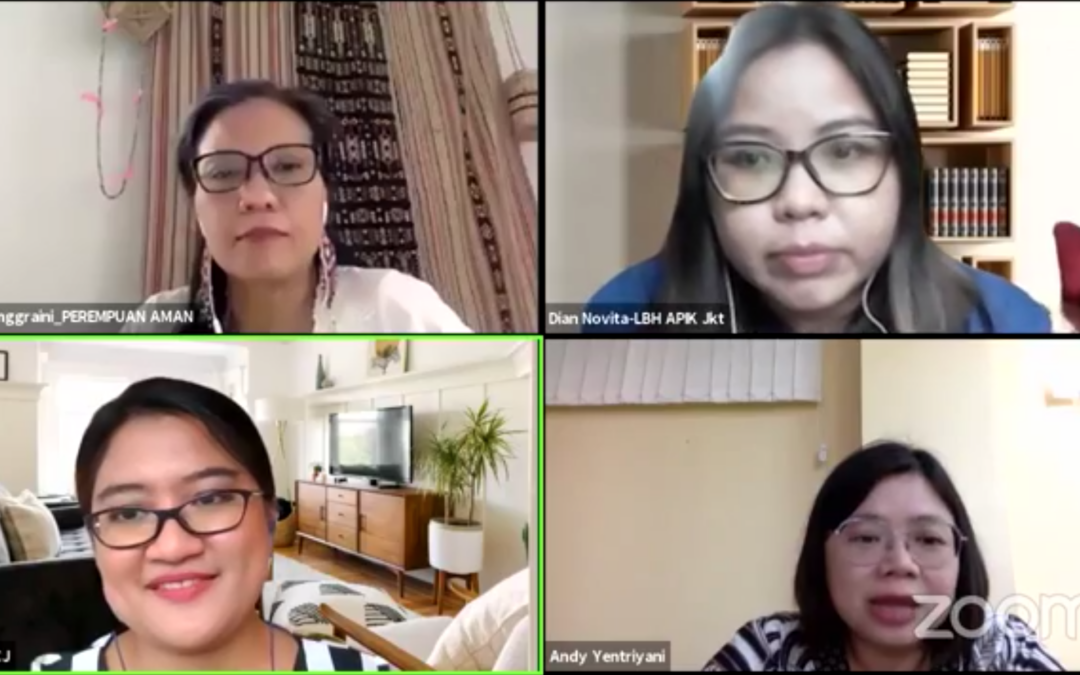
The ICJ, together with the Office of the United Nations High Commissioner for Human Rights (OHCHR) and the National Commission on Violence Against Women (Komnas Perempuan) in Indonesia, held a webinar on 6 April to consider ways to combat discrimination and violence faced by Indonesian women.
In particular, participants identified advocacy strategies towards strengthening Indonesia’s compliance with its international legal obligations under the UN Convention on the Elimination of all forms of Discrimination against Women (CEDAW).
The webinar was broadcast live on Facebook and showcased the Bahasa Indonesia version of CEDAW video and attended by more than 50 women human rights defenders. The participants discussed the adequacy of measures taken by the Indonesian government to implement recommendations issued by the Committee on the Elimination of Discrimination against Women (CEDAW Committee) after it had reviewed Indonesia’s report in 2012. These recommendations included a call to repeal discriminatory by-laws adopted at the provincial level that restrict women’s rights in Aceh province and elsewhere; the adoption of measures taken to ensure that the draft or proposed amendments to the Criminal Code Bill and other bills do not contain provisions that discriminate against women; the need to address gender based violence and sexual violence against women including indigenous women; and the protection of women human rights defenders.
Devi Anggraini, Chairperson of Association of Indigenous Women of the Archipelago (Perempuan Aman) said although Indonesia had ratified CEDAW through Law No. 7 year 1984 to protect the individual rights of Indonesian women, policies had yet to effectively protect the collective rights of indigenous women. She shared her concerns regarding discrimination against Indigenous women in the context of large-scale development projects, exploitation of natural resources, deforestation, and expansion of agriculture, as well as their access to land and resources.
“The Indonesian government does not seek ‘free, prior, and informed consent’ by the affected indigenous people, especially indigenous women and this has caused 87.8% of indigenous women to lose control of their traditional lands,” said Devi.
Dian Novita, Coordinator of Policy Advocacy Division from Legal aid for Women and Children (LBH APIK Jakarta) raised concern about discriminatory draft laws and provincial laws.
“LBH APIK assists many cases of women who are victims of gender-based violence in which their videos containing private sexual conducts were distributed online. However, they were criminalized under the pornography law and Electronic Information’s and Transactions (EIT) Law. We are currently trying to pursue judicial review of the ETI Law from women’s perspective”, said Dian.
Andy Yentriyani, Head of Komnas Perempuan said that despite existing challenges and new obstacles, there had been some progress in responding to the Recommendations of the CEDAW Committee from the previous cycle, such as the enactment of Supreme Court Regulation no.3 year 2017 on guidance for judges in adjudicating cases involving women and similar gender sensitive regulation released by the Attorney General’s Office and the Police. “It is now our duty to monitor that these policies and training are effectively implemented. For example, we gained extraordinary support from the civil society during the campaign urging the Government to adopt the Sexual Violence Bill and this expanded participatory space for constructive dialogue for public to understand more about State responsibilities to protect and promote the fundamental rights of women.”
Watch
Contact
Ruth Panjaitan, Legal Adviser for Indonesia, e: ruthstephani.panjaitan(a)icj.org
Apr 7, 2021 | News
Victims of gross human rights violations must be provided with effective reparations and guarantees of non-recurrence by Tunisia’s Specialized Criminal Chambers (SCC), judges and prosecutors asserted during a workshop held by the ICJ and the Association of Tunisian Magistrates (AMT) on 3 and 4 April.
The workshop highlighted the need for the SCC to adopt restitution, compensation, rehabilitation and satisfaction measures to achieve to the fullest extent possible reparation for material and moral damage suffered by victims of gross human rights violations in Tunisia.
Participants further emphasized that SCC decisions should include recommendations on guarantees of non-recurrence, including on legal and institutional reforms.
The workshop was attended by more than 25 Tunisian judges and prosecutors attached to the 13 Specialized Criminal Chambers. Discussions involved also international experts and ICJ representatives.
“It is important that the SCC, consistent with international standards, adopt a comprehensive notion of victims and persons entitled to reparation,” said Philippe Texier, ICJ Commissioner.
“In this respect, reparative measures should focus not only on direct victims, but also indirect victims, including the immediate family or dependants of the direct victim and persons who have suffered harm in intervening to assist victims,” he added.
Federico Andreu-Guzmán, international expert, noted the non-derogable nature of the right to reparation under international law and that SCC should seek to ensure that all their decisions comply with this right.
“SCC decisions should include wide-reaching recommendations in order to guarantee that the violations will not be repeated,” said Said Benarbia, Director of ICJ’s Middle East and North Africa Programme.
The workshop also offered the opportunity to participants to discuss a set of recommendations targeting the High Judicial Council and its role in supporting the SCC.
The recommendations, which were developed by a group of SCC judges and prosecutors following the ICJ’s roundtable of 13-14 March, aim to find joint approaches to address ongoing procedural obstacles before the SCC and will be subject of future meetings and roundtable discussions organized by the ICJ and the AMT.
Contact
Valentina Cadelo, Legal Adviser, ICJ Middle East and North Africa Programme, e: valentina.cadelo(a)icj.org
Asser Khattab, Research and Communications’ Officer, ICJ Middle East and North Africa Programme, e: asser.khattab(a)icj.org
Apr 2, 2021 | News
The Thai authorities’ adoption of a draft law to regulate non-profit groups would strike a severe blow to human rights in Thailand, several international organizations said today. The bill is the latest effort by the Thai government to pass repressive legislation to muzzle civil society groups and non-governmental organizations (NGOs).
The “Draft Act on the Operations of Not-for-Profit Organizations” contains provisions that would have a deeply damaging impact on those joining together to advocate for human rights in the country, in violation of their right to freedom of association and other rights. The Thai government provided a perfunctory and inadequate consultation process for the bill. Because of fundamental problems in the draft law, the authorities should withdraw the draft entirely and ensure that any future law regulating NGOs strictly adheres to international human rights law and standards, the organizations said.
“This draft law poses an existential threat to both established human rights organizations and grassroots community groups alike. If enacted, this law would strike a severe blow to human rights by giving the government the arbitrary power to ban groups and criminalize individuals it doesn’t like,” said Maria Chin Abdullah, member of ASEAN Parliamentarians for Human Rights (APHR) and a Malaysian Member of Parliament (MP).
“This draft blatantly breaches Thailand’s own constitution and its human rights obligations. A thriving, independent and free civil society is an essential component of a rights-respecting, open society. The authorities should withdraw this deeply flawed draft and go back to the drawing board,” said Brad Adams, Director of Human Rights Watch’s Asia Division.
Arbitrary and vaguely-defined powers
According to the Draft Act (in Section 3), the government would have wide discretion as to which organizations will be exempted from the application of the law.
The Draft Act (in Section 4) also uses an overbroad definition of not-for-profit organizations (NPO), which has left it open to abusive and arbitrary application by the authorities.
The broad terms of the Draft Act would allow unequal treatment of certain disfavoured groups and carry dire consequences for associations critical of the government, with little scope to legally challenge government decisions. Groups as varied as academic institutions, community groups, sports associations, art galleries and ad hoc disaster relief collectives could be deemed to be NPOs and therefore be subject to the law’s mandatory registration requirement and potential criminal prosecution. The vague and overbroad definition of ‘not-for-profit organizations’ amounts to a violation of the “legality” principle, which requires any restriction to freedom of association and other fundamental freedoms be clearly “prescribed by law”.
Registered and unregistered groups alike must be allowed to function freely and be able to enjoy the right to freedom of association on equal terms. In order to enable individuals to exercise their right to freedom of association, States need to provide a simple, accessible, non-burdensome and non-discriminatory notification process for organizations to obtain their registration and must not require the authorities’ prior authorization.
“The draft law’s broad terms could be applied against virtually any group, no matter how small or informal,” said David Diaz-Jogeix, Senior Director of Programmes at ARTICLE 19. “If passed in its current form, the draft law will likely cause entire sectors of Thai civil society to collapse or take their activities underground.”
Excessive punishments
“Those found in breach of this law’s many faulty provisions risk lengthy prison sentences. Targetted NGOs could have their very existence extinguished at the whim of governmental authorities – enabling the silencing of critical and independent voices in Thailand,” said Ian Seiderman, Legal and Policy Director at the International Commission of Jurists (ICJ).
By making the registration of an NPO mandatory (in Section 5) and rendering any unregistered group illegal, the Draft Act would violate the right to freedom of association and severely impede the work of groups that defend and promote human rights.
Notably, under the proposed law (in Section 10), anyone found to belong to an unregistered association that operates within Thailand could be jailed for up to five years, fined up to 100,000 THB (approx. 3,200 USD), or both. This would effectively criminalize people solely for their peaceful exercise of the right to freedom of association.
“Paranoia” of foreign funding
“Around the world, bogus claims regarding foreign funding for NGOs are constantly used by repressive governments to distract from their own human rights record and to stigmatize and fuel paranoia regarding those who speak truth to power – often simply because they are critical of the government,” said Shamini Darshni Kaliemuthu, FORUM-ASIA’s Executive Director. “Now Thailand seems to want to follow suit, adding itself to an unwelcome list of rights-abusing governments trying to control or severely limit NGO funding.”
The Draft Act (in Section 6) places discriminatory restrictions on organizations that receive foreign funding. Authorities have the sole discretion to determine which activities may be carried out using funds from foreign or international sources, leaving ample room for abuse.
Moreover, the Draft Act states as a rationale for enacting the law: “several [NPOs] accepted money [from foreign sources], and used them to fund activities that may affect the relationship between the Kingdom of Thailand and its neighboring countries, or public order within the Kingdom.” This justification stigmatizes organizations that use foreign funding by equating their objectives to those of “foreign agents”. The government has failed to recognize the legitimate work carried out by organizations and their contribution to the rule of law and development of the country, merely because they are funded by foreign sources.
Privacy invaded and censorship on expression
“In addition to the ongoing criminalization of online expression in Thailand, the Draft Act gives sweeping, unchecked and discretionary administrative powers to the authorities to further obstruct the work of human rights organizations,” said Emerlynne Gil, Amnesty International’s Deputy Regional Director for Research.
The Draft Act not only confers the power to the authorities to closely scrutinize organizations, it also contains provisions to subject NPOs’ offices and members to invasive surveillance and searches without judicial oversight. The Draft Act (in Section 6) allows the authorities to enter civil society organizations’ offices and make copies of their electronic communications traffic data without prior notice or a court warrant. This is a serious threat to the right to privacy and to freely express the ideas and opinions of its members.
Without prior notice or a valid warrant, this arbitrary power clearly violates domestic and international standards on due process of law.
“In going down this route, Thailand stands to poison the space for civil society. The passage of this law would severely undercut Thailand’s claims to be a rights-respecting country with a flourishing civil society,” said David Kode, Advocacy and Campaigns Lead at CIVICUS.
Contact
Ian Seiderman, ICJ Legal and Policy Director, ian.seiderman(a)icj.org, +41 229793800
Download
The statement with additional background information and list of organizations in English and Thai.
Submissions
Amnesty International
Article 19
Human Rights Watch
International Commission of Jurists – English and Thai