Sep 30, 2020 | Artículos, Eventos, Noticias
Durante décadas, las víctimas de desapariciones forzadas y ejecuciones extrajudiciales en América Latina han demando justicia, verdad y reparación. A pesar de estos esfuerzos, la impunidad en estos delitos es alta. En algunos casos, las víctimas han esperado por más de cuatro décadas para que se haga justicia.
Como parte de su estrategia para promover la rendición de cuentas en casos de graves violaciones a los derechos humanos alrededor del mundo, la CIJ, junto con sus socios, está implementando un proyecto regional para promover justicia en casos de ejecuciones extrajudiciales y desapariciones forzadas en Colombia, Guatemala y Perú.
El proyecto cuenta con el apoyo de la Unión Europea. Uno de los resultados del proyecto ha sido apoyar la elaboración de tres casos emblemáticos por parte de los socios locales de la CIJ.
En Colombia, para ilustrar uno de los patrones de ejecuciones extrajudiciales, la Asociación de Red Defensores y Defensoras de Derechos Humanos (dhColombia) produjo un documento sobre tres casos de ejecuciones extrajudiciales cometidos de 2005 a 2008. El documento Una práctica sistemática ejecuciones extrajudiciales en el eje cafetero (2006-2008) presenta las dificultades que las víctimas y sus abogados han enfrentado para demostrar la responsabilidad de demando en estos casos.
En Perú, el Instituto de Defensa Legal (IDL) documentó la desaparición forzada de estudiantes universitarios y profesores entre 1989 y 1993, en el momento más argüido del conflicto interno peruano. En el documento Los desaparecidos de la Universidad Nacional del Centro IDL describe el difícil camino jurídico que las víctimas han enfrentado, para llevar a la justicia a los agentes del Estado que estarían involucrados en estos crímenes.
En Guatemala, para subrayar la manera en como se cometieron desapariciones forzadas contra las comunidades rurales en el marco del conflicto armado guatemalteco, la Asociación de Familiares de Detenidos-Desaparecidos de Guatemala (Famdegua) escribió acerca de la desaparición de más de 500 personas en la región de las Veparaces. En el informe Las desapariciones forzadas en la región de las Verapaces se presenta la historia de cinco de estos casos.
Estos tres informes contribuyen a comprender la prevalencia de estas violaciones en América Latina y las opciones disponibles para hacer frente a la impunidad.
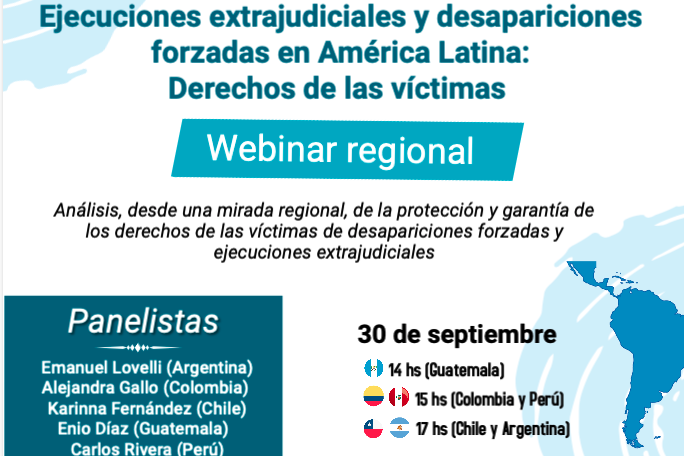
El 30 de septiembre de 2020, la CIJ organizará un webinar regional para discutir la protección y garantía de los derechos de las víctimas de desapariciones forzadas y ejecuciones extrajudiciales en Argentina, Colombia, Chile, Guatemala y Perú. El webinar será transmitido en vivo en la página de Facebook de la CIJ, a las 14 horas (hora de Guatemala) / 15 horas (hora de Colombia y Perú) / 17 horas (hora de Chile y Argentina).
Contactos:
Kingsley Abbott, Coordinador de la iniciativa global de rendición de cuentas de la CIJ. Correo electrónico: kingsley.abbott(a)icj.org
Carolina Villadiego, Asesora Legal, América Latina y coordinadora regional del proyecto. Correo Electrónico: carolina.villadiego(a)icj.org
Rocío Quintero M, Asesora Legal, América Latina. Correo electrónico: rocio.quintero(a)icj.org
Sep 30, 2020 | Noticias
Venezuela está sufriendo una crisis humanitaria y de derechos humanos sin precedentes que se ha profundizado debido a la negligencia del gobierno autoritario y la ruptura del estado de derecho en el país.
La Organización Internacional para las Migraciones (OIM) ha estimado que alrededor de 5.2 millones de venezolanos han dejado el país, llegando la mayoría como refugiados e inmigrantes a países vecinos.
En 2018, la Oficina del Alto Comisionado de las Naciones Unidas para los Derechos Humanos (ACNUDH) calificó esta situación de los derechos humanos como “una espiral descendente que no parece tener fin“.
La situación del derecho a la salud en Venezuela y su sistema de salud pública mostraron problemas estructurales antes de la pandemia, y la Alta Comisionada la describió como una “dramática crisis sanitaria y (…) un completo colapso del sistema de atención sanitaria”.
Recientemente, la ACNUDH presentó un informe al Consejo de Derechos Humanos que mencionó, entre otras cuestiones, los ataques a los derechos de los pueblos indígenas en el Arco Minero del Orinoco (AMO).
Los derechos de los pueblos indígenas y los proyectos mineros en el AMO antes de la pandemia de la COVID-19
Los pueblos indígenas han sido tradicionalmente olvidados por las autoridades gubernamentales venezolanas y condenados a vivir en la pobreza.
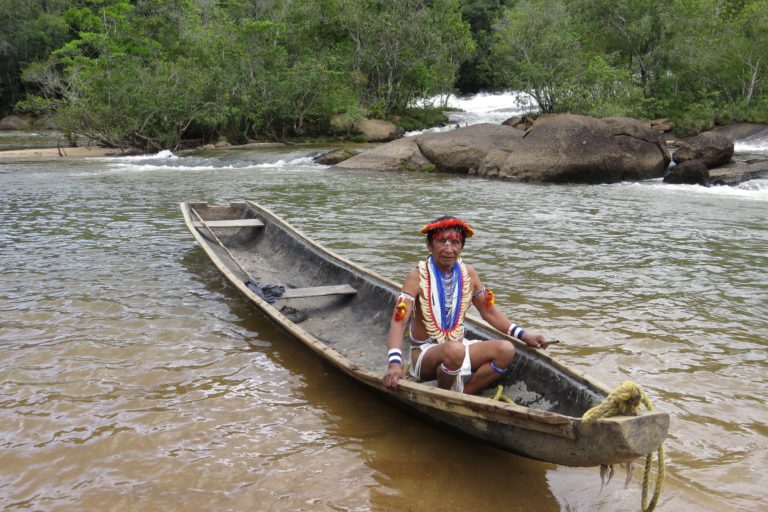
Durante la crisis humanitaria han sufrido nuevos abusos debido a la actividad minera y a la violencia que ocurre en sus territorios.
En 2016, el gobierno venezolano creó la Zona de Desarrollo Estratégico Nacional del Arco Minero del Orinoco a través del Decreto presidencial No. 2248, como un proyecto de megaminería enfocado, principalmente, en la extracción de oro en un área de 111.843.700 kilómetros cuadrados.
El AMO se ubica al sur del río Orinoco en los territorios amazónicos de Venezuela y abarca tres estados: Amazonas, Bolívar y Delta Amacuro. Es el hábitat de varios grupos étnicos indígenas a los que no se les consultó de manera adecuada antes de la implementación del proyecto.
El derecho a la tierra de los pueblos indígenas está reconocido en la Constitución de Venezuela. Sin embargo, como reportó la ONG Programa Venezolano de Educación- Acción en Derechos Humanos (PROVEA), las autoridades no han mostrado avances en la demarcación y protección de los territorios indígenas desde 2016.
Varias organizaciones indígenas y otros movimientos sociales han expresado su preocupación y rechazo al proyecto del AMO.
La implementación de este proyecto ha impactado de manera negativa los derechos de los pueblos indígenas a la vida, la salud y un medio ambiente seguro, saludable y sostenible.
Human Rights Watch, Business and Human Rights Resource Center, organizaciones no gubernamentales locales, movimientos sociales y la ACNUDH, han documentado la destrucción de la tierra y la contaminación de los ríos debido a la deforestación y la actividad minera, que también está contribuyendo al aumento del paludismo y otras enfermedades.
Las mujeres y los niños indígenas están entre los más afectados. La Organización Panamericana de la Salud (OPS) ha reportado que “[l]os pueblos indígenas que viven en la zona fronteriza de Venezuela son sumamente vulnerables a las enfermedades epidémicas”, y ha planteado una preocupación especial sobre el pueblo Warao (que vive en la frontera entre Venezuela y Guyana), y el pueblo Yanomami (que vive en la frontera entre Venezuela y Brasil).
Las mujeres y los niños también corren grandes riesgos de explotación sexual, laboral y violencia de género en el contexto de las actividades mineras. El reciente informe de la Alta Comisionada menciona que desde 2016 hay un fuerte incremento “en prostitución, explotación sexual y tráfico en áreas mineras, incluyendo a niñas adolescentes”.
La Oficina de Coordinación de Asuntos Humanitarios de las Naciones Unidas (OCHA) y el Fondo de las Naciones Unidas para la Infancia (UNICEF) han determinado una tendencia entre los adolescentes a abandonar la escuela, en particular entre los 13 y los 17 años. Los adolescentes indígenas se ven gravemente afectados, ya que muchos niños se van a trabajar en las minas.
La violencia y la delincuencia también han aumentado en el AMO. Organizaciones criminales y grupos guerrilleros y paramilitares están presentes en la zona, y el gobierno venezolano ha ampliado su presencia militar.
Los dirigentes indígenas y los defensores de derechos humanos han sido objeto de ataques y amenazas; además, persisten las denuncias de casos de desapariciones forzadas y ejecuciones extrajudiciales y arbitrarias.
Situación actual de la pandemia de COVID-19
La pandemia por COVID-19 y la falta de una respuesta adecuada han agravado la situación.
El Gobierno declaró el estado de emergencia (estado de alarma) el 13 de marzo y estableció un confinamiento obligatorio y medidas de distanciamiento social. Sin embargo, las actividades mineras han continuado sin protocolos sanitarios adecuados para prevenir la propagación de la pandemia.
El estado Bolívar, el más grande del país y que está ubicado en el Arco Minero del Orinoco, tiene entre el mayor número de casos confirmados de COVID-19 que incluye a miembros de pueblos indígenas.
La respuesta de las autoridades venezolanas a la pandemia en estos territorios no ha considerado medidas culturalmente apropiadas para las poblaciones indígenas.
Adicionalmente, aunque las autoridades establecieron un grupo de hospitales e instalaciones médicas llamados “hospitales centinela” para atender a personas con síntomas de COVID-19, estos se encuentran en las ciudades y las comunidades indígenas viven lejos de ellas.
Además, la falta de gasolina en el país agrava los obstáculos para trasladarse fácilmente a estos centros.
Las organizaciones de la sociedad civil y los líderes indígenas se quejan de la falta de pruebas de COVID-19 y de la manipulación de los datos que dan cuenta de cuál es la situación real de la pandemia.
Además, la ACNUDH reportó la detención arbitraria de por lo menos tres profesionales de la salud por denunciar la falta de equipo básico y por proporcionar información sobre la situación de COVID-19, y destacó que hay “restricciones al espacio cívico y democrático, incluso bajo el “estado de alarma” decretado en respuesta a la pandemia COVID-19″.
Para leer el artículo completo: Venezuela-COVID19 indigenous-News Feature articles-2020-SPA
Sep 30, 2020 | Feature articles, News
Venezuela is suffering from an unprecedented human rights and humanitarian crisis that has deepened due to the dereliction by the authoritarian government and the breakdown of the rule of law in the country.
The International Organization for Migration (IOM) has estimated that some 5.2 million Venezuelans have left the country, most arriving as refugees and migrants in neighbouring countries.
The Office of the United Nations High Commissioner for Human Rights (OHCHR) in 2018 had categorized this situation of human rights, as “a downward spiral with no end in sight”.
The situation of the right to health in Venezuela and its public health system showed structural problems before the pandemic and was described as a “dramatic health crisis (…) consequence of the collapse of the Venezuelan health care system” by the High Commissioner.
Recently, the OHCHR submitted a report to the Human Rights Council, in which it addressed, among other things the attacks on indigenous peoples’ rights in the Arco Minero del Orinoco (Orinoco’s Mining Arc or AMO).
Indigenous peoples’ rights and the AMO mining projects before the covid-19 pandemic
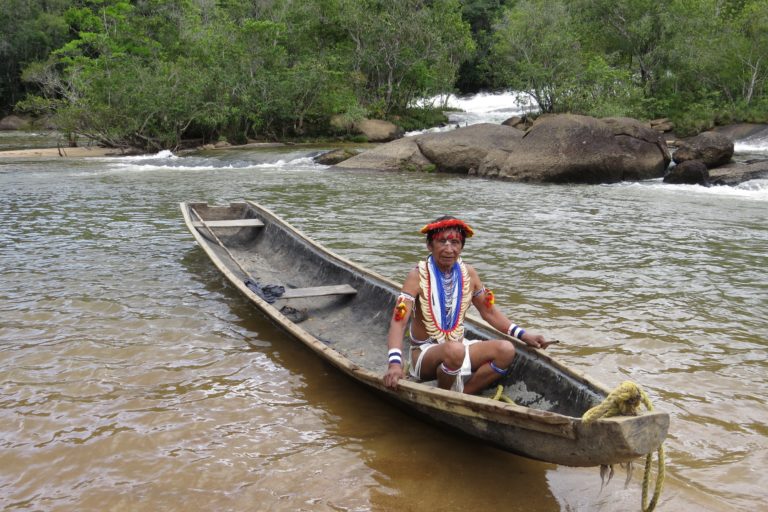
Indigenous peoples have been traditionally forgotten by government authorities in Venezuela and condemned to live in poverty. During the humanitarian crisis, they have suffered further abuses due to the mining activity and the violence occurring in their territories.
In 2016, the Venezuelan government created the Orinoco’s Mining Arc National Strategic Development Zone through presidential Decree No. 2248, as a mega-mining project focused mainly in gold extraction in an area of 111.843,70 square kilometres.
It is located at the south of the Orinoco river in the Amazonian territories of Venezuela and covers three states: Amazonas, Bolívar and Delta Amacuro.
It is the habitat for several indigenous ethnic groups[1] who were not properly consulted before the implementation of the project.
The right to land of indigenous peoples is recognized in the Venezuelan Constitution. Yet, as reported by local NGO Programa Venezolano de Educación- Acción en Derechos Humanos (PROVEA), the authorities have shown no progress in the demarcation and protection of indigenous territories since 2016.
Several indigenous organizations and other social movements have expressed concern and rejected the AMO project.
The implementation of this project has negatively impacted indigenous peoples’ rights to life, health and a safe, healthy and sustainable environment. Human Rights Watch, Business and Human Rights Resource Center, local NGO’s, social movements and the OHCHR, have documented the destruction of the land and the contamination of rivers due to the deforestation and mining activity, which is also contributing to the growth of Malaria and other diseases.
Indigenous women and children are among the most affected. The Pan-American Health Organization (PAHO) has reported that “the indigenous populations living in border areas of Venezuela are highly vulnerable to epidemic-prone diseases”, and it raised a special concern about the Warao people (Venezuela and Guyana border) and Yanomami people (Venezuela and Brazil border).
Women and children also face higher risks of sexual and labour exploitation and of gender-based violence in the context of mining activities.
The High Commissioner’s recent report mentions that there is “a sharp increase since 2016 in prostitution, sexual exploitation and trafficking in mining areas, including of adolescent girls.”
In addition, the United Nations Office for the Coordination of Humanitarian Affairs (OCHA) and the United Nations Children’s Fund (UNICEF) have identified a trend among adolescents of dropping out of school particularly between the ages of 13 and 17. Indigenous individuals are acutely affected, as many children leave to become workers at the mines.
Violence and crime have also increased in the AMO. Criminal organizations and guerrilla and paramilitary groups are present in the zone, and the Venezuelan government has expanded its military presence. Indigenous leaders and human rights defenders have been targets of attacks and threats; and there is a persistence of allegations of cases of enforced disappearances and extrajudicial and arbitrary killings.
Current situation under COVID-19 pandemic
The COVID-19 pandemic and the lack of adequate response to it has aggravated this situation.
The government declared a state of emergency (estado de alarma) on 13 March and established a mandatory lockdown and social distancing measures. Yet mining activities have continued without adequate sanitary protocols to prevent the spread of the pandemic.
The State of Bolívar -the largest state of the country which is located in the Orinoco Mining Arc- has among the highest numbers of confirmed cases of COVID-19 which have included indigenous peoples.
The Venezuelan authorities’ response to the pandemic in these territories has not considered culturally appropriate measures for them. In addition, although authorities established a group of hospitals and medical facilities called “sentinel centres” to attend persons with COVID-19 symptoms, they are located in cities while indigenous communities live far from cities.
Furthermore, the lack of petrol in the country aggravates the obstacles to easy transportation to these centres.
Civil society organizations and indigenous leaders complain about the lack of COVID-19 tests and the data manipulation of the real situation of the pandemic. Also, the OHCHR reported the arbitrary arrest of at least three health professionals for denouncing the lack of basic equipment and for providing information about the situation of COVID-19, and stressed that there are “restrictions to civic and democratic space, including under the “state of alarm” decreed in response to the COVID-19 pandemic.”
[1] At least Kari’ña, Warao, Arawak, Pemón, Ye’kwana, Sanemá o Hotï, Eñe’pa, Panare, Wánai, Mapoyo, Piaroa and Hiwi.
Download
Venezuela-COVID19 indigenous-News Feature articles-2020-ENG (full article with additional information, in PDF)
Sep 30, 2020 | News
The ICJ today welcomed the first annual rule of law report of the European Commission, which analyses the compliance of all EU Member States with rule of law standards, including on judicial independence, freedom of the media and civil society.
The report is a welcome recognition that rule of law guarantees cannot be taken for granted in any European country, and that all EU institutions must be particularly vigilant in their defence.
But the ICJ warns that the report is only valuable if it leads to strengthened EU enforcement action to address the serious rule of law crises in Poland and in Hungary.
“This report is further testimony to the actions of governments of Poland and Hungary, to deliberately and systematically dismantle protections for judicial independence and other essential rule of law protections,” said Róisín Pillay, ICJ Europe and Central Asia Programme Director.
“We need the EU to use its powers of enforcement promptly and to the full, to defend these fundamental guarantees, including through prompt progression of Article 7 and enforcement proceedings. It is welcome that the European Commission calls on Member States to accelerate the resolution of problems raised under the Article 7 proceedings against Poland and Hungary. This report should lead to renewed efforts of all the institutions to urgently progress these proceedings,” she added.
Additional information
The full text of the European Commission report is available here: https://ec.europa.eu/info/publications/2020-rule-law-report-communication-and-country-chapters_en
The International Commission of Jurists has repeatedly expressed serious concern at the deteriorating rule of law situation in both Poland and Hungary, see for example:
https://www.icj.org/poland-judges-and-lawyers-from-around-the-world-condemn-rapidly-escalating-rule-of-law-crisis/
And here: https://www.icj.org/european-union-icj-joins-call-for-urgent-eu-response-to-hungarys-covid-19-emergency-law/
Contact:
Róisín Pillay, ICJ Europe and Central Asia Programme Director, t: +32 476 97 42 63; e: roisin.pillay@icj.org
Karolina Babicka, Legal Adviser, ICJ Europe and Central Asia Programme, t: +32 475 46 20 67; e: karolina.babicka@icj.org
Sep 30, 2020 | Events, News
For decades, victims of enforced disappearances and extrajudicial killings in Latin America have been demanding justice, truth, and reparations. Despite these efforts, impunity remains rampant. In some cases, victims have been waiting for justice for over four decades.
As a part of its strategy to promote accountability for serious human rights violations around the world, the ICJ, together with partners, is implementing a regional project to address justice for extrajudicial killings and enforced disappearances in Colombia, Guatemala, and Peru, supported by the European Union.
One of the results of the project has been to support the production of three case dossiers by the ICJ’s local partners.
In Colombia, to illustrate one of the patterns of extrajudicial killings, the Asociación de Red Defensores y Defensoras de Derechos Humanos (dhColombia) produced a document concerning three cases of extrajudicial killings committed during 2006 and 2008.
The report Una práctica sistemática ejecuciones extrajudiciales en el eje cafetero (2006-2008) presents the challenges the victims and their lawyers have faced when seeking responsibility for those crimes.
In Peru, the Instituto de Defensa Legal (IDL) documented the enforced disappearances of university students and professors between 1989 to 1993, at the height of the internal conflict. In the report Los desaparecidos de la Universidad Nacional del Centro IDL describes the difficult legal path victims have faced in order to bring state agents suspected of committing crimes to justice.
In Guatemala, to highlight the manner in which enforced disappearances were committed against rural communities during the internal armed conflict, the Asociación de Familiares de Detenidos-Desaparecidos de Guatemala (Famdegua) wrote about the enforced disappearance of more than 500 people in the region of the Veparaces. In the report Las desapariciones forzadas en la región de las Verapaces the story of five cases is presented.
These three reports contribute towards understanding the prevalence of these violations in Latin America, and the available options to tackle impunity.
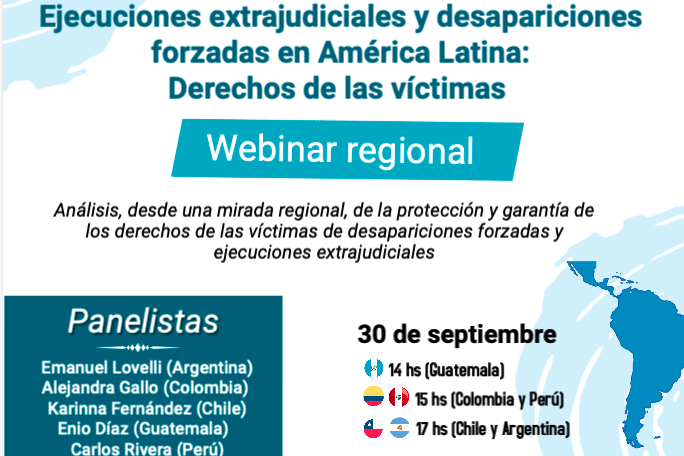
On 30 September 2020, the ICJ will host a regional webinar to discuss the protection and guarantee of the rights of victims of enforced disappearances and extrajudicial executions in Argentina, Colombia, Chile, Guatemala and Peru.
The webinar will be broadcast live on the ICJ’s Facebook page, at 14 hours (Guatemala time)/15 hours (Colombia and Peru time)/ 17 hours (Chile and Argentina time).
Contact
Kingsley Abbott, Coordinator of the Global Accountability Initiative, e: kingsley.abbott@icj.org
Carolina Villadiego Burbano, Legal and Policy Adviser, Latin America and Regional Coordinator of the Project, e: carolina.villadiego@icj.org
Rocío Quintero M, Legal Adviser, Latin America, e: rocio.quintero@icj.org