Aug 21, 2020 | News
The order of the Magistrates’ Court of Zimbabwe barring lawyer Beatrice Mtetwa from continuing as defence legal counsel for journalist Hopewell Chin’ono is a violation of Chin’ono’s right to a fair trial and Mtetwa’s right to express her opinions freely, said the ICJ today.
“Hopewell Chin’ono is already facing persecution because of his reporting on alleged corruption and now his lawyer is prevented from defending him properly. The Magistrate Court’s decision violates Zimbabwe’s domestic, international and regional legal obligations regarding freedom of expression and the right to a fair trial,” said ICJ Secretary General Sam Zarifi.
Hopewell Chin’ono, a prominent Zimbabwean journalist, is currently in custody and is facing trial on charges of inciting public violence, related to his reporting on corruption.
He appointed Beatrice Mtetwa, a prominent Zimbabwean human rights lawyer to act as his defence legal counsel.
After Hopewell Chin’ono was denied bail, it is alleged that a Facebook page by the name “Beatrice Mtetwa and The Rule of Law” posted the following statements:
“Where is the outrage from the international community that Hopewell Chin’ono is being held as a political prisoner? His life is in serious peril. Raise awareness about his unlawful imprisonment. Do not let him to be forgotten. You or someone you love could be the next one abducted from your home and put in leg irons.”
On account of these alleged statements and at the instance of an application by the State, the Magistrates’ court barred Beatrice Mtetwa from continuing as defense legal counsel on grounds that she made statements which demonstrates that “she is no longer detached from the case to continue appearing in it” and has lost the “requisite objectivity of an officer of the court”.
The full judgment by the court can be accessed here.
Beatrice Mtetwa denied ownership of or control over the said Facebook page. Filmmaker Lorie Conway is listed as the only administrator of the said Facebook page. Despite this, the Magistrate’s Court ruled that Beatrice Mtetwa is aware of the page, approved its creation and therefore, these statements are attributable to her.
“Regardless of whether or not these statements can be attributed to Beatrice Mtetwa, the International Commission of Jurists is concerned about the chilling effect which the judgment has on the exercise of freedom of expression by lawyers, the accused persons’ right to legal representation and the right to fair trial. The judgment seems to suggest that if a lawyer makes public statements such as those allegedly attributed to Beatrice Mtetwa, the lawyer should be barred from continuing as legal counsel in the matter—and that is contrary to international standards regarding the role of lawyers,” Zarifi said.
This right is underscored in Principle 23 of the United Nations Basic Principles on the Role of Lawyers which states that:
“Lawyers like other citizens are entitled to freedom of expression, belief, association and assembly. In particular, they shall have the right to take part in public discussion of matters concerning the law, the administration of justice and the promotion and protection of human rights…”
The right to legal representation is recognised in section 70(1)(d) of the Constitution of Zimbabwe. This guarantees an accused person the right to appoint a legal practitioner of their choice to act as their defence attorney. The same right is underscored in article 14(3)(b) of the ICCPR and article 7(1) of the African Charter. The right to legal representation is an integral element of the right to fair trial as elaborately explained under the Principles and Guidelines on the Right to a Fair Trial and Legal Assistance in Africa.
Contact
Shaazia Ebrahim (Media Officer) email: Shaazia.Ebrahim(a)icj.org
Aug 21, 2020 | News
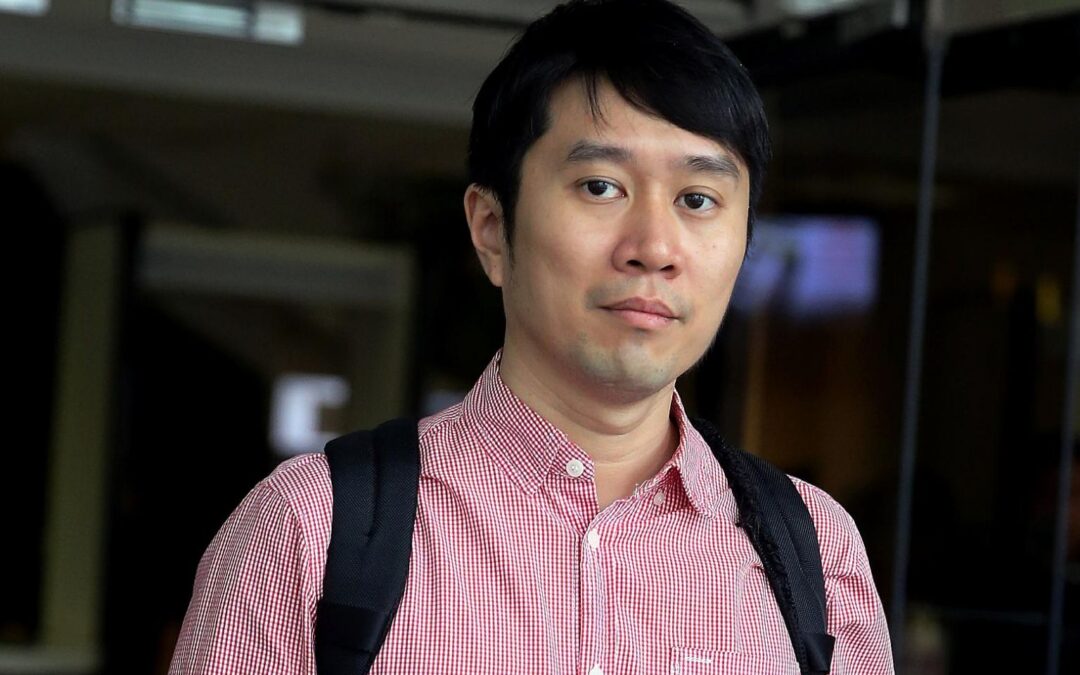
The ICJ today condemned the conviction and imprisonment of human rights defender Jolovan Wham following the dismissal of his appeal by Singapore’s highest court in connection with a conference he had organized in 2016.
The ICJ urged the Singapore’s authorities to take action to quash the conviction and immediately release Wham from prison.
The ICJ further called on the authorities to refrain from targeting human rights defenders for harassment through unwarranted legal proceedings and to amend the country’s Public Order Act which formed the basis for the charges against Wham.
“Wham will now be in jail for organizing an indoor private discussion, in violation of his rights to free expression and freedom of association and peaceful assembly,” said Ian Seiderman, the ICJ’s Legal and Policy Director.
In November 2016, Wham organized a discussion entitled “Civil Disobedience and Social Movements” for approximately 50 participants in an indoor event venue, which included Hong Kong activist Joshua Wong as a speaker who called in via a video call. Prior to the event, Wham had not applied for a police permit to conduct the discussion, which was required under the Public Order Act (POA) as Wong is not a citizen of Singapore.
In 2019, Wham was convicted of violating section 16(1) of the POA and sentenced to a fine of S$2,000 (approx. USD 1,463) or ten days’ imprisonment in default by the District Court, following which his appeal was dismissed by the High Court. Yesterday, his appeal against the High Court decision was dismissed by Singapore’s apex Court of Appeal. Today, Wham began his prison term of ten days.
“The highly flawed Public Order Act was initially adopted to regulate public assemblies and processions, but has now perversely expanded in its scope of application to cover even private discussions,” said Seiderman.
In January 2019, the UN Special Rapporteurs on the right to freedom of opinion and expression, the situation of human rights defenders and the rights to freedom of peaceful assembly and association issued a joint statement expressing concern that the conviction was “clearly neither a necessary nor a proportional response to the actions of Jolovan Wham.” The Special Rapporteurs noted that the action had wrongly targeted the “legitimate exercise of the right to freedom of expression and freedom of peaceful assembly in Singapore.”
“The conviction and imprisonment of Wham marks a continued trend of abuse of poorly conceived laws to limit free expression, association and peaceful assembly in Singapore and harass individuals who seek to bring human rights violations to light in the country,” said Seiderman.
The ICJ calls on Singapore’s legislators also to act to amend other non-human rights compliant laws, including the Protection from Online Falsehoods and Manipulation Act (POFMA), Administration of Justice (Protection) Act (AJPA), and criminal defamation provisions under its Penal Code.
Wham was previously convicted in 2018 under the AJPA for alleged contempt of court following a comment on Facebook that “Malaysian judges are more independent than Singapore’s in cases with political implications”. He currently has active charges under the POA relating to the organizing of a vigil for a death row inmate and the holding of a silent protest on an MRT train and is being investigated under the POA for holding signs silently in solidarity with other activists.
See also
In a 2019 regional report, the ICJ found that in Singapore, non-human rights compliant provisions in POFMA, AJPA and other contempt of court provisions, civil and criminal defamation laws have been used to curtail freedom of expression and information online.
ICJ, Dictating the Internet: Curtailing Free Expression, Opinion and Information Online in Southeast Asia, December 2019
Similarly, the ICJ and other human rights organizations have called on Singapore authorities to drop investigations of human rights lawyer M Ravi and others under the contempt of court law and cease their harassment of human rights defenders. On 13 August, in relation to a death penalty case M Ravi is defending, the Court of Appeal opined that a statement made by the Attorney-General’s Chambers against the lawyer could have been “reasonably construed as intimidating”, offering a recent glimpse into the trend of legal harassment faced by human rights defenders in the country.
ICJ, ICJ and other groups call on authorities to drop investigations under abusive contempt of court law, March 2020
Aug 20, 2020 | News
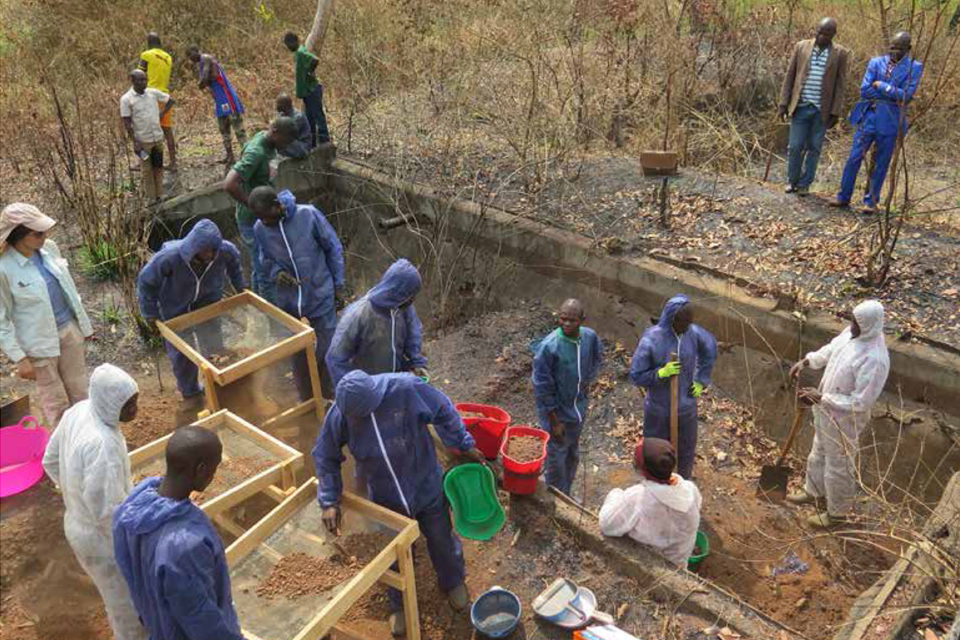
Despite remarkable efforts to recover and identify human remains in Latin America, there are still thousands of cases where remains have not been identified and returned to their family. Crucially, families still struggle to understand and participate in the forensic process.
To address this issue, el Equipo Argentino de Antropología Forense (EAAF) launched today a Forensic Guide which aims at providing practical and accessible information on the investigation, recovery, and analysis of human remains.
Currently, this publication is only available in Spanish but an English version will be provided in the forthcoming months.
The guide will be particularly useful for people who have no previous forensic knowledge and will contribute towards improving the understanding and participation of victims and civil society organizations in the search for disappeared persons.
The Guide was written by Luis Fondebrider, the executive director of the EAAF and takes into account international standards including the revised Minnesota Protocol on the Investigation of Potentially Unlawful Death (2016).
The ICJ, the Equipo Peruano de Antropología Forense (EPAF) and the Fundación de Antropología Forense de Guatemala (FAFG) provided input during the Guide’s development.
The Guide was launched during a Webinar. The key speakers were Luis Fondebrider from the EAAF; Claudia Rivera from the FAFG and Franco Mora from the EPAF. It was moderated by Carolina Villadiego from the ICJ.
At the launch, all the forensic experts emphasized the central role that the families of disappeared persons must play in the process of investigation, recovery, and analysis of human remains. In particular, it was acknowledged that they not only have key information to find the remains but also, they have driven the processes.
Background
The Guide was produced as part of a regional project addressing justice for extrajudicial killings and enforced disappearances in Colombia, Guatemala, and Peru, which is coordinated by the ICJ.
The aim of the project is to promote the accountability of perpetrators and access to effective remedies and reparation for victims and their families in cases of extrajudicial killings and enforced disappearances in Colombia, Guatemala and Peru – and Latin America more broadly – through effective, accountable and inclusive laws, institutions and practices that also reduce the risk of future violations. The project is supported by the EU European Instrument for Democracy and Human Rights (EIDHR).
The ICJ’s partners include the Asociación de Familiares de Detenidos-Desaparecidos de Guatemala (FAMDEGUA), Asociación Red de Defensores y Defensoras de Derechos Humanos (dhColombia), Equipo Argentino de Antropología Forense (EAAF), Equipo Peruano de Antropología Forense (EPAF), Fundación de Antropología Forense de Guatemala (FAFG), and the Instituto de Defensa Legal (IDL).
Contacts:
Kingsley Abbott, Coordinator of the Global Accountability Initiative, e: kingsley.abbott(a)icj.org
Carolina Villadiego, Legal and Policy Adviser, Latin America, and Regional Coordinator of the Project, e: carolina.villadiego(a)icj.org
Aug 20, 2020 | Artículos, Noticias
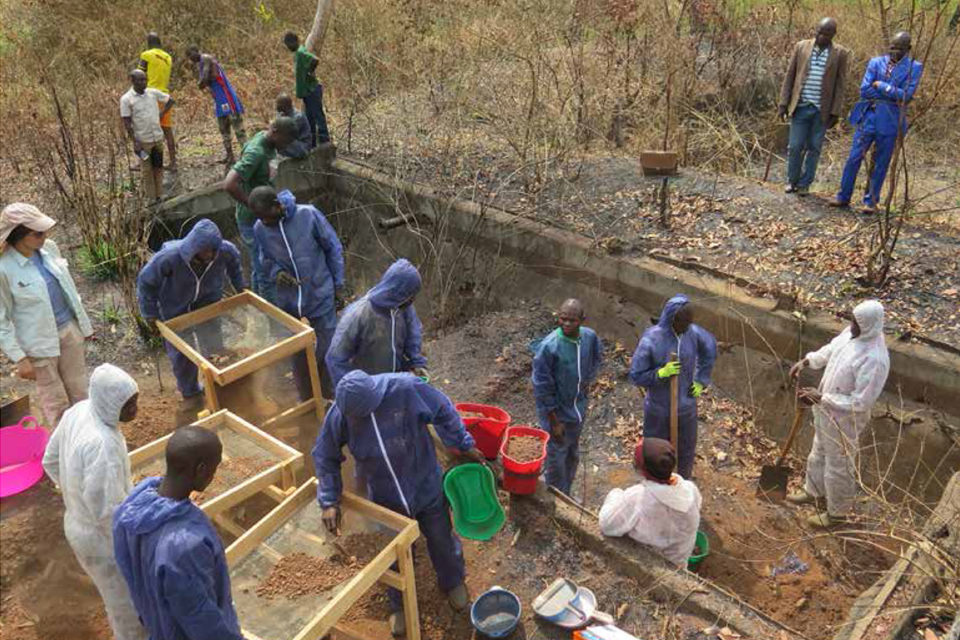
A pesar de esfuerzos significativos para recuperar e identificar restos óseos en América Latina, todavía hay miles de casos donde los restos no han sido identificados y entregados a los familiares. Asimismo, se debe destacar el hecho de que los familiares todavía tienen problemas para entender y participar en el proceso forense.
Con el fin de contribuir a la solución de este problema, el Equipo Argentino de Antropología Forense (EAAF) lanzó hoy una guía forense con información práctica y accesible sobre la investigación, recuperación y análisis de restos óseos.
La guía es particularmente útil para las personas que no tienen previos conocimientos forenses. Además, contribuirá para mejorar el entendimiento y la participación de las víctimas y organizaciones de la sociedad civil en la búsqueda de personas desaparecidas.
La guía fue escrita por Luis Fondebrider, director ejecutivo del EAAF y para su elaboración se tuvo en cuenta los estándares internacionales en la materia, incluyendo el Protocolo de Minnesota sobre la Investigación de Muertes Potencialmente Ilícitas (2016). La Comisión Internacional de Juristas (ICJ), el Equipo Peruano de Antropología Forense (EPAF) y la Fundación de Antropología Forense de Guatemala (FAFG) contribuyeron con insumos para la elaboración de la guía.
La guía fue lanzada durante un webinar. Los panelistas del evento fueron Luis Fondebrider del EAAF; Claudia Rivera de la FAFG y Franco Mora del EPAF. Contó con la moderación de Carolina Villadiego de la CIJ.
En el lanzamiento, todos los expertos forenses enfatizaron en el rol central que los familiares de las personas desaparecidas deben tener en el proceso de investigación, recuperación y análisis de restos óseos. En particular, se resaltó que los familiares no solo tienen información clave para encontrar los restos, sino que también, son los que impulsan estos procesos.
Actualmente, la guía está disponible en español y en los próximos meses estará disponible en inglés.
Contexto:
La guía fue producida como parte de un proyecto regional para promover justicia para ejecuciones extrajudiciales y desapariciones forzadas en Colombia, Guatemala y Perú, que es coordinado por la CIJ.
El objetivo principal del proyecto es mejorar la rendición de cuentas en casos de ejecuciones extrajudiciales y desapariciones forzadas, a través del fortalecimiento de capacidades de jueces, fiscales, investigadores, víctimas, abogados, forenses, y organizaciones de la sociedad civil. El proyecto cuenta con el apoyo del Instrumento Europeo para la Democracia y los Derechos Humanos (IEDDH).
Además, se implementa en conjunto con la Asociación Red de Defensores y Defensoras de Derechos Humanos de Colombia (dhColombia), el Equipo Argentino de Antropología Forense (EAAF), la Asociación de Familiares de Detenidos-Desaparecidos de Guatemala (FAMDEGUA), el Equipo Peruano de Antropología Forense (EPAF), la Fundación de Antropología Forense de Guatemala (FAFG), y el Instituto de Defensa Legal de Perú (IDL).
Contactos:
Kingsley Abbott, Coordinador de la iniciativa global de rendición de cuentas de la CIJ. Correo electrónico: kingsley.abbott(a)icj.org
Carolina Villadiego, Asesora Legal, América Latina y coordinadora regional del proyecto. Correo Electrónico: carolina.villadiego(a)icj.org
Aug 19, 2020 | Artículos, Noticias
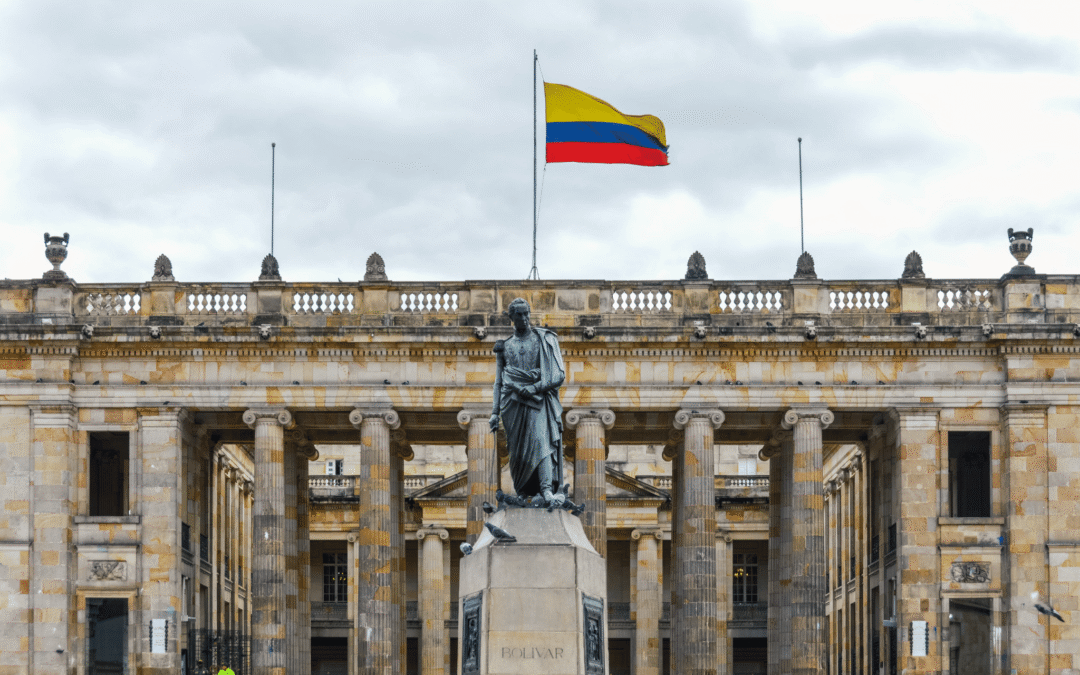
Hoy la CIJ llamó a las autoridades públicas a abstenerse de realizar comentarios o acciones que puedan socavar la integridad del proceso judicial y la independencia de la Rama Judicial.
El 4 de agosto la Sala Especial de Instrucción de la Sala Penal de la Corte Suprema de Justicia resolvió la situación jurídica del expresidente Álvaro Uribe Vélez, y ordenó su detención preventiva, sustituyéndola por detención domiciliaria, en relación con el caso que se sigue en su contra por los presuntos delitos de soborno a testigo y fraude procesal.
Desde hace días, varios políticos han hecho declaraciones inapropiadas e incendiarias respecto de la justicia, incluidas algunas que sugieren que los jueces toman sus decisiones basándose en prejuicios ideológicos o políticos en lugar de basarse en la Constitución y la ley.
El presidente de Colombia, Iván Duque, expresó en una declaración trasmitida por televisión que le “duele como colombiano que muchos de los que han lacerado al país con barbarie se defiendan en libertad o inclusive tengan garantizado jamás ir a prisión, y que a un servidor público ejemplar que ha ocupado la más alta dignidad del Estado no se le permita defenderse en libertad con la presunción de inocencia. Soy y seré siempre un creyente en la inocencia y en la honorabilidad de quien con su ejemplo se ha ganado un lugar en la historia de Colombia”.
La CIJ enfatiza que es inapropiado que un jefe de Estado u otro funcionario del poder ejecutivo intervenga de esta manera en un caso que está siendo objeto de estudio en la Rama Judicial. Los Principios Básicos relativos a la independencia de la judicatura de las Naciones Unidas dejan claro que “[t]odas las instituciones gubernamentales y de otra índole respetarán y acatarán la independencia de la judicatura”, y esto implica que deben abstenerse de “influencias, alicientes, presiones, amenazas o intromisiones indebidas, sean directas o indirectas”.
Adicionalmente, y como reacción a la detención del expresidente Uribe, el partido político “Centro Democrático” del cual son miembros el presidente Duque y el expresidente Uribe, emitió un comunicado de prensa en el que dijo que planeaban proponer una Asamblea Nacional Constituyente “con el propósito de despolitizar la justicia”. Y el expresidente Uribe mencionó el 16 de agosto que esperaba que su partido político iniciara una reforma judicial a través de referendo para acabar con la “politización” de la Corte.
La CIJ considera que las acciones de reforma a la justicia no deben basarse en reacciones políticas a un caso o una decisión judicial determinada. Las reformas al sector justicia deben basarse en las buenas prácticas y en los estándares que permitan reforzar la independencia judicial y contar con una pronta, oportuna y justa administración de justicia.
Por último, el vicepresidente de Estados Unidos, Mike Pence, también hizo comentarios inapropiados frente a la justicia colombiana, al tuitear el 14 de agosto que se unía a las voces que pedían a las autoridades colombianas que permitieran que Álvaro Uribe “se defendiera como un hombre libre”.
Contacto: Carolina Villadiego Burbano, Asesora Legal para América Latina de la CIJ, e: carolina.villadiego(a)icj.org