Aug 28, 2020 | News
The ICJ contributed to and has endorsed a groundbreaking new UN standard aimed at ensuring effective access to justice for persons with disabilities, published today in Geneva.
Published today by the Office of the UN High Commissioner for Human Rights, the International Principles and Guidelines on Access to Justice for Persons with Disabilities were adopted jointly by the UN Special Rapporteur on the rights of persons with disabilities, the Committee on the Rights of Persons with Disabilities, and the Special Envoy of the UN Secretary-General on Disability and Accessibility. They have been endorsed by the ICJ and the International Disability Alliance.
The ICJ contributed to the development of the Principles and Guidelines, including through participation in expert consultations alongside disability rights experts, organizations of people with disabilities, State representatives, academics, and other judicial and legal practitioners. The ICJ also plans to assist with promotion and implementation of the Principles and Guidelines at the global and national levels.
Building on the provisions and interpretations of the Convention on the Rights of Persons with Disabilities and other international standards and best practices, the document affirms ten key principles of access to justice for people with disabilities and sets out detailed guidelines on how to implement each one.
The Principles and Guidelines are intended to be a practical tool to help inform the design and implementation of justice systems that provide equal access to justice for persons with disabilities, in line with international human rights standards.
The Principles and Guidelines can be downloaded by clicking here.
Further information about the process of their development is available here, and the UN press release announcing their publication is here.
Aug 28, 2020 | Agendas, Events
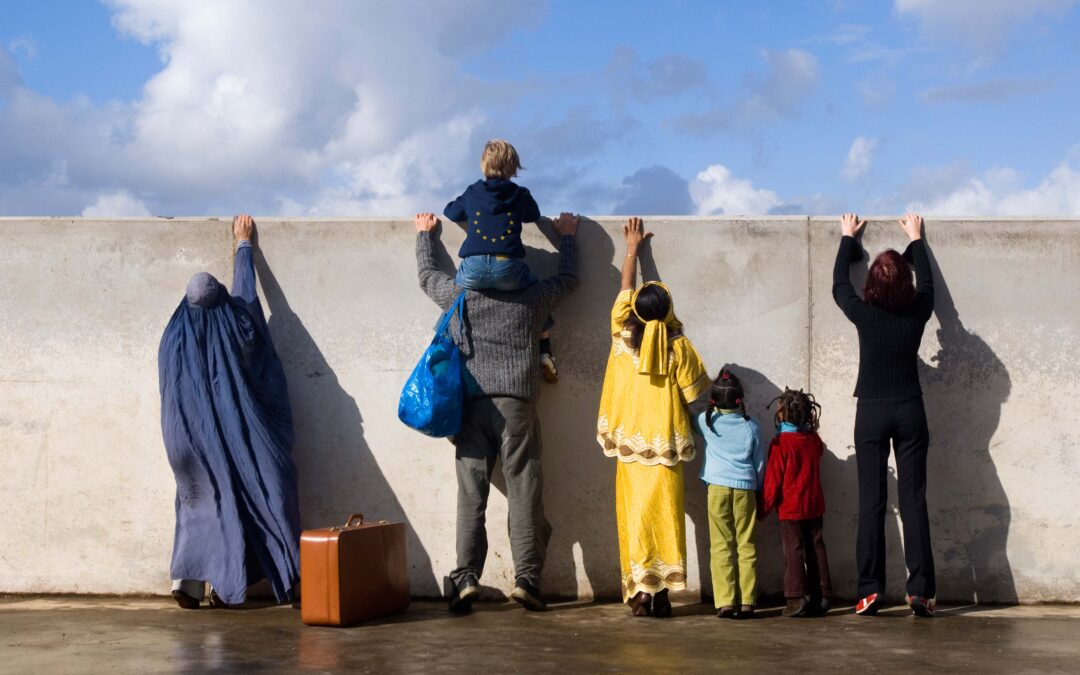
Today, the ICJ and LPRC began a series of online seminars on international human rights mechanisms for the protection of migrants, refugees and asylum seekers for 44 Kazakh defense lawyers and human rights defenders of NGOs.
The seminars took plance via online communication on 28 and 29 of August and 12 of September. The event was of particular importance given the impact of COVID-19 on migration processes in Kazakhstan and Central Asia region.
The seminar lectures were delivered by prominent international experts in the field of migration from the International Commission of Jurists, representatives of the UNHCR Complaints Division, the European Council for Refugees and Exiles (ECRE) and the Greek National Human Rights Commission.
The participants discussed international principles and fundamental documents on expulsion, detention and protection, briefly overviewed the economic, social and cultural rights of migrants, and considered the hierarchy of legal acts in Kazakhstan, the relationship between international law and national legislation. The training program consisted of theoretical and practical components to strengthen the gained knowledge and develop practical skills for the protection of migrants at the international level. A training module was prepared for the participants with an overview of access to international human rights mechanisms.
This seminar complements previously conducted trainings for 105 defense lawyers and human rights defenders of non-profit organizations on strategic judicial protection of migrants and ensuring the exchange of best practices and strategies between Kazakhstani and European lawyers.
The seminar was organized by the Legal Policy Research Center (LPRC) in cooperation with the International Commission of Jurists (ICJ) and the International Commission of Jurists – European Institutions (ICJ-EI), with financial support from the European Union under the project “Strengthening Legal Protection of Migrants’ Rights in Kazakhstan”. The project aims to improve the access of migrants to national and international instruments for the protection of human rights in Kazakhstan, as well as to stimulate professional training and cooperation between specialized lawyers from Kazakhstan and their European counterparts.
Aug 27, 2020
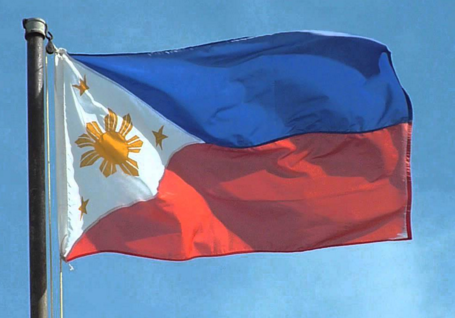
The ICJ has joined a call by more than 60 organizations urging the UN Human Rights Council to create an independent international investigative mechanism on the human rights situation in the Philippines, at its upcoming session in September.
The call comes in an open letter to all member and observer States at the Council.
The ICJ and other organizations express grave concern over ongoing extrajudicial executions and other serious human rights violations in the context of the “war on drugs” in the Philippines. They note that these abuses continue to be fueled by incitement to violence and discrimination by the highest levels of government, with near-total impunity.
The letter urges delegations to ensure that the United Nations Human Rights Council responds robustly to the recent report on the situation in the Philippines by the UN High Commissioner for Human Rights when it convenes for its upcoming 45th session in September.
Specifically, the organizations call for adoption of a resolution establishing an independent international investigative mechanism on extrajudicial executions and other human rights violations committed in the Philippines since 2016, with a view to contributing to accountability.
Establishing such a mechanism would, the letter notes, be in line with clear calls by the UN High Commissioner for Human Rights, a group of Special Procedures, the Commission on Human Rights of the Philippines, and national and international civil society.
The letter can be downloaded in PDF format here: UN-HRC45-OpenLetter-Philippines-2020

Aug 27, 2020 | Advocacy, News
The ICJ, in collaboration with the Zimbabwe Anti-Corruption Commission (ZACC), convened a virtual Asset Recovery Training Workshop from 18-26 August. The training was part of the ICJ efforts to advance the rule of law in Zimbabwe.
The training was held with investigators from ZACC. It was led by Dr Prosper Maguchu, a legal expert on human rights and financial crimes.
The objective of the training was to enhance the capacity of ZACC investigators to conduct financial investigations and apply asset tracing techniques in relation to corruption and money laundering cases.
Over the past 50 years, it is estimated that Africa has lost in excess of one trillion US dollars in illicit financial flows (IFFs) with claims that this is roughly equivalent to all of the official development assistance received by the continent during the same timeframe.
Zimbabwe is not immune to this challenge of IFFs.
ZACC chairperson Justice Loice Matanda-Moyo remarked that financial crimes and illicit financial flows had become a serious threat the Zimbabwe economy and beyond our borders. She pointed to the prevalence of tax evasion, smuggling, corruption, fraud, drug trafficking and money laundering and noted that ill-gotten proceeds involving money were moving across borders. In such instances it is a daunting task for investigators and asset recovery officers to follow the money trails and recover proceeds of crime. She noted that the virtual asset recovery workshop was an opportune moment time to enhance the capacity of investigators and asset recovery officers.
“This training was very timely and critical. It enhanced the capacity of ZACC in its pursuit to recover assets accumulated though corruption. The investigators were equipped with the requisite skills and techniques involved in asset recovery that include collecting evidence, issuing restraint and freezing orders and making mutual legal assistance requests. Recovering stolen assets is an important process in the fight against corruption as it deters corruption by turning it into a high-risk, low-reward activity. Additionally, asset recovery is a means to obtain resources for the development of the country, which resources can also be channelled towards strengthening the fight against corruption in Zimbabwe, thus contributing to the greater respect for the rule of law,” said ICJ Senior Legal Adviser Blessing Gorejena.
The training workshop provided a comprehensive overview on what asset recovery means, exploring approaches and tools in asset recovery and enhance the technical capacity of the investigators to trace, seize and confiscate and repatriate illicitly acquired assets.
Participants in this workshop included 18 investigative officers and two Commissioners. Overall there were 11 female and 9 male participants in attendance.
This workshop was supported by the European Union Delegation in Zimbabwe.
Contact:
Shaazia Ebrahim (ICJ media officer), c: +277 167 067 19 e: shaazia.ebrahim(a)icj.org
Vimbai Mutandwa (ICJ legal advisor), c: +263 77 351 7733 e: vimbai.mutandwa(a)icj.org
Aug 22, 2020 | News
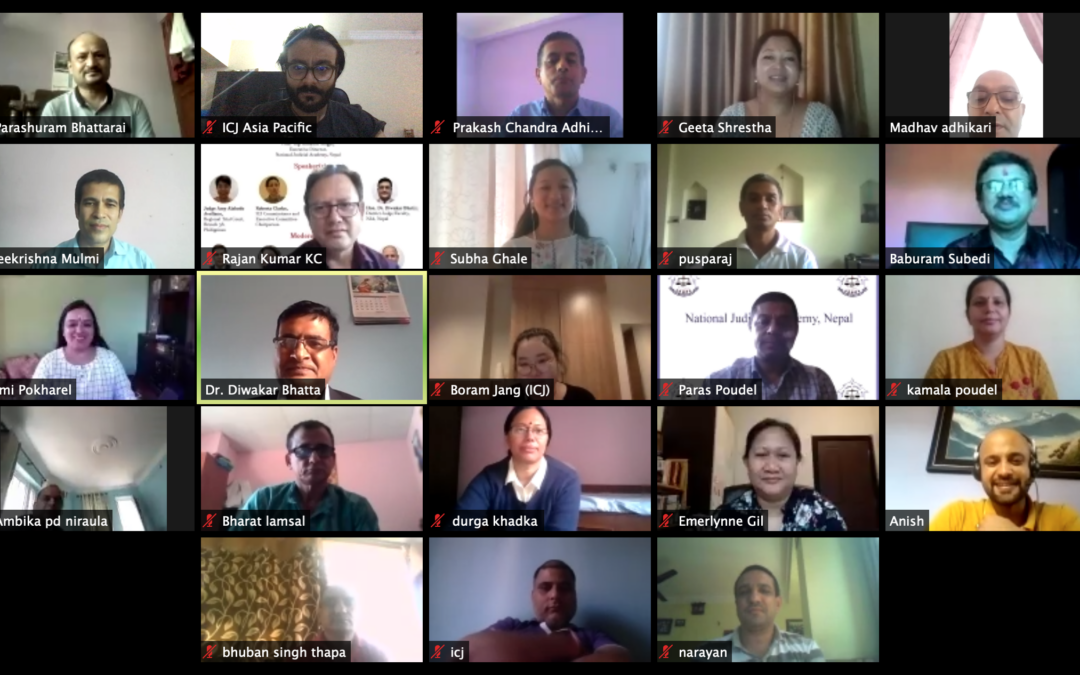
On 15 and 22 August 2020, the ICJ, in collaboration with the National Judicial Academy (NJA) of Nepal, organized the National Judicial Dialogue on the Elimination of Discrimination against Women and Enhancing Women’s Access to Justice.
Due to the exigencies caused by the COVID-19 pandemic, the judicial dialogue was conducted through virtual means.
Fifteen trial court judges from Kathmandu Valley participated in this judicial dialogue with judicial experts from other countries.
Judge Amy Alabado Avellano, a Regional Trial Court judge from the Philippines, engaged with the judges on the application of the Convention on the Elimination of All Forms of Discrimination Against Women (CEDAW) in their judicial decisions. Roberta Clarke, ICJ’s Executive Committee Chairperson and UN Women’s OIC for UN Women’s East and Southern Africa Regional Office, spoke on the right to access to justice under international human rights law.
The second day featured a discussion on specific barriers that women in Nepal face when they access justice. The judges discussed their own role and measures available to the judiciary as an institution to enhance access to justice for women in Nepal. Hon. Justice Sapana Pradhan Malla from the Supreme Court of Nepal and Dr. Diwakar Bhatta from the National Judicial Academy of Nepal led these discussions.
At the Dialogue Emerlynne Gil, ICJ Senior International Legal Adviser, remarked that “judges have a responsibility to uphold the fairness and integrity of the justice system by ensuring that proceedings are conducted in a fashion that does not subordinate the fact-finding process to myth and stereotype.” Honorable Top Bahadur Magar, the Executive Director of the National Judicial Academy, stressed that, “Trial court judges play a pivotal role in debunking myths and gender stereotypes.”
Highlighting the importance of continuing the work towards eliminating gender discriminatory practices among frontline justice actors, even during the COVID-19 pandemic, Emerlynne Gil said. “The COVID-19 pandemic is aggravating existing gender inequalities and women are experiencing more violations of their human rights.”
Contact
Laxmi Pokharel, National Legal Advisor, International Commission of Jurists, t: 977 9851047588, e: laxmi.pokharel(a)icj.org