Jul 9, 2020 | Agendas, Events, News
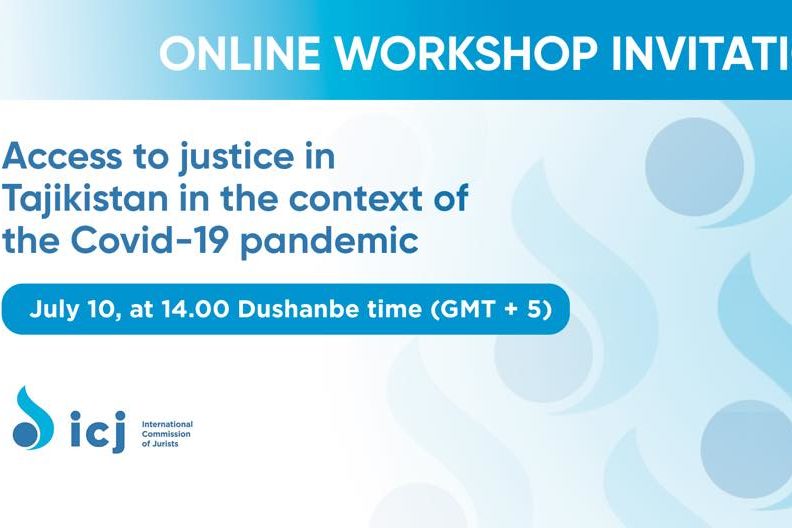
The ICJ is holding an online discussion for lawyers and other representatives of civil society in Tajikistan on access to justice in the context of the Covid-19 pandemic. The discussion is held on 10 July 2020 from 14.00 to 17.00 Dushanbe Time (GMT + 5) on the GoToMeeting platform
The discussion aims to raise some of the main issues that lawyers face in providing legal representation both in and outside of courts.
The event will present an opportunity for practicing lawyers, NGOs and IGOs to discuss the recent challenges that the legal profession faced in Tajikistan as well as seek some of the solutions based on international law and best practices of other countries.
During the discussion, relevant international law and standards as well as comparative examples from the Central Asian countries and Azerbaijan will be discussed.
To participate in the discussions registration is required on the following link : https://forms.gle/QRywqBFPSxfR5eyk7
Working languages of the event are Russian and Tajik.
Contact:
Dilshod Juraev, t: +992 77 700 18 34 ; e: Dilshod.jurayev(a)icj.org
Jul 9, 2020 | News
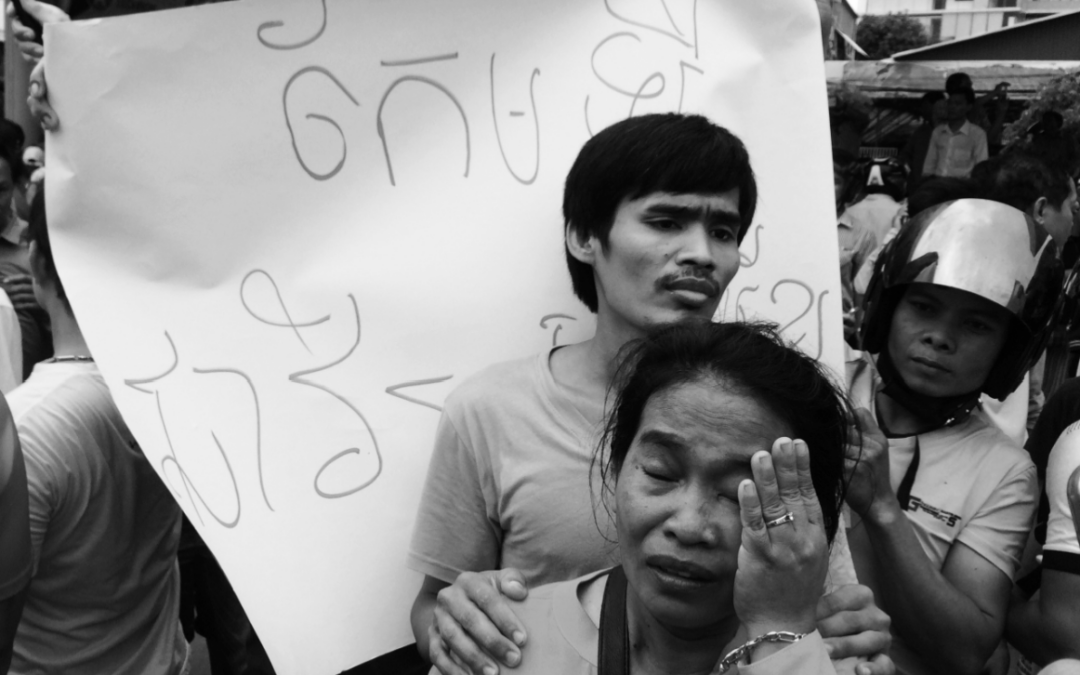
Today, in advance of the fourth anniversary of the killing of prominent political commentator and human rights defender Kem Ley, the ICJ and 29 other organizations called on Cambodian authorities to create an independent Commission of Inquiry to conduct an effective and impartial investigation that is long overdue into Kem Ley’s death.
The organizations further urged Cambodian authorities to cease intimidation and harassment of persons peacefully commemorating his passing.
On 10 July 2016, Kem Ley was shot and killed at a petrol station in central Phnom Penh. Without conducting a prompt, thorough, and independent investigation, and following a half-day trial which was widely criticized for failure to meet international fair trial standards, in March 2017, Oeuth Ang was found guilty of the murder of Kem Ley and sentenced to life imprisonment.
Since 2016, many international and domestic human rights organizations have consistently called on the Cambodian government to set up an independent Commission of Inquiry to conduct a prompt, impartial, and effective investigation into this killing, with emphasis on examining the potential criminal responsibility of persons other than the direct perpetrator, in line with international standards set out in the International Covenant on Civil and Political Rights (ICCPR).
The UN Principles on the Effective Prevention and Investigation of Extralegal, Arbitrary and Summary Executions as well as the revised Minnesota Protocol on the Investigation of Potentially Unlawful Death reinforce the duty of governments to investigate unlawful deaths and to establish an independent commission of inquiry when states, like Cambodia, lack effective procedures to conduct such an investigation in accordance with international standards.
The Cambodian government, has to date, failed to take any steps towards the establishment of such an independent and impartial investigative body. Given the government’s unwillingness to conduct an independent investigation into Kem Ley’s killing, and civil society’s highly warranted lack of trust and confidence in Cambodia’s justice system which lacks the requisite levels of independence to adjudicate cases involving public officials, this body should be established under the auspices of the United Nations and composed of independent experts.
Following the killing of Kem Ley, the Cambodian authorities have continually monitored, harassed, and ultimately disrupted and prohibited planned anniversary memorials of his death. These actions constitute arbitrary restrictions on the rights to freedom of expression and peaceful assembly. The organizations condemned such attempts to stifle free speech and reiterated their call to the Cambodian government to stop such harassment.
The joint statement is available here.
Contact
Frederick Rawski, ICJ Asia and Pacific Regional Director, frederick.rawski(a)icj.org
See also
ICJ, ‘Cambodia: three years and still no effective investigation into Dr. Kem Ley’s killing’, 9 July 2019
ICJ, ‘Cambodia: Commission of Inquiry into killing of Kem Ley should be established without further delay’, 9 July 2018
ICJ, ‘Cambodia: request to create a commission of inquiry into the killing of Kem Ley’, 7 July 2017
ICJ, ‘Cambodia: Kem Ley’s killing demands immediate credible and impartial investigation’, 13 July 2016
Jul 9, 2020 | Advocacy, Non-legal submissions
The ICJ filed a submission to the Human Rights Council’s Working Group on the Universal Periodic Review in advance of its review of Lebanon’s human rights record between January and February 2021.
Information provided in the submission was based on a number of recent ICJ publications, including on the independence of the judiciary; military courts; gender-based violence; and a forthcoming publication on the human rights of refugees and migrants in Lebanon.
In the submission, the ICJ drew the attention of the Working Group to the following concerns with respect to Lebanon:
- The independence of the judiciary and the use and jurisdiction of military courts;
- The obstacles that continue to impede women’s and girls’ access to justice for sexual and gender-based violence (SGBV); and
- The inadequate framework and practices undermining migrants’ and refugees’ rights.
The ICJ called on the Working Group and Human Rights Council to urge the Lebanese authorities to take the following actions:
With regard to the independence of the judiciary and the use and jurisdiction of military courts:
- End executive control and undue influence over the judiciary, including by divesting the Minister of Justice of any role in the selection, appointment, promotion, transfer, secondment or any other aspects of the management of the career of judges;
- Ensure that the High Judicial Council is independent from the executive, including by amending its composition to ensure that the majority of members are judges elected by their peers, and that it is pluralistic, gender and minority representative, competent to decide on all issues relating to the career of judges, and empowered to uphold the independence of the judiciary;
- Ensure that military courts have no jurisdiction to try civilians, and that such jurisdiction is restricted to military personnel over alleged breaches of military discipline or ordinary crimes not involving the commission of human rights violations, to the exclusion of human rights violations and crimes under international law.
With regard to women’s access to justice for SGBV:
- Repeal all discriminatory provisions against women, particularly those in the Criminal Code, the Nationality Code and Personal Status Laws;
- Adopt a unified civil Personal Status Law for all religious groups, where all customs discriminating against women and girls are overridden in accordance with article 2(f) of CEDAW; and ensure that issues related to divorce, inheritance and custody are adjudicated before ordinary courts consistent with international standards;
- Amend Law No. 293/2014 on the protection of women and other family members from domestic violence (Law No. 293/14) and the Criminal Code to ensure that it criminalizes all forms of SGBV, including by properly defining rape as a type of sexual assault characterized by a physical invasion of a sexual nature without consent or under coercive circumstances, and ensure that marital and all other acts of rape be criminalized; and, to this end, abolish provisions of Law No. 293/14 providing for a religion-based claim to marital rights;
- Amend the Criminal Code, the Code of Criminal Procedure and Law No. 293/14 to include gender-sensitive investigations and evidence-gathering procedures in order to enable women to report violence against them, and take effective steps to address the social and practical factors that continue to impede women’s access to justice, such as gender-based stereotypes and prejudices that operate in society and in the justice system;
- Remove obstacles related to gender stereotypes, economic and social realities that continue to impede access to justice in SGBV cases, including by ensuring that where law enforcement officers fail to ensure an effective investigation into an incident of SGBV, their omissions be actionable as a breach of their duties and subject to disciplinary measures as appropriate;
- Provide routine capacity building training to justice sector actors on the application of international human rights law, including CEDAW and related jurisprudence.
With regard to the treatment of refugees and migrants:
- Become a party to the 1951 UN Refugee Convention and its 1967 Protocol, and pass legislation to adequately protect the human rights of refugees, asylum seekers, stateless people and migrants, in compliance with Lebanon’s international obligations;
- Amend the 1962 Law on the Entry, Stay in and Exit from Lebanon (Law 1962) to ensure full compliance with these obligations, and that people entitled to international protection, chiefly refugees, asylum seekers, and stateless individuals, are not penalized, automatically arrested or deported for their “illegal” entry and stay in the country;
- Ensure that no individual is deprived of their liberty solely on the grounds of their immigration status, and, to this end, amend articles 32 and 36 of Law 1962; until then, provide automatic, periodic judicial review of the lawfulness, necessity and proportionality of any immigration-related detention;
- Strictly comply with Lebanon’s non-refoulement obligations, including by ensuring that no individual is transferred to a country where they face a real risk of persecution or other forms of serious harm; that nobody is forcibly returned without an individualized, fair and effective procedure guaranteeing due process; and by establishing a moratorium on all removals to Syria.
Lebanon-UPR Submission-Advocacy-Non Legal submission-2020-ENG (full submission, in PDF)
Jul 8, 2020 | News
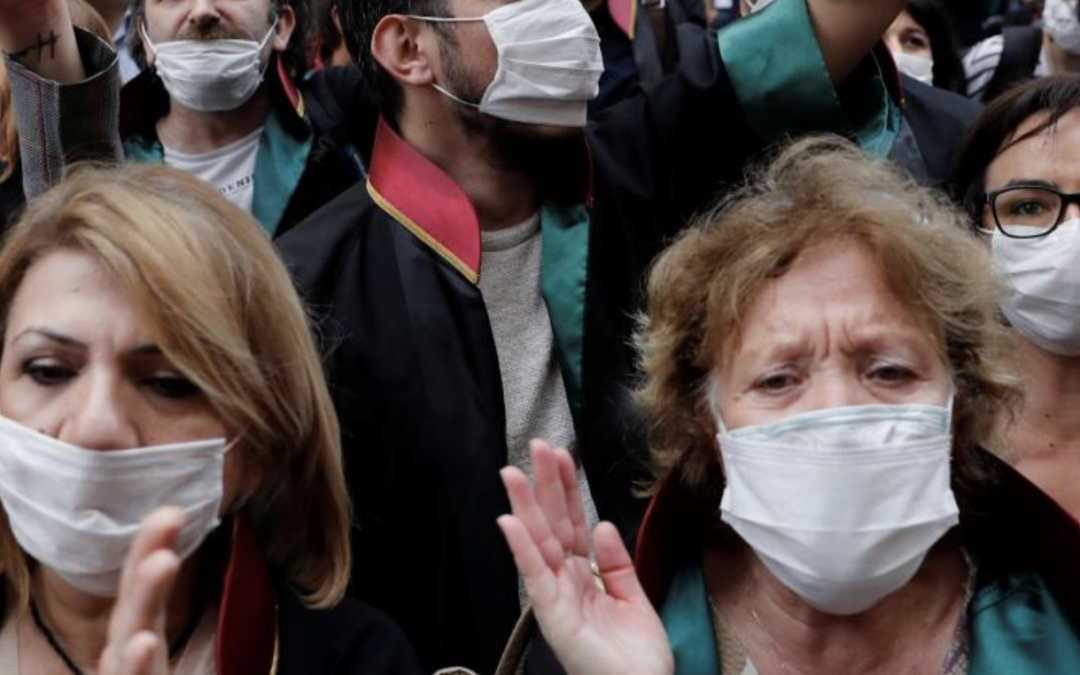
Draft law reduces leading bar associations’ authority, leads to creation of rival groups, the ICJ and Human Rights Watch said today. The Turkish government’s plan to allow for multiple bar associations appears calculated to divide the legal profession along political lines and diminish the biggest bar associations’ role as human rights watchdogs, they added.
The current bar associations have not been consulted, and 78 bars out of 80 signed a statement opposing the plan.
The ICJ and Human Rights Watch have published a question and answer document explaining the draft law, scheduled for a vote in parliament in the coming days. The document outlines the government-led effort to reduce the influence of leading bar associations, reflecting the executive’s growing dissatisfaction with the bar associations’ public reporting on Turkey’s crisis for human rights and the rule of law.
“Turkey’s prominent bar associations play a key role in defending fair trial rights and scrutinizing human rights at a time when flagrant violation of rights is the norm in Turkey,” said Hugh Williamson, Europe and Central Asia director at Human Rights Watch.
“The government move to create multiple bars and dramatically cut leading bars’ representation at the national level is a clear divide-and-rule tactic to diminish the bar associations’ authority and watchdog role,” he added.
The proposed amendments provide that in provinces with over 5,000 lawyers, a group of at least 2,000 lawyers can establish alternative bar associations.
In big cities such as Istanbul, Ankara, and Izmir, several bar associations could be established. The amendments would also greatly reduce the representation of the largest bar associations at the national level within the Union of Turkish Bars, the Ankara-based umbrella body with significant financial resources it controls and distributes to provincial bars.
The fact that the vast majority of elected legal profession representatives oppose the move and that the likely impact will be to greatly diminish the authority of leading provincial bars that have been critical of certain government initiatives demonstrates that the aim of the proposed change is to shield the government from justified criticism, the ICJ and Human Rights Watch said.
Drastically cutting the number of delegates from large bar associations representing thousands of lawyers to the national Union of Turkish Bar Associations would reduce the influence of the large bar associations in electing the national group’s president and participating meaningfully in other decision-making functions.
A provincial bar association with fewer than 100 lawyers, such as Ardahan in northeastern Turkey, for example, would be represented by 4 delegates, compared with 3 at present.
But a bar association such as Izmir in western Turkey, with over 9,500 lawyers, which sends 35 delegates, would be entitled to only 5. Istanbul, Ankara, and Izmir Bar, which represent 55 percent of the lawyers in Turkey, would be entitled to only 7 percent of all delegates within the national union.
The atmosphere of conflict in which the draft law has been introduced, its timing, and the lack of consultation with the bar associations themselves provides credible grounds for great concern and skepticism over the government’s motives, the groups said.
Over the past year, Turkey’s presidency and government have made public statements strongly criticizing leading bar associations in response to the bars’ legitimate expression of concerns about Turkey’s rule of law crisis and executive interference in the justice system.
The government has reacted strongly against the bars’ scrutiny of its failure to uphold human rights obligations through bar association publication of reports on torture, enforced disappearances, and other rights abuses ignored by the authorities.
For these reasons, the government’s proposed amendments are clearly designed to achieve a political purpose unrelated to an effort to advance or strengthen standards in the legal profession, the ICJ and Human Rights Watch said.
The government’s move is politically divisive and will contribute to undermining the appearance of independence and impartiality in the justice system.
“The government should immediately withdraw the current proposed amendment and embark on a process of full consultation with bar associations,” said Róisín Pillay, Director of ICJ’s Europe and Central Asia Programme.
“The government’s plan as it stands will only deepen mistrust in Turkey’s justice system as lacking independence by dividing the legal profession along political lines. This could have disastrous long-term consequences for upholding the role and function of lawyers and for fair trial rights.”
Contact:
Róisín Pillay, Director of ICJ’s Europe and Central Asia Programme, t: +32-2-734-84-46 ; e: roisin.pillay(a)icj.org
Massimo Frigo, Senior Legal Adviser, ICJ’s Europe and Central Asia Programme, t: +41-79-749-99-49 ; e: massimo.frigo(a)icj.org ; Twitter: @maxfrigo
Download
Turkey-Q and A on the bar associations-Advocacy-2020-ENG (Q & A, in PDF)
Turkey-Q and A on the bar associations-News-Press releases-2020-TUR (Story in Turkish, PDF)
Turkey-Q and A on the bar associations-Advocacy-2020-TUR (Q & A in Turkish, PDF)
Jul 7, 2020 | Advocacy, Non-legal submissions
The ICJ, along with other NGOs, made a joint submission in response to the call for written contributions in advance of the General Assembly’s review of the UN human rights treaty body system and of the effectiveness of the measures taken to strengthen the system in Resolution 68/268 (2014).
The submission reiterates the ICJ’s strong commitment to the treaty body system, and reiterates that it is essential that UN Member States adequately support this key component of the UN’s human rights architecture.
Download the submission here: Universal-NGO response to TBSP cofacs questions-Advocacy-non legal submissions-2020-ENG