Jul 5, 2020 | News
The ICJ hosted live interviews with human rights defenders from Asia, Africa and Latin America to mark Pride Month, which is celebrated during the month of June in various parts of the world. The interviews took place from 22 June to 3 July 2020.
In total, 13 human rights defenders from 11 countries spanning three continents, who are working to uphold the human rights of of lesbians, gay, bisexual, transgender (LGBT) individuals, were interviewed.
The interviews discussed existing legal systems that discriminate on the basis of sexual orientation, gender identity and expression (SOGIE) and the impacts of COVID-19 on existing activism, .
The interviews aimed to provide quick snapshots of different country and regional contexts and a platform for LGBT activist voices on the varied and devastating impacts of COVID-19 on LGBT people.
Debunking cultural myths
In many countries around the world where people are criminalized or stigmatized as a result of harmful steretypes and prejudice on the grounds of their real or imputed SOGIE, public discourse tend to cast LGBT relationships and identities as threats to culture, religion or beliefs and the future of the nation. These interviews endeavoured to interrogate and debunk cultural and regional myths surrounding SOGIE identities as ‘Western’ constructs.
In a response to homosexuality being said to be ‘unAfrican’, Kutlwano Pearl Magashula, executive officer for program functions at the Other Foundation from Botswana, said:
“Utterances that suggest that homosexuality is unAfrican enforce stigma and violence and serve to carve deep roots in the consciousness of people around the world that breed discrimination and treating people differently.”
Devastating impacts of COVID-19 on LGBT people
Important impacts of COVID-19 on LGBT people were highlighted by different speakers, ranging from a loss of livelihood, vulnerability to violence at home and in public spaces, as well as challenges in accessing healthcare.
“There is violence against transgender women sex workers. The police arrest them, yell at them and shoot at them with rubber bullets. This is a recent episode here in Colombia and it is terrible. If they don’t work, they don’t have money to buy food and pay the rent. It is a difficult scenario,” Dejusticia researcher Santiago Carvajal Casas from Columbia said.
Pre-existing inequalities and landmark wins
Personal experiences of ‘life after’ important wins from around the world were shared. Some important gains from the decriminalization of consensual same-sex sexual relationships in Botswana and India, as well as the recent legalization of same-sex marriage in Taiwan must be celebrated. However, many of these wins may remain illusory for people who have been discriminated against on the basis of class, caste and other status inequality, or are without social support, especially in the face of COVID-19.
“What we really need is social protection, we need a safety-net for all those who are close to the poverty line and who are likely to go below the poverty line because of disasters like the COVID-19 epidemic or catastrophic out of pocket healthcare expenditures. We definitely need accessible healthcare for everyone and livelihood.” – Dr. L Ramakrishnan, public health professional and Vice-President of SAATHII, India
Watch the Facebook lives below:
Kutlwano Pearl Magashula, Executive Officer for Program Functions at the Other Foundation, on the board of LEGABIBO as the vice-chairperson and co-founder of the autonomous feminist collective Black Queer DocX (Botswana)
Busisiwe Deyi, Commissioner of CGE/ Lecturer of Jurisprudence (South Africa)
Letlhogonolo Mokgoroane, lawyer activist and podcaster (South Africa)
Lini Zurlia, advocacy officer at ASEAN SOGIE Caucus (ASEAN/Indonesia)
Yee Shan, member of Diversity Malaysia (Malaysia)
Sirasak Chaited, human rights campaigner, LGBT+ and sex worker rights activist (Thailand)
Santiago Carvajal Casas, Dejusticia researcher (Colombia)
Sih-Cheng (Sean) Du, Director of Policy Advocacy at Taiwan Tongzhi (LGBTQ+) Hotline Association (Taiwan)
Neeli Rana, transgender activist (Pakistan)
Riska Carolina, The Indonesian Plan Parenthood Association (IPPA) member (Indonesia)
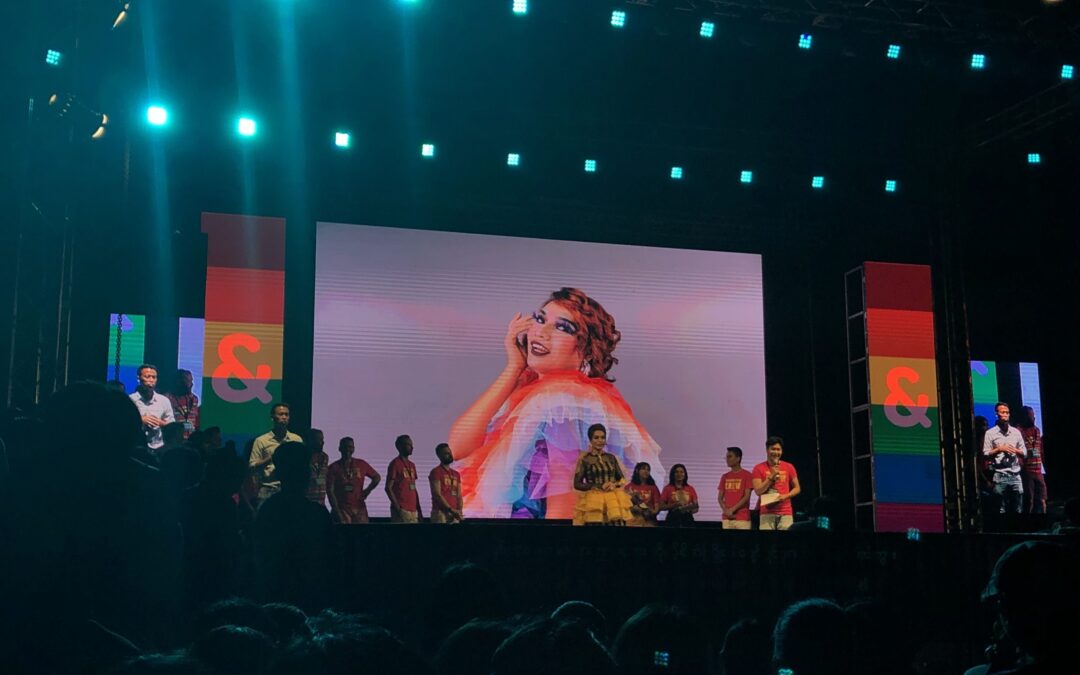
Hla Myat Tun, Deputy Director from Colors Rainbow and Co-Director at &PROUD (Myanmar)
Dr. L Ramakrishnan, Vice President Saathii, activist, public health professional (India)
Nigel Mpemba Patel, Associate editor at the South African Journal on Human Rights and research consultant at ILGA World (Malawi)
***
Cover photo by Violaine Biex-Colors Rainbow, Myanmar.
Jul 3, 2020 | News
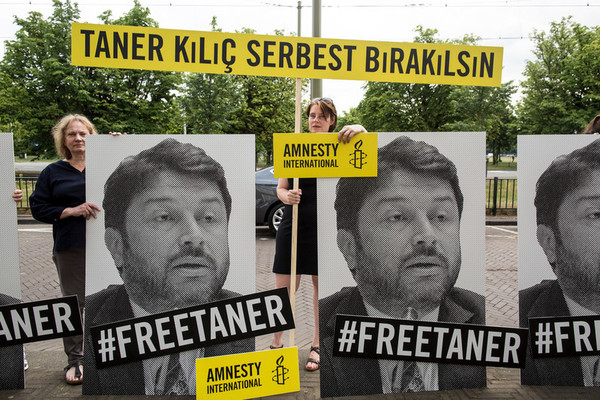
The ICJ deplores today’s conviction of former Amnesty International Turkey President Taner Kılıç, and former Chair of Human Rights Agenda Association Günal Kurşun, former Director of Amnesty International Turkey İdil Eser and human rights defender Özlem Dalkıran by the Istanbul 35th Heavy Penal Court, on clearly unfounded terrorism charges.
“These convictions, which were clearly revealed to be baseless during the trial, are an alarming setback to efforts to restore the rule of law in Turkey,” said Massimo Frigo, Senior Legal Adviser for the ICJ Europe and Central Asia Programme.
“This prosecution and conviction constitute harassment of human rights defenders, in violation of a number of Turkey’s international legal obligations. The Turkish authorities should be protecting human rights and supporting the important work of human rights defenders, but instead we have witnessed a continuing pattern of arrests on human rights defenders in the country,” he added.
Taner Kılıç has been sentenced to six years and three months of imprisonment for “membership of a terrorist organization. Günal Kuşun, İdil Eser and Özlem Dalkıran were sentenced to one year and 13 months of imprisonment for “assisting a terrorist organisation”. This decision was taken by majority, with one dissenting opinion that called for their acquittal.
The Court acquitted the other defendants in the case: Nalan Erkem, İlknur Üstün, Ali Gharavi, Peter Steudtner, Veli Acu, Nejat Taştan et Şeyhmus Özbekli.
On 6 June 2017, Taner Kiliç, then President of Amnesty International Turkey was arrested on spurious terrorism charges. The other human rights defenders were arrested while attending a training in Istanbul on digital security and information management; also reported arrested were two trainers (reportedly a German and a Swedish national) and the owner of the training venue.
In Turkey, anti-terrorism offences are oftentimes abused and are applied in over-extensive terms to charge and prosecute human rights defenders and political dissenters, as it occurred in this case. The ICJ has highlighted this problem in several reports, including in its submission to the UN Human Rights Council on the universal periodic review of Turkey.
Jul 3, 2020 | News
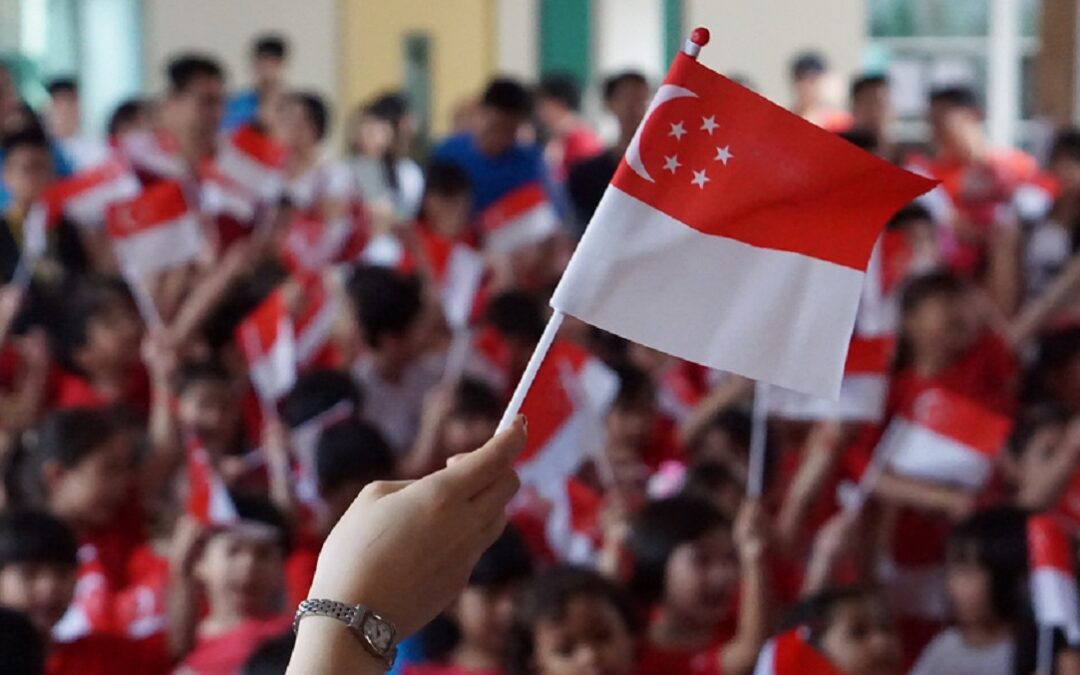
In the lead-up to general elections on 10 July, today, the ICJ, Asian Forum for Human Rights and Development (FORUM-ASIA) and CIVICUS: World Alliance for Citizen Participation (CIVICUS) urged all political parties and parliamentary candidates in Singapore to commit to respecting and protecting human rights and fundamental freedoms as part of their mandate.
The organizations noted the ongoing abuse of legal frameworks by the State to limit the rights to freedom of expression, information, association and peaceful assembly in Singapore. These included the use of civil defamation suits and criminal defamation charges; contempt of court provisions including under the Administration of Justice (Protection) Act; the Protection from Online Falsehoods and Manipulation Act; and the Public Order Act to penalize and harass individuals for mere exercise of their fundamental freedoms.
The organizations urged all political parties and parliamentary candidates to address concerns raised by these laws and ensure fundamental freedoms – including the rights to expression, information, association and peaceful assembly – remain at the forefront of the debate in Singapore.
The open letter is available here.
In a 2019 ICJ report on freedom of expression and information online across Southeast Asia, the ICJ highlighted how defamation provisions, the AJPA and POFMA had been wielded by the State to curtail free speech and access to information online by targeting critical dissent of the regime by human rights defenders, lawyers, independent media outlets and members of the political opposition. The report detailed problematic provisions in the laws and selected case studies detailing this trend.
Contact
Frederick Rawski, ICJ Asia and Pacific Regional Director, e: frederick.rawski(a)icj.org
See also
ICJ, ‘Dictating the Internet: Curtailing Free Expression, Opinion and Information Online in Southeast Asia’, December 2019

Jul 3, 2020 | Advocacy, News
The ICJ published a legal memorandum concluding that the Ministry of Transport and Communications (MOTC) Order to block access to specific websites is not compliant with international human rights law.
The legal memorandum also sets out various remedial options under Myanmar law to question the lawfulness of the Order.
The ICJ focused its human rights analysis on the rights to freedom of expression and access to information and the right to health, which includes access to health information. These rights are well established under general and customary international law. The right to health is guaranteed under the International Covenant on Economic, Social and Cultural Rights (ICESCR) and the Convention on the Rights of the Child, to which Myanmar is a party.
The MOTC, presumably invoking Section 77 of the Telecommunications Law, ordered telecommunication service providers in March 2020 to take down 2,147 websites found by it to have disseminated “fake news,” adult content, and child sexual abuse content. It is not clear if any of the information under sanction relates to COVID-19, although the pandemic was mentioned elsewhere in one mobile service provider’s press release. Immediately after the release of the MOTC Order, it was discovered that the ban included ethnic news media websites, such as Rakhine-based Development Media Group and Narinjara News, thereby prompting speculation as to the true reasons behind the ban.
The ICJ emphasized the following in the legal memorandum:
- Blocking access to specific websites engages a wide range of human rights concerns, including but not limited to the person’s right to freedom of expression and right of access to information protected under Article 19 of the International Covenant on Civil and Political Rights and customary international law. While lack of transparency about the State rationale and evidence was an obstacle to a full analysis, the permissible conditions that would justify sweeping limitations on this right do not appear to have been met.
- In the context of the COVID-19 pandemic, the MOTC Order also undermines the right to health of all persons in Myanmar. The right to health guaranteed under the ICESCR is reserved to all persons without discrimination and includes access to health information. The MOTC Order effectively hinders access to health information by blocking legitimate sources of information.
- To challenge the MOTC Order, the following domestic legal remedies are available: (i) filing a complaint with the Myanmar National Human Rights Commission; (ii) filing an application for a constitutional writ before the Union Supreme Court and/or (iii) filing a declaration suit under the Specific Relief Act.
Download
Myanmar-Memo-on-MOTC-Order-Legal-Memorandum-2020-ENG (PDF)
Contact
Jenny Domino, ICJ Associate Legal Adviser, e: jenny.domino(a)icj.org
Hnin Win Aung, ICJ Legal Adviser, e: hninwin.aung(a)icj.org
Related work
Publication: Myanmar’s ongoing Internet shutdown and hostilities threaten right to health during COVID-19
Statement: Government must lift online restrictions in conflict-affected areas to ensure access to information during COVID-19 pandemic
Report: Curtailing the Right to Freedom of Expression and Information in Myanmar
Publication: Four Immediate Reforms to Strengthen the Myanmar National Human Rights Commission
Publication: Strategic Litigation Handbook for Myanmar
Jul 1, 2020 | News
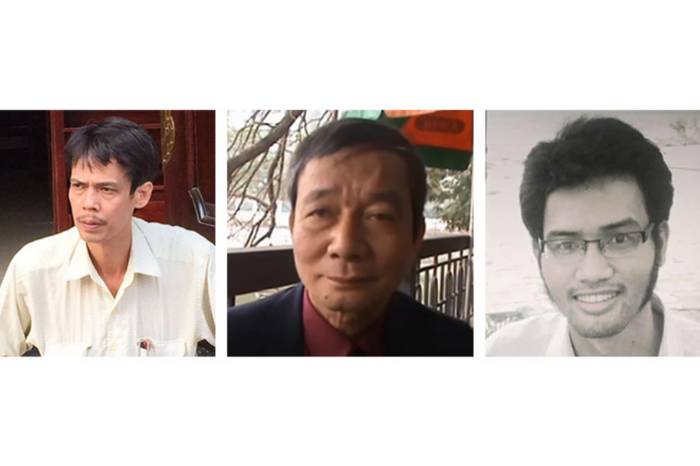
On 30 June, the ICJ and five other organizations sent open letters to the Prime Minister of Vietnam and the European Union (EU) calling for the immediate and unconditional release of human rights defenders, Dr. Phạm Chí Dũng, Nguyễn Tường Thụy and Lê Hữu Minh Tuấn.
The ICJ, Boat People SOS, Human Rights Watch, International Federation for Human Rights, VETO! Human Rights Defenders’ Network and Vietnam Committee on Human Rights in their address to the Prime Minister, urged the Vietnamese government to cease all harassment of other activists from the Independent Journalists Association of Vietnam (IJAVN).
In November 2019, Dr. Phạm Chí Dũng, founding member and Chairman of IJAVN, was arrested in Ho Chi Minh City for allegedly “making, storing, distributing or disseminating materials” that “oppose the State” in violation of article 117 of Vietnam’s Penal Code. He has since been held in incommunicado detention.
Following Phạm’s arrest, a number of persons were subjected to various forms of harassment up to and including arrest and prosecution in connection with their IJAVN membership. In May and June 2020, two IJAVN members, journalist Nguyễn Tường Thụy and law student Lê Hữu Minh Tuấn, were arrested in Hanoi and Quang Nam provinces on similar charges.
In their letters, the ICJ and other organizations raised concerns that Phạm had been targeted and arrested for his human rights advocacy. From 2013 till his arrest, Phạm wrote independently on key rights issues in Vietnam, including on freedom of expression, labour rights, detention of human rights defenders, and harassment of independent civil society. In July 2012, he was arbitrarily arrested under charges of “conducting propaganda against the State” and released in February 2013 after months in prison without trial. In 2014, he was prevented by Vietnamese authorities from travelling to Geneva to participate in a United Nations Human Rights Council side-event connected to the Universal Periodic Review of Vietnam, following which his passport was confiscated.
The organizations noted that the arrest and arbitrary detention of Phạm, Nguyễn Tường Thụy and Lê Hữu Minh Tuấn contravened article 19 of the International Covenant on Civil and Political Rights (ICCPR) which guarantees the right to freedom of expression, as they appeared to have been politically motivated to curtail the rights of the three individuals to freely express their opinions and share information relating to domestic affairs.
In a 2019 ICJ report on freedom of expression and information online across Southeast Asia, national security-related provisions in Vietnam’s Penal Code, including article 117, were shown to have often been abused to curtail free speech and access to information online.
The organizations further noted that the prolonged incommunicado detention of Phạm constituted a violation of the prohibition on torture and other ill-treatment, the right to liberty and the right to be treated with dignity under articles 7, 9 and 10 of the ICCPR.
They further called on Vietnam to protect and facilitate the work of human rights defenders in line with the UN Declaration on the Right and Responsibility of Individuals, Groups and Organs of Society to Promote and Protect Universally Recognized Human Rights and Fundamental Freedoms (Human Rights Defenders Declaration).
The letter to the Prime Minister of Vietnam by the ICJ, Human Rights Watch and VETO! Human Rights Defenders’ Network is available here.
The letter to the European Union by the ICJ, Boat People SOS, Human Rights Watch, International Federation for Human Rights, VETO! Human Rights Defenders’ Network and Vietnam Committee on Human Rights is available here.
Contact
Frederick Rawski, ICJ Asia and Pacific Regional Director, e: frederick.rawski(a)icj.org
See also
ICJ, ‘Dictating the Internet: Curtailing Free Expression, Opinion and Information Online in Southeast Asia’, December 2019