Jun 30, 2020
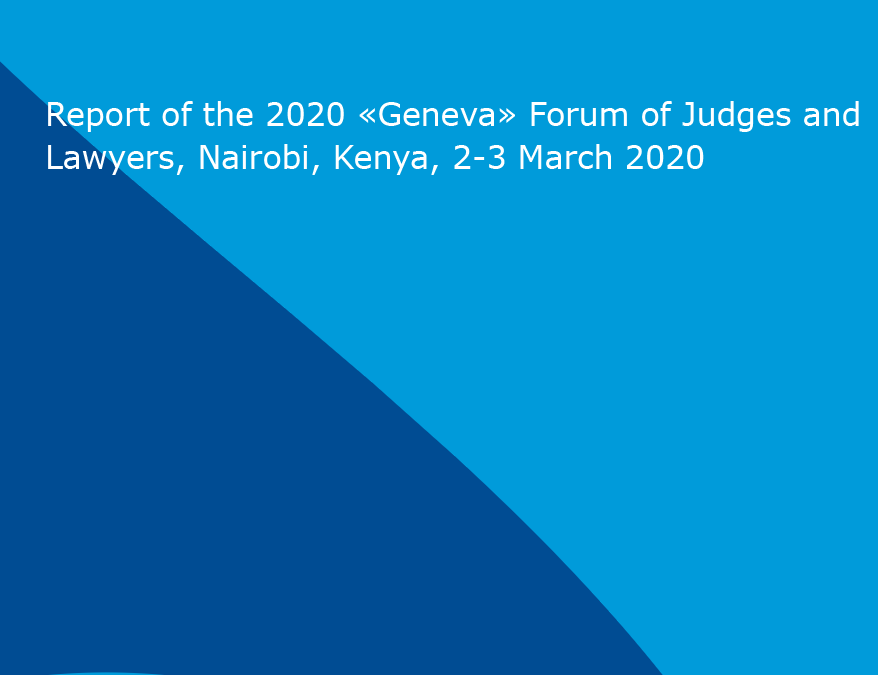
The ICJ has today published a report on customary and informal justice systems, and alternative dispute resolution processes, in the East, Southern and Horn of Africa.
The report is based on discussions at the 10th ICJ “Geneva” Forum of Judges & Lawyers which took place in Nairobi, Kenya, in March 2020.
The ICJ’s Geneva-based Centre for the Independence of Judges and Lawyers, and its Africa Regional Programme, collaborated with the International Development Law Organization (IDLO) to organize the regional Forum, which was convened under the auspices of the Judiciary of Kenya and in cooperation with the ICJ’s national section ICJ Kenya.
The Forum brought together senior judges, lawyers, and other legal experts and practitioners from around the region, from both formal State justice systems and indigenous and other traditional or customary systems, as well as other alternative dispute resolution processes.
Participants exchanged experience and expertise regarding the opportunities for improving access to justice, and methods for mitigating risks that could arise, through constructive engagement with indigenous and other traditional or customary justice systems in the East, Southern and Horn of Africa. The relevance of UN Sustainable Development Goal 16 and global and regional human rights and rule-of-law standards was also highlighted.
The report summarizing discussions at the regional Forum should be read in conjunction with the separately published and periodically updated ICJ publication Indigenous and other Traditional and Customary Justice Systems: Selected International Sources, which compiles relevant treaty provisions, standards, conclusions and recommendations of UN and other expert bodies, as well as the Report of the 8th ICJ Geneva Forum held in 2017 and the Report of the 9th ICJ Geneva Forum held in 2018. Building on her participation in the 2018 Forum, the UN Special Rapporteur on the Rights of Indigenous Peoples devoted her 2019 report to the UN Human Rights Council to the topic of indigenous justice systems.
The Geneva Forum global and regional consultations, the Special Rapporteur’s report and recommendations, and the ICJ’s own research, global experience and expertise, provide a foundation for the development by the ICJ of further legal, policy and practical guidance to be discussed at a conclusory global ICJ “Geneva” Forum on the topic in late 2020, and published before March 2021.
The Geneva Forum is an annual global meeting of senior judges, lawyers, prosecutors and other legal and United Nations experts, convened by the ICJ through its Geneva-based Centre for the Independence of Judges and Lawyers, with the support of the Canton and Republic of Geneva (Switzerland) and other partners.
Each year, participants and the ICJ discuss an issue relevant to the independence and role of judges, lawyers and prosecutors, with a view to developing and disseminating practical guidance for practitioners.
Contact
matt.pollard(a)icj.org
Download
Africa-GvaForum Kenya-Publications-Reports-Seminar or conference reports-2020-ENG
Jun 30, 2020 | Advocacy, Non-legal submissions
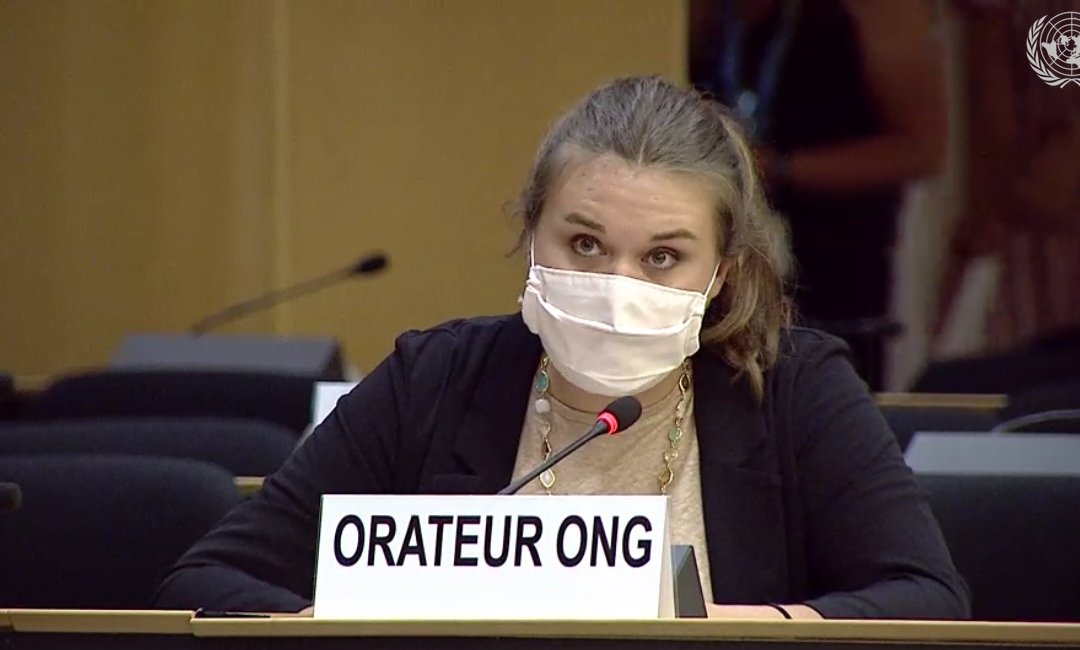
Speaking at the UN Human Rights Council today, the ICJ urged action on longstanding and pervasive impunity for human rights violations in the Philippines and highlighted new threats posed by a pending new counter-terrorism law.
The oral statement, delivered in an interactive debate on the human rights situation in the Philippines based on a report prepared by the High Commissioner for Human Rights, read as follows:
“Madame President,
The International Commission of Jurists (ICJ) concurs with the High Commissioner’s finding that overemphasis by the Government of the Philippines on national security and public order has led to serious human rights violations (A/HRC/44/22, para 12). Such violations will only increase if the draft Anti-Terrorism Act is approved and implemented.
The draft law would, for example, allows detention without judicial warrant for up to twenty-four days. Such prolonged pretrial detention without judicial review This is inconsistent with the prohibition of arbitrary detention under the International Covenant on Civil and Political Rights (ICCPR), and the right under the ICCPR of anyone arrested or detained on criminal grounds to be brought promptly before a judge. The Human Rights Committee has stressed that such judicial control of initial detention periods is not only essential to guarantee the right to liberty but also to prevent torture, other ill-treatment, and enforced disappearance.
In line with both the High Commissioner’s report and the 25 June 2020 statement by a large number of Special Procedures, the ICJ urges the Government of the Philippines to accept the findings and recommendations and rapidly implement corrective measures, in cooperation with the OHCHR, civil society, and the Commission on Human Rights, and to abandon or fundamentally revise the draft Anti-Terror Law. In the absence of clear, effective and measurable progress on accountability at the national level, this Council must stand ready to establish an independent international investigation (para 88(iii)).
Thank you.”
Jun 30, 2020 | Multimedia items, News, Video clips
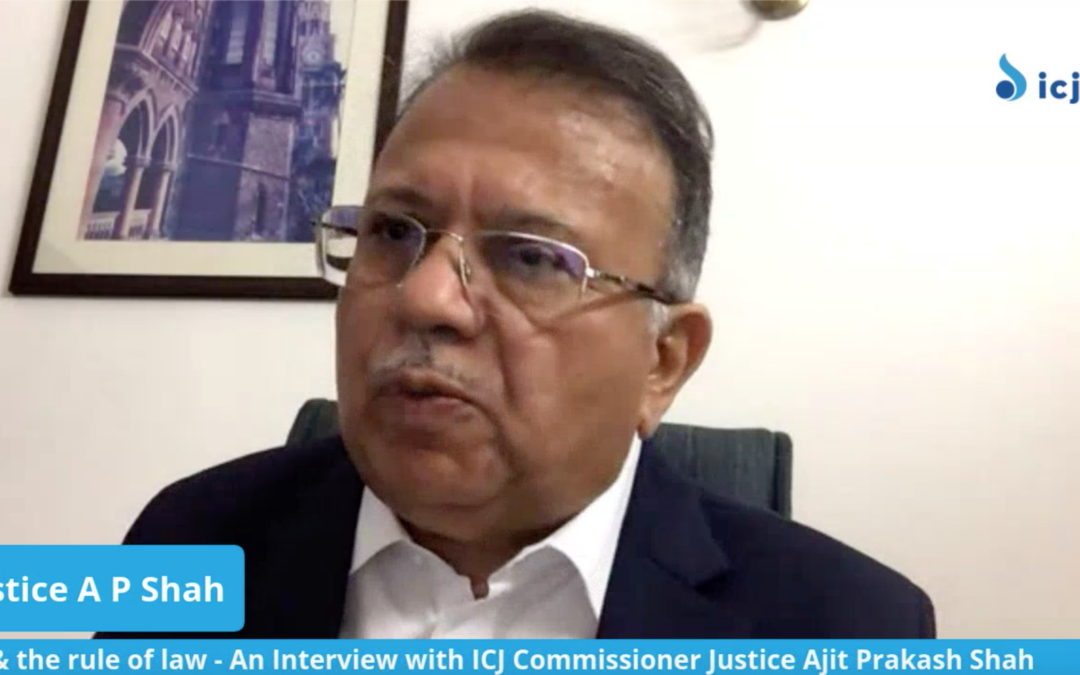
In a wide-ranging interview recorded on June 4 2020, ICJ Commissioner and former Chief Justice of the High Court of Delhi, Ajit Prakash Shah, called on the Indian judiciary to exercise its responsibility to protect peoples’ human rights and “reprise its role as protector of Indian people” in the context of the Covid-19 epidemic.
In April and May 2020, the Indian Supreme Court dismissed several petitions and applications concerning the rights of internal migrant workers.
These included petitions demanding that migrant workers be moved to shelter homes and provided with basic needs and that payment of minimum wages be made to all migrant workers for the lockdown period.
The Court was also requested to direct the District Magistrates to identify those who are walking and ensure that they are provided with shelter and food and reach their destination, following the death of 16 internal migrant workers killed while sleeping on railway tracks while on their way back to their hometowns.
Finally, on 26 May 2020 the Court took suo moto cognizance of their predicament and, on 28 May 2020 ordered the Government to: register internal migrant workers; provide internal migrant workers free transportation home; and provide internal migrant workers with shelter, food, and water until they reach their homes.
This action was followed by another order on 9 June by which the Court ordered that: internal migrant workers are identified and sent to their hometowns within 15 days; and that all cases registered against those who had allegedly violated COVID-19 lockdown orders be considered for withdrawal.
In the interview, Justice Shah accented, in particular, the role of the Indian judiciary “as protector of Indian people” in respect of marginalized and disadvantaged people, including people living in poverty.
In addressing the question about internal migrant workers who were stranded during the recent COVID-19 lockdown, Justice Shah observed that for two months (March 24 2020 – May 28 2020) between the initiation of the lockdown and the rulings of the Supreme Court the Court appeared to have “remained skeptical” and in “denial” about petitions filed seeking redress for internal migrant workers.
Speaking in this context, Justice Shah reminded the Indian judiciary that Indian courts have historically been at “the forefront of giving effect to India’s international legal obligations,” including its economic, social, and cultural rights obligations encapsulated in International Covenant on Economic, Social and Cultural Rights.
They had done so in landmark cases such as PUCL v. UOI (in which it held that the right to life with dignity includes a right to food and a right to be free from hunger and starvation) and Chameli Singh v. UOI (in which it held that right to shelter includes adequate living space includes light, air, water, civil amenities, and sanitation).
While commending the Courts interventions in May 2020, Justice Shah pointed out that their lateness to react was damaging.
“Courts should have intervened earlier. They could have monitored the process of the return of the migrants to their home states and ensured basic wages were fixed and delivered.”
Justice Shah expressed hope that the 28 May 2020 order represented a turning point:
“Hopefully, going forward, the Court will act in the same spirit … to grant some reliefs to suffering migrant communities. In the future, the Court should take the lead and monitor these processes, serving as a guide to both the center and the state authorities and the bureaucracy for addressing these issues.”
Commenting on the role of lawyers during the COVID-19 crisis, Justice Shah expressed concern that law officers were castigating lawyers for approaching courts with petitions.
Watch the video
Additional Reading
- Briefing Papers
- India on the Brink of Hunger Crisis during COVID-19 Pandemic
- The Right to Water in India and the COVID 19 Crisis
- COVID-19 Pandemic Exposes India’s Housing Crisis
- Press Release: COVID-19: Indian authorities must act immediately to protect internal migrant workers stranded under intolerable conditions
Download (with additional information)
India-Justice-Shah-Interview-Web-Story-2020-ENG (PDF)
Jun 26, 2020 | Cases, News
The ICJ today welcomed the judgment by the Court in the case of Bagirov v. Azerbaijan. It found that the suspension from legal practice and subsequent disbarment of Khalid Bagirov violated his rights to freedom of expression and to respect for private life under Articles 10 and 8 of the European Convention on Human Rights (ECHR).
Khalid Bagirov’s suspension from the practice of law was based on his public criticism of ill-treatment by the police, following the wide media coverage of the death of an individual in police custody. Later he represented the victim as a lawyer in the proceedings.
His subsequent disbarment arose from his remarks about a judge made in the courtroom when representing his client in another high-profile case.
The ICJ intervened in this case as a third party, providing an evaluation of the State’s obligation to protect the right to freedom of expression of lawyers in light of international standards on independence of the lawyers and the consequences of disciplinary proceedings for lawyers’ rights under Articles 8 and 10 ECHR.
The ICJ calls on the Azerbaijani authorities to fully and promptly implement the judgment, including by taking steps to restore Khalid Bagirov as a member of the Azerbaijan Bar Association.
“Khalid Bagirov must now be reinstated as a lawyer and be allowed to resume his legal practice in Azerbaijan,” said Massimo Frigo, ICJ Senior Legal Adviser.
“But in addition, this judgment shows that measures need to be taken to address the systemic problem of unjustified disbarments of lawyers who seek to defend human rights in Azerbaijan. Reforms are needed to ensure that the disciplinary process is independent and fair and that penalties are proportionate.”
In its judgment of 25 June 2020, the Court held under Article 10 of the Convention that the reasons given by the domestic courts in support of Khalid Bagirov’s disbarment were not relevant and sufficient, and that the sanction imposed on him was disproportionate to the legitimate aim pursued, having highlighted that “the disbarment cannot but be regarded as a harsh sanction, capable of having a chilling effect on the performance by lawyers of their duties as defence counsel”.
In relation to Article 8 ECHR, the Court further noted that “…in a series of cases it has noted a pattern of arbitrary arrest, detention or other measures taken in respect of government critics, civil society activists and human rights defenders … Against this background, the Court underlines that, notwithstanding the duties, in particular, with respect to their conduct, with which all lawyers must comply, the alleged need in a democratic society for a sanction of disbarment of a lawyer in circumstances such as this would need to be supported by particularly weighty reasons” which had not been established in this case.
In respect of the suspension of the lawyer, the Government contended that the interference with Mr Bagirov’s rights to private life and freedom of expression had been prescribed by law and pursued the legitimate aims of preventing the disclosure of information received in confidence or maintaining the authority and impartiality of the judiciary.
The Court found that, he was not the victim’s lawyer when he made the impugned statements about the police, furthermore, the Court mentioned that it did not find any provision of domestic law preventing a lawyer from calling for peaceful protests against police brutality for the purpose of preventing violence.
The Court further found that while Mr Bagirov’s remarks, about a judge’s lack of capacity, were capable of being offensive, the sanction imposed on him did not struck a fair balance between the need to protect the authority of the judiciary and the need to protect his rights to private life and freedom of expression.
In this connection, the Court stated that inter alia, Mr Bagirov had confined himself to making a statement in a courtroom as a lawyer, in the context of his objections to the shortcomings of the proceedings.
Background
In addition to its intervention in Bhagirov v Azerbaijan, the ICJ has also intervened as a third party in other cases of lawyers from Azerbaijan (Hajibeyli and Aliyev v. Azerbaijan, nos. 6477/08 and 10414/08, § 54, 19 April 2018).
In 2019, the ICJ published recommendations to the Azerbaijan Bar Association on the role and independence of Lawyers,
In 2016, the ICJ published a mission report Defenceless Defenders: Systemic Problems in the Legal Profession of Azerbaijan
Jun 26, 2020
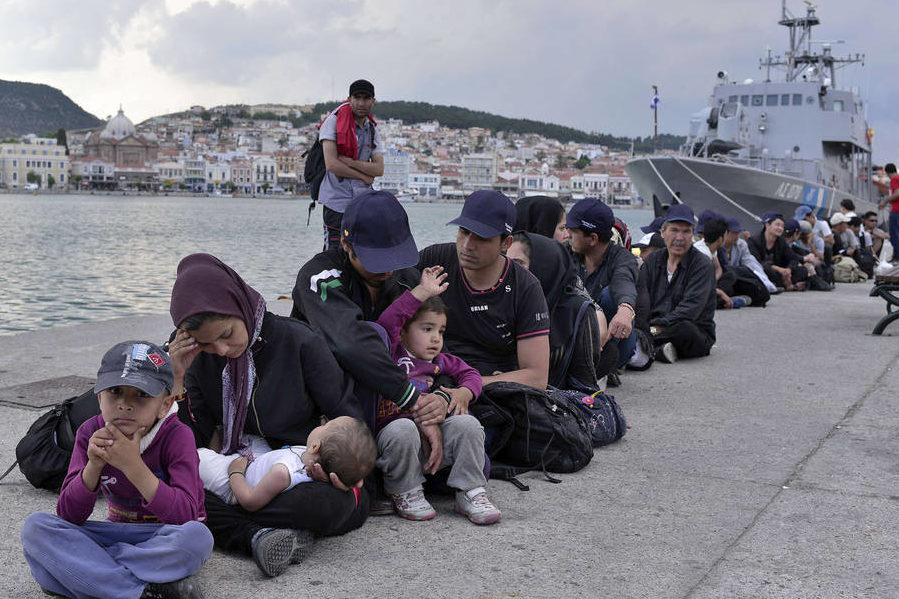
The ICJ publishes today a legal briefing on the impact of COVID-19 related measures on human rights of migrants and refugees in the EU.
Since January 2020, the Coronavirus pandemic has been spreading in Europe. As a result, all EU Member States have taken measures with the stated intention of containing the spread of the virus. These included restrictions on public gatherings, requirements to stay at home except for limited essential activities, and orders to close businesses and cultural and educational institutions. The most severe of these restrictions were in place between March and May 2020, which is the period covered by the paper.
In this period, some EU Member States closed their borders; stopped the registration and lodging of asylum applications; or freedom of movement in and out of reception centers was restricted. Many of these measures affected, often disproportionately, the rights of migrants and refugees.
The briefing paper considers some of these measures, their impact on the human rights of migrants and refugees, and their compliance with international human rights law. It touches in particular upon the following issues: (1) The impact of the closure of the EU external borders and suspension of new and on-going asylum applications; (2) Closure of internal borders and impact of COVID-19 measures on Dublin transfers and the right to family life; (3) Impact of COVID-19 measures on residence permits, right to work and access to health care; (4) Reception and living conditions and (5) Immigration detention.
You will find the briefing here.
The Legal briefing is published in the framework of the FAIR PLUS project funded by the European Union’s Justice Programme (2014-2020). The content of this publication represents the views of the author only and is his/her sole responsibility. The European Commission does not accept any responsibility for use that may be made of the information it contains.