Jun 2, 2020 | News
The ICJ has called on the Russian authorities to institute a prompt, independent and thorough investigation into the recent use of physical force against lawyers Natalia Magova, Diana Sipinova and Liudmila Kochesokova and detention of Diana Sipinova by officers of the Ministry of Interior in the Kabardino-Balkaria Republic.
Those responsible should be held accountable, the ICJ stressed.
According to the lawyers and as corroborated by video recordings available online, they arrived in the Department of the Ministry of Interior in the Kabardino-Balkaria Republic to represent their client Ratmir Jilokov, another lawyer who was detained on 20 May 2020, also following alleged violence against him by the police.
Despite the lawyers’ requests to have access to their client, they were not allowed to meet him. Instead, they were removed from the building of the Department of the Ministry of Interior with the use of physical force by several officers, which resulted in an altercation.
Moreover, Diana Sipinova was detained in the building of the Department for several hours. Both she and Ratmir Jilokov were later released.
“The use of physical force against the lawyers to prevent their meeting their client was clearly contrary to international human rights law and standards, including those on the role of lawyers,” said Temur Shakirov, Senior Legal Adviser of the ICJ Europe and Central Asia Programme.
The ICJ also raised concerns at the criminal proceedings against lawyer Diana Sipinova, following the incident of 21 May 2020, and Ratmir Jilokov, who was detained on 20 May 2020 apparently in connection with having tried to defend a client’s premises from what he considered to be an unlawful search by the authorities.
Both are accused of having used violence against police officers.
Reportedly, the criminal proceedings against Diana Sipinova and Ratmir Jilokov were instituted following their complaints of being subjected to physical attack by the officers of the Ministry of Interior of the Kabardino-Balkaria Republic.
The ICJ highlights that as provided by the UN Principles on the Role of Lawyers, States must ensure that lawyers are able to perform all of their professional functions without intimidation, hindrance, harassment or improper interference and that they do not suffer, or be threatened with prosecution for any action taken in accordance with recognized professional duties, standards and ethics.
International human rights law further guarantees the right of a person deprived of liberty to meet with his or her lawyer.
The authorities should take effective measures to prevent such acts against lawyers in the future, and to ensure that lawyers are not prevented from representing their clients in accordance with law, the ICJ said.
The ICJ furthermore calls on the authorities to terminate the criminal investigations against the lawyers in connection with their attempts to meet with and defend their clients’ interests, and for any other action they have taken in relation to the representation of their clients that was in accordance with their professional duties, standards and ethics.
Background information:
Natalia Magova, Diana Sipinova and Liudmila Kochesokova are lawyers based in Kabardino-Balkaria Republic in the North Caucasus part of the Russian Federation.
According to the official website of the Investigative Department of the Investigative Committee of Kabardino-Balkaria, Diana Sipinova and Ratmir Jikolov are charged with the criminal offence provided for by Article 318.1 (use of violence which does not endanger life or health against the public officials in connection with the performance of their duties) of the Criminal Code of the Russian Federation.
In particular, Diana Sipinova is charged with having used violence against officers of the department of the Ministry of Interior of Kabardino-Balkaria Republic when she requested access to her client on 21 May 2020. Ratmir Jilokov is charged with having used violence against the police officers who arrived in the office of his client to conduct a search on 20 May 2020.
On 30 May 2020, the first instance court imposed the preventive measure for Diana Sipinova of prohibition of certain activities for two months.
Lawyer Ratmir Jilokov, who was detained on 20 May and released on 21 May 2020, claims that the officers who arrived in his client’s office for a search failed to provide him with any legal grounds or the document authorising the search, and that he was subjected to violence when he had challenged the unlawfulness of the officers’ actions. The first instance court imposed the preventive measure of prohibition of certain activities for two months in respect of him.
The Federal Chamber of Lawyers of Russian Federation expressed their support to the lawyers and criticized the interference with their professional functions and actively participated in the defence of the lawyers.
The ICJ has previously raised concerns at violence and intimidation against Russian lawyers.
May 28, 2020
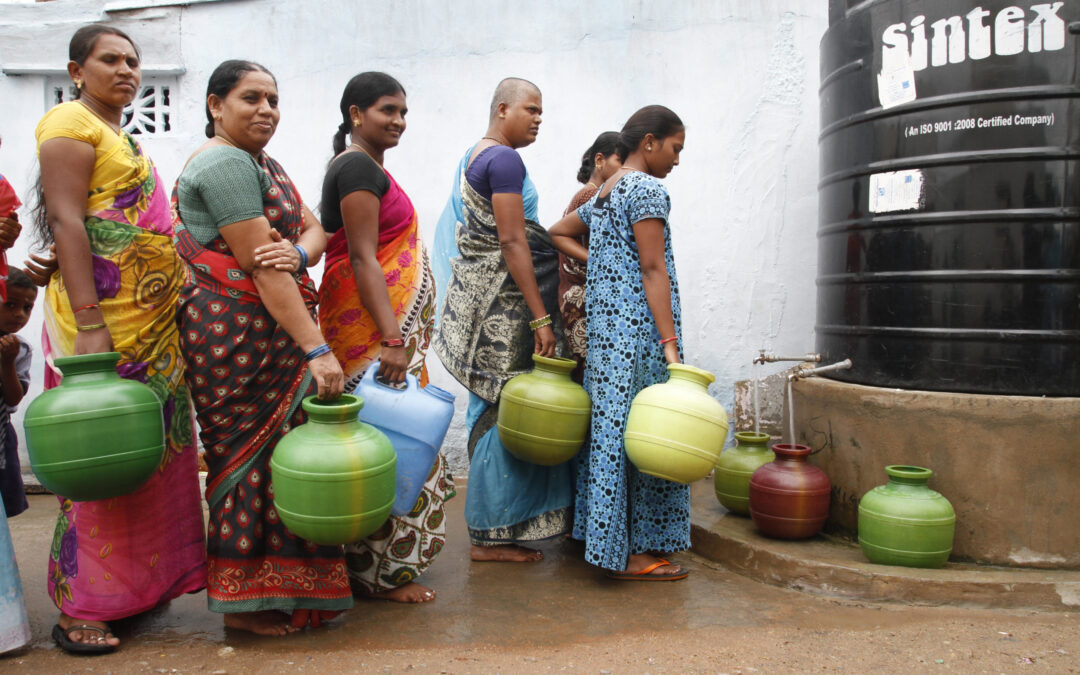
The Indian Government has fallen short of its obligations to guarantee the right to water during the COVID-19 pandemic, the ICJ said in a briefing paper released today.
There is the need for frequent hand washing to protect from, and prevent the spread of, COVID-19. However, for many people, particularly those living in poverty, water of adequate quality and quantity is either unavailable, inaccessible or only intermittently available. This increases the risk of transmission of COVID-19. Indian authorities’ failure to meet their obligations to address this situation results in violation of the rights to water and sanitation, life and health. It also presents a significant public health risk.
In a briefing paper, the ICJ answers the following questions in the context of some of the human rights concerns that have arisen as a consequence of lack of access to adequate water during the COVID-19 pandemic:
- What are the principal concerns regarding the right to water in India?
- What are India’s legal obligations to guarantee the right to water?
- What issues must the Indian authorities address to meet its obligation to guarantee the right to water during COVID-19?
- What does the International Commission of Jurists recommend?
The ICJ calls upon Indian authorities to undertake the following:
- Immediate and Emergency Water Provision:
- Urgently enact and implement enforceable policies and strategies on the provision of emergency water in all water-scarce areas for all people during the COVID-19 pandemic. Such access should be provided regardless of legal tenure, notification status of an informal settlement or any other factor or circumstance. In particular, this must include:
- Provision and cleaning of public hand-washing facilities, soap, other cleaning materials and hand sanitizer on a continuous basis during the COVID-19 pandemic;
- Clear instructions for state governments on the permissible means of providing water and a minimum quantity and quality of water to be provided per household;
- A waiver of water charges for all persons below a specified income level during the COVID-19 pandemic; and
- A cessation of all water disconnections during the COVID-19 pandemic.
- Legal Enforcement:
- Finalize the enactment of enforceable national legislation on access to water which is compliant with India’s obligations in terms of the right to water;
- In the absence of such a law, clarify the legally binding nature of advisories, policies, orders and guidelines issued in relation to access to water in general and access to emergency water during the COVID-19 pandemic in particular; and
- Create and ensure effective operation of water supply helpline for effective and prompt redress of grievances and responses to emergency water needs.
- Monitoring and Information Circulation
:
- Establish independent monitoring mechanisms, with effective participation by community members and civil society organizations, state human rights institutions, and other members as maybe deemed relevant by the Government; and
- Provide regular, accurate, evidence-based information on the spread of COVID-19 to the general public (including via public television and radio) on hygiene measures that are effective in curbing the spread of COVID-19.
Earlier, the ICJ has published briefing papers on the Right to Food and Right to Housing in India, on 27 April and 7 May respectively, urging India to take immediate steps to guard against the “hunger crisis” and “housing crisis”. The ICJ has also highlighted the human rights violations faced by stranded internal migrant workers in India
Infographic
Download the Right to Water Infographic here.
Contact
Download
India-Right-to-Water-COVID-19-Briefing-Paper-2020-ENG (PDF)
May 28, 2020 | Articles, Nouvelles
Un article de Martine Comte, Commissaire française de la CIJ. (Avec une mise à jour)
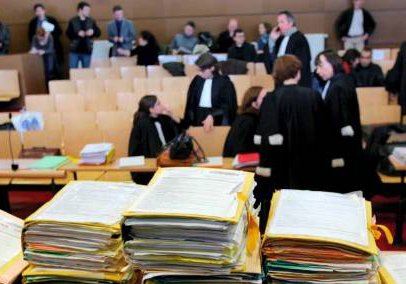
En raison de la crise sanitaire, la loi française n° 2020-290 du 23 mars 2020 habilitait le gouvernement à adapter notamment, par ordonnance, diverses règles de procédure pénale, compte tenu des circonstances.
C’est ainsi que l’article 16 de l’ordonnance n° 2020-303 du 25 mars 2020 prorogeait de plein droit les délais maximums de détention provisoire d’une durée allant de 2, 3 ou 6 mois selon la peine encourue.
L’interprétation de ce texte donnée par le Ministère de la Justice aboutissait à priver les détenus de tout examen contradictoire par un juge de cette prolongation, avec l’assistance d’un avocat, et allongeait automatiquement la durée maximale de détention provisoire possible, et ce, malgré différents recours, tous rejetés par le Conseil d’État.
Cette situation, contraire à la convention européenne des droits de l’Homme, au pacte international relatif aux droits civils et politiques et à la Déclaration universelle des droits de l’Homme, ne cessait d’être dénoncée par différents juristes, qu’ils soient magistrats, avocats ou professeurs de droit, et bien sûr, par les défenseurs des droits de l’Homme .
Elle avait donné lieu à un précédent article sur ce site.
C’est dans ces conditions que le Parlement a adopté, le 11 mai 2020, la loi n° 2020-546 prorogeant l’état d’urgence sanitaire et complétant ses dispositions, publiée le 12 mai 2020, après décision du conseil constitutionnel n° 2020-800 DC du 11 mai 2020 .
Cette loi modifie notamment l’article 16 précité de l’ordonnance n° 2020-303 du 25 mars 2020 et crée un article 16-1 qui met fin, à partir du 11 mai, à la prolongation de plein droit des titres de détention provisoire qui arrivent à échéance, le débat contradictoire devant un juge avec l’assistance d’un avocat redevenant la règle.
Par ailleurs, la prolongation de plein droit du délai de détention intervenue au cours de l’instruction avant le 11 mai 2020, en vertu de l’article 16 précité, n’a pas pour effet d’allonger la durée maximale totale de la détention en application des dispositions de code de procédure pénale, sauf si cette prolongation a porté sur la dernière échéance possible .
Enfin, pour tenir compte des prolongations intervenues avant le 11 mai, ou pour les détentions venant à échéance entre le 11 mai et le 11 juin, des dispositions particulières prévoient l’obligation d’une audience contradictoire devant le juge selon des modalités précises et dans des délais contraints .
Si l’on peut se réjouir que le Parlement ait mis fin à une situation portant atteinte de façon considérable aux droits et libertés fondamentales, il n’en reste pas moins que les juridictions vont devoir appliquer, dans des conditions particulièrement difficiles, des dispositions complexes, et statuer, dans des délais brefs, sur des prolongations de détention intervenues sans aucun contrôle et sans débat ou venant prochainement à échéance.
Il eût finalement été plus simple de respecter dès le départ les garanties fondamentales découlant de la présomption d’innocence et soumettant la privation de liberté avant procès au contrôle d’un juge indépendant, dans le cadre d’un débat contradictoire, avec l’assistance d’un avocat.
Il faut enfin noter que ce texte intervient quelques jours avant que la cour de cassation ne statue sur différents recours portant sur ce point et que sa décision constituera une référence pour savoir comment concilier, dans un contexte tout à fait exceptionnel, les droits humans et les libertés fondamentales avec les impératifs de continuité du fonctionnement des institutions.
Note et mise à jour de la CIJ: Le 26 mai, la cour de cassation a rendu deux arrêts levant les incertitudes sur la mise en oeuvre de l’article 16 de l’Ordonnance n°202-303 du 25 mars 2020 prévoyant la prolongation de plein droit des détentions provisoires. Voir le communiqué et le jugement ci-dessous:
Communiqué
Arrêt détention
May 27, 2020
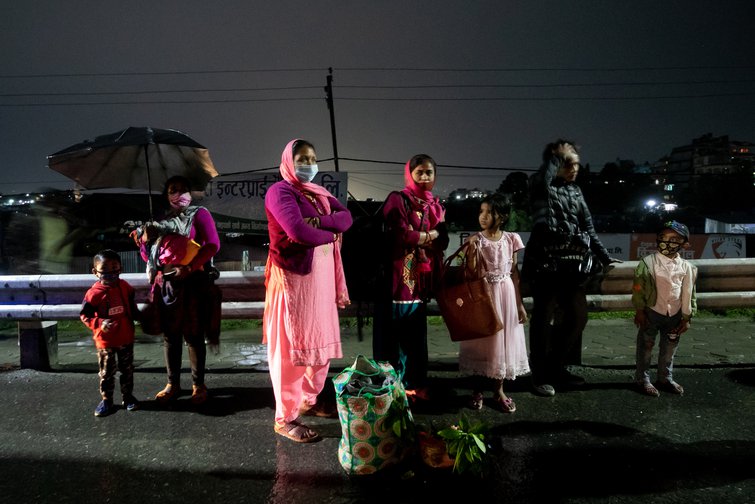
Today the ICJ joined 83 other signatories in calling on States, donors and other stakeholders to protect and promote the rights of stateless persons in their Covid-19 responses.
The call stresses that stateless people who are denied and nationality and deprived of human rights and welfare are facing greater, life-threatening marginalization.
May 27, 2020
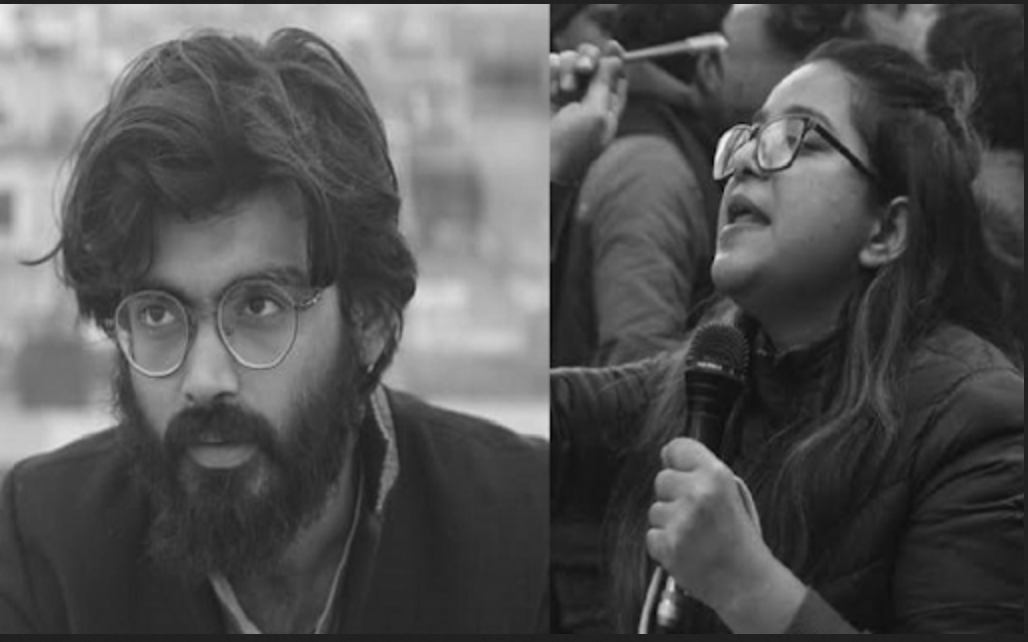
The ICJ, together with 24 other civil society organizations, sent a joint open letter to the Indian Government calling for the release of human rights defenders, all detained under the Unlawful Activities (Prevention) Act (UAPA).
Mr Amit Shah
Union Home Minister of India
Ministry of Home Affairs
Government of India
Re: Release human rights defenders at risk in the context of COVID-19
Dear Home Minister,
We, the undersigned organizations, write with great concern regarding the situation of student activists Safoora Zargar, who is four months pregnant, Meeran Haider, Shifa-Ur-Rehman and Sharjeel Imam, all detained under the Unlawful Activities (Prevention) Act (UAPA). We believe their detention is unfounded and designed to punish them for defending human rights and engaging in peaceful protest against a discriminatory law. In addition, their being jailed in the context of the COVID-19 pandemic is unnecessarily putting their lives and health at serious risk. We urge you to immediately and unconditionally release all four activists, as well as other persons who have been detained, charged, or convicted simply for defending human rights and exercising their right to freedom of expression and peaceful assembly.
Safoora Zargar, Meeran Haider and Shifa-Ur-Rahman are student activists who were involved in protests against the Citizenship (Amendment) Act (CAA) and arrested in April 2020. Safoora Zargar, Meeran Haider and Shifa-Ur-Rahman, were arrested by the Delhi Police on 10 April, 1 April and 24 April on charges of rioting and unlawful assembly, reportedly in connection with their alleged role in the demonstrations.The CAA legitimises discrimination on the basis of religion and contravenes the Constitution of India and international human rights law. Student activist Sharjeel Imam was arrested in January 2020 under charges of sedition for his speech during anti-CAA protests. The additional charges under UAPA were brought in April 2020. All of them are currently in pre-trial detention.
Their situation is not unique. For example, on 14 April 2020, the authorities also detained human rights activists Anand Teltumbde and Gautam Navlakha under the UAPA for allegedly inciting caste-based violence during a 2018 demonstration in Bhima Koregaon, Maharashtra state. Nine other activists have been detained since 2018 in relation to the same case. They are known for their work defending the rights of Adivasi and Dalit communities and should all be released immediately.
We are seriously concerned that the Indian authorities have routinely misused draconian, anti-terrorism laws such as the UAPA, to undermine human rights, stifle dissent and press freedom. This is even more concerning during the COVID-19 pandemic. The slow investigative processes and extremely stringent bail provisions under these laws mean that human rights defenders and others who speak out may face many years behind bars unjustly. In their communication to the Government of India on 6 May 2020, eight UN Special Rapporteurs and the Working Group on Arbitrary Detention raised serious concerns about the 2019 amendment to the UAPA regarding ‘the designation of individuals as “terrorists” in the context of ongoing discrimination directed at religious and other minorities, human rights defenders and political dissidents, against whom the law has been used.’ They also noted that non-violent criticism of state policies or institutions should not be made a criminal offence under counter-terrorism measures in a society governed by the rule of law and abiding by human rights principles and obligations. Arrests of peaceful protesters violate India’s obligations under international law, specifically the International Covenant on Civil and Political Rights (ICCPR), to respect and protect the rights to liberty, to freedom of expression and peaceful assembly, set out in Articles 9, 19 and 21 of that treaty.
On 25 March 2020, the UN High Commissioner for Human Rights urged all states to release “every person detained without sufficient legal basis, including political prisoners, and those detained for critical, dissenting views” in response to the COVID-19 pandemic. With at least 200 prison inmates and jail staff testing positive for the COVID-19 across India, including in Maharashtra, Madhya Pradesh and Karnataka, when the authorities misuse draconian laws to detain activists and human rights defenders, including peaceful protesters, they are not only persecuting them, they are unnecessarily putting their lives at grave risk.
In addition, Safoora Zargar’s pregnancy makes her release even more urgent, particularly amid the COVID-19 pandemic. The United Nations Rules for the Treatment of Women Prisoners and Non-custodial Measures for Women Offenders, also known as the Bangkok Rules, recommend that while deciding on pre-trial measures, non-custodial alternatives should be preferred for pregnant women where possible and appropriate.
The Indian authorities need to ensure that, as they apply the Supreme Court of India’s directive to decongest prisons to contain the spread of COVID-19, they immediately and unconditionally release student activists Safoora Zargar, Meeran Haider, Shifa-Ur-Rehman and Sharjeel Imam who remain in jail simply for peacefully exercising their right to freedom of expression by opposing the discriminatory law. They should also immediately release the 11 rights activists and journalists jailed in the Bhima Koregaon case.
The fight against the pandemic must be inclusive and not selectively used to dissuade and prevent human rights defenders from exercising their human rights.
Download
India-Release-HRDs-COVID19-Joint-Open-Letter-2020-ENG