May 1, 2020 | Advocacy
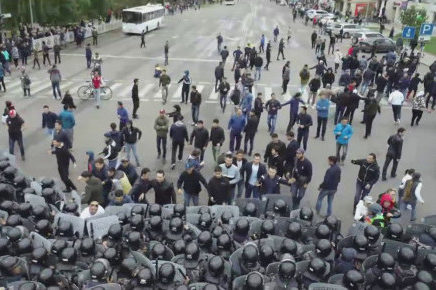
The ICJ, the International Bar Association’s Human Rights Institute (IBAHRI), and the Centre for Civil and Political Rights (CCPR Centre) today published a legal opinion by ICJ Commissioner Professor Sarah Cleveland, on compliance of Kazakhstan’s Draft Law on the Procedure for Organising and Holding Peaceful Assemblies, with the Republic of Kazakhstan’s international human rights obligations.
“Excessive restrictions on freedom of peaceful assembly in Kazakhstan have been of significant concern to the UN Human Rights Committee, the Venice Commission of the Council of Europe, and other human rights bodies for many years,” said Sarah Cleveland.
“Kazakhstan now has an important opportunity to bring its law into compliance with its international human rights obligations, but the draft law currently being considered does not achieve this.”
The Opinion finds that the proposed legislation includes of number of restrictions on freedom of assembly that are fundamentally contrary to Kazakhstan’s human rights obligations, including (1) excessive notification and approval requirements; (2) excessive authority to ban an assembly; (3) a prohibition on spontaneous assemblies; (4) restriction of assemblies to specific locations; (5) preferential treatment for assemblies organized by the government; (6) a prohibition against foreigners, refugees, stateless persons from organizing or participating in assemblies, (7) excessive obligations on organizers and participants; and (8) excessive sanctions for organizers and participants. The timing and process for adopting a law that so fundamentally impacts domestic compliance with core human rights obligations itself raises serious human rights concerns, given the limited ability of civil society organizations and the general public to participate in a robust public debate regarding the law during the quarantine.
In light of these serious human rights concerns, the IBAHRI, the ICJ and the CCPR Centre urge the Senate and/or the President of the Republic of Kazakhstan to halt consideration of the Draft Law, and to seek guidance from the OSCE/ODIHR Panel of Experts on Freedom of Assembly and Association, the Office of UN High Commissioner on Human Rights, and/or the Venice Commission regarding how the current law on freedom of peaceful assembly might be revised consistent with Kazakhstan’s international human rights obligations.
Kazakhstan-Assembly Law Opinion-Advocacy-2020-ENG (full text in PDF)
May 1, 2020 | Advocacy, News
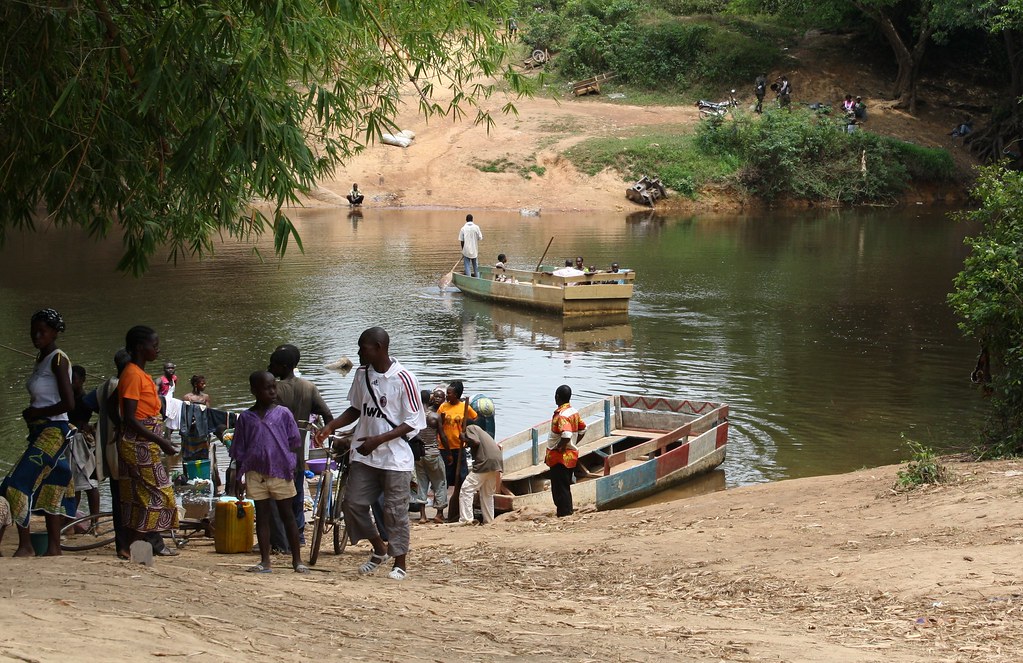
The ICJ today condemned the recent decisions of the governments of the Republic of Benin and Côte d’Ivoire to withdraw their respective declarations that gave individuals and nongovernmental organizations the right to directly bring cases of human rights violations against those States, before the African Court on Human and Peoples Rights.
The ICJ called on the authorities of both States to reconsider and rescind these decisions.
Coming after a similar withdrawal by Tanzania in November 2019, these withdrawal decisions serve to deprive the inhabitants of these countries access to a judicial remedy at the regional level for human rights violations, and undermine the effective of the African regional human rights system.
The ICJ stressed that withdrawal decisions serve to undermine Aspiration 3 of the African Union’s AGENDA 2063, by which the AU aims at “[a]n Africa of good governance, democracy, respect for human rights, justice and the rule of law.”
Both States have offered vague and unsubstantiated rationales for their decisions, but their actions follow their dissatisfaction with the outcomes of particular cases against them. Responses of this kind are effectively an attack on the independence of the Court and can serve to undermine the integrity of the Court itself.
The ICJ recalls that in February 2020, the Executive Council of the African Union called on African States to accede to the Protocol Establishing the African Court and to make the declaration required under article 34(6) of the Protocol. These decisions of the governments of Benin and Côte d’Ivoire to withdraw their article 34(6) declarations fly in the face of this call by the Executive Council of the African Union and greatly threaten the progress that has been made towards protection of human rights in Africa.
Background
Article 34(6) of the Protocol to the African Charter on Human and Peoples’ Rights establishing the African Court on Human and Peoples’ Rights requires that State Parties to the Protocol make a separate declaration in order to allow direct access to individuals and non-governmental organizations to bring cases against them before the African Human Rights Court. Benin which deposited its declaration on 8 February 2016 announced its withdrawal of the declaration on 23 April 2020. Benin claimed that its decision is based ‘dysfunctions and slip-ups’ it has increasingly observed in the work of the African Human Rights Court, allegedly resulting in the Court’s increasing departure from its mandate and core area of competence. Benin cited the earlier withdrawals of Rwanda and Tanzania as further justification for its decision.
Côte d’Ivoire, which deposited its declaration on 23 July 2013 and announced its withdrawal on 29 April 2020, says that its decision was based on what it considers to be ‘the serious and intolerable actions that the African Court has allowed itself’ and which ‘not only undermines the sovereignty of the state of Côte d’Ivoire … but are also likely to cause serious disruption to the internal legal order of states’.
Contact:
Arnold Tsunga, ICJ Africa Director, C: +27716405926, or +254 746 608 859 E: arnold.tsunga@icj.org
Solomon Ebobrah, Senior Legal Advisor, ICJ Africa, C: +234 8034927549; E: Solomon.ebobrah@icj.org
Full text, in PDF: Ivory-Coast-Statement-Advocacy-ENG-2020
May 1, 2020 | News
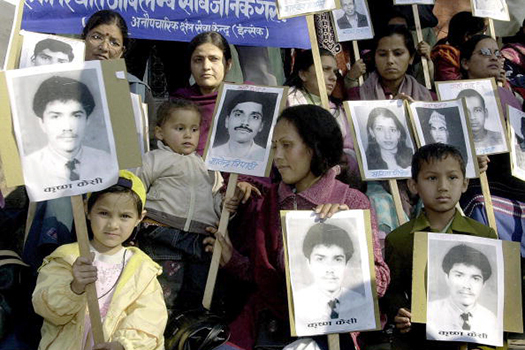
The decision by Nepal’s Supreme Court to reject a petition by the government asking that it review its 2015 ruling against amnesties for grave conflict-era crimes is an important step in securing truth, justice and reparations for the thousands of victims of the country’s decade-long conflict, the ICJ and other groups said today.
The armed conflict between Maoist and government forces ended in 2006, but victims of serious abuses by both sides are still awaiting justice, accountability and reparations.
The ICJ, Amnesty International, TRIAL International, and Human Rights Watch called upon the Government to revise the 2014 Transitional Justice Act and ensure its implementation in accordance with the Supreme Court’s judgments, so as to assure access to justice for the victims of conflict-era abuses.
Nepal’s transitional justice law, which was passed by Parliament in April 2014, established a Truth and Reconciliation Commission and a Commission of Investigation on Enforced Disappeared Persons.
However, it contained provisions that could allow for amnesties even for crimes such as torture, including rape and other sexual violence and ill-treatment and enforced disappearance.
On 26 February 2015, the Supreme Court struck down the amnesty provisions and ordered the act to be amended accordingly. However, the government immediately petitioned to overturn the ruling. That petition was rejected by the court on April 27, 2020.
“With the Supreme Court’s decision, there can be no further excuse for government backsliding on ensuring truth, justice, reparations and guarantees of non-recurrence. The government should immediately amend the Enforced Disappearances Enquiry, Truth and Reconciliation Commission Act, 2014 in line with the Supreme Court’s orders and its own international obligations,” said Biraj Patnaik, South Asia Director at Amnesty International.
With its latest ruling the Supreme Court has upheld the principle that there can be no amnesties for those suspected of criminal responsibility for crimes under international law and human rights violations. More than 13 years since the Comprehensive Peace Agreement of November 2006 promised justice to the victims, no one has been made accountable for any conflict era crimes.
“The request filed by the Nepal Government to review the decision of the Supreme Court was another attempt to evade the real issue: accountability for mass human rights violations. We are delighted that the Supreme Court held its ground and reaffirmed the importance of fair and efficient transitional justice mechanisms,” said Cristina Cariello, the Head of Nepal Program at TRIAL International.
Amnesty International, the ICJ, Human Rights Watch and TRIAL International have repeatedly expressed concerns about the faltering transitional justice process. Besides the failure to amend the law to uphold basic principles of justice, there have been long delays and repeated political interference in appointments to the two transitional justice commissions.
“Over the past decade, the Supreme Court of Nepal has produced some of the most human rights compliant jurisprudence in South Asia. This petition cynically sought to have the Court undermine its own judgement, so that the government could sidestep its responsibility to provide accountability for conflict-related human rights violations,” said Frederick Rawski, ICJ Asia Pacific Director. “The government has no excuse for not immediately amending the transitional justice legal framework so that it is consistent with the Court’s jurisprudence and Nepal’s international legal obligations.”
An effective transitional justice system requires strong legal foundations consistent with international law and standards, and the political will to address the demands of victims of the conflict, the organizations said.
“When Nepal stood for election to the United Nations Human Rights Council the government promised to uphold its human rights obligations, but 3 years later, as it seeks re-election, there has been nothing but impunity and evasion on transitional justice,” said Meenakshi Ganguly, South Asia director at Human Rights Watch. “These are crimes under international law, subject to universal jurisdiction, and if justice is denied at home victims may take their cases abroad.”
Contact
Frederick Rawski, ICJ Asia-Pacific Director, frederick.rawski(a)icj.org, +66644781121
Download
English
Nepali
Apr 30, 2020 | Advocacy, Non-legal submissions
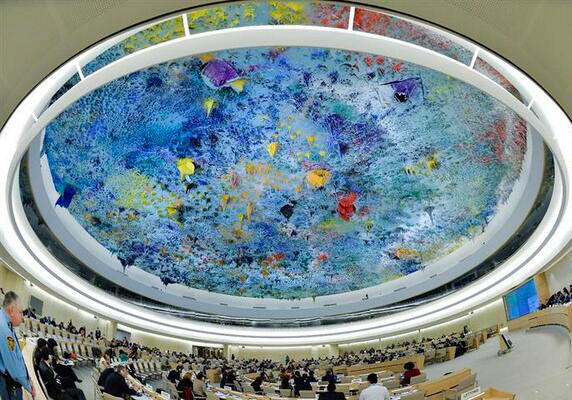
The ICJ has joined other NGOs in highlighting the contribution of independent UN human rights experts in ensuring that measures against COVID-19 are consistent with human rights.
The statement, delivered by Amnesty International on behalf of the group of NGOs in an informal online meeting of the UN Human Rights Council, read as follows:
“We thank the Coordination Committee for the update on the work undertaken by the Special Procedures to date to highlight the human rights impacts of the COVID-19 pandemic.
As States undertake extraordinary measures to curb the spread of COVID-19, we recognize the good faith efforts of many States to effectively protect the right to life, the right to health and other human rights as well as the well-being of their populations, and to curb the spread of COVID-19. States must ensure that quality health services and goods necessary for prevention and care are accessible, available and affordable for all. Health workers and other front-line workers should be provided with adequate protective equipment, information, training and psycho-social support. Key health services, including sexual and reproductive health information and services, should be confirmed as essential services and their provision guaranteed.
We also recognize that in other contexts, States have used emergency powers to enact repressive measures that do not comply with the principles of legality, proportionality and necessity and that may have the effect or intention of suppressing criticism and minimizing dissent.
In this regard, we take heart at the Special Procedures statement that “[t]he COVID-19 crisis cannot be solved with public health and emergency measures only; all other human rights must be addressed too“.[1] We particularly value the vast and interconnected responses by the Special Procedures highlighting the wide-ranging effects of the pandemic itself, as well as of measures taken by states in the name of responding to the global health crisis.
The Special Procedures have addressed the impact on economic, social and cultural rights, such as the rights to health, housing, water and sanitation, food, work, social security, education, healthy environment and adequate standard of living, and to equality and non-discrimination as cross-cutting rights.
The Special Procedures have also highlighted the increased risks of people with underlying health conditions, older people, people who are homeless or in inadequate housing, people living in poverty, persons with disabilities, LGBTI people, children, migrants, refugees and asylum-seekers, people living in refugee or IDP camps, and people deprived of liberty. They have also highlighted the effects on women and girls, calling for responses to consider factors such as their “sex, gender, age, disability, ethnic origin, and immigration or residence status among others“.[2]
We also welcome the various tools that have been developed by some mandate holders, such as the COVID-19 Freedom Tracker, the Dispatches, video messages and guidelines in addition to the vast number of press releases.[3] Making these tools readily accessible to all stakeholders is critical, as is considering ways to receive feedback and share learnings about their application. We encourage the Special Procedures to continue to deepen their analyses of state responses, including through reports to the Human Rights Council and the General Assembly, and to offer guidance, through the tools mentioned, to states on how to respond to the crisis in a human rights compliant manner.
Last but not least, we urge UN member states to cooperate fully with the Special Procedures. While country visits are suspended for the time being, this should not be used as an excuse not to co-operate. We call on states to respond in a timely manner to communications from the Special Procedures and to seek technical and expert advice from relevant mandate holders in relation to draft legislation to ensure that these are in line with states’ obligations to respect, protect and fulfil all human rights.”
The statement was joined by the following organisations:
- Amnesty International
- Asian Forum for Human Rights and Development (FORUM-ASIA)
- Centro de Estudios Legales y Sociales (CELS)
- CIVICUS: World Alliance for Citizen Participation
- Conectas Direitos Humanos
- DefendDefenders (East and Horn of Africa Human Rights Defenders Project)
- Human Rights Law Centre
- Human Rights Watch
- ILGA World – The International Lesbian, Gay, Bisexual, Trans and Intersex Association (International Lesbian and Gay Association)
- International Commission of Jurists
- International Service for Human Rights
[1] https://www.ohchr.org/EN/NewsEvents/Pages/DisplayNews.aspx?NewsID=25746&LangID=E
[2] https://www.ohchr.org/EN/HRBodies/SP/Pages/News.aspx
[3] https://www.ohchr.org/EN/HRBodies/SP/Pages/COVID-19-and-Special-Procedures.aspx
Apr 30, 2020
Today, the ICJ published a briefing paper entitled “COVID-19 and Human Rights: Upholding the Right to Health in Myanmar’s Conflict Areas.”
The briefing paper analyzes the ongoing Internet shutdown in Rakhine and Chin states through a right to health lens amid the COVID-19 pandemic, and its impact on Myanmar’s obligation to uphold the right to health under the International Covenant on Economic, Social and Cultural Rights. Myanmar became a party to the treaty in 2017.
The briefing paper also discusses the right to health and international humanitarian law implications of the attack against World Health Organization employees in Rakhine state in April 2020.
Questions answered include:
- What does the right to health guarantee?
- Who does the right to health protect?
- What are Myanmar’s obligations regarding the right to health?
- How is access to information important to upholding the right to health?
- Do these human rights obligations and protections apply in situations of armed conflict?
- How does the Internet shutdown in Rakhine and Chin states affect Myanmar’s obligation to uphold the right to health?
- What are the legal implications of attacks against medical personnel in areas of armed conflict?
Download
English
Burmese
Contact
Jenny Domino, ICJ Associate Legal Adviser, e: jenny.domino(a)icj.org
Related Work
Statement: Government must lift online restrictions in conflict-affected areas to ensure access to information during COVID-19
Report: Curtailing the Right to Freedom of Expression and Information in Myanmar
Publication: Questions and Answers on Human Rights Law in Rakhine State
Event: ICJ and Myanmar National Human Rights Commission Hold Forum on Economic, Social and Cultural Rights