Mar 27, 2020 | News
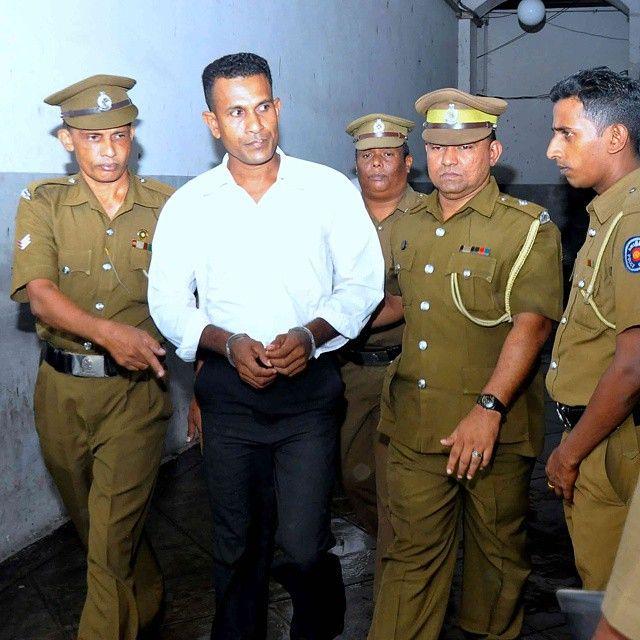
The ICJ today condemned the Presidential pardon granted to murder convict Sunil Ratnayake, Former Staff Sergeant of the Sri Lankan Army.
Sri Lankan President Gotabaya Rajapaksa pardoned Former Staff Sergeant Sunil Ratnayake who was convicted in 2015 for the murder of eight Tamil civilians, including three children, in Mirusuvil in April 2000. The conviction and death sentence was affirmed by the Supreme Court of Sri Lanka in 2019.
The ICJ said that the pardon cast serious doubt upon the Government’s commitment to accountability and the rule of law in Sri Lanka.
While the ICJ welcomes the lifting of the death sentence, the full pardon and extinguishment of serious punishment constitutes a blow to the victims of these violations.
“The prosecution of Staff Sergeant Ratnayake for his involvement in the killing of civilians, including children, at Mirusuvil was a rare exception to the usual lack of accountability for human rights violations committed during the conflict,” said Frederick Rawski, ICJ’s Regional Director for Asia and the Pacific. “Such a pardon is incompatible with international standards relating to impunity and access to justice, and reinforces the well-founded public perception that the military is exempt from any form of accountability, even for the most heinous crimes”.
The ICJ stressed that for serious crimes such as unlawful killing of civilians, there should be no amnesties or pardons that are inconsistent with the right to victims of such violations to reparation.
“It is particularly distressing that a presidential pardon of this nature has been issued at a time when the nation is dealing with the potentially devastating impacts of the COVID-19 outbreak,” said Rawski. “The government would be advised to focus on responding to legitimate calls to release prisoners of minor offences, and take measures to address prison congestion, rather than taking cynical advantage of the crisis to free convicted war criminals.”
It is noteworthy that during his presidential campaign, Gotabaya Rajapaksa had made repeated pledges to release “war heroes languishing in prison over false charges and cases”. The ICJ is deeply concerned that this presidential pardon may be the first of the many to come.
The ICJ has consistently raised concerns about the severe lack of accountability regarding crimes perpetrated by the Sri Lankan armed forces – most recently before the Human Rights Council in February 2020.
The ICJ opposes capital punishment in all cases without exception as a violation of right to life and to freedom from cruel, inhuman or degrading punishment.
Contact
Frederick Rawski, ICJ’s Asia Pacific Regional Director, t: +66 2 619 84 77; e: frederick.rawski(a)icj.org
Mar 26, 2020 | Новости, Пресс-релизы
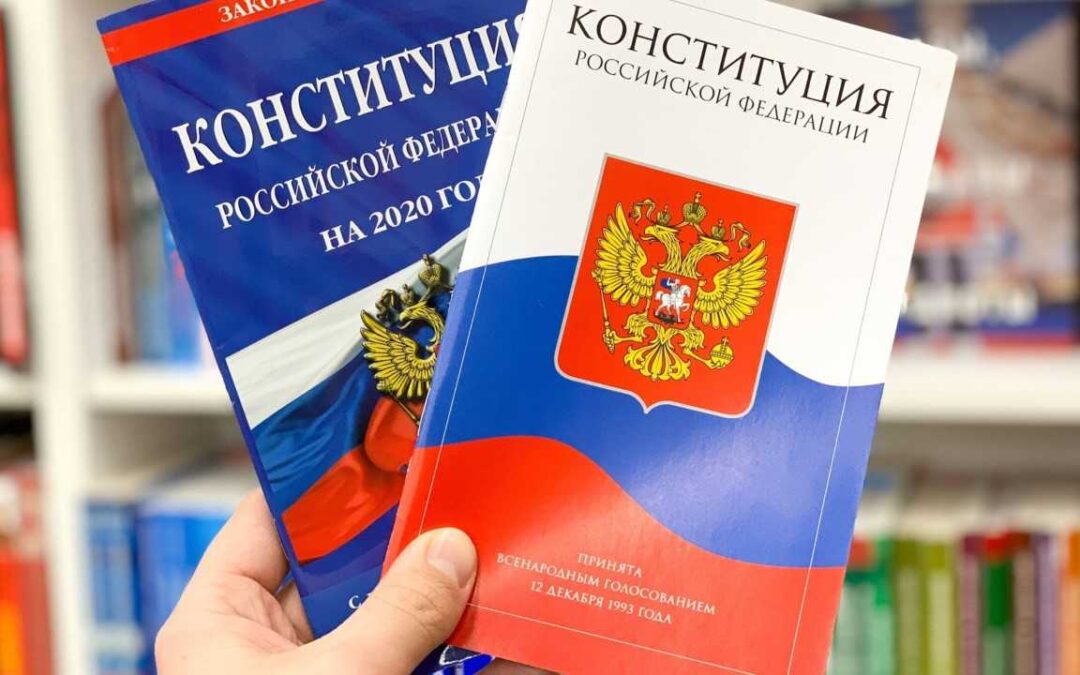
После решения российских властей о переносе даты голосования по поправкам к российской Конституции Международная комиссия юристов (МКЮ) призывает воздержаться от принятия поправок и пересмотреть те из них, которые наносят ущерб принципу верховенства закона и защите прав человека.
«Среди многочисленных поправок есть те, которые ограничивают имплементацию международного права в области прав человека и, в частности, решений международных судов по правам человека в Российской Федерации, – заявила Роушин Пиллей, директор Региональной программы МКЮ по Европе и Центральной Азии. – Другие же поправки наносят ущерб независимости российских судебных органов, так как предусматривают поправки в порядок назначения и отстранения судей».
МКЮ обращает внимание на эти вопросы в аналитической записке по отдельным поправкам к Конституции Российской Федерации, которая была опубликована сегодня.
«Мы призываем российские власти воспользоваться возможностью, которая представилась им в связи с переносом голосования, чтобы пересмотреть поправки, которые окажут пагубное воздействие на способность системы правосудия предоставлять эффективное средство правовой защиты гражданам, права человека которых были нарушены», – подытожила г-жа Пиллей.
Общие сведения
15 января 2020 г. Президент Российской Федерации объявил о решении внести более сорока поправок в текст Конституции, принятой в 1993 г. Поправки будут приняты в рамках нестандартной процедуры, предусматривающей общероссийское голосование, организованное специально для их принятия.
Поправки затрагивают широкий спектр вопросов, при этом не все из них связаны друг с другом. В частности, уменьшают роль международного права и судов, а также ослабляют независимость национальных судебных органов.
25 марта Президент Российской Федерации Владимир Путин объявил, что запланированное голосование по поправкам к Конституции переносится в связи с распространением новой коронавирусной инфекции (COVID-19).
В аналитической записке МКЮ исследуется вопрос о том, каким образом данные поправки могут противоречить международно-правовым обязательствам Российской Федерации и еще больше ограничивать независимость судебных органов. В записке рассматриваются три отдельные поправки, предложенные к Конституции 1993 г.:
- Роль международного права и решений международных судов и других механизмов (статья 125 Конституции)
- Назначение судей (статья 83 Конституции)
- Порядок назначения и отстранения судей (статьи 83, 102 и 128 Конституции).
Russia-constitution changes-Advocacy-Analysis Brief-2020-RUS
Mar 26, 2020 | News
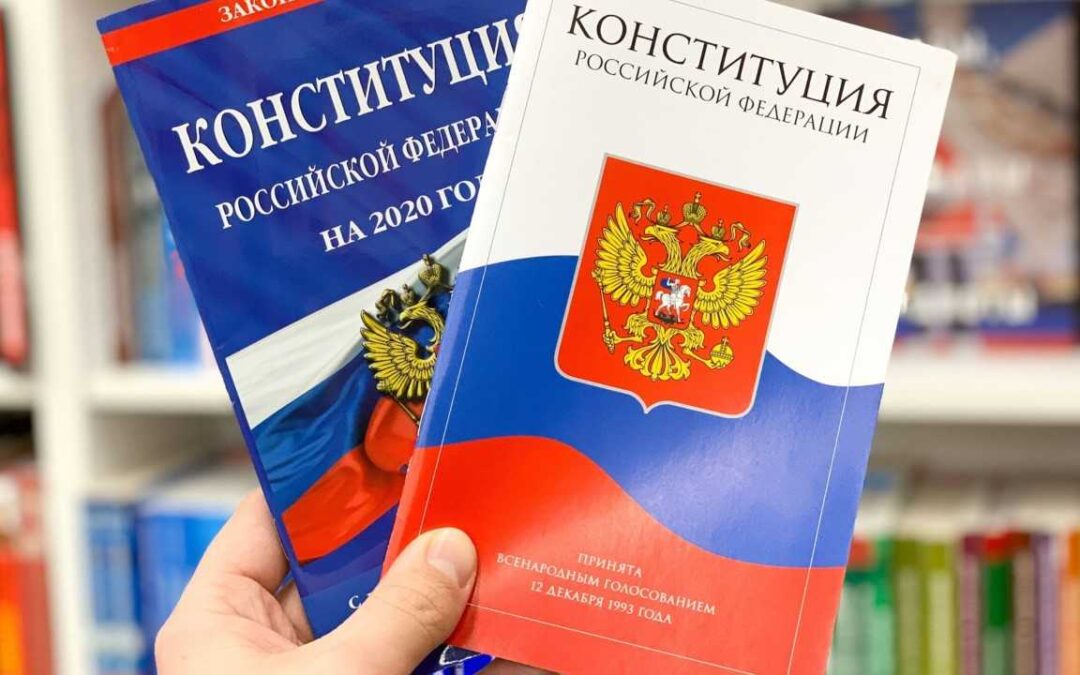
Following the decision to postpone a referendum on amendments to the Russian Constitution, the ICJ calls on the authorities of the Russian Federation to refrain from adoption of the amendments or revise those amendments which are likely to have a detrimental effect on the rule of law and human rights protection.
“Amongst the wide range of amendments proposed, are some that would restrict the implementation of international human rights law, and in particular the decisions of international human rights courts, in the Russian Federation,” said Róisín Pillay, Director of the Europe and Central Asia Programme of the ICJ.
“Other amendments would damage the independence of the Russian judiciary through changes to judicial appointments and dismissal procedures.”
The ICJ draws attention to these issues in a briefing paper on certain amendments to the Constitution of the Russian Federation, published today.
“We urge the Russian authorities to use the opportunity presented by the postponement of the referendum, to reconsider amendments that would damage the ability of the justice system to provide an effective remedy to people whose human rights have been violated,” added Pillay.
Background
On 15 January 2020 the President of the Russian Federation announced a decision to introduce more than forty amendments to the Constitution adopted in 1993. They are to be adopted through an extraordinary procedure which includes public vote, organised specifically for these amendments.
The amendments touch upon a range of issues not necessarily connected with each other. They among other things erode the role of international law and tribunals as well as weaken the independence of the national judiciary.
On 25 March, Russian Federation President Vladimir Putin announced that a planned referendum on the constitutional amendments would be postponed due to COVID-19.
This ICJ briefing paper analyses how these amendments may run contrary to international commitments of the Russian Federation and further impede the judicial independence. The briefing paper addresses three particular changes proposed to the 1993 Constitution:
- The role of international law and of decisions of international courts or other mechanisms (Article 125 of the Constitution)
- Appointment of judges (Article 83 of the Constitution)
- Procedures of appointment and removal for judges (Articles 83, 102 and 128 of the Constitution).
Full Briefing Paper (in PDF): Russia-constitution changes-Advocacy-Analysis Brief-2020-ENG
Mar 26, 2020 | News
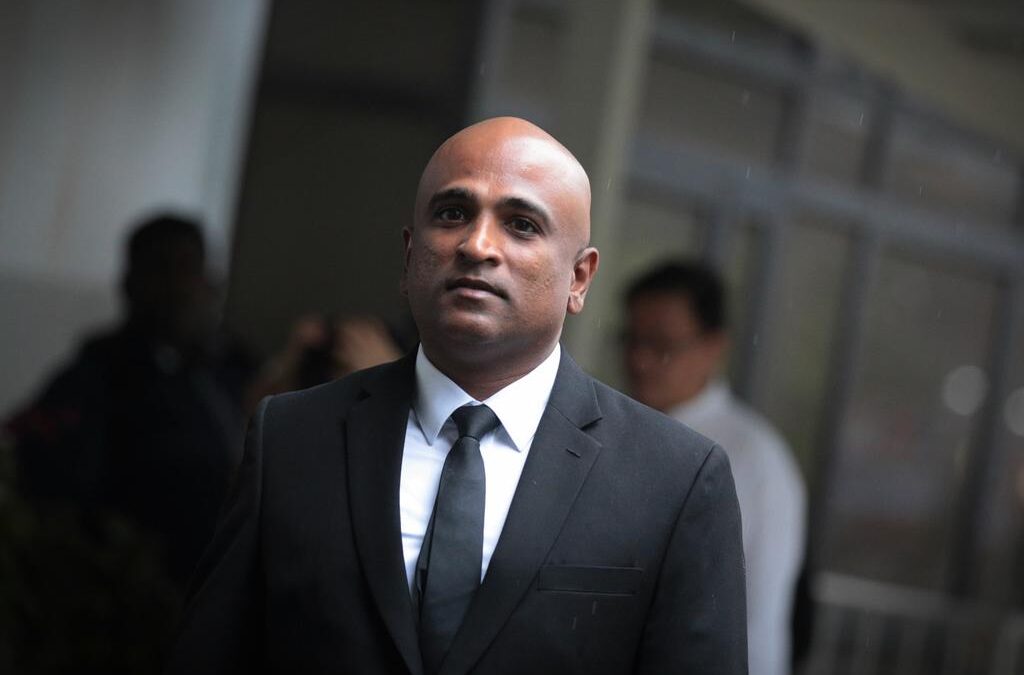
The ICJ, Amnesty International, ARTICLE 19, ASEAN Parliamentarians for Human Rights, CIVICUS and Human Rights Watch today called on Singapore authorities to drop investigations of human rights lawyer M Ravi and two other individuals under Singapore’s contempt of court law and cease their harassment of human rights defenders.
On 13 March, police raided the office of human rights lawyer M Ravi, editor of an independent news website, Terry Xu, seizing his phone, passport and firm’s laptop.
He is apparently under investigation for contempt of court under the Administration of Justice Act (AJPA).
The investigation followed the publication of articles on independent media website ‘The Online Citizen’ (TOC) relating to his client, Mohan Rajangam, a Singaporean who challenged the legality of his extradition from Malaysia in 2015.
The same day, police raided the home of Terry Xu, TOC’s editor, and confiscated his electronic equipment. He is also being investigated for contempt of court under the AJPA, after he published articles on Rajangam’s case. Two other individuals are also being subject to investigation, including Rajangam himself and a writer for the TOC.
Even as the police have stated that the publication online on TOC of parts of Rajangam’s affidavit breached contempt of court regulations, it is unclear what exact content poses a risk of prejudice to the court proceedings.
“The contempt of court doctrine under common law was, for years, used by authorities to curtail speech surrounding politically sensitive topics and cases,” noted Frederick Rawski, ICJ’s Director for Asia and the Pacific.
“After the coming into force of the AJPA, the contempt regime is even more vulnerable for misuse – these current raids and investigations only evidence that how the law can be abused to violate the rights of individuals.”
Investigations of the four individuals for contempt of court continue. The ICJ has been informed that as of 15 March, M Ravi had put the police on notice that the contents of his mobile phone and laptop are subject to legal professional privilege and should remain confidential until a formal ruling is made by a court of law on the matter.
Terry Xu and M Ravi have been targeted and harassed constantly by authorities for information they have released in their professional capacities as an independent journalist and human rights lawyer respectively – notably through abuse of legal mechanisms. Terry Xu is currently fighting pending cases in court relating to alleged defamation of political officials and Singapore’s problematic Protection from Online Falsehoods and Manipulation Act (POFMA). M Ravi has similarly faced action by the Attorney-General’s Chambers for his advocacy against the death penalty.
“In the lead-up to elections, it is even more crucial that the Singapore government ensure that freedom of expression, opinion and information are protected and that independent media is allowed to operate to ensure communication of a diversity of opinions and ideas and inform public opinion,” said Rawski.
“For these reasons we urge the authorities to cease harassment of the four individuals and call on them to drop investigations against them”.
Read the joint statement here.
Contact
Frederick Rawski, ICJ Asia Pacific Regional Director, frederick.rawski(a)icj.org
Background
In its 2019 regional report, ‘Dictating the Internet: Curtailing Free Expression, Opinion and Information Online in Southeast Asia’, the ICJ found that in Singapore contempt of court proceedings have been used to curtail freedom of expression and information under the guise of “maintaining orderly proceedings” and “protecting public confidence in the judiciary”, particularly in cases of online criticism touching on politically sensitive matters.
In October 2017, the Administration of Justice (Protection) Act 2016 came into force, despite well founded concerns that its vague provisions could result in abusive interpretation and implementation, given existing trends of use of contempt of court under common law to limit freedom of expression.
The AJPA lowered the threshold for contempt in what is referred to as “scandalizing the Court”, expanding judicial powers to punish such contempt with increased and onerous penalties. Section 3(1) criminalizes the “scandalizing of court” through (i) “impugning the integrity, propriety or impartiality” of judges by “intentionally publishing any matter or doing any act that… poses a risk that public confidence in the administration of justice would be undermined” (section 3(1)(a)); and (ii) “intentional” publishing of any material which interferes with pending court proceedings, or sub judice contempt (section 3(1)(b)). Section 3(1)(a) reduced the threshold for “scandalizing” contempt to a mere “risk” of undermining public confidence in the judiciary, where the common law test established in the landmark case of Attorney-General v Shadrake Alan was to establish a “real risk” of such undermining of confidence. This exacerbated a standard that was already deeply problematic.
Section 12(1) of the AJPA increased the maximum penalty for “scandalizing” contempt to three years’ imprisonment or a fine of S$100,000 (approx. USD 72,051) or both, when under common law, a six-week imprisonment sentence and S$20,000 (approx. USD 14,410) fine had been deemed appropriate.

Mar 25, 2020 | News
The ICJ today called on the South African government to take urgent and immediate measures to ensure the full protection human rights, including economic, social and cultural rights, in the context of the COVID 19 epidemic.
The call comes as South Africa’s 21-day nationwide lockdown is poised to commence tomorrow, 26 March 2020. As it stands the human rights of the majority of South African residents are under serious threat.
“The ICJ is calling on the South African government to take effective measures ensure that addressing one human rights crisis does need lead to new human rights pressures” said Arnold Tsunga, Director of or the ICJ Africa Programme.
“We therefore call on the authorities to take three urgent steps: 1) Declare a moratorium on all evictions; 2) Ensure emergency provision of water to all; and 3) publically repudiate xenophobic statements made by Minister Khumbudzo Ntshavheni and affirm non-citizens rights to work”.
- Declaration of a moratorium on all evictions:
In the context of COVID-19, evictions are particularly dangerous and life-threatening. Evictions risk the further spread of COVID-19 and make it impossible to stay at home as the World Health Organization has advised.
The UN Special Rapporteur on the Right to Housing, has called for a global ban on evictions worldwide, stressing that: “The logical extension of a logical stay at home policy is a global ban on evictions. There must be no evictions of anyone, anywhere, for any reason. Simply put: a global ban on evictions will save lives”. In South Africa, local social movements and human rights organizations have called for a “moratorium” on evictions, as has Abahlali BaseMjondolo a movement of tens of thousands of “shack dwellers” across the country.
The ICJ calls on President Ramaphosa to declare a moratorium on evictions immediately before the commencement of the nationwide lockdown. South Africa must do so to meet its international legal obligations to protect the rights to housing and health.
- Provision of emergency access to water before the lockdown commences:
Many people in South Africa live in informal settlements and rural settings in which access to water, sanitation and basic services are inadequate or inconsistent. The simple instruction of washing one’s hands to prevent the spread of the virus is extremely difficult, if not impossible, for many.
The President announced on 23 March that “emergency water supplies” would be provided in “informal settlements and rural areas”. However, reports from around the country suggest that with lockdown beginning tomorrow many major informal settlements, including Khayelitsha in Cape Town, still do not have sufficient access to such emergency water.
The ICJ calls on President Ramaphosa to ensure that provision is made for all South Africans to have access to basic services, including water, before the commencement of national lockdown. South Africa must do so to meet its international legal obligations to protect the right to water.
- Protecting the right to work of “everyone” including non-citizens:
On 24 March 2020 speaking on national television, Minister of Small Business and Development in South Africa Khumbudzo Ntshavheni said that only spaza shops “owned by South Africans and managed and run by South Africans” will be allowed to continue operating during nationwide-lockdown, ostensibly to ensure the quality of goods and food.
This statement is discriminatory and in violation of South Africa’s commitments in terms of its own Constitution and international human rights law, to ensure non-discrimination and equal protection of the law. It risks a resurgence of existing xenophobic sentiment at a time of crisis which South Africa can ill afford and threatens the livelihood of foreign nationals.
The ICJ calls on President Ramaphosa to withdraw the statement immediately and reaffirm the internationally recognized right to equality of non-citizens including their right to work.
Contact:
Tim Fish Hodgson, ICJ Legal Adviser, e: tim.hodgson(a)icj.org ; c: +2782871990
Shaazia Ebrahim, ICJ Media Officer, e: shaazia.ebrahim(a)icj.org ; c: +27716706719
Background:
The global Covid-19 pandemic has led South African president Cyril Ramaphosa to announce a 21-day nationwide lockdown which will be effective on 26 March at midnight. This follows on from South Africa’s declaration of a “national disaster” on 15 March and the publication of disaster regulations governing the disaster response.
Global consensus on best practice to combat COVID-19, as recommended by the World Health Organization, is for people to stay at home, maintain social distance and intensify hygiene measures including through frequent washing of hands. However, South Africa has well-documented and extremely high levels of poverty and inequality. A number of problems in complying with global best practice in response to COVID-19.
The disaster regulations require that measures taken to combat COVID-19 are implemented “as far as possible, without affecting service delivery in relation to the realisation of the rights” including the rights to housing and basic services, healthcare, social security and education.