Mar 24, 2020 | Articles, Nouvelles
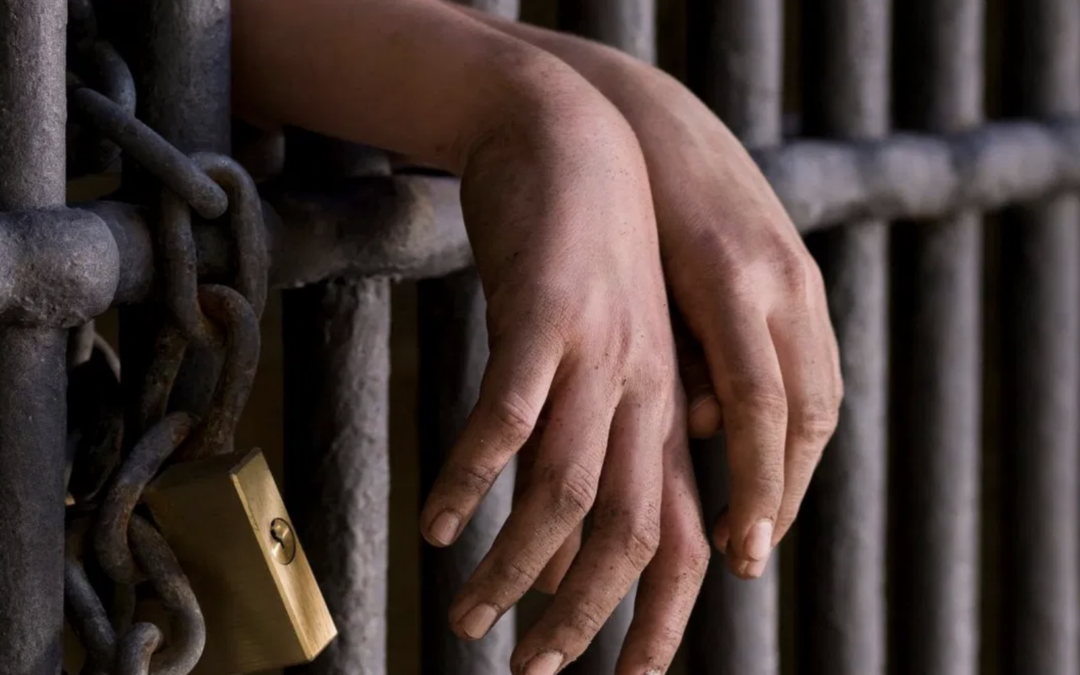
L’ICJ et 39 autres organisations ont exprimé aujourd’hui leur inquiétude par rapport à la situation de la population carcérale des pays du Moyen-Orient et d’Afrique du Nord face à la pandémie du coronavirus.
À la lumière de la pandémie de COVID-19 − qualifiée « d’urgence de santé publique de portée internationale » par l’Organisation mondiale de la santé (OMS) − nous, les organisations soussignées, exprimons notre vive inquiétude quant à la situation des détenu·e·s et des prisonnier.e.s dans la région du Moyen-Orient et de l’Afrique du Nord (MENA).
Si certains États de la région ont pris des mesures positives pour protéger la population dans son ensemble, la population carcérale reste particulièrement exposée à la propagation du virus.
Plusieurs pays de la région MENA ont déjà des systèmes de santé surchargés, certains considérablement affaiblis par des années de conflit armé. Dans ces pays, les prisons et les centres de détention sont souvent surpeuplés, insalubres et souffrent d’un manque de ressources ; en conséquence, les détenu·e·s se voient régulièrement refuser un accès adéquat aux soins médicaux. Ces difficultés ne font que s’aggraver en période d’urgence sanitaire, exposant les personnes privées de liberté à des risques accrus, tout en accentuant la pression sur des infrastructures de santé en prison déjà fragilisées. De plus, les personnes en détention interagissent régulièrement avec les gardien·ne·s de prison, les policier·e·s et les professionnels de la santé qui sont en contact avec le monde extérieur. Ne pas protéger les prisonnier·e·s et le personnel pénitentiaire contre le COVID-19 peut avoir des conséquences négatives pour le reste de la population.
En vertu du droit international relatif aux droits humains, tout individu a droit au meilleur état de santé physique et mentale susceptible d’être atteint. Les États ayant l’obligation de garantir la réalisation de ce droit sont tenus de veiller à ce que les détenu·e·s et les prisonnier·e·s soient traité·e·s humainement dans le respect de leur dignité et ne soient pas soumis·e·s à des traitements cruels, inhumains et dégradants. Les Règles Nelson Mandela exigent le respect du principe d’équivalence des soins, ce qui signifie que les personnes placées en milieu pénitentiaire doivent pouvoir bénéficier de soins de santé équivalents à ceux mis à disposition de la population civile générale. Cela ne change pas en période de pandémie.
Bien que des restrictions, notamment sur les visites en prison, puissent être imposées pour freiner la propagation de maladies infectieuses comme le COVID-19, elles doivent respecter les principes de proportionnalité et de transparence. Toute mesure, y compris les libérations de prisonnier·e·s, doit être prise conformément à des critères clairs et transparents, sans discrimination.
À la lumière de ce qui précède,
Nous appelons les gouvernements de la région MENA à:
(1) Rendre publiques les politiques et directives spécifiques à leur pays et, le cas échéant, les politiques et lignes directrices mises en place pour empêcher la propagation de COVID-19 dans les centres de détention, les prisons et les commissariats de police.
(2) Partager leurs plans d’interventions d’urgence et dispenser une formation spécifique au personnel et aux autorités compétentes afin de garantir un accès suffisant et durable aux soins de santé et à l’hygiène.
(3) Procéder à un examen approfondi de la population carcérale et, en conséquence, réduire leur population carcérale en ordonnant la libération immédiate:
- des détenu·e·s et prisonnier·e·s « à faible risque », y compris celles et ceux qui ont été condamné·e·s ou placé·e·s en détention préventive pour des infractions non violentes, les personnes placées en détention administrative ainsi que toute personne dont la détention continue ne peut être justifiée;
- des détenu·e·s et prisonnier·e·s particulièrement vulnérables au virus, y compris les personnes âgées et les personnes présentant un état médical sous-jacent grave, tel que des maladies pulmonaires et cardiaques, le diabète ou encore des maladies auto-immunes.
(4) Permettre aux personnes actuellement en liberté surveillée de s’acquitter de leurs obligations depuis leur domicile.
(5) Garantir que les personnes qui restent en détention:
(a) voient leur droit à la santé effectivement respecté en ayant pleinement accès aux soins médicaux nécessaires;
(b) aient accès au test du COVID-19 et à une assistance appropriée selon le principe d’équivalence des soins;
(c) disposent de moyens de communication et de possibilités d’accès au monde extérieur lorsque les visites en personne sont suspendues ;
(d) continuent de jouir de leur droit à une procédure régulière, y compris, sans s’y limiter, le droit de contester la légalité de leur détention, et leur droit de ne pas subir de retards qui rendraient leur détention arbitraire.
Nous appelons l’Organisation mondiale de la santé, le Comité international de la Croix-Rouge et les titulaires de mandat au titre des procédures spéciales du Conseil des droits de l’homme des Nations unies à publier des déclarations publiques et des directives mettant en évidence les recommandations et les meilleures pratiques à l’attention de tous les gouvernements en matière de détention et d’emprisonnement en période de pandémie.
Organisations signataires:
ACAT – France (Action by Christians Against Torture)
Access Now
Al Mezan Center for Human Rights
ALQST for Human Rights
Arab Network for Knowledge about Human rights (ANKH)
Arab Reform Initiative (ARI)
ARCI (Associazione Ricreativa Culturale Italiana)
Association of Detainees and Missing in Sednaya Prison
Association for Freedom of Thought and Expression (AFTE)
Bahrain Centre for Human Rights
Bahrain Transparency Society
Bar Human Rights Committee of England and Wales
CIVICUS
Committee for Justice
Democratic Transition and Human Rights support (DAAM Center)
Digital Citizenship Organisation
DIGNITY – Danish Institute Against Torture
Egyptian Commission for Rights and Freedoms
Egyptian Human Rights Forum
El Nadim Center
HaMoked: Center for the Defence of the Individual
Human Rights First
Initiative franco-égyptienne pour les droits les libertés (IFEDL)
International Commission of Jurists
International Federation for Human Rights (FIDH)
Kuwaiti Transparency Society
Lebanese Centre For Human Rights
medico international e.V., Germany
MENA Rights Group
Mwatana for Human Rights
Physicians for Human Rights – Israel
Project on Middle East Democracy
Reprieve
Robert F. Kennedy Human Rights
Syrian Center For Legal Studies and Researches
Syrian Network for Human Rights
Tahrir Institute for Middle East Policy (TIMEP)
UMAM Documentation & Research (MENA Prison Forum)
Women’s March Global
World Organisation Against Torture
PDF: MENA-Covid-19-Prisons-Advocacy-2020-FRA
Mar 24, 2020 | Advocacy, Non-legal submissions
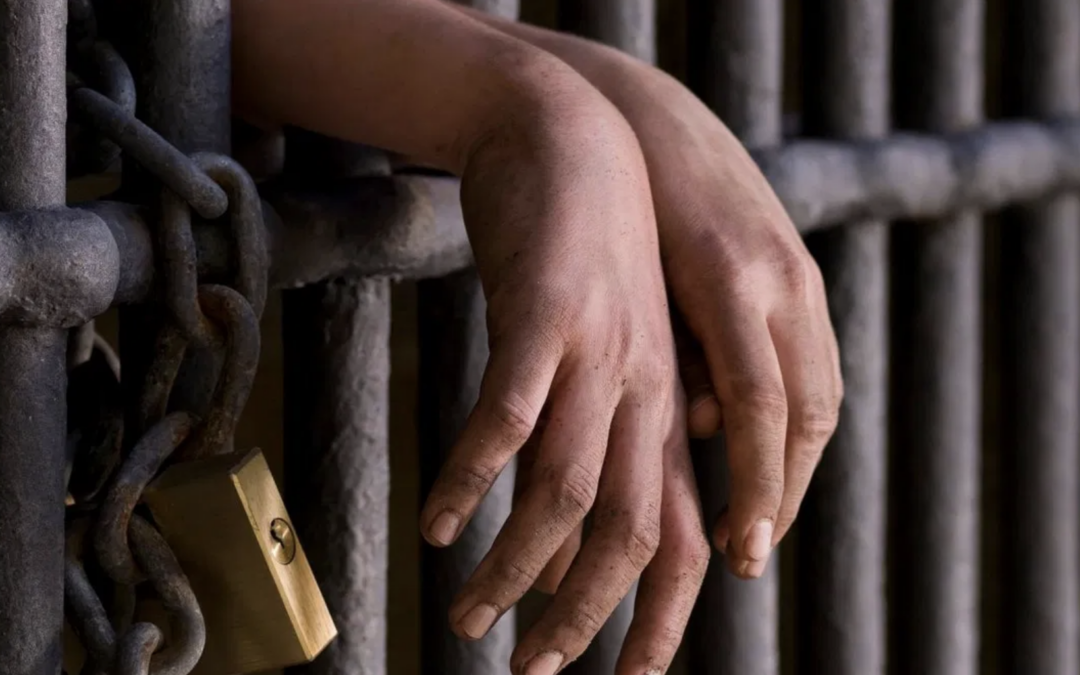
In light of the global COVID-19 pandemic outbreak—qualified as a Public Health Emergency of International Concern by the World Health Organization (WHO)—the ICJ, together with 39 other organizations, today expressed grave concern over the situation of detainees and prisoners across the Middle East and North Africa (MENA) and called on governments in the MENA region to:
- Make known to the public their country-specific, and if relevant, facility-specific policies and guidelines in place to prevent the spread of COVID-19 in detention centers, prisons, and police stations.
- Share their emergency preparedness plans and provide specific training to relevant staff and authorities to ensure sufficient and sustained access to healthcare and hygiene provision.
- Conduct a thorough review of the prison population and in turn, reduce their prison populations by ordering the immediate release of:
-
- “Low-risk” detainees and prisoners, including those convicted or held in pretrial detention (remand) for nonviolent offences; administrative detainees; and those whose continued detention is not justified;
- Detainees and prisoners particularly vulnerable to the virus, including the elderly, and individuals with serious underlying conditions including lung disease, heart disease, diabetes, and autoimmune diseases.
- Allow individuals serving probation and probationary measures to fulfill their probation and probationary measures in their homes.
- Guarantee that individuals who remain in detention:
-
- Have their right to health effectively upheld by being granted full access to medical care as required;
- Access COVID-19 testing and treatment on a standard equal to that governing the general population;
- Are provided with means of communication and opportunities to access the outside world when in-person visits are suspended;
- Continue to enjoy their right to due process, including but not limited to the right to challenge the lawfulness of their detention, and their right not to experience delays that would render their detention arbitrary.
Full English language joint statement (in PDF): MENA-Covid-19-Prisons-Advocacy-2020-ENG
Full Arabic language joint statement (in PDF): MENA-Covid-19-Prisons-Advocacy-2020-ARA

Mar 23, 2020 | News
The ICJ called today on the Parliament of Hungary not to approve a Government bill that would extend indefinitely the emergency powers of the executive to counter the Covid-19 pandemic.
The proposed legislation would enable executive rule by decree, without parliamentary approval, and would impose harsh restrictions on freedom of expression.
“States of emergency, whatever the reason to invoke them, must never be allowed to become permanent,” said Róisín Pillay, Director of the ICJ Europe and Central Asia Programme.
“Emergency measures that restrict human rights must be constantly reassessed to ensure that they remain necessary and proportionate. And even where measures are temporarily necessary, they should be subject to a “sunset clause” that ensure that it can be reviewed and will lapse if no longer justified ”.
The Hungarian emergency legislation includes offences of publishing false or distorted facts that interfere with protection of the public or cause public alarm – offences which have the potential to significantly and unduly restrict freedom of expression.
International human rights law requires that any interference with freedom of expression must be in sufficiently clear terms to be adequately prescribed by law and must be necessary and proportionate to the legitimate aim that it serves.
“This legislation is particularly worrying in a context where the Hungarian government has systematically undermined the rule of law and protection of human rights, including freedom of the media and civil society, and the independence of the judiciary in recent years,” Róisín Pillay added.
“The emergency powers are therefore particularly open to arbitrary or abusive application, without effective scrutiny by parliament or an independent judiciary.”
Background
The Bill on Protection against the Coronavirus (Bill T/9790) in the form of tabled by the Government will extend the state of danger that it had ordered by government decree from 11 March 2020.
The ICJ understands that the Bill will allow the government to rule by decree without Parliamentary scrutiny. The legislation would make it a criminal offence, punishable by imprisonment, to publish false or distorted facts that interfere with protection of the public or that alarm or agitate the public, or to interfere with a quarantine or isolation order.
Under international treaties to which Hungary is a party, including the European Convention on Human Rights and the International Covenant on Civil and Political Rights, States may take emergency measures to derogate from their international human rights law obligations in times of crisis, only the extent strictly necessary to protect the life of the nation. Derogating measures may only limit the scope of certain rights to the extent strictly necessary to meet a threat to the life of the nation, but they do not entirely suspend the applicability of any right in its entirety.
This necessity must be continually re-assessed so that the derogating measures apply for the shortest time possible. Certain human rights, including the right to life, the prohibition of torture or ill-treatment, and the essential elements of arbitrary deprivation of liberty and to a fair trial and the right to an effective remedy can never be restricted even in a state of emergency.
Mar 20, 2020 | News
The ICJ condemned the execution today of four men who were convicted of raping and murdering a 23-year-old student in December 2012.
The ICJ denounced the executions, and urged the Indian Government to abolish the death penalty. It called on the Government to introduce systemic changes to the legal system that would deter violence and improve access to justice for women.
“State-sanctioned executions are little more than public theatre that risk celebrating and perpetuating violence at the expense of the rule of law,” said Frederick Rawski, ICJ Asia-Pacific Director. “As heinous as these crimes were, the imposition of the death penalty – the deterrent effect of which has been widely debunked – does nothing to improve the lives of women.”
According to senior lawyer Vrinda Grover, a renowned Indian human rights defender, “In 2013, the criminal laws were amended; however seven years later the graph of rapes has not diminished.”
Instead of compelling the state to invest in plugging the gaps in the investigation, prosecution and adjudication of sexual crimes and formulating victim oriented processes, the clamour for execution of the convicts has hijacked the discourse. Seven years later, the power of the state to extinguish life stands entrenched, while women and girls in India continue to struggle to live a life of freedom, safety and dignity, as equal persons, ” said Vrinda Grover.
The UN Human Rights Committee has stated that “[t]he death penalty cannot be reconciled with full respect for the right to life, and abolition of the death penalty is both desirable and necessary for the enhancement of human dignity and progressive development of human rights.”
The ICJ opposes capital punishment in all cases without exception as a violation of right to life and to freedom from cruel, inhuman or degrading punishment.
The ICJ called upon the Indian Government to join the large majority of States and take immediate steps to end the practice of capital punishment, as prescribed by repeated United Nations General Assembly Resolutions.
To download the full statement with background information, click here.
Contact
Maitreyi Gupta, ICJ India Legal Adviser, t: +91 77 560 28369 e: maitreyi.gupta(a)icj.org
Frederick Rawski, ICJ Asia-Pacific Director, t: +66 64 478 1121; e: frederick.rawski(a)icj.org
Read Also
ICJ, Press Release, September 2013 – India: Executing perpetrators of Delhi Gang Rape Case ‘counterproductive to preventing sexual violence’