Jul 24, 2018 | Advocacy, Open letters
The ICJ has submitted recommendations to Thailand’s Criminal Justice Reform Committee concerning the Draft Amending Criminal Procedure Code Act and the Draft Act On Judicial Process Timeframe, which were scheduled for public consultation today.
The ICJ welcomed the Criminal Justice Reform Committee’s efforts to enhance the effectiveness and fairness of the criminal justice system in Thailand, through proposed amendments to Thailand’s Criminal Procedure Code B.E. 2551 (2008) and the Judicial Process Timeframe Act.
The ICJ noted, however, that modifications would be necessary to some of these amendments to ensure they optimally served the ends of justice and were in conformity with international standards.
In particular, the ICJ commended the Committee’s inclusion within the Draft Amending Criminal Procedure Code Act of the following provisions and made recommendations as to how these provisions could be further strengthened:
- Section 13/1. Video and audio recordings of arrests and/or searches
- Section 13/2. Prohibitions against violation of the presumption of innocence
- Sections 121/2, 123 and 124/2. Lodging of criminal complaint with the public prosecutor, at any location and through email or other online medium
- Section 136. Video and audio recordings of inquiry or interrogation
- Section 161/1. Right of the court to dismiss a case where it is filed in bad faith or with misrepresentation of facts in order to harass or take advantage of a defendant
- Section 165/1. Allowing the defendant to submit a defence plea and produce supporting evidence in court
- Section 179/1. Trial in absentia
Contact
Kingsley Abbott, ICJ Senior Legal Adviser, e: kingsley.abbott(a)icj.org
Full letter in English (PDF): Thailand-CPC-Amendments-Advocacy-Open-letters-2018-ENG
Full letter in Thai (PDF): Thailand-CPC-Amendments-Advocacy-Open-letters-2018-THA.pdf
Jul 12, 2018 | Advocacy, Non-legal submissions
Today, the ICJ filed a submission to the Human Rights Council’s Working Group on the Universal Periodic Review in advance of its review of Cambodia’s human rights record in January/February 2019.
In its submission, the ICJ expressed concern about the following issues:
(1) Misuse of the law under the false pretext of the ‘rule of law’; and
(2) Lack of an independent and impartial judiciary.
The ICJ further called upon the Human Rights Council and the Working Group on the Universal Periodic Review to recommend to the Cambodian authorities to:
(i) Repeal or amend domestic laws to bring them in line with Cambodia’s international human rights obligations;
(ii) Repeal or amend domestic laws to ensure the independence of the judiciary and remove excessive powers granted to members of the Executive branch;
(iii) Abolish government-issued regulations or directives that contravene human rights protected under international human rights law;
(iv) Halt efforts to bring into force legislation drafted with the purpose of – or in any event –violating rights protected under international human rights law;
(v) End the prosecution of individuals on so-called lèse-majesté charges under the Cambodian Criminal Code and release individuals detained in connection with them;
(vi) End all use of legislation as a tool of harassment, intimidation or silencing of members of the political opposition, civil society, critical media, lawyers, prosecutors, judges and/or individuals;
(vii) Release all prisoners currently imprisoned or detained on politically motivated charges;
(viii) Uphold the right to fair trial of all persons, including of detained persons;
(ix) Take necessary measures to hold to account perpetrators of harassment, intimidation and violence against members of the political opposition, civil society, critical media, lawyers, prosecutors, judges and/or individuals for the legitimate exercise of their fundamental freedoms;
(x) Take necessary measures, in law and in practice, to guard against legal harassment of lawyers, prosecutors and judges on the basis of the political affiliations or agendas of their clients.
Contact
Kingsley Abbott, ICJ Senior Legal Adviser, e: kingsley.abbott(a)icj.org
Full submission in English (PDF) : Cambodia-UPR-Advocacy-Non legal-submission-July-2018-ENG
Jul 11, 2018 | Advocacy, Non-legal submissions
The ICJ today joined other civil society organizations in calling for respect for human rights, and protection of and participation by civil society, to have a greater role in the UN Global Counter-terrorism Strategy.
The joint statement by the organizations followed adoption by the UN General Assembly on June 26th, 2018 of Resolution 72/284, reviewing the United Nations Global Counter-Terrorism Strategy. The UN’s Global Counterterrorism Strategy, first adopted in 2006, sets out a plan of action for the UN and member states at the global, regional, and national level to counter-terrorism.
The organizations emphasise the value of a global counter-terrorism strategy where human rights are an essential component. It notes that the General Assembly resolution importantly reaffirms states’ obligations to comply with international law, including international human rights law, while countering terrorism and that human rights are the “fundamental basis of the fight against terrorism.”
The joint statement expresses concern at States’ failure to adequately address human rights abuses in relation to counter-terrorism measures. It also sets out concerns about member states’ failure to provide an enabling environment for civil society entities, including those relating to women, to be meaningfully engaged in the Strategy review.
The full statement and list of organizations joining it can be downloaded in PDF format here: UN-Advocacy-JointStatement-CounterTerrorismStrategy-2018
Jul 10, 2018 | Advocacy, Non-legal submissions
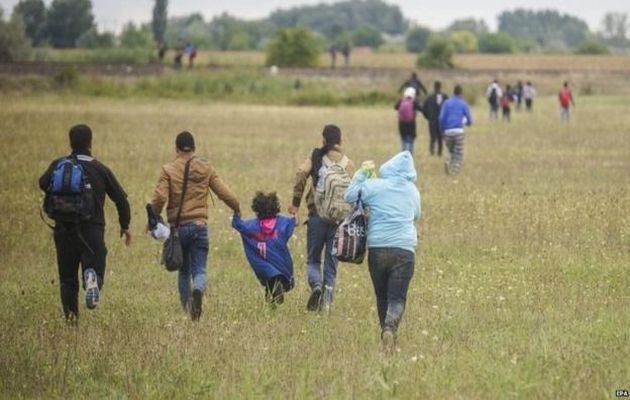
The ICJ has joined almost 180 other organizations in calling for the final draft of the UN Global Compact on Migration (GCM) to reflect strong legal protections for human rights.
Recognizing the potential of the GCM to protect migrants in irregular and/or vulnerable situations, civil society organizations are calling on all States to ensure that the final document truly lives up to the spirit of the New York Declaration for Refugees and Migrants.
The statement was presented to Member States and the GCM Co-Facilitators (the governments of Switzerland and Mexico) in an informal dialogue on Tuesday, 10 July.
The statement calls on States to address the following issues:
- Regular vs. irregular: The GCM must not include a distinction between migrants with regular status and those whose status is irregular which falls below human rights law, international labor standards and other international obligations.
- Non-Refoulement: The GCM must explicitly mention the principle of non-refoulement, which prohibits returning a person to a place where her/his life would be in danger. Including it is fundamental to ensure that migrants are provided with full live-saving protection.
- Vulnerable situations: The GCM must address the situation of vulnerable migrants, and it must not weaken protection for victims of natural disasters and climate change, who are not adequately addressed in the Global Compact for Refugees.
- Right to privacy: The final document must protect migrants’ right to privacy of personal information. Otherwise, the GCM risks preventing them from accessing certain social services and discouraging them from participating in data collection efforts, which are vital for migration management.
- Criminalization of migrants and those who assist them: The GCM must avoid all provisions and language that criminalizes migrants crossing an international border in search of safety or of people and organizations that support to them.
- Detention of migrant children: The GCM must include provisions towards ending the practice of detaining migrant children by explicitly mentioning the availability and accessibility of non-custodial and community-based alternatives.
- Implementation, review, and follow-up mechanisms: The Compact needs robust implementation, review, and follow-up mechanisms to ensure accountability and transparency in achieving its goals. Civil society organizations ask for a fully mandated partnership role in implementation and monitoring the GCM.
To be effective, the statement concludes, migration management must be credible not only to States, but also to migrants.
The statement is available in PDF format here: UN-Advocacy-JointStatement-Migrants-2018
Jul 5, 2018 | Advocacy, Non-legal submissions
The ICJ today joined other NGOs in urging open discussion and debate about countries at the UN Human Rights Council in Geneva, including in discussions of cooperation, despite attempts by some States to interrupt and suppress debate.
The statement was delivered in a General Debate on items 2 and 10 of the Council, by Asian Forum for Human Rights and Development (FORUM-ASIA) on behalf of the group of NGOs. It read as follows:
“Thank you, Mr. President. While we appreciate the importance of technical cooperation, we wish to stress that a debate on technical cooperation will be incomplete if it does not address non-cooperation and country situations that have worsened despite technical cooperation. We are alarmed by efforts to restrict discussion on such situations by some states under Agenda Item 10, including for instance by (the Bolivarian Republic of) Venezuela earlier today.
While we recognise that all delegations including NGOs are required to speak on the topic under discussion, we are deeply concerned when NGOs making relevant statements are interrupted and not given a chance to explain the relevance of their statement, and in some cases are even prevented from finishing the statement. This has happened even when an NGO is speaking specifically on concerns addressed by UN reports listed for discussion in the relevant debate. Statements on Cambodia during the March session of the Council are recent examples.
The concept of international cooperation should never be invoked to shut down any criticism of human rights situations in individual countries. Cooperation cannot succeed without accountability. To be effective, debates on technical assistance and capacity building must be open to frank discussion of the true gravity, character and extent of on-going violations in the country in question, as well as the impact or lack of impact of any assistance already undertaken.
Thank You”
Asian Forum for Human Rights and Development (FORUM-ASIA)
Cairo Institute for Human Rights Studies
Conectas Direitos Humanos
Freedom House
Human Rights House Foundation
Human Rights Watch
International Commission of Jurists
International Humanist and Ethical Union (IHEU)
International Service for Human Rights (ISHR)