Aug 26, 2015 | Incidencia
Hoy, la CIJ y la Organización Mundial Contra la Tortura (OMCT) presentaron a un Amicus Curiae ante la Corte Constitucional de Colombia, sobre una reforma constitucional (Acto Legislativo 01 de 25 de junio 2015, “Por el cual se reforma el artículo 221 de la Constitución Política de Colombia”).
Esta reforma constitucional pretende ampliar de forma exhorbitante el ámbito de competencia de la jurisdicción penal militar y niega los principios de complementariedad entre el Derecho internacional de los Derechos Humanos y el Derecho Internacional Humanitario y de la doble protección del ser humano bajo estas dos ramas del Derecho Internacional en las situaciones de conflicto armado.
La reforma constitucional fue demandada ante la Corte Constitucional por la Comisión Colombia de Juristas, varias Organizaciones No Gubernamentales de Derechos Humanos y asociaciones de víctimas de violaciones a los derechos humanos de Colombia.
Colombia-AmicusCuriaeCIJOMCT-Advocacy-Legal submission-2015-SPA (texto íntegro en PDF)
Jul 14, 2015 | Advocacy, Non-legal submissions
Today, the ICJ delivered an oral statement before the Human Rights Committee during a half a day of general discussion in view of the Committee’s ongoing elaboration of a new General Comment on Article 6 (Right to Life) of the International Covenant on Civil and Political Rights.
The ICJ’s oral statement focussed on the following:
- the principles of equality before the law, equal protection of the law and non-discrimination, as well as non-refoulment;
- State Parties’ duty to protect the right to life in respect of conduct of private actors;
- State Parties’ duty to take measures to protect and ensure the right to life in connection with acts of gender-based violence against women and violence against individuals based on their real or imputed sexual orientation and/or gender identity or expression;
- the relationship between the right to life and certain economic, social and cultural rights;
- the extraterritorial reach of the Covenant; and
- the application of Article 6 during situations of armed conflict.
Universal-ICJ oral statement HALF DAY GENERAL DISCUSSION ON GC-Advocacy-2015-ENG (full text in PDF)

Jul 7, 2015 | Advocacy
The ICJ and 15 other NGOs participating in the first session of the OEIWG to elaborate a treaty on business and human rights highlighted that in principle all conduct by all types of business enterprises, whether local or transnational, shall be addressed in the legally binding instrument.
The footnote in the preamble should not be interpreted as limiting in any way the scope of possible discussions in the Open Ended Intergovernmental Working Group (OEIWG) or any analysis or recommendations that may be reported back to the Council on a future treaty.
Business enterprises that do not have any or any significant transnational operations no doubt are capable of and in many instances have been responsible for human rights abuses no less serious in scale or severity than those of transnational businesses.
The people whose human rights are abused directly or indirectly by businesses are unlikely to distinguish whether the business enterprise that causes them harm has transnational ownership or operations; nor are affected people likely to excuse abuses they suffer from a “local” business simply because the entity lacks a transnational element.
From the point of view of those whose human rights are affected by business activities, the key consideration is not the formal character of the business entity, but instead the their practical access to effective remedy and reparation for the harm they have suffered.
If a treaty is going to take the view and needs of those adversely affected by business activity as a central concern, it must address all business enterprises that can potentially carry out abuses and not only on those with transnational links.
The statement can be downloaded here: Joint Oral Statement on Scope v.2
Jul 1, 2015 | Advocacy, Open letters
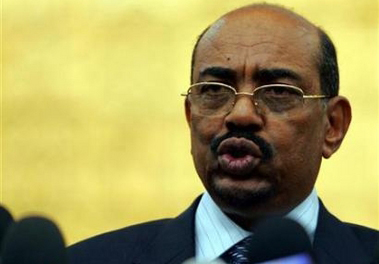
The statement has been endorsed by more than 100 civil society groups, including the ICJ, with representation in more than 25 African states, following Omar al-Bashir’s travel to South Africa from June 13-15.
The declaration raises grave concern over South Africa’s flouting its domestic and international legal obligations in failing to arrest al-Bashir (photo), and applauds the efforts of Southern Africa Litigation Centre, which filed an application before South Africa’s courts to compel al-Bashir’s arrest.
The declaration is a strong testament to support for victims of grave crimes to have access to justice, for the ICC’s efforts to advance justice for crimes committed in Darfur, and for activism to ensure al-Bashir’s surrender to the ICC.
SouthAfrica-Civil Society Declaration on Bashir-Advocacy-Open letters-2015-ENG (full text in PDF)
Jul 1, 2015 | Advocacy
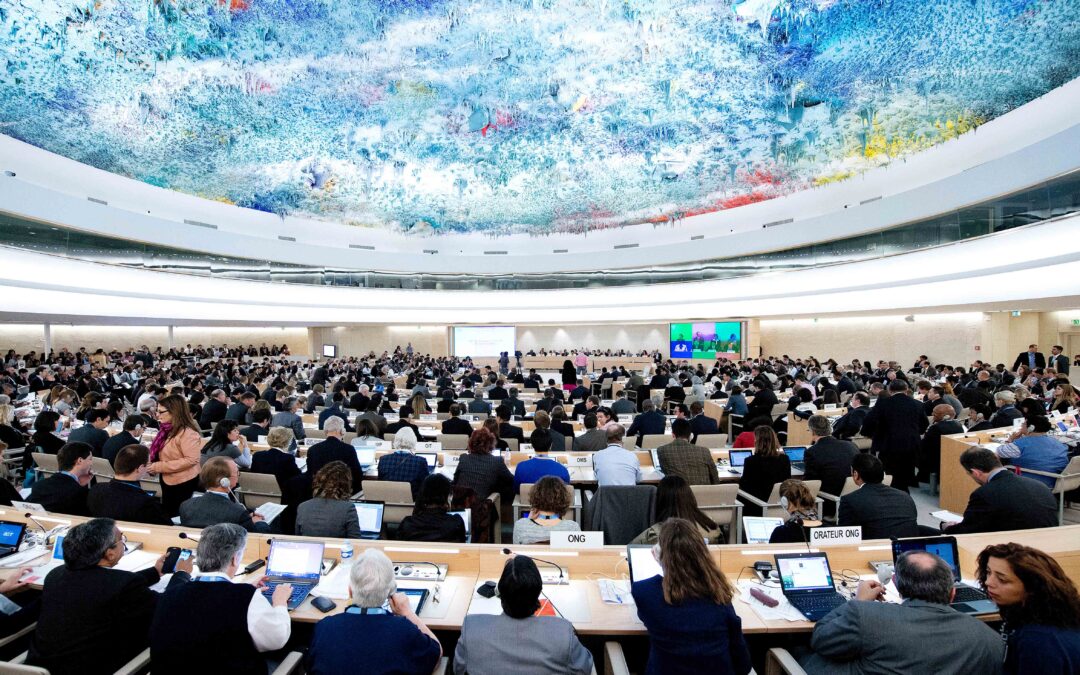
Joint statement by the ICJ and Amnesty International after a group of States, led by Egypt, proposed a resolution on “protection of the family” at the ongoing 29th regular session of the UN Human Rights Council.
Bangladesh, Belarus, China, Cote d’Ivoire, Egypt, El Salvador, Mauritania, Morocco, Qatar, the Russian Federation, Saudi Arabia and Tunisia have submitted a seemingly innocuous draft resolution (A/HRC/29/L.25) that, in fact, underhandedly seeks to divert the Council from its institutional mandate focused on the effective promotion and protection of the human rights of the individuals towards protecting the purported rights of a social institution, namely, “the family”.
The full statement can be downloaded here: Universal-ICJ+AI statement on protection of the family-Advocacy-2015-ENG (in PDF)