Dec 9, 2013
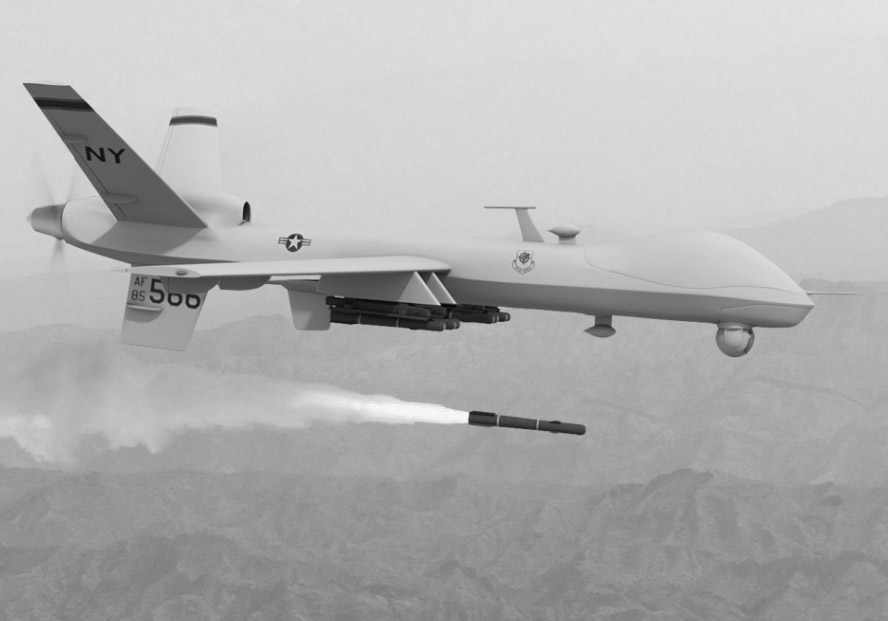
The ICJ continues to be concerned at certain policies and practices of target killing, particularly through the use of drones, by the United States and others, in the context of counterterrorism operations.
This legal memoranda by ICJ Legal and Policy Director Ian Seiderman, entitled The United States Targeted Killing Policy and the Threshold of Armed Conflict, addresses the US war paradigm and what is arguably a misapplication of the appropriate legal regime when conducting counterterrorism operations in a number of countries.
USA-ICJ memo on targeted kilings-advocacy-analysis brief-2013 (download in pdf)
This article appeared in European University Institute’s Robert Schumann Centre for Advanced Studies publication entitled, Targeted Killing, Unmanned Aerial Vehicles, and EU Policy, Policy Paper 2013/17available at http://globalgovernanceprogramme.eui.eu/news-events/high-level-policy-seminars/targeted-killing-unmanned-aerial-vehicles-and-eu-policy/
Nov 20, 2013
The Bangladesh Government must repeal or amend the newly amended Information and Communication Technology (ICT) Act because it is being used to assault freedom of expression and freedom from arbitrary detention, the ICJ says.
The ICT Act, as amended on 6 October 2013, has been used to arbitrarily detain Nasiruddin Elan, Director of prominent human rights organization Odhikar, who was denied bail by the cyber crimes tribunal on 6 November 2013.
His appeal to the High Court division of the Supreme Court has been set for 24 November 2013.
Adilur Rahman Khan, Odhikar’s Secretary, has also been charged under the ICT Act.
The Government has accused the two of deliberately distorting the number of protestors killed in a police crackdown on the Islamist party, Hefazat-i-Islam, in May this year.
“The original ICT Act already served to undermine human rights, but the new amendments make the law nothing short of draconian”, said Sam Zarifi, ICJ’s Asia director. “The Government has used the newly amended Act to try to silence peaceful critics and civil society like Odhikar, in clear violation of international law.”
In a briefing paper issued today (see below), the ICJ analyzes the Information and Communication Technology (amendment) Act, 2013, and points out its serious deviations from international law, including: the amendments make many offences under the Act non-bailable; they allow the police to make arrests without a warrant; they impose a severe minimum prison sentence of seven years for offences under the Act; and they increase the maximum penalty for offences under the law from ten to 14 years’ imprisonment.
Provisions of the original ICT Act, particularly section 57, are also incompatible with Bangladesh’s obligations under Article 19 of the International Covenant on Civil and Political Rights (ICCPR), which Bangladesh ratified on 6 September 2000: the offences prescribed are vague and overbroad; the restrictions imposed on freedom of opinion and expression go beyond what is permissible under Article 19(3) of the ICCPR; and the restrictions are not necessary and proportional to achieve a legitimate purpose.
“The overbroad, vaguely defined offences combined with disproportionate penalties stifle public discourse, especially any criticism of the Government,” Zarifi added. “With elections coming up, it is crucial to defend the right to freely express opinions and exchange views—something the ICT Act seeks to restrict.”
Mahmudur Rahman, acting editor of a Bengali newspaper critical of the Government, has also been arbitrarily detained under the Act for publishing transcripts of a Skype conversation between former International Crimes Tribunal Chairman, Justice Muhammad Nizamul Huq, and a Bangladeshi legal expert, Ahmed Ziauddin.
The records revealed information casting doubt on the independence of the International Crimes Tribunal.
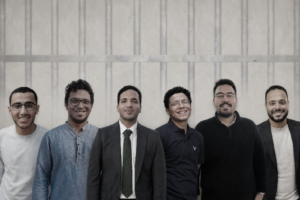
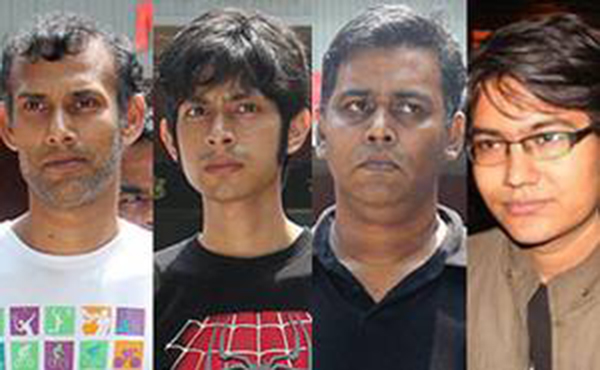
Four bloggers (photo), Asif Mohiuddin, Subrata Adhikari Shuvo, Moshiur Rahman Biplob and Rasel Parvez, are also facing trial under section 57 of the ICT Act for allegedly making derogatory comments about Islam and ‘hurting’ religious sentiment.
“The amended ICT Act reflects a further attack on the rule of law and respect for human rights in Bangladesh,” said Zarifi. “The Government must immediately take steps to either repeal the Act or to modify it in line with international law and standards.”
Contact:
Sam Zarifi, ICJ Asia-Pacific Regional Director, (Bangkok), t: +66 807819002; email: sam.zarifi(a)icj.org
Ben Schonveld, ICJ South Asia Director, (Kathmandu), t: +977 14432651; email: ben.schonveld(a)icj.org
Reema Omer, ICJ International Legal Advisor, (Lahore), t: +923214968434; email: reema.omer(a)icj.org
Bangladesh-ICT Brief -Advocacy-Analysis brief-2013 (full text in pdf)
Oct 2, 2013
Amnesty International and the ICJ comment on the case of three asylum seekers in the Netherlands who say the criminalisation of who they are puts them at risk of being persecuted in their country of origin.
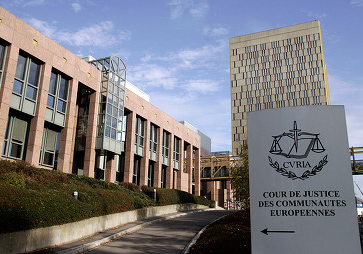
Following Advocate General Sharpston’s Opinion in the case of X, Y and Z v Minister voor Immigratie, Integratie en Asiel (C‑199/12, C‑200/12 and C‑201/12) pending before the Court of Justice of the European Union, in these observations Amnesty International and the ICJ assert that when the criminalization of same-sex acts or conduct provides the possibility of imprisonment upon conviction it would per se give rise to a well-founded fear of persecution irrespective of evidence of recent enforcement.
Europe-Observations by AI and ICJ on X, Y and Z CJEU-analysis brief-2013 (full text in pdf)
Photo: ec.europa.eu
Sep 30, 2013
The ICJ has issued a briefing paper explaining the international legal issues and underlying political context of the case against Nepali Army officer Colonel Kumar Lama in a Question and Answer format.
The case against Nepali Army officer Colonel Kumar Lama, arrested in the United Kingdom on allegations that he was responsible for torture in Nepal, will come before the UK criminal court on 21 October 2013.
“This decision has far reaching implications, not only for the victims in this case but for all victims of torture around the world seeking justice,” said Sheila Varadan, ICJ Legal Advisor for South Asia.
Colonel Kumar Lama was arrested on the morning of Thursday, 3 January 2013 in the UK while he was on leave from his duties as a United Nations Peacekeeper in Sudan.
Exercising the principle of universal jurisdiction, Colonel Lama was charged with two counts of committing torture under Section 134(1) of the Criminal Justice Act 1988 in the United Kingdom.
“This is the first time the UK courts are seriously considering the principle of universal jurisdiction since the Augusto Pinochet case,” Varadan added.
The charges are based on allegations that Colonel Lama participated in the torture of two Nepali detainees in 2005, at the height of Nepal’s decade-long internal armed conflict.
“The case comes at a time when ongoing impunity is causing serious political instability in Nepal and calls for transitional justice mechanism continue to go unheard,” Varadan said.
CONTACTS
Sheila Varadan, ICJ South Asia Legal Adviser (Bangkok), t: +66 857 200 723 (mobile); email: sheila.varadan(a)icj.org
Ben Schonveld, ICJ South Asia Director (Kathmandu), t: +9779804596661 (mobile); email: ben.schonveld(a)icj.org
Nepal-LAMA Case Q & A -advocacy-analysis brief-2013 (full text in pdf)

Jun 19, 2013
The ICJ issues this brief analysis of international standards regarding grounds and procedures for disciplinary action against lawyers in CIS countries.
It is published in response to a pattern of disbarment or suspension of lawyers on improper grounds, in CIS countries.
It outlines the international standards on the role of lawyers; guarantees for the functioning of lawyers; and the principles governing disciplinary action.
These standards reinforce the independence of the legal profession and of individual lawyers; they aim to ensure that lawyers can contribute to the fair administration of justice under the rule of law.
The recommendations, at the end of the document, are based on the legal analysis. They aim to provide guidance for national bar associations and the relevant state bodies.
CIS-icj opinion lawyers discipline law-advocacy-analysis brief-2013-eng (full text in pdf)
CIS-icj opinion lawyers discipline law-advocacy-analysis brief-2013-rus (full text in pdf)