Jan 26, 2021 | News
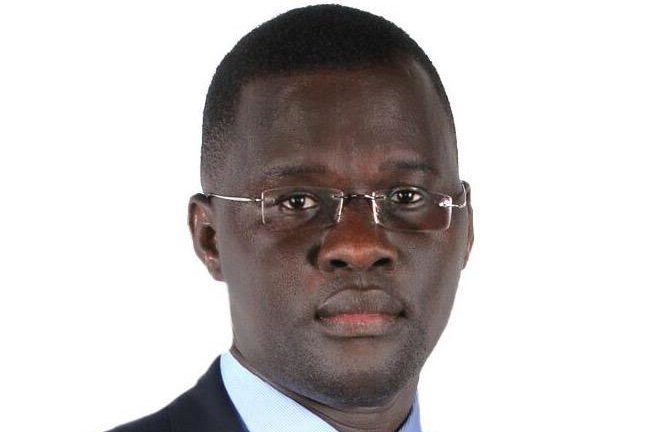
Lawyers for Lawyers (L4L) and the ICJ condemn the spurious charges under the Anti-Money Laundering brought against Ugandan lawyer and human rights defender Nicholas Opiyo and call for them to be dropped.
The organizations consider that this action stands to impede work of lawyers in the country of carrying out their professional functions, particularly regarding human rights work.
There do not appear to be legitimate grounds for these charges or the ongoing prosecution. The organizations are further concerned at numerous alleged violations surrounding the arrest, detention and pre-trial proceedings.
Nicholas Opiyo, Executive Director of Chapter Four Uganda, a civil rights charity working to defend human rights and civil liberties, was arbitrarily arrested on 22 December 2020, not informed of the reason for his arrest and effectively held in incommunicado detention for a prolonged period.
On 22 December 2020, plain clothed law enforcement officers who did not identify themselves seized Mr. Opiyo from a restaurant, along with four other individuals, including three lawyers.
He was later charged under section 3 (c) of the Anti-Money Laundering Act on allegations that he acquired USD 340,000 through the bank account of Chapter Four Uganda, knowing that “the said funds were proceeds of crime”.
Chapter Four Uganda have confirmed that these are legitimate donor funds for lawful purposes.
Sophie de Graaf, the Director of Lawyers for Lawyers, said:
“Lawyers play a vital role in the protection of the rule of law and human rights. It is the responsibility of lawyers to protect and establish the rights of citizens from whatever quarter they may be threatened. Their work is indispensable for ensuring effective access to justice for all. To fulfil their professional duties effectively, lawyers should be able to practice law freely and independently, without any fear of reprisal.”
Kaajal Ramjathan-Keogh, ICJ’s Africa Director, added:
“Uganda is required under its Constitution and under its international legal obligations, to respect and protect the independence of lawyers. These baseless charges seek to intimidate and harass Mr. Opiyo and interfere with his work as a lawyer”.
Lawyers for Lawyers and the ICJ call on the Ugandan authorities to drop the spurious charges against Mr. Opiyo and to ensure that his rights to due process and fair trial are fully respected.
The organizations emphasize that the responsibilities authorities must comply with Uganda’s international legal obligations to ensure that members of the legal profession can carry out their professional functions without harassment and improper interference, including arbitrary arrest and incommunicado detention.
Background
Article 23 of Uganda’s Constitution stipulates that suspects under detention should be brought before a court of law within 48 hours from the time of arrest. Article 27 of Uganda’s Constitution requires that a person charged with a criminal offence should be informed immediately of the charges against them. Article 28 of the Ugandan Constitution guarantees for every person the right to a fair hearing and the right to legal representation. These rights are protected under the International Covenant on Civil and Political Rights and the African Charter on Human and Peoples Rights, to which Uganda is a party.
International and regional standards on ensuring the independence of lawyers are set out in the UN Basic Principles on the Role of Lawyers (UN Basic Principles) and the Principles and Guidelines on the Right to a Fair Trial and Legal Assistance in Africa.
Contact:
Kaajal Ramjathan-Keogh, ICJ Africa Director Kaajal.Keogh(a)icj.org +27 84 5148039
Tanveer Jeewa, Media and Legal Consultant Tanveer.Jeewa(a)icj.org
Jan 23, 2021 | News
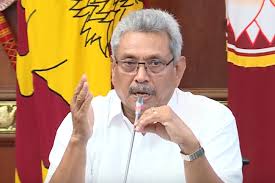
The ICJ stated today that a newly appointed Commission of Inquiry tasked to review reports on past human rights and humanitarian law violations was unlikely to bring justice to victims of conflict era atrocities.
On 21 January 2021, Sri Lankan President Gotabaya Rajapaksa appointed a three-member Commission of Inquiry (CoI), headed by sitting Supreme Court Judge A.H.M. Nawaz to assess the findings and recommendations of preceding CoIs and Committees on human rights violations, serious violations of international humanitarian law and other such serious offences.
“Sri Lanka has an appalling track record on accountability in relation to toothless inquiry mechanisms.” said Ian Seiderman, ICJ’s Legal and Policy Director. “the tendency to set up these kinds of processes just ahead of sessions the UN Human Rights Council raises the suspicion that the announcement is targeted to deflect robust action by the Council beginning next month”
Sri Lanka is due to be taken up at the 46th session of the UN Human Rights Council on 24 February 2021, where the UN High Commissioner for Human Rights will present her report on Sri Lanka’s implementation of Council Resolution 30/1.
The decision to set up this COI was first announced in February 2020, by the Minister of Foreign Affairs at the 43rd Session of the UN Human Rights Council when he declared the Government’s withdrawal of support for the process under Resolutions 30/1, 34/1 and 40/1.
The Commission is tasked with the responsibility of identifying the “manner in which the recommendations have been implemented so far in terms of the existing law and what steps need to be taken to implement those recommendations further in line with the present Government policy.” It has been given a six-month mandate.
COIs and similar bodies established by successive Sri Lankan governments have been ineffective and deeply deficient in terms of their mandate, functions and independence. As the ICJ has previously documented, such mechanisms have largely been partisan mechanisms for punishing political opponents or for shielding perpetrators and institutions from responsibility.
The ICJ called upon the UN High Commissioner for Human Rights and the Member States to acknowledge the Sri Lankan Government’s categorical inability and unwillingness to ensure accountability domestically and urges the Council to explore viable international alternatives to ensure justice for victims of gross human rights violations.
Contact
For questions and clarifications, please contact Osama Motiwala, Communications Officer – osama.motiwala(a)icj.org
Jan 20, 2021 | News
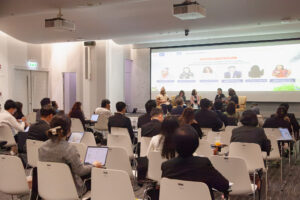
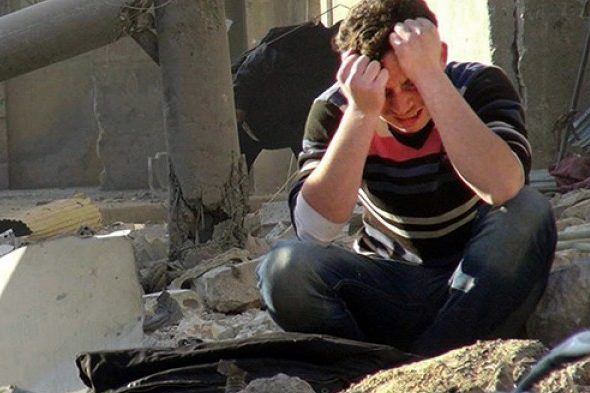
Justice for serious human rights violations requires more effective evidence collection and prosecution, said victims and experts, at a conference organized by the Kingdom of the Netherlands and the ICJ, today.
Keynote speakers included the Prosecutor of the International Criminal Court, Fatou Bensouda, UN Assistant Secretary General for Human Rights, Ilze Brands Kehri, and victim representatives from Myanmar and Yemen.
“The quest for global accountability has progressed tremendously since the ICJ began working nearly 70 years ago,” said Sam Zarifi, Secretary General of the ICJ.
“Over the last three decades in particular we have seen increasing efforts to seek justice at the international level as well as through national courts.”
“We now have to ensure these efforts are more coherent and are able to gather and preserve evidence critical for the successful prosecution of crimes under international law,” he added.
The ICJ has dedicated a Global Accountability Initiative to combat impunity and promote redress for serious human rights violations around the world through the entrenchment of the rule of law.
The Initiative works at the national, regional, and global level to facilitate victims’ access to justice.
“All over the world, perpetrators of serious human rights violations still go unpunished,” said Stef Blok, Foreign Minister of the Kingdom of the Netherlands.
“But this climate of impunity cannot be allowed to continue,” he added.
Impunity for serious human rights violations remains a significant challenge for a variety of reasons including when certain countries obstruct the work of the International Criminal Court.
In response, UN Bodies, including the Human Rights Council and General Assembly, are increasingly being called upon to establish innovative accountability mechanisms often with an evidence collection and preservation function.
Examples include Syria, Myanmar and Yemen where the lack of an UN Security Council referral to the International Criminal Court led the UN General Assembly and Human Rights Council to take action.
At the same time, accountability mechanisms have indicated challenges, including failures of political support, lack of international cooperation, and difficulties in securing the necessary resources and staffing in the amount and time required to effectively fulfill their mandates within the mandate period.
Mr Blok opened today’s online event, in which over 30 countries, numerous NGOs and victim’ advocacy groups discussed how best to enhance these various efforts. The event was moderated by Sam Zarifi.
Fatou Bensouda, Prosecutor of the International Criminal Court
Radya Al-Mutawakel, President of the Mwatana Organization for Human Rights
Ambia Perveen, Vice chairperson of the European Rohingya Council
Omar Alshogre, Syrian refugee and human rights activist
The full video of the conference can be viewed here.
Contact
Kingsley Abbott, Director of Global Accountability and International Justice, kingsley.abbott(a)icj.org
Jan 18, 2021 | Новости, Пресс-релизы
Три выдающихся правозащитника из авторитарных государств номинированы на Премию имени Мартина Энналса для правозащитников в 2021 году.
В Туркменистане, одной из самых закрытых стран мира, журналистка Солтан Ачилова освещает нарушения прав человека в своих фоторепортажах. Люджейн аль-Хазлюль из Саудовской Аравии, отбывающая тюремное заключение, является ведущей активисткой движения за права женщин и сторонником гендерного равенства. До обвинительного приговора и тюремного заключения китайский адвокат Ю Веншенг занимался делами в области нарушений прав человека и оказанием юридической помощи правозащитникам. Все Финалисты отличаются исключительным мужеством и глубокой приверженностью вопросам, которые они отстаивают, несмотря на многочисленные попытки властей заcтавить их замолчать. Мы отдадим дань глубокого уважения самоотверженности наших Финалистов во время церемонии награждения Премии имени Мартина Энналса, которая состоится 11 февраля 2021 года в онлайн-режиме совместно с городскими властями города Женевы, которые в течение многих лет оказывают поддержку Премии, демонстрируя приверженность делу защиты прав человека.
Ничто не сможет помешать нам отметить выдающийся вклад Финалистов в дело защиты прав человека
Ежегодно международной Премии для правозащитников имени Мартина Энналса удостаиваются правозащитники и активисты со всего мира, которые демонстрируют исключительное мужество и приверженность делу защиты прав человека, часто рискуя собственной жизнью. В 2021 году Жюри номинировало трех правозащитников, которые вынуждены вести свою деятельность в условиях авторитарных политических режимов.
«Каждый год тысячи правозащитников подвергаются преследованиям, репрессиям, приговариваются к тюремным срокам и даже погибают. «Фонду имени Мартина Энналса» выпала честь отметить заслуги Финалистов 2021 года, которые проделали огромную работу во благо других людей и чьи непростые судьбы символизируют вызовы, с которыми в настоящее время сталкиваются активисты правозащитного движения», – заявила Изабель де Сола, директор «Фонда имени Мартина Энналса».
Финалисты 2021 года
«Авторитарные государства, как правило, считают, что посадив за решетку правозащитников или подвергнув цензуре их деятельность, их имена скоро забудут. Казалось, что во время пандемии коронавируса локдаун и самоизоляция не дадут людям возможность выражать свою точку зрения. Финалисты этого года являются прямым доказательством того, что это совсем не так», – считает Председатель Жюри Ханс Тулен.
В Туркменистане, одном из самых закрытых государств мира, полностью отсутствуетсвобода слова, а независимые журналисты осуществляют свою деятельность на свой страх и риск. Фотожурналист Солтан Ачилова (71 год) освещает нарушения прав человека и социальные проблемы, затрагивающие повседневную жизнь обычных туркменских граждан. Несмотря на репрессивный режим в стране и личные трудности, Солтан является одним из немногих журналистов, которые осмеливаются публиковать свои статьи под собственным именем.
В Саудовской Аравии женщины до сих пор сталкиваются с различными формамидискриминации по гендерному признаку. В «Докладе о глобальном гендерном разрыве» 2020г. , опубликованном Всемирным экономическим форумом, Саудовская Аравия попала в число десяти стран с самыми худшими показателями. Люджейн аль-Хазлюль (31 год) была одним из лидеров движения за право женщин на управление автомобилем и выступала за отмену системы опекунства мужчин над женщинами. В 2018 году вместе с другими активистками она получила тюремный срок по статье, связанной с угрозой национальной безопасности. Люджейн подвергали пыткам, помещали в одиночную камеру и отказывали в предоставлении медицинской помощи. 28 декабря 2020 года ее приговорили к пяти годам и восьми месяцам тюремного заключения.
Более 300 правозащитников и юристов бесследно исчезли или были арестованы в 2015году в Китае во время крупномасштабной кампания травли правозащитников и адвокатов, получившей название «Гонения 709». Успешный юрист, занимающийся корпоративным правом Ю Веншенг (54 года), отказался от своей карьеры, чтобы в качестве адвоката защищать одного из задержанных юристов, а вскоре был арестован сам. Ю Веншенг находится в тюрьме уже почти три года, где ему раздробили руку, а состояние его здоровья ухудшается.
MEA Finalists Bios-2020-RUS
Jan 18, 2021 | Communiqués de presse, Nouvelles
Soltan Achilova, Loujain AlHathloul et Yu Wensheng, trois éminent-e-s défenseur-euse-s des droits humains qui mènent leur combat pour les libertés dans des États autoritaires sont les finalistes du Prix Martin Ennals pour les défenseur-euse-s des droits humains 2021. La CIJ est membre du jury.
Au Turkménistan, l’un des pays les plus isolés au monde, Soltan Achilova documente les violations des droits humains par le biais du photojournalisme.
Loujain AlHathloul est une éminente défenseuse de l’égalité des sexes et des droits des femmes détenue en Arabie saoudite.
L’avocat Yu Wensheng a défendu les droits de plusieurs de ses compatriotes et de militants des droits humains avant sa condamnation et son emprisonnement en Chine.
Les finalistes se distinguent par leur courage et leur engagement infaillible pour les causes qu’ils défendent malgré les nombreuses tentatives de leurs gouvernements respectifs de les réduire au silence.
« Chaque année, des milliers de défenseur-euse-s des droits humains sont persécuté-e-s, harcelé-e-s, emprisonné-e-s, voire tué-e-s. C’est un honneur pour la Fondation Martin Ennals que de célébrer les finalistes de notre Prix 2021, qui ont tant fait pour les autres ; les épreuves qu’ils ont traversées sont emblématiques de la précarité à laquelle se retrouve confronté le mouvement des droits humains aujourd’hui », note Isabel de Sola, directrice de la Fondation Martin Ennals.
« Les États autoritaires tendent à croire qu’il suffit d’emprisonner ou de censurer les défenseur-euse- s des droits humains pour que le monde les oublie. Pendant la pandémie de COVID-19, on aurait pu s’attendre à ce que les mesures de confinement parviennent à davantage empêcher les gens de s’exprimer. Les finalistes de cette année sont la preuve vivante que rien n’est plus éloigné de la vérité », ajoute Hans Thoolen, président du Jury.
Les finalistes 2021
Au Turkménistan, l’un des pays les plus isolés du monde, la liberté d’expression est inexistante et les journalistes indépendants travaillent au péril de leur vie. Soltan Achilova, une photojournaliste âgée de 71 ans, documente les violations des droits humains et les problèmes sociaux qui touchent les Turkmènes dans leur vie quotidienne. C’est l’une des rares journalistes du pays à oser signer des articles indépendants malgré le contexte répressif dans lequel elle travaille et les épreuves qu’elle a traversées.
En Arabie saoudite, les femmes sont encore confrontées à plusieurs formes de discrimination de genre : le Royaume figure parmi les dix derniers du classement établi par le Rapport 2020 sur la parité entre les hommes et les femmes dans le monde, publié par le Forum économique. Loujain AlHathloul, 31 ans, a été l’une des principales figures du mouvement « Women to drive » et milite pour l’abolition du système de tutelle masculine. Elle a été emprisonnée en 2018 pour des motifs liés à la sécurité nationale avec plusieurs autres militantes. Torturée, privée de soins médicaux et placée en cellule d’isolement, Loujain a été condamnée à cinq ans et huit mois de prison le 28 décembre 2020.
En Chine, plus de 300 militants des droits humains et avocats ont disparu ou ont été arrêtés en2015 lors de la vague de « répression 709 ». Yu Wensheng, 54 ans, a abandonné sa carrière florissante d’avocat d’affaires pour défendre l’un de ces avocats détenus, avant d’être lui-même arrêté. Yu Wensheng est aujourd’hui détenu depuis près de trois ans ; on lui a écrasé la main droite en prison et son état de santé se détériore de jour en jour.
Cérémonie de remise du Prix en ligne le 11 février 2021
Le Prix Martin Ennals 2021 sera remis à l’un-e des trois finalistes le 11 février 2021 lors d’une cérémonie en ligne co-organisée par la Ville de Genève (Suisse) qui soutient le prix depuis de nombreuses années.
Contact
Olivier van Bogaert, directeur media & communications, représentant la CIJ dans le jury du MEA, t: +41 22 979 38 08 ; e: olivier.vanbogaert(a)icj.org
Chloé Bitton, responsable de la communication, Martin Ennals Foundation, t +41 22 809 49 25 e: cbitton(a)martinennalsaward.org
MEA Finalists Bios-2020-FRE (Bios des finalistes, PDF)