Jan 18, 2021 | News
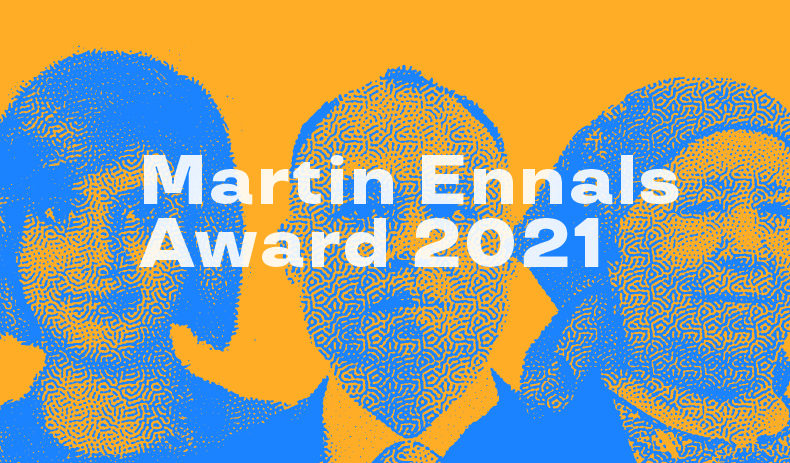
Soltan Achilova, Loujain AlHathloul and Yu Wensheng, three outstanding human rights defenders based in authoritarian states are nominated for the 2021 Martin Ennals Award for Human Rights Defenders. The ICJ is member of the MEA Jury.
In isolated Turkmenistan, Soltan Achilova documents human rights violations and abuses through photojournalism.
Imprisoned in Saudi Arabia, Loujain AlHathloul is a leading advocate for gender equality and women’s rights.
A lawyer, Yu Wensheng defended human rights cases and activists before his conviction and imprisonment in China.
The Finalists distinguish themselves by their bravery and deep commitment to the issues they defend, despite the many attempts to silence them by respective governmental authorities.
“Every year thousands of human rights defenders are persecuted, harassed, imprisoned, even killed. The Martin Ennals Foundation is honored to celebrate the 2021 Finalists, who have done so much for others and whose stories of adversity are emblematic of the precarity faced by the human rights movement today,” said Isabel de Sola, Director of the Martin Ennals Foundation.
“Authoritarian states tend to believe that by jailing or censoring human rights defenders, the world will forget about them. During the COVID-pandemic, it seemed like lockdowns would successfully keep people from speaking out. This year’s Finalists are a testament to the fact that nothing could be further from the truth,” added Hans Thoolen, Chair of the Jury.
Nothing can stop us from celebrating human rights defenders
Each year, the Martin Ennals Award honors human rights defenders from around the world who distinguish themselves by their strong commitment to promoting our fundamental rights – often at the risk of their own lives.
The 2021 Martin Ennals Award Ceremony will celebrate their courage on 11 February during an online ceremony hosted jointly with the City of Geneva which, as part of its commitment to human rights, has for many years supported the Award.
The 2021 Finalists
In Turkmenistan, one of the world’s most isolated countries, freedom of speech is inexistant and independent journalists work at their own peril. Soltan Achilova (71), a photojournalist, documents the human rights abuses and social issues affecting Turkmen people in their daily lives. Despite the repressive environment and personal hardships, she is one of the very few reporters in the country daring to sign independent
In Saudi Arabia, women still face several forms of gender discrimination, so much so, that the Kingdom ranks in the bottom 10 places according to the World Economic Forum’s Global Gender Gap Report 2020. Loujain AlHathloul (31) was one of the leading figures of the Women to drive movement and advocated for the end of the male guardianship system. She was imprisoned in 2018 on charges related to national security together with several other women activists. Tortured, denied medical care, and subjected to solitary confinement, Loujain was sentenced to 5 years and 8 months in prison on 28 December 2020.
In China, more than 300 human rights activists and lawyers disappeared or were arrested in 2015 during the so called 709 Crackdown. A successful business lawyer, Yu Wensheng (54) gave up his career to defend one of these detained lawyers, before being arrested himself. Detained for almost three years now, Yu Wensheng’s right hand was crushed in jail and his health is failing.
Contact
Olivier van Bogaert, Director Media & Communications, ICJ representative in the MEA Jury, t: +41 22 979 38 08 ; e: olivier.vanbogaert(a)icj.org
Chloé Bitton, Communications Manager, Martin Ennals Foundation, t +41 22 809 49 25 e: cbitton(a)martinennalsaward.org
MEA Finalists Bios-2020-ENG (full bios of finalists, in PDF)
MEA Finalists Bios-2020-ARA (full story and bios of finalists in Arabic, PDF)
Jan 18, 2021 | News
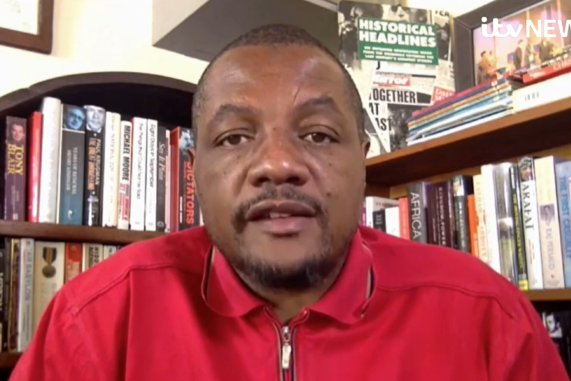
The ICJ today condemned the arbitrary arrests in recent days of prominent Zimbabwean human rights defenders Hopewell Chin’ono, Fadzayi Mahere and Job Sikhala, who have been critical of the government led by President Emmerson Mnangagwa.
The ICJ is concerned that their arrests and potential prosecutions are based solely on their exercise of protected human rights, including freedom of expression. The ICJ calls for their immediate release and the dropping of the charges against them.
The three have been charged with contravening section 31 of the Criminal Code which prohibits “publishing or communicating false statements prejudicial to the state”.
The alleged offences arise from posts made on social media and comments issued by all three in connection with an incident at a Harare taxi rank in which a police officer is alleged to have assaulted a mother with a baby on her back.
ICJ’s Africa Director Kaajal Ramjathan-Keogh said:
“The use of judicial processes to silence these three human rights defenders constitutes a continuing assault on members of the bar and journalists and is a clear attempt to chill others from carrying out their professional functions when these activities offend government authorities. Of concern is the continued use of criminal defamation (section 31) charges which were declared unconstitutional in 2014 yet continues to be weaponised against human rights defenders.”
Chin’ono, a journalist, was arrested on 8 January and had his application for bail rejected on 14 January. He has been handcuffed and held in leg irons during court appearances, despite a Magistrate’s ruling on 12 January that forcing Chin’ono to be shackled in leg irons and handcuffing him amounts to inhumane and degrading treatment.
Mahere is a lawyer and spokesperson of the opposition political party Movement for Democratic Change (MDC) Alliance. She was arrested on 11 January. On 15 January Magistrate Trynos Utahwashe failed to hand down his ruling on her application for bail as required.
Bail was however granted today. Mahere did raise concerns about the absence of essential COVID-19 measures in her detention, including the lack of temperature checks or sanitisers at the entrance to the police station; the failure to practice social distancing in the waiting area or holding cells; the unavailability of masks in the cells and use of old masks by cellmates; as well as the failure to provide sanitary materials to female inmates.
Sikhala is a human rights lawyer, the MDC Alliance Vice National Chairperson, and MP for Zengeza West.
He was part of Chin’ono’s legal team. On 15 January Magistrate Ngoni Nduna dismissed his bail application stating that there was overwhelming evidence against him not to grant it. He remains in prison custody while he awaits trial. Sikhala has also been handcuffed and held in leg irons during court appearances.
Ramjathan-Keogh added:
“The courts have unlawfully employed the denial of bail as well as the repeated prolonged bail proceedings as a punitive tool in these cases. Pre-trial detention without the opportunity for bail, with exceptions not applicable here, is a violation of the right to liberty. The government has an obligation to provide safe and humane conditions of detention.”
The ICJ recalls that that Zimbabwe’s Constitution guarantees the rights to freedom of expression and freedom of the media (Article 61); freedom from arbitrary detention (Article 50). Zimbabwe has an international legal obligation to protect these rights under the International Covenant on Civil and Political Rights (Article 9 and 19) and the African Charter on Human and Peoples’ Rights (Articles 6 and 9).
Contact:
Kaajal Ramjathan-Keogh, Director of ICJ Africa Programme, e: Kaajal.Keogh(a)icj.org ; t: +27845148039
Tanveer Jeewa, Legal and Communications Consultant, e: Tanveer.Jeewa(a)icj.org
Background Information:
Hopewell Chin’ono has been arrested on three separate occasions. He has been denied bail on each occasion and those bail proceedings have been unduly and unfairly prolonged. He was initially arrested in July 2020 after he expressed support on Twitter for an anti-corruption protest, which was planned for 31 July. He was charged with incitement to participate in public violence and breaching anti-corona virus health regulations.
He appeared in court three times to apply for bail and was only granted bail in September 2020, nearly two months after his arrest. On 3 November 2020, he was re-arrested for contempt of court for allegedly violating section 182(1)(a) or (b) of the Criminal Code because of a tweet he posted. His tweet stated: “On day of bail hearing CJ was seen leaving court in light of what has been said by judges what does this say.” The arrest violates Zimbabwe’s constitutional provisions, in particular, section 61, which provides for freedom of expression and the right of a journalist to practice his profession. He was again arrested on 8 January 2021 for allegedly communicating falsehoods by tweeting that police beat a baby to death.
Chin’ono was in 2020 denied access to the legal representative of his choice. The magistrate’s order barring lawyer Beatrice Mtetwa from continuing as defence legal counsel for Chin’ono violated his right to a fair trial and Mtetwa’s right to express her opinions freely. See ICJ’s statement of 21 August 2020.
Jan 15, 2021 | Agendas, Events, News
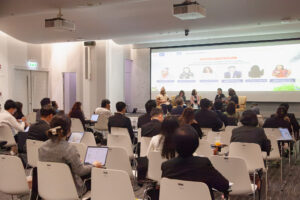
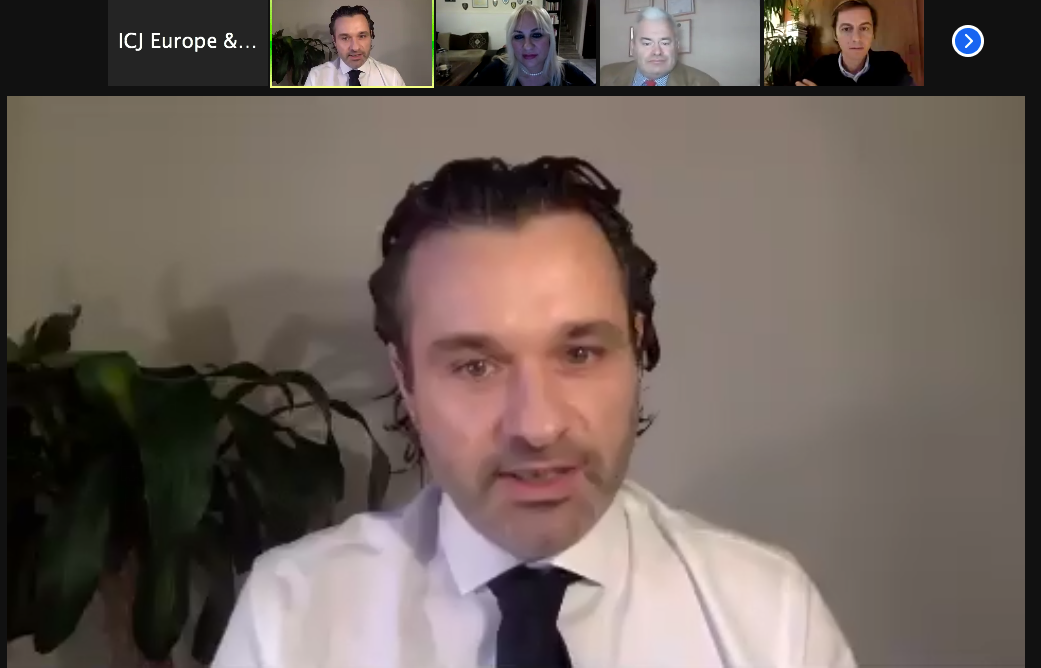
Today, the ICJ in collaboration with Greek Council of Refugees (GCR) is holding the second part of the training for Greek judges and lawyers on asylum procedures and detention of third country nationals.
The first part of the training, which has been held on 18 December 2020, addressed administrative detention of third-country nationals. The second training will consider issues related to fair and effective asylum procedures. Over 60 national judges and 10 Greek lawyers will participate in the training.
Speakers (from the Administrative Court of Appeal, First Instance Administrative court and the Court of Justice of the EU) will discuss Directive 2011/95/EE (inclusion clause in refugee protection status); the asylum procedure and procedural guarantees; case-law of the CJEU on asylum and common issues in asylum applications, including credibility and safe third country.
See the agenda for both parts of the training in English and in Greek.
This training is a part of FAIR PLUS project. It was carried out with the financial support of the European Union. Its contents are the sole responsibility of ICJ and do not necessarily reflect the views of the European Union.
Jan 15, 2021 | Comunicados de prensa, Noticias
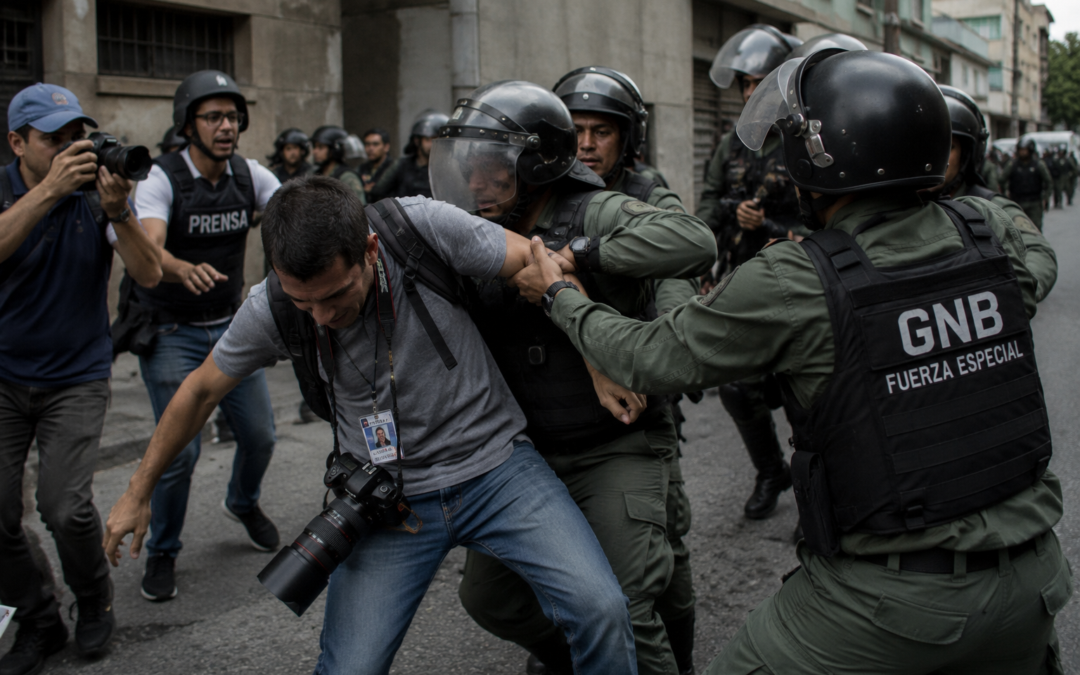
Las recientes campañas de estigmatización, hostigamientos y operativos contra medios de comunicación en Venezuela constituyen una arremetida contra la libertad de expresión e información y atentan contra la importante contribución que estos medios realizan para darle visibilidad a las violaciones de derechos humanos cometidas por las autoridades venezolanas.
Estos ataques se producen después de otros incidentes de hostigamiento a otras organizaciones y pueden ser parte de una campaña más amplia contra la sociedad civil en Venezuela, en la que las autoridades atentan contra la labor de defensa de derechos humanos que realizan estos grupos.
El medio de comunicación Efecto Cocuyo, la cadena de radios comunitarias Fe y Alegría, así como el Sindicato Nacional de Trabajadores de la Prensa, VPI TV y el diario Panorama, entre otros medios de comunicación, se convirtieron en el blanco de campañas estigmatizantes y operativos de fiscalización por parte de las autoridades que responden a Nicolás Maduro. Según la organización venezolana de derechos humanos Provea, durante los primeros ocho meses del estado de alarma declarado por la pandemia han sido detenidos 66 periodistas y trabajadores de medios de comunicación en Venezuela.
Desde el 6 de enero de 2021, medios de comunicación independientes como Efecto Cucuyo y El Pitazo fueron señalados primero por medios privados con una línea editorial afín al gobierno y luego por las autoridades, incluido el propio Maduro, de servir para “injerencia” extranjera por recibir cooperación internacional. Al mismo tiempo, el canal digital de noticias VPI TV fue sometido a una ardua fiscalización y a la incautación de sus equipos en su sede en Caracas, lo que provocó el cierre “momentáneo” de sus operaciones.
El 8 de enero, el diario Panorama dio a conocer en sus redes sociales que había sido clausurado por cinco días por el Servicio Nacional Integrado de Administración Aduanera y Tributaria (SENIAT), bajo el argumento de “incumplimiento a deberes formales de leyes tributarias”. La clausura fue acatada por el medio de comunicación.
Otros medios han sido objeto de ataques por parte de personas desconocidas durante el mismo período. Ejemplo de ello fue el reporte del periódico digital Tal Cual el 8 de enero, qué informó de un ataque digital de tres horas en su contra, durante las cuales hubo dificultades para acceder a su página web.
El gobierno de Nicolás Maduro frecuentemente usa señalamientos y otras formas de hostigamiento para amedrentar e intentar silenciar a quienes lo critican, expresan ideas contrarias a sus políticas, o denuncian violaciones de derechos humanos, e incluso contra actores humanitarios, atentando contra el derecho a la libertad de expresión.
Estos patrones de hostigamiento se pueden traducir en ataques graves contra la integridad, libertad y garantías judiciales de defensores de derechos humanos y periodistas. Según la Alta Comisionada para los Derechos Humanos Michelle Bachelet, en Venezuela “los periodistas y los defensores de los derechos humanos que critican al Gobierno siguen siendo objeto de intimidación y difamación pública” y existen “restricciones a la libertad de expresión” que incluyen la “aplicación de la legislación en contra del odio, ataques en contra de defensores de derechos humanos y detenciones de periodistas”.
Las violaciones a los derechos humanos ocurren de forma sistemática y generalizada en Venezuela, y la Misión de Determinación de los Hechos de las Naciones Unidas encontró “motivos razonables para creer que en Venezuela se cometieron crímenes de lesa humanidad” entre 2014 y 2020.
Las autoridades tienen la responsabilidad de prevenir estos hostigamientos y ataques, y abstenerse de alentarlos o realizarlos. La ocurrencia y recurrencia de este tipo de actuaciones, como la persecución en contra de defensores y periodistas, su detención ilegal o arbitraria, así como la eventual criminalización de la cooperación internacional que promueve la promoción y defensa de derechos humanos, incluida la libertad de expresión, podrían conducir a que se cometan otras graves violaciones de derechos humanos, incluyendo eventuales crímenes de derecho internacional.
Las organizaciones firmantes condenamos estos hechos y exigimos firmemente a las autoridades bajo el mando de Nicolás Maduro que pongan fin a los hostigamientos y ataques contra los medios de comunicación, periodistas y defensores de derechos humanos; igualmente solicitamos que garanticen no solo su labor informativa y el ejercicio de la libertad de expresión, sino también su contribución a visibilizar los abusos y las violaciones a derechos humanos que se cometen en Venezuela.
Organizaciones firmantes:
Amnistía Internacional
Comisión Internacional de Juristas
Conectas
Human Rights Watch
Oficina en Washington para Asuntos Latinoamericanos (WOLA)
Jan 15, 2021 | News
The recent campaigns of stigmatization, harassment, and repression against the media in Venezuela constitute a clear attack against the freedoms of expression and of access to information and infringe upon journalists’ important contributions to expose human rights violations committed by the authorities.
These attacks follow incidents of harassment of other organizations and may be part of a broader campaign against civil society in Venezuela, through which the authorities undermine the work that these groups carry out in defense of human rights.
The media outlet Efecto Cocuyo, community radio channel Fe y Alegría, as well as the National Press Workers Union, VPI TV, and news journal Panorama, among other media outlets, have become the target of stigmatization campaigns and legal scrutiny by the authorities that respond to Nicolás Maduro.
According to Venezuelan human rights organization PROVEA, during the first 8 months of the state of emergency declared in response to the pandemic, 66 journalists and media staff have been detained in Venezuela.
Since January 6, 2021, independent media organizations such as Efecto Cocuyo and El Pitazo have been accused, first by pro-government media and later by Venezuelan authorities—including Maduro himself—of advancing foreign “interference” efforts in exchange for international cooperation.
At the same time, digital news channel VPI TV was subject to an arduous audit and the seizure of its equipment from its office in Caracas, which provoked the “temporary” closing of its operations.
On January 8, daily newspaper Panorama announced on social media that its operations had been closed for five days by the National Integrated Service for the Administration of Customs Duties and Taxes (SENIAT), on the grounds of “incompliance with formal duties and tax obligations.” The media organization complied with this order to close.
Other media groups have faced attacks by unknown actors during this same period. One example is the digital newspaper Tal Cual, which on January 8 reported that it had been the target of a 3 hour-long digital attack, during which staff experienced difficulties accessing their own web page.
The government of Nicolás Maduro frequently uses public accusations and other forms of harassment to intimidate and attempt to silence those who criticize the government, express ideas contrary to its policies, or denounce human rights violations—including against humanitarian actors—all of which undermines the right to freedom of expression.
These patterns of harassment amount to serious attacks against the integrity, freedom, and judicial guarantees of human rights defenders and journalists.
According to High Commissioner for Human Rights Michelle Bachelet, in Venezuela “journalists and human rights defenders critical of the government continue to face intimidation and public defamation,” and there are clear “restrictions on the freedom of expression,” including the “application of legislation against targeted groups, attacks against human rights defenders and the detention of journalists.”
Human rights violations occur in a systematic and generalized manner in Venezuela, and the United Nations Fact-Finding Mission found “reasonable grounds to believe” that crimes against humanity were committed in Venezuela between 2014 and 2020.
The Venezuelan authorities have a responsibility to prevent such harassment and attacks, and to abstain from encouraging or committing them.
The occurrence and recurrence of these types of actions, including the persecution of human rights defenders and journalists, the violation of their freedom of expression or illegal or arbitrary detention, or the eventual criminalization of international support for human rights defenders, may amount to serious human rights violations or crimes under international law.
The below organizations condemn these incidents and firmly demand that authorities under the command of Nicolás Maduro put an end to the harassment and attacks against media outlets, journalists, and human rights defenders.
We also request that the authorities guarantee respect for the informative work of these groups and their freedom of expression, as well as their contributions to expose human rights abuses and violations committed in Venezuela.
Signing organizations:
Amnesty International
Conectas
International Commission of Jurists
Human Rights Watch
Washington Office on Latin America (WOLA)