Jul 12, 2019 | News, Publications, Reports
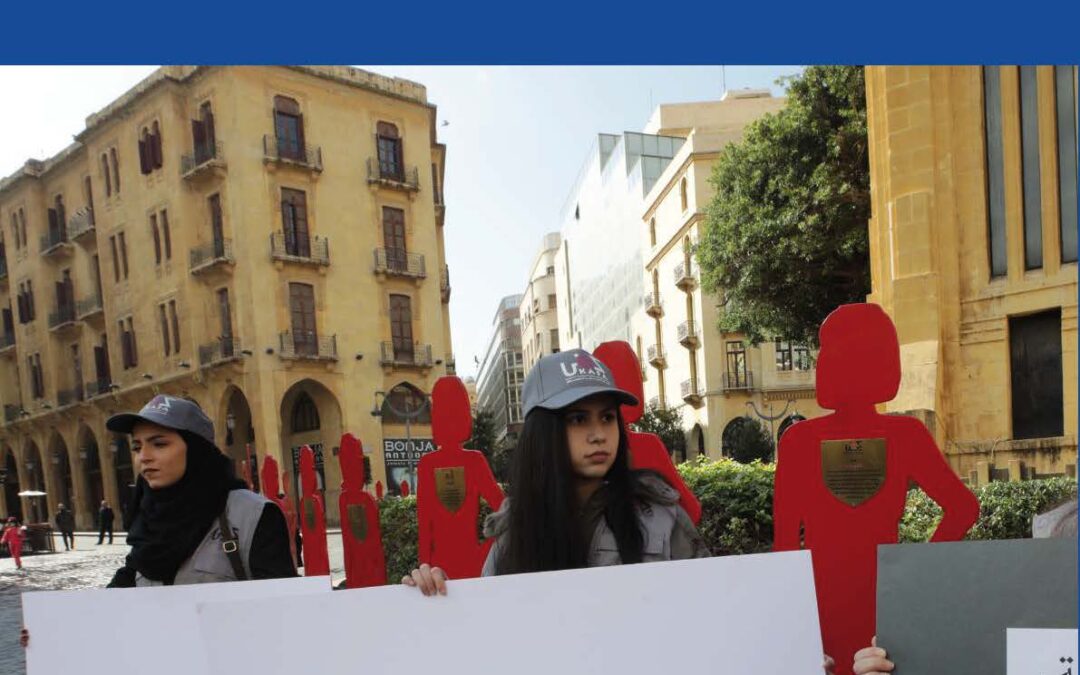
In a report published today, the ICJ called on the Lebanese authorities to prevent, address and ensure accountability for all forms of gender-based violence (GBV) against women and girls, including by adopting legislative, judicial and other appropriate measures.
The report Gender-based Violence in Lebanon: Inadequate Framework, Ineffective Remedies concludes that the persistence of GBV against women and girls in Lebanon is rooted in entrenched patriarchal norms and cultural stereotypes about the roles and responsibilities of women and men in society prevalent throughout the country, including within the judiciary and among other law enforcement officials.
Moreover, legal frameworks and ineffective procedures for the investigation, prosecution and adjudication of GBV fail to adequately protect women’s rights, the report says.
While steps taken by the Lebanese authorities to remedy some deficiencies in the legal framework are commendable, there is still a long way to go to dismantle the web of legal provisions, including in the Criminal Code, the Nationality Law and Personal Status Laws, which discriminate against women or fail to adequately protect their rights.
“Gender discrimination embedded in family laws and in practices is one root cause of violence against women and girls,” said Roberta Clarke, Chair of the ICJ’s Executive Committee.
“Discrimination and economic dependency act as barriers to women’s access to justice,” she added.
The ICJ is particularly concerned that discriminatory practices and bias against women continue to undermine criminal investigations and prosecutions in GBV cases.
“Lebanon should provide for gender-sensitive investigations and evidence-gathering procedures in order to enable women to report violence against them, and ensure that any case of gender-based violence is prosecuted effectively whenever warranted by the evidence, even where no formal complaint has been lodged or when a complaint is withdrawn,” said Kate Vigneswaran, Senior Legal Adviser for the ICJ’s Middle East and North Africa Programme.
Based on an analysis of 30 judicial decisions related to GBV cases and other research, the ICJ found that stereotyping by justice system actors results in direct and indirect discrimination against women.
This, in turn, greatly diminishes the chance that judges granting remedies are both free from biased assumptions and effective, thereby undermining the justice system’s impartiality.
“Judges must decide gender-based violence cases based on the law and facts of the case, rather than pre-conceived cultural beliefs and social stereotypes that are biased against women,” said Said Benarbia, ICJ MENA Director.
“Courts must not use ‘honour,’ ‘fit of fury’ and victim blaming to shield perpetrators of violence against women from accountability,” he added.
Contact:
Said Benarbia, Director, ICJ Middle East and North Africa Programme, t: +41-22-979-3817; e: said.benarbia@icj.org
Kate Vigneswaran, Senior Legal Adviser, ICJ Middle East and North Africa Programme, t: +31-62-489-4664; e: kate.vigneswaran@icj.org
Additional information
This week, ICJ Commissioner Roberta Clarke led the delegation that met with Lebanese authorities and justice and civil society actors in Beirut to present the ICJ’s report and discuss its findings and recommendations.
The delegation met with Chief Justice Jean Fahed, President of the Lebanese Cassation Court and the High Judicial Council; Mrs. Claudine Aoun Roukoz, President of the National Commission for Lebanese Women; George Fiani, head of the Legal Aid Division of the Beirut Bar Association; representatives of the office of the Prime Minister and the office of the Minister of State for Economic Empowerment of Women and Youth; members of the Internal Security Forces; a member of the National Human Rights Institution; and representatives of civil society and the United Nations.
Lebanon-Gender Violence-Publications (full report, English, in PDF)
Lebanon-Gender Violence-Publications-ARA (full report, Arabic, in PDF)
Lebanon-GBVReport2 launch-News-Press releases-2019-ARA (full story, Arabic, in PDF)
Jul 11, 2019 | News
The ICJ today condemned the raids on 11 July by India’s Central Bureau of Investigation (CBI) on the homes and offices of Anand Grover and Indira Jaising, two lawyers prominent for frequently challenging the Indian government’s failures to respect and promote the rights of all people in India.
Grover and Jaising are both Supreme Court lawyers and co-founders of the Lawyers Collective, a non-governmental organization.
These raids were reportedly conducted pursuant to CBI’s registration of criminal charges into alleged violations of Foreign Contribution (Regulation) Act (FCRA), a much criticized law frequently used to target human rights defenders and critics of the Indian government.
“This raid seems designed to harass and intimidate two tireless advocates of Constitutional and international rights in India,” said Sam Zarifi, Secretary-General of the ICJ.
“The Indian government must immediately cease harassment of the Lawyers Collective and its founders Anand Grover and Indira Jaising,” he added.
The CBI raids appears to be based on a 2016 Ministry of Home Affairs report, now under appeal in the Bombay High Court, and without any material change in circumstances since its release.
The raid has also been conducted notwithstanding a National Human Rights Commission statement seeking a status report from the CBI by 21 July 2019 to ensure that the investigation is “non-discriminatory and to avoid arbitrariness”.
The attack is emblematic of a broader pattern of official threats to and harassment of Indian civil society in general, and the Lawyers Collective in particular.
Lawyers Collective’s FCRA license was cancelled in November 2016, a decision that is under appeal in the Bombay High Court. The action relied upon overly broad and vague legal provisions of the FCRA that violate India’s legal obligation to respect and protect the rights to freedom of expression, association and peaceful assembly.
“The repeated use of the FCRA to target civil society including Lawyers Collective has had a devastating chilling effect on public comment about the government,” said Zarifi.
“The law should be repealed, or substantially amended to include safeguards against arbitrary use of its provisions, and to protect freedom of expression and association,” he added.
The ICJ supports the 2016 call by three United Nations Special Rapporteurs to the Indian Government to repeal FCRA, which decried the FCRA’s use to “silence organisations involved in advocating civil, political, economic, social, environmental or cultural priorities, which may differ from those backed by the Government”.

Jul 8, 2019 | Comunicados de prensa, Informes, Multimedia, Noticias, Publicaciones
Las autoridades venezolanas deben tomar medidas de inmediato para restaurar las instituciones democráticas y el funcionamiento del estado de derecho, lo que incluye disolver la Asamblea Nacional Constituyente y restaurar los poderes constitucionales de la Asamblea Nacional, dijo hoy la CIJ.
Sin lugar para la deliberación, el informe más reciente de una serie sobre derechos humanos y estado de derecho en Venezuela, aborda aspectos profundamente problemáticos con respecto a la creación, composición y funcionamiento de la Asamblea Nacional Constituyente de Venezuela, la cual actualmente detenta funciones legislativas, y su devastador efecto para el Estado de Derecho en ese país.
El reporte muestra que la Asamblea Nacional Constituyente, instalada el 4 de agosto en virtud un decreto ejecutivo del Presidente Nicolás Maduro, ha desplazado la autoridad de la constitucionalmente establecida Asamblea Nacional.
“La ANC fue creada unilateralmente por el Presidente, sin refrendación popular mediante un referendo, configurando una evidente violación a la Constitución, y desde entonces ha actuado como un cuerpo sin control o respeto por el estado de derecho,” dijo Sam Zarifi, Secretario General de la ICJ.
Inicialmente creada para redactar una nueva Constitución, la Asamblea Nacional Constituyente ha sido usada para usurpar funciones legislativas y así aprobar medidas de orden administrativo, electoral y legislativo en favor de la agenda del Poder Ejecutivo, establece el reporte.
El informe documenta cómo la Asamblea Nacional Constituyente adelantó elecciones presidenciales; levantó la inmunidad parlamentaria de diputados de la Asamblea Nacional para permitir su arresto y enjuiciamiento; designó a las autoridades de más alto nivel; y aprobó leyes discriminatorias que criminalizan la libertad de expresión y asociación.
Entre otras cosas, la CIJ recomienda a las autoridades venezolanas que tomen medidas para que:
- Cese el funcionamiento de la Asamblea Nacional Constituyente y se reestablezcan los poderes constitucionales de la Asamblea Nacional.
- Se permita a la Asamblea Nacional revisar los actos adoptados por la Asamblea Nacional Constituyente, a fin de dejarlos sin efecto total o parcialmente, de manera inmediata o condicional, en aras de preservar la seguridad jurídica.
Contactos:
Sam Zarifi: Secretario General de la CIJ; t +41 79 726 44 15; e sam.zarifi(a)icj.org
Santiago Martínez Neira: abogado consultor de la CIJ; e santiago.mn(a)gmail.com
Venezuela-Sin Lugar para la deliberacion-Publications-Reports- fact findings mission reports-2019-SPA (Informe, en PDF)
Video de un evento paralelo sobre la crisis de derechos humanos en Venezuela, organizado conjuntamente con Amesty International:
https://www.facebook.com/ridhglobal/videos/1206399322898690/

Jul 8, 2019 | News
The ICJ welcomes the report issued today by the United Nations Office of the High Commissioner for Human Rights (OHCHR) documenting human rights violations and abuses in Indian administered Kashmir and Pakistan administered Kashmir.
The ICJ called upon both India and Pakistan to take immediate measures to implement the Report’s main recommendations, and to hold security forces as well as non-state actors accountable for human rights violations and abuses.
The Report follows a June 2018 report that documented similar violations, as well as the widespread impunity for human rights violations by Indian security forces and armed groups allegedly supported by Pakistan. The Indian Government has rejected both reports as a violation of its “sovereignty and territorial integrity”. The Pakistan government has welcomed the report and called for the establishment of a United Nations Commission of Inquiry.
“It is unfortunate that India has again refused to acknowledge the facts set out in the OHCHR report, or to pledge action on its recommendations,” said Frederick Rawski, Asia Pacific Director for the ICJ.
“This is an opportunity for India, a member of the Human Rights Council, to lead by example. It can start by repealing the Armed Forces Special Powers Act and launching an investigation into rights abuses in line with international standards and the guidelines set out by the Indian Supreme Court,” he added.
The Report documents human rights violations by Indian security forces including extrajudicial killings, arbitrary detentions, unlawful custodial deaths, enforced disappearances, and ill-treatment and torture, including rape and sexual violence, in Indian-administered Kashmir.
According to the Report, based on data from civil society organization Jammu and Kashmir Coalition of Civil Society (JKCCS), 71 extrajudicial killings were allegedly committed by security forces in 2018 (for a total of 1081 between 2008 and 2018). Between 2016 and 2018, 1253 people have been blinded by pellet guns.
The Report highlights how the extraordinary powers granted to security forces by the Armed Forces (Jammu and Kashmir) Special Powers Act, 1990 has been wielded arbitrarily and led to near total impunity from prosecution. In addition, it documents human rights abuses committed by non-state armed groups in Indian-administered Kashmir including kidnappings, killings and rape.
The Report also documents rights violations in Pakistan-administered Kashmir, including restrictions on freedom of expression and opinion, assembly and association, and the abuse of vague and overbroad anti-terrorism laws in contravention of international human rights law.
The Report documents cases of arbitrary arrest by local authorities and intelligence agencies, including charging 19 activists with treason for organizing a rally in November 2018, and the arbitrary detention of 30 members of the Jammu Kashmir National Students Federation in March 2019 by Pakistani law enforcement. The Report notes the particular vulnerability of journalists to threats, harassment and arbitrary arrest.
“While we commend Pakistan for welcoming the Report, the fact remains that the Government has done little to prevent the continuation of human rights violations by its security forces, or to implement the recommendations of the previous report,” Rawski said.
“Pakistan must take action to hold perpetrators of rights violations accountable, and take action to end threats and violence targeted at human rights defenders and journalists,” he added.
The ICJ called on both Pakistan and India to grant unconditional access to the OHCHR and Special Procedures of the UN Human Rights Council, and to ensure that human rights defenders and journalists can carry out their work without threats or reprisals from security forces and non-State armed groups.
The ICJ also underscores the importance of the OHCHR recommendation that the United Nations set up an independent commission of inquiry into allegations of rights violations by all parties to the conflict.
The ICJ urged both the Indian and Pakistan governments to respect, protect and fulfill their international human rights obligations in Kashmir, to accept the Report’s findings and take immediate and effective action to implement its recommendations.

Jul 8, 2019 | Artículos, Noticias
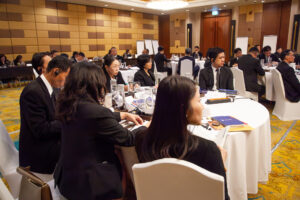
La CIJ anuncia que llevará a cabo una misión para observar el proceso de elección de magistrados de Corte Suprema de Justicia y Salas de Apelaciones. Para el efecto, ya se encuentra en el país, el Comisionado de nacionalidad chilena Alejandro Salinas (foto), quien permanecerá en el país, hasta el viernes 12 de julio.
La misión tendrá reuniones con el Procurador de Derechos Humanos, Diputados del Frente Parlamentario por la Transparencia y contra la Corrupción y miembros del Sector Académico, Gremio de Abogados y representantes del Sector de Justicia, que participarán en las próximas comisiones de postulación.
El objetivo de esta misión es promover la mayor transparencia del proceso de elección de las y los magistrados de la Corte Suprema de Justicia y Salas de Apelaciones, para que dichos procesos de elección logren que los próximos magistrados/as sean electos por méritos y no por compadrazgos políticos y así, que exista la mayor independencia posible en el Poder Judicial y por lo tanto, mayor respeto de los derechos humanos.
Se espera que la misión haga públicas sus conclusiones el viernes 12 de julio, después de implementar la agenda respectiva.
Además, el 11 de julio, llevará a cabo un foro público, para estimular el debate social sobre la necesidad de un Poder Judicial independiente, que cuente con magistrados imparciales, idóneos y honestos.
Ramón Cadena, Director de la CIJ para Centroamérica expresó: “En las elecciones del año 2009, las acciones de la Comisión Internacional contra la Impunidad en Guatemala (CICIG), conjuntamente con las de la sociedad guatemalteca, permitieron que el proceso en sí mismo, se constituyera en un mecanismo de depuración, ya que el Congreso de la República tuvo que dar marcha atrás y no nombrar como Magistrados de Corte Suprema de Justicia a tres personas. En 2014, la CICIG conjuntamente con el Ministerio Público, llevaron a juicio después de las elecciones, a tres magistrados de Corte Suprema de Justicia, recién electos, que tuvieron que renunciar al cargo. Las elecciones de este año, estarán marcadas por la ausencia de la CICIG, lo cual significará enfrentar mayores desafíos para lograr avances en la lucha contra la impunidad, durante todo el proceso de elección.”