Feb 20, 2017 | News
On Monday 20 February 2017, the ICJ Commissioner Belisário Dos Santos Júnior and the lawyer, Jaime Araíújo Rentería commenced an international mission in Guatemala.
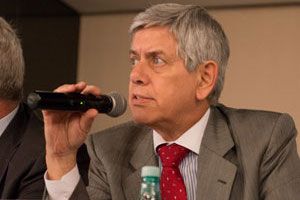
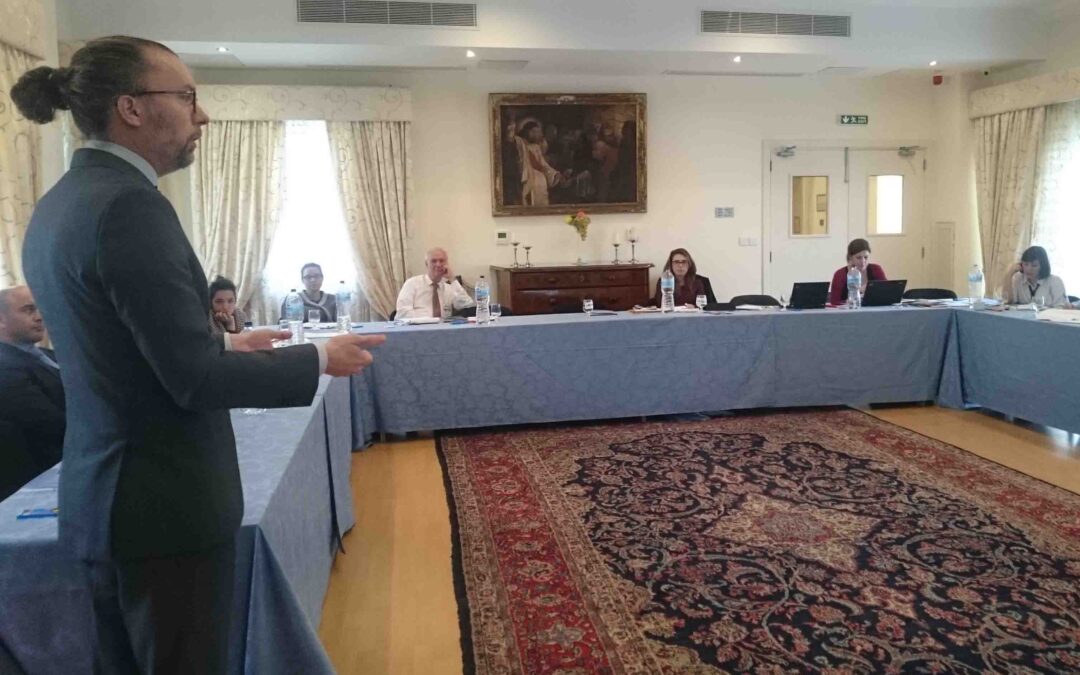
The ICJ Commissioner Belisário Dos Santos Júnior (photo) is the former representative of the Brazilian lawyers’ association at the São Paulo Human Rights Commission, who has acted as the legal representative for political detainees. Jaime Araújo Rentería, former President of the Colombian Constitutional Court is a practicing lawyer and university professor.
The objective of the mission is to evaluate the situation of the legal profession in the country, identify obstacles and challenges, and offer perspectives about ways in which the State can provide better protection for lawyers so they can carry out their functions in an independent and safe manner.
The two mission members will be in Guatemala for a week and will interview the President and Executive Committee of the Bar Association, human rights lawyers, and high-level officials from the three branches of the State, members of the international community and representatives of human rights organizations.
On Friday 24 February, the two lawyers will hold a press conference to present the conclusions and recommendations of the mission to the press and general public.

Feb 20, 2017 | Artículos, Noticias
El Comisionado de la CIJ Belisário Dos Santos Júnior y el abogado Jaime Araújo Rentería llevarán a cabo la misíon.
A partir del día de hoy lunes 20 de febrero 2017, el Comisionado de la CIJ Belisário Dos Santos Júnior (foto), Jurista de Brasil y quien ha sido abogado defensor de detenidos políticos y ex representante del gremio de abogados de Brasil ante la Comisión de Derechos Humanos de Sao Paulo y el abogado Jaime Araújo Rentería, ex Presidente de la Corte Constitucional de Colombia, abogado litigante y profesor universitario, llevarán a cabo una misión en Guatemala, con el propósito de evaluar la situación del ejercicio de la abogacía en el país, determinar los obstáculos que se presentan para el ejercicio de la profesión de abogado y los retos y perspectivas para que el Estado brinde una mayor protección a abogados y abogadas en el ejercicio de su profesión y que puedan desempeñarse en forma independiente y segura.
Los dos juristas permanecerán en el país toda la semana y se entrevistarán con el Presidente del Colegio de Abogados, con su JuntaDirectiva, con abogados y abogadas defensores de derechos humanos, con funcionarios de los tres poderes del Estado al más alto nivel, con miembros de la Comunidad Internacional y con representantes de organizaciones de derechos humanos.
Al terminar su misión, el viernes 24 de febrero del presente año, ofrecerán una conferencia de prensa, para presentar sus conclusiones y recomendaciones a la prensa y al público en general.
Feb 16, 2017 | Agendas, Events, News, Training modules
Today, the ICJ and Aditus are holding a training for lawyers on the rights of migrant children and on accessing international human rights mechanisms in Valetta.
The training aims to support the strategic use of national and international mechanisms to foster migrant children’s access to justice.
The training will take place over the course of two days 16-17 February 2017.
The training will focus on accessing the international mechanisms in order to protect and promote the rights of migrant children, the child’s right to be heard and economic, social and cultural rights.
A practical case analysis will be part of the training. Trainers include experts from the ICJ and the Hague University.
The training is based on draft training materials prepared by the ICJ (to be published in the second half of 2017) and the ICJ Practitioners Guide no. 6: Migration and International Human Rights Law.
It is organized as part of the FAIR project co-funded by the Rights, Equality and Citizenship Programme of the European Union and OSIFE.
As part of the project, this training follows the trainings on the rights of migrant children in Spain, Italy and Bulgaria, trainings in Germany, Greece and Ireland will follow this year.
Download the agenda in English here:
Malta-FAIR training-News-Agenda-2017-ENG

Feb 13, 2017 | News
The ICJ today announces the establishment of an expert panel of jurists to study and provide guidance on the effectiveness of grievance procedures provided by businesses to address and remedy harms arising from their operations.
The Panel, composed of senior retired judges, academics and legal practitioners, will work with the support of a wider group of civil society organizations, lawyers, academic institutions and the legal profession.
Many large business enterprises and projects have their own internal procedures and mechanisms to address concerns affecting individuals and local communities that arise from their operations. Known as operational-level grievance mechanisms, these are an integral part of responsible business practices and a way to remedy real or perceived wrongs.
The use of operational-level grievance mechanisms is recommended by the United Nations Guiding Principles on Business and Human Rights and global institutions, such as the World Bank.
However, poor design and/or implementation of these grievance mechanisms can result in further problems, aggravating the harm to individuals and communities and impacting on the company’s or project’s own sustainability.
The ICJ initiative has been prompted by concerns about recent cases where people the mechanisms were meant to help have been unaware of their very existence, the procedures have been unfair or unclear and outcomes have been inadequate for the kind of harm experienced.
Most importantly some grievance mechanisms seem to stand in the way of meaningful access to justice for adversely affected people.
The panel members
The expert Panel is the think tank of the ICJ initiative. Besides holding wide consultations and site visits to specific projects, the Panel will advise the ICJ on preparation of a report and a guidance to support the work of practitioners and human rights defenders working in this field.
The members of the Panel, five of whom are ICJ Commissioners, are:
- Justice Ian Binnie (retired) formerly of Canada’s Supreme Court
- Sheila Keetharuth, Lawyer in Mauritius and currently UN special rapporteur on the human rights in Eritrea
- Justice John O’Meally (retired) formerly of the District Court of New South Wales and the Dust Diseases Tribunal in Australia
- Alejandro Salinas Rivera, lawyer and former legal advisor to the Government of Chile
- Professor Marco Sassoli, professor of international law at the University of Geneva
- Justice Ajit Prakash Shah (retired), formerly of the High Court of Delhi and presently Chair of the Law Commission in India
The Panel and the ICJ will receive advice for this work from a wider Consultative Group of practitioners and members of the legal profession.
The Consultative Group includes individuals of long-standing experience and recognised expertise on the functioning of grievance mechanisms at the project or operations level.
This initiative adds to the growing attention paid to remedy systems available to individuals and communities affected by business operations.
The final outcome of this initiative will be to provide guidance to making effective the remedial procedures systems available in cases of business-related human rights abuses in way that truly helps victims attain justice.
Feb 13, 2017 | News
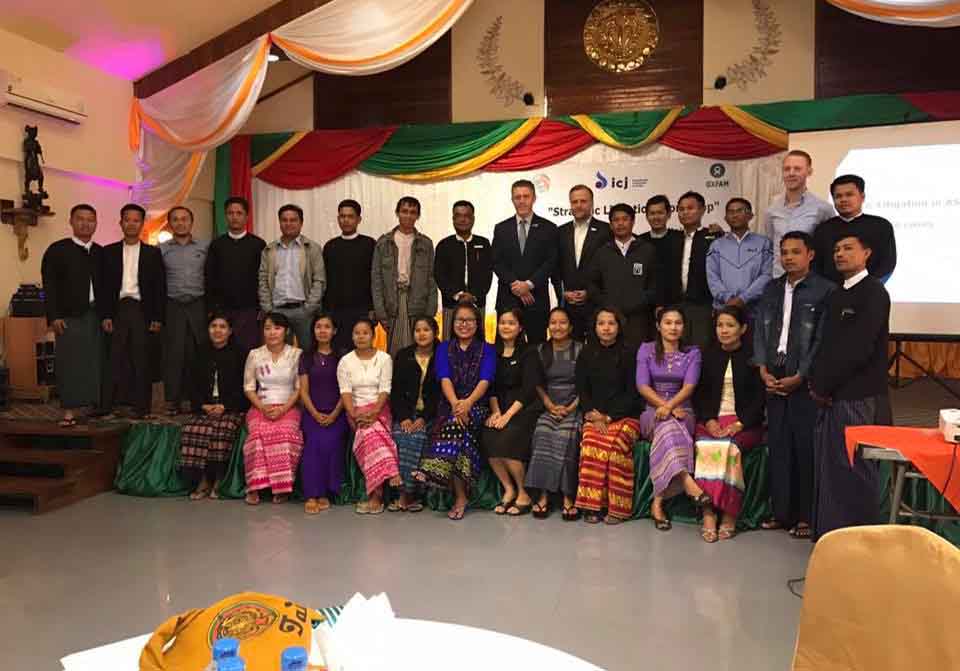
The workshop, held from 11-12 February in Sittwe, brought lawyers and civil society together to discuss of experiences of strategic litigation elsewhere in Myanmar and the region, and consider potential public purpose litigation cases in Rakhine State.
Dr Daniel Aguirre, the ICJ’s International Legal Adviser in Myanmar, provided an introduction to strategic litigation as a method for promoting accountability in a time of transition in governance.
He noted the critical role of independent lawyers in protecting human rights, by representing clients from all communities in Rakhine State.
And he emphasized the importance of strategic litigation as a means to prevent violations and abuses of human rights, or to seek reparations where violations and abuses have occurred.
Kingsley Abbot and Jintana Sakulborirak, from the ICJ’s Asia Regional Office in Thailand, discussed strategic litigation cases from the region, including in northern Thailand where community members have launched an action to appeal the legality of land acquisition for a planned SEZ in Tak Province.
The cases highlighted how media engagement is a critical part of strategic litigation, to raise public attention on human rights issues and demands for accountability in the implementation of investment projects.
Daw Aye Mon Thu, advocate from Dawei Pro Bono Lawyers Network presented the experiences of Heinda Mine cases from Dawei Region, Southern Myanmar, emphasizing the importance of trust-building and cooperation with local community as stake-holder. Such a strategic litigation cases are extremely rare in Myanmar.
Discussions followed about potential cases for strategic litigation from Kyauk Phyu and Sittwe, including issues related to land acquisition for railways construction and an SEZ appear to have been carried out unlawfully in violation of human rights.
Participants discussed the principle of undertaking litigation for broader advocacy objectives rather than solely focusing on actually winning the case in the court.
They also reflected on the challenges and limitations for Myanmar lawyers to undertake strategic litigation.
Highlighting the vital role of lawyers, speakers encouraged participants to consider strategic litigation as a means to challenge unlawful acts that violate or abuse human rights, particularly accompanying business enterprises.
Rakhine State is among Myanmar’s poorest and most isolated provinces, where lawyers and CSOs have had limited exposure to concepts of human rights and international laws.
This workshop, the first of its kind to be held in Rakhine State, is part of efforts to address this gap by building legal literacy on international human rights law and lawyers to consider litigation as a strategy to protect human rights.