

Практическое руководство по миграции и международному праву в области прав человека доступно на русском языке
Сегодня Международная комиссия юристов (МКЮ) опубликовала перевод Практического руководства № 6 «Миграция и международное право в области прав человека» на русский язык.
В дополненном издании Практического руководства анализируются гарантии защиты, которые предоставляются мигрантам по международному праву, а также способы их имплементации на национальном и международном уровнях.
В Руководстве МКЮ синтезируются и освещаются международные стандарты по таким ключевым вопросам, как:
- Права и процедуры, связанные с особенностями въезда мигрантов в страну и их статусом в стране назначения;
- Ограничения в отношении выдворения, предусмотренные правами человека и нормами, регулирующими положение беженцев;
- Права человека и права беженцев в связи с процедурами выдворения;
- Права и гарантии в случае административного задержания мигрантов;
- Трудовые права; а также
- Право на образование, наивысший достижимый уровень здоровья, надлежащие жилищные условия, воду, еду и социальное обеспечение.
universal-pg-6-migration-publications-practitionners-guides-series-2016-rus (доступно на русском языке, PDF)

The process towards a treaty on business and human rights: a roundtable multistakeholder discussion
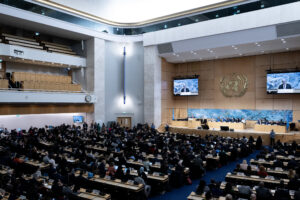
The ICJ convenes today a roundtable at the United Nations gathering several stakeholders to discuss on a possible future treaty on business and human rights.
Tuesday 25 October, 2016
13:00 to 15:00 hrs
Room XXVII- Palais des Nations
The second session of the Open Ended Intergovernmental Working Group to elaborate a legally binding instrument on Transnational Corporations and other business enterprises in relation to human rights, offers the opportunity to significantly advance the process of establishing an effective treaty that assist in preventing and addressing business related human rights abuses. Advancing the process will require stakeholders to reach a common platform of understanding on some core concepts and foundational elements before textual details can be elaborated and negotiated.
The objective of the roundtable is to assist in this process by creating a space for various stakeholders to address issues of importance for the treaty process from diverse points of view with the goal of enhancing mutual understanding among stakeholders of concepts and element that can serve as the basis for possible agreement for the future. This panel has a multistakeholder nature with a view to create a space of dialogue and understanding among the most important actors of the process.
Moderator:
Mr Ian Seiderman, Legal and Policy Director, International Commission of Jurists
Speakers:
Mr Ariel Meyerstein- United States Council of International Business, representing the International Organization of Employers
Mrs Makbule Sahan, Legal Advisor, International Trade Union Confederation
Prof Douglas Cassel, School of Law, University of Notre Dame, Indiana, United States
Prof Surya Deva, member of the UN Working Group on Business and Human Rights
Mr Humberto Cantú Rivera, Researcher at University of Panthéon-Assas, Paris II
Mrs Debbie Stothard, Secretary-General, International Federation of Human Rights (FIDH)
icj-side-event-2nd-session-flyer (download the flyer)

Recommendations for the content of a treaty on business and human rights
In a paper published today, the ICJ recommends a series of substantive elements that it considers as key to an effective treaty on business and human rights.
The ICJ is publishing this paper as the second session of the open ended intergovernmental working group on transnational corporations and other business enterprises with respect to human rights (OEIWG) will be held next week (24-28 October).
On 26 June 2014, the United Nations Human Rights Council (HRC) adopted Resolution 26/9 establishing an “open ended intergovernmental working group on transnational corporations and other business enterprises with respect to human rights” (OEIWG) with the mandate to “elaborate an international legally binding instrument to regulate, in international human rights law, the activities of transnational corporations and other business enterprises”.
The first session of the OEIWG took place from 6 to 10 July 2015.
The ICJ supports the objective of establishing an international legally binding instrument on transnational corporations and other business enterprises, with a focus on business accountability and access to effective remedies for human rights abuses by business enterprises.
There is a substantial international protection gap to be filled in this respect, on which the ICJ has previously commented extensively.
It is with a view to closing this gap and ensuring that international human rights law can optimally fulfil its protective function that the ICJ is engaging in the present treaty process.
The key elements in the ICJ paper are a contribution to the ongoing discussions about the future instrument, without being exhaustive as to such elements.
The ICJ has already published a paper focused on issues of scope of businesses to be addressed in the treaty, in particular the meaning or “transnational corporations (TNCs) and other business enterprises” a question which remains unresolved and is contentious in the OEIWG discussions.
The present paper will focus on the possible content of the prospective treaty.
universal-oewg-session-2-icj-submission-advocacy-analysis-brief-2016-eng (full text in PDF)
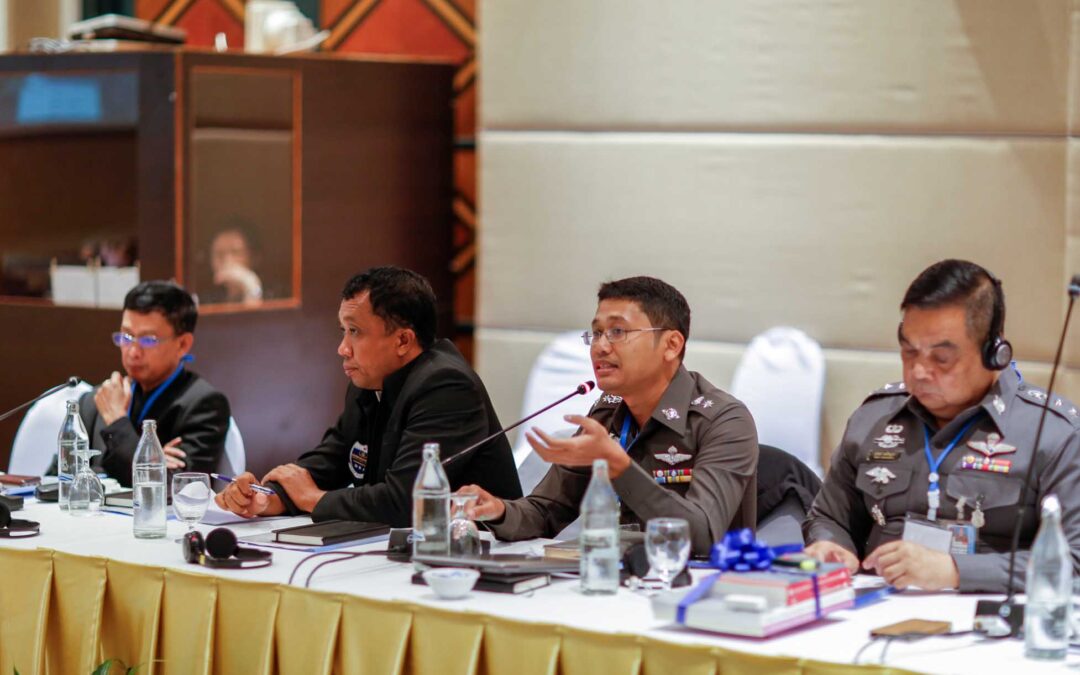
Thailand: ICJ workshop on use of telecommunication evidence in criminal cases
On 15-16 October 2016, the ICJ held a Workshop for justice sector actors in Thailand’s deep South on “the Use of Telecommunication Evidence in Criminal Cases” for police, special investigators, prosecutors and lawyers.
The attendees included 30 public prosecutors, police and Department of Special Investigation (DSI) officials, 15 defense lawyers, and observers from the Thailand Institute of Justice (TIJ) and the Asia Foundation.
This is the sixth ICJ workshop related to strengthening the administration of justice in the deep South since 2011.
The objective of the workshop, held in Hat Yai, was to discuss how telecommunication information may be used as part of an effective criminal investigation, and the ways in which prosecutors, lawyers and judges should consider approaching the use of this kind of information as evidence at trial.
The Workshop observed a moment of silence for the passage of the late King Rama IX.
Kingsley Abbott, ICJ Senior International Legal Adviser, opened by saying that the use of telecommunication evidence is one tool that can be used in an effective investigation of serious criminal and security related cases followed by fair trials.
However, it is important to ensure that the acquisition and use of this information as evidence fully respects the right to privacy guaranteed by the International Covenant on Civil and Political rights (ICCPR) to which Thailand is a State Party.
The ICJ firmly believes that respect for human rights and the rule of law must be the bedrock in countering terrorism and violent crime.
Speakers at the Workshop included Judge Wasupatchra Jongpermwattanapol, Chief Judge of the Office of the Chief Justice Region 9; Mr Sophon Tipbamrung, Executive Director of the Special Office of Criminal Litigation 3, Region 9; Lt. Col. Thatphichai Chanwaranon, Deputy Superintendent of the Investigation Bureau, Southern Border Provinces Police Operation Center and national expert on the use of telecommunication evidence; and Mr Nigel Povoas, a British Barrister with experience leading high profile international serious and organized crime cases and an expert in the use of telecommunication evidence.
Background
Previous ICJ workshops in the deep South have included:
- The Protection of Victims in Criminal Cases (2015)
- The Principle of Inadmissibility of Evidence Obtained by Unlawful Means and Hearsay Evidence: International Standards Compared to Thai Law (2014)
- Rule of Law and Strengthening the Administration of Justice in the Context of Habeas Corpus in the Southern Border Provinces (2012)
- Rule of Law and Strengthening the Administration of Justice in the Context of Bail in the Southern Border Provinces (2012)
- Rule of Law and Strengthening the Administration of Justice in the Context of the Application of Emergency Laws in the Southern Border Provinces (2011)
Recent News
 Myanmar: As armed conflict rages and military rule continues, critical measures can be taken towards eventual justice and accountability for victims of Enforced Disappearance10 Sep 2026
 HRC63: ICJ Raises Alarm over Repression in Tunisia and Arbitrary Detention in El Salvador09 Sep 2026
 HRC63: ICJ Calls for Protection of Lawyers and Accountability in Myanmar07 Sep 2026
 More than fifty years on: enforced disappearance, the families who named it, and the reframing of international protection26 Aug 2026