
India: repeal Armed Forces Special Powers Act immediately
On the 15th anniversary of Irom Sharmila’s hunger strike, the International Commission of Jurists calls on the Indian government to repeal the Armed Forces Special Powers Act without further delay.
Irom Sharmila began a hunger strike in November 2000, calling for the repeal of the AFSPA, following the unlawful killing of 10 civilians by security forces purportedly acting under it in Malom.
“The AFSPA has facilitated gross human rights violations by the armed forces in the areas in which it is operational,” Sam Zarifi, Asia-Pacific Director of the ICJ said. “It is a repressive and draconian law that should have no place in today’s India”.
Once an area is declared “disturbed” under the AFSPA, armed forces are given a range of “special powers”. These include the power to arrest without warrant, to enter and search any premises, and in certain circumstances, “fire upon or otherwise use force, even to the causing of death”. These and other vaguely framed provisions give armed forces broad powers that are inconsistent with the government’s obligations to respect the right to life.
In addition to leading to many unlawful killings in the areas in which it has been in effect, the provisions of the AFSPA have also facilitated torture, rape and enforced disappearances.
“The AFSPA has created a culture of impunity, shielding security forces from accountability in India for crimes under international law, and making it impossible for victims of human rights violations to access justice”, Sam Zarifi said.
Under the AFSPA, governmental permission, or sanction, is required before any member of the armed forces can be prosecuted for crimes in a civilian court. Decisions regarding sanction take many years, and as yet, no member of the armed forces has been prosecuted in a civilian court.
The Indian government has often justified the need for the AFSPA as necessary to address terrorism and militancy in “disturbed areas”. “International law requires and experience shows that effective counter- terrorism measures must reinforce human rights, and not undermine and violate them,” said Sam Zarifi.
Calls for the repeal or amendment of the AFSPA –including from official bodies – have come from near and far for a number of years.
Several UN human rights bodies have recommended that the AFSPA be repealed or significantly amended. These include the Committee on the Elimination of Discrimination against Women (2014), the Special Rapporteur on violence against women (2014), the Special Rapporteur on extrajudicial, summary or arbitrary executions (in 2013 and again in 2015), the Special Rapporteur on the situation of human rights defenders (2012), the Committee on the Elimination of Racial Discrimination (2007), and the UN Human Rights Committee (1997).
In recent years, prominent Indian bodies have recognized the brutality of the AFSPA and echoed demands for repeal or amendment. The Justice Jeevan Reddy Committee set up by the Government of India to review the working of the AFSPA, has advocated its repeal. The Fifth Report of the Second Administrative Reforms Commission seconded this recommendation.
The Verma Commission, set up by the government following the gang rape in Delhi in 2012, called for the repeal of sanction provisions under the AFSPA as they relate to sexual offences. In 2015, a High Level Committee on the Status of Women also reportedly advocated its repeal.
In 2012, the Extra Judicial Execution Victims Family Association, Manipur (EEVFAM) filed a petition at the Supreme Court of India, alleging that between 1979 and 2012, 1528 people were extra-judicially executed by security forces in Manipur.
A court-appointed fact-finding commission – popularly known as the Santosh Hegde Commission – studied 6 of these cases, and found that the deaths were not lawful.
In its report, the Hegde Commission agreed with the observation of the Jeevan Reddy Commission, that the AFSPA had become “a symbol of oppression, an object of hate, and an instrument of discrimination and high-handedness.”
The case is still pending in the Supreme Court.
Contact:
Sam Zarifi, ICJ Asia Pacific Regional Director (Bangkok), t: +66 807819002; email: sam.zarifi(a)icj.org
Sanhita Ambast, ICJ International Legal Advisor (Delhi), t: +91 9810962193; email: Sanhita.ambast(a)icj.org
Maldives: immediately revoke state of emergency measures and restore rule of law
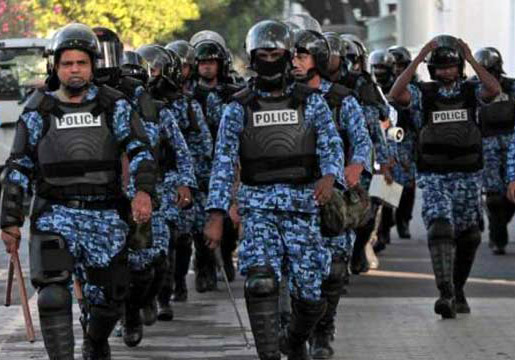
The government of Maldives must immediately revoke its suspension of human rights protections under the state of emergency declared today and restore the rule of law to the country, said the ICJ.
The Maldivian government suspended a range of constitutional protections under a 30-day state of emergency declared on 4 November, citing a threat to national security based on the allegation that “some groups are planning to use … dangerous weapons and explosives,” according to a translated version of the emergency decree obtained by the ICJ.
“The complete suspension of constitutional protections for human rights such as the right to liberty and right to free assembly goes far beyond anything that could be justified by the alleged grounds cited by the government,” said Nikhil Narayan, ICJ’s South Asia Senior Legal Adviser.
“International law strictly regulates attempts by governments to suspend or otherwise derogate from human rights on the grounds of emergency,” he added.
Article 4 of the International Covenant on Civil and Political Rights (ICCPR), to which the Maldives is a State Party, expressly permits derogations only for certain human rights, and then only ‘in time of public emergency which threatens the life of the nation’.
“Maldivian authorities have not come close to explaining how the current situation constitutes a threat to the ‘life of the nation’, the high threshold set by international law for the derogation of rights in times of emergency,” Narayan said.
According to the emergency decree, the constitutionally protected rights that have been suspended during the state of emergency are, among others:
- Article 19: “A citizen is free to engage in any conduct or activity that is not expressly prohibited by Islamic Shari’ah or by law. No control or restraint may be exercised against any person unless it is expressly authorised by law.”
- Article 24: “Everyone has the right to respect for his private and family life, his home and his private communications. Every person must respect these rights with respect to others.”
- Article 31: “Every person employed in the Maldives and all other workers have the freedom to stop work and to strike in order to protest.”
- Article 32: “Everyone has the right to freedom of peaceful assembly without prior permission of the state.”
- Article 41(a): “Every citizen has the freedom to enter, remain in and leave the Maldives, and to travel within the Maldives.”
- Article 45: “Everyone has the right not to be arbitrarily detained, arrested or imprisoned except as provided by law enacted by the People’s Majlis in accordance with Article 16 of this Constitution.”
- Article 47(a) and (b): “(a) No person shall be subject to search or seizure unless there is reasonable cause. (b) Residential property shall be inviolable and shall not be entered without the consent of the resident, except to prevent immediate and serious harm to life or property, or under the express authorisation of an order of the Court.”
“The basic prohibition against arbitrary detention and imprisonment can never be derogated from,” Narayan said.
The declaration of the state of emergency also seems to target the country’s vice president, whom the president appears to regard as a political threat. The vice president is facing impeachment proceedings for his alleged role in the boat explosion which the government claims was caused by a bomb as part of a deliberate assassination attempt.
The emergency decree reduces the period provided under Article 100 of the Maldives Constitution for the vice president to respond to the impeachment charges from 14 days to 7 days.
“There seems to be a clear political motive in arbitrarily reducing the vice president’s procedural rights in the impeachment process,” added Narayan.
Additional information
The alleged threat cited by the Maldivian government refers to the announcement that Maldivian security forces had discovered weapons and explosives in two areas, and that some additional weapons were missing.
These allegations followed the purported discovery of an explosive device near the president’s palace on Monday that, following closely on last month’s explosion on a boat carrying the president and his wife, the government claims is part of an alleged assassination attempt on the president.
The government rejected the findings of an FBI investigation into the earlier boat explosion which ruled out the possibility that it was caused by a bomb.
In August 2015, following a joint fact-finding mission to the Maldives, the ICJ and South Asians for Human Rights (SAHR) documented the breakdown of the rule of law and human rights in the Maldives in a 35-page report, Justice Adrift: Rule of Law and the Political Crisis in the Maldives.
Contact:
Nikhil Narayan, ICJ Senior Legal Adviser for South Asia, t: +977 9813187821 ; e: nikhil.narayan(a)icj.org

Vietnam: ICJ concerned over draft Law on Religion
The ICJ and 26 other civil society organizations called today upon the Vietnamese government to comprehensively revise the draft Law on Religion to conform with the country’s obligations under international human rights law.
The groups are concerned that Vietnam’s draft Law on Belief and Religion is inconsistent with the right to freedom of religion or belief.
In its current form, the draft Law places limitations on freedom of religion or belief that extend beyond those permitted under international human rights law that is binding on Vietnam, they say.
Article 18(3) of the International Covenant on Civil and Political Rights (ICCPR), to which Vietnam is a state party, requires the authorities to ensure that the freedom to manifest one’s religion or belief is subject only to such limitations as are prescribed by law and are necessary and proportionate to protect public safety, order, health, or morals or the fundamental rights and freedoms of others.
While the draft Law purports to acknowledge “the right to freedom of religion and belief” and proclaims that the “government respects and protects the freedom of religion and belief of everyone,” the provisions of the draft Law, if passed, would act as a powerful instrument of control placing sweeping, overly broad limitations on the practice of religion or belief within Vietnam, perpetuating the already repressive situation.
Contact:
Kingsley Abbott, ICJ International Legal Adviser, (Bangkok), t:+66 944701345, e-mail: kingsley.abbott(a)icj.org
Vietnam-Draft Law on Religion-Advocacy-2015-ENG (full statement, in PDF)
Venezuela: el ocaso del Estado de Derecho – Nuevo informe de la CIJ
Hoy, la CIJ hizo público su informe Venezuela: El ocaso del Estado de Derecho.
Este informe es el resultado del seguimiento que la CIJ viene haciendo desde hace varios años sobre la situación del Poder judicial y de los derechos humanos en Venezuela, así como de la Misión in situ liderada por Alejandro Salinas, realizada en agosto de 2015.
Desde su anterior Informe, Fortaleciendo el Estado de Derecho en Venezuela (2014), la CIJ ha constatado una vertiginosa degradación de la situación de los Derechos Humanos, un grave y sistemático menoscabo de la independencia e imparcialidad del Poder Judicial, y la total erosión del Estado de Derecho en Venezuela.
“Hay un claro divorcio entre el deber ser establecido en la Constitución y los compromisos internacionales y por otro lado lo que se refleja en la realidad,” dijo Alejandro Salinas, el autor del informe.
“Esta situación ya observada en años anteriores, se ve agravada por una serie de medidas del Gobierno venezolano que han significado ceder soberanía en favor de organizaciones criminales,” añadió.
En las últimas semanas, la CIJ ha constatado una acelerada escalada de los ataques contra los defensores de derechos humanos y toda forma de oposición social y política.
“La situación en Venezuela es, sin lugar a duda, configura una grave y persistente crisis de los derechos humanos, la democracia y del Estado de Derecho. La Comunidad internacional está en mora y debe reaccionar bajo del derecho internacional,” dijo Wilder Tayler, Secretario General de la CIJ.
La CIJ ha visto agravada la situación de la falta de independencia de la justicia en general, en virtud no sólo de la falta de independencia del Poder Judicial dada la inexistencia de estabilidad de la gran mayoría de los jueces y de la casi totalidad de los fiscales del Ministerio Público; así como también, la falta de garantías para el ejercicio de los defensores de derechos humanos y en algunos casos de la profesión de abogado.
En este sentido, la CIJ manifiesta su preocupación frente las consecuencias representadas en los altísimos niveles de impunidad judicial en los casos de violaciones de derechos humanos y de las víctimas de delitos comunes en general, lo cual contrasta con la inusual prontitud con la que se abren juicios, se dictan medidas cautelares restrictivas y se condenan a miembros activos de la sociedad civil, líderes sociales y a opositores políticos.
Entre los casos que más representativos de esta situación se encuentran, entre otros, la reapertura del juicio penal contra la jueza María Lourdes Afiuni; la detención preventiva para someter a juicio al abogado Tadeo Arrieche; la orden de captura contra los miembros directivos y de los consejos editoriales de “El Nacional”, “Tal Cual” y “La Patilla”; y la condena de Leopoldo López a casi 14 años de prisión.
Finalmente, la CIJ desea llamar la atención sobre la gravedad que significa que desde el mes de agosto del presente año 2015, 23 municipios en Venezuela hayan estado siendo sometidos a estados de excepción con la restricción de varios de los derechos consagrados en el Pacto Internacional de Derechos Civiles y Políticos, sin que estén claramente cumplidos los requisitos internacionales como la gravedad de la situación que no pueda ser enfrentada con los poderes ordinarios del estado, la estricta necesidad y proporcionalidad de las medidas.
Es de gran preocupación para la CIJ las medidas arbitrarias tomadas contra nacionales colombianos que han sido deportados masivamente, incluidos menores de edad; y además, que estando por darse inicio a la campaña política para las elecciones de diputados a la Asamblea Nacional el próximo 6 de diciembre, se hayan restringido – sin justificación – los derechos de reunión pública y de manifestación pacífica, por el efecto restrictivo que ello implica para el ejercicio libre de los derechos políticos en una sociedad democrática.
Contact:
Wilder Tayler, Secretario General de la CIJ, t: +41 22 979 3825 ; e: wilder.tayler(a)icj.org
Alejandro Salinas, autor del informe, e: alejandro.salinasrivera(a)gmail.com
Venezuela-OcasoEstadoDerecho-Publications-Reports-2015-SPA (Informe en PDF)
Recent News
 Egypt: Unjust conviction of Mada Masr Editor-in-Chief marks serious escalation in media crackdown29 Oct 2026
 Thailand: Three draft anti-SLAPP laws must deliver comprehensive protection23 Oct 2026
 Egypt’s Matsda2sh case: end the crackdown on media workers with fake “terrorism” charges19 Oct 2026
 Joint Letter: Addressing Human Rights Abuses During Vietnam’s To Lam’s Visit16 Oct 2026