Mar 20, 2019 | Advocacy, Non-legal submissions
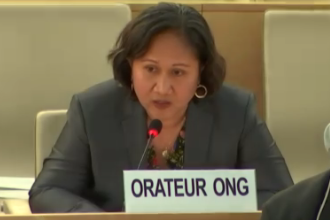
The ICJ today called at the UN for prompt establishment of a judicial accountability mechanism with international involvement, for Sri Lanka.The statement, delivered during an interactive dialogue on the OHCHR report on Sri Lanka at the Human Rights Council in Geneva, read as follows:
“The ICJ welcomes the comprehensive report of the OHCHR on promoting reconciliation, accountability and human rights in Sri Lanka (A/HRC/40/23). We share OHCHR’s observation that there is a lack of progress and absence of a comprehensive strategy for implementation of all commitments made under Resolution 30/1.
ICJ is particularly concerned about the lack of progress in the area of criminal accountability (as noted in Paragraph 27 of the report). We believe that there is an urgent need to establish a judicial mechanism with the involvement of foreign judges. We echo the sentiments of the OHCHR regarding the inability of the Sri Lankan courts, on their own, to address the impunity of security forces for crimes under international law.
Failure of the criminal justice system to effectively address emblematic cases (as reflected in Paragraph 38 of the report) clearly indicates the level of capacity and willingness on the part of the State even today to prosecute and punish perpetrators of serious crimes when they are linked to the security forces or other positions of power.
ICJ also notes that women are grossly under-represented in the judiciary in Sri Lanka, which prevents women human rights defenders and female victims from having confidence in the ordinary criminal justice system, impeding their full engagement and participation in pursuing accountability for crimes committed against them during the conflict and other transitional justice processes.
A judicial mechanism with the involvement of foreign judges is particularly urgent for women in conflict-affected areas who still live in a highly militarized environment and are compelled to live among their perpetrators – those who have been accused of war crimes including rape and other forms of sexual violence.
We therefore reject calls for a purely domestic mechanism. Indeed, the ICJ considers that the continuing failure of the Government to ensure justice means that referral to the International Criminal Court or the creation of another international mechanism to facilitate criminal accountability would be fully warranted. The draft resolution before this session of the Council, reaffirming all elements of resolution 30/1, thus already represents a deep compromise and anything less than the existing text would be wholly unacceptable.
Mar 15, 2019
Today, ICJ and Human Rights Lawyers’ Association (HRLA) submitted recommendations to the Ministry of Justice on Thailand’s draft National Action Plan on Business and Human Rights (‘draft NAP’), dated 14 February 2019, scheduled for public consultation between 15 February 2019 and 15 March 2019.
The organizations called for modifications to the draft NAP to ensure adequate legal and other protections for human rights defenders and their work, which was indicated as the identified as one of the NAP’s key priority areas.
The ICJ and HRLA welcomed the overall commitment expressed by the Thai Government, including the Ministry of Justice’s, to implement the United Nations Guiding Principles on Business and Human Rights (UNGPs) through the NAP.
The organizations expressed concern, however, at the removal of a commitment that had been included in earlier versions of the NAP to “push for an Anti- Strategic Litigation against Public Participation (SLAPP) law” from the current draft NAP.
This removal was justified in the draft NAP on the grounds that the Court of Justice had already introduced legal amendments to prevent SLAPP lawsuits, in particular by enacting revisions of the Criminal Procedure Code (Articles 161/1 and 165/2). The draft NAP also refers to certain powers of a public prosecutor as another means of preventing SLAPP lawsuits.
ICJ and HRLA indicated that these laws were inadequate to prevent judicial harassment of human rights defenders and called for the draft NAP to include concrete action with the force of law to protect individuals, and in particular human rights defenders, from judicial harassment, including through SLAPP lawsuits.
Background
Thailand is among the first countries in the ASEAN region to have begun the elaboration of a NAP. The UN Human Rights Council has stressed the importance of the development of National Action Plans by States to implement the UN Guiding Principles on Business and Human Rights, which include the obligation to provide protections for persons from any adverse human rights impact of business activity.
On 15 February 2019, the Ministry of Justice circulated a final draft of the NAP for public consultation.
Upon finalization of the draft following the consultation, the draft will be forwarded to the Office of the National Economics and Social Development Council for their consideration before being sent to the Cabinet for approval.
The draft NAP sets out 4 key priority areas including (1) labour; (2) land, environment and natural resources; (3) human rights defenders; and (4) cross border investment and multi-national enterprises.
The draft NAP has set out several action points aimed to address concerns regarding the above-noted key priority areas for the period of 5 years (2019-2023).
Thailand-SLAPP Analysis-Advocacy-Analysis brief-2019-ENG (analysis in English, PDF)
Thailand-SLAPP Analysis-Advocacy-Analysis brief-2019-THA (analysis in Thai, PDF)

Mar 15, 2019 | News
The ICJ called on the Government of Malaysia to take immediate steps to protect the right of all persons in the country to freedom of expression and assembly, after seven organizers of the International Women’ Day (IWD) March were summoned for questioning by police authorities on 14 March 2019.
“It is very concerning that the Malaysian authorities continue to rely on repressive legislation to control and undermine freedom of expression and freedom of assembly in the country,” said Emerlynne Gil, ICJ’s Senior International Legal Adviser.
The Women’s March took place in Kuala Lumpur, on 9 March 2019. The demands of the participating groups included an ‘end of all violence based on gender and sexual orientation’, the ban of all child marriages, and the setting of RM1,800 as a minimum wage.
A statement by the Dang Wangi District Police Deputy Chief identified the organizers as individuals who had spoken at an ‘LGBT’ rally.
There were reportedly taken in for questioning on 18 March for potential violations of Section 4(1) of the Sedition Act and Section 9(5) of the Peaceful Assembly Act. They remain at risk of being charged for these offences.
The ICJ considers the Sedition Act 1948 and the Peaceful Assembly Act 2012 to be incompatible with international standards. The ICJ has previously called on the Government of Malaysia to abolish both laws, which have historically been used to silence voices of those challenging governmental policy.
The laws place restrictions on the exercise of freedom of expression that are overbroad, unnecessary and disproportionate, and inconsistent with rule of law and human rights principles. The Pakatan Harapan Government committed itself to abolishing the Sedition Act 1948 and the Peaceful Assembly Act 2012, but has not done so to date.
“The vague definition of ‘seditious tendencies’ in the Sedition Act has been used as a tool for silencing government critics and human rights defenders by previous administrations. It is disappointing that the Malaysian authorities have ended the moratorium on the use of the Sedition Act 1948, and continue to use it, instead of moving towards its abolition,” said Gil.
According to international standards, any limits on the right to peaceful assembly should not require prior authorization by the authorities. Notification requirements must not be unduly bureaucratic and be used only for the purpose of allowing the authorities to facilitate the exercise of the right to peaceful assembly, and to protect public safety.
In a 14 March statement, the organizers claimed to have been in regular communication with the police and to have been in compliance with the relevant notice provisions of the Peaceful Assembly Act.
The ICJ calls on the Malaysian authorities to end any investigations targeting the organizers of the Women’s March pursuant to the Peaceful Assembly and Sedition Act. It also calls on the Government to abolish the Peaceful Assembly Act and the Sedition Act.
Contact
Emerlynne Gil, ICJ Senior International Legal Adviser, t: +66 840923575, e: emerlynne.gil(a)icj.org
Malaysia-Womens March-News-web stories-2019-ENG (full story with additional information, in PDF)

Mar 13, 2019 | Advocacy
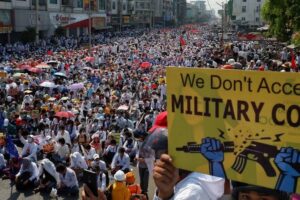
This important blog by ICJ Senior Legal Adviser Kingsley Abbott was first posted to Opinio Juris. It has been translated into Burmese language as a resource for individuals, institutions and organizations in the country.
Documenting criminal human rights violations in the Myanmar is critical, so we must be careful not to create problems for future efforts at establishing criminal responsibility.
In his article, Kingsley Abbott, discusses the important role of the documentation of serious human rights violations in Myanmar by civil society, UN bodies and journalists.
This effort has played a critical role in raising awareness of the situation inside and outside the country and in getting responses from the international community.
Read the article in English
Read the article in Burmese
Contact
Kingsley Abbott, ICJ Senior Legal Adviser for Global Redress & Accountability e: kingsley.abbott(a)icj.org
Mar 12, 2019 | News
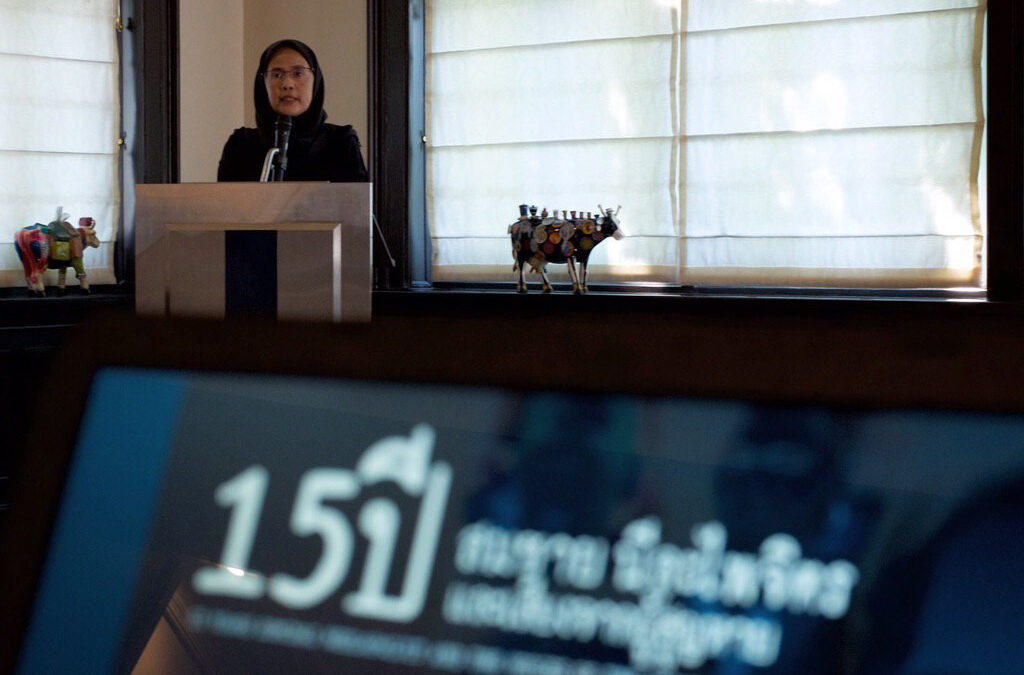
Today, the ICJ co-hosted an art exhibition and public forum titled 15th Year of Somchai’s Disappearance and the Voices of the Disappeared at the Embassy of the Netherlands in Bangkok.
The event was held to commemorate 15 years since the enforced disappearance of Somchai Neelapaijit, a prominent human rights lawyer, whose case has never been adequately by the Thai authorities.
Somchai was abducted after being stopped on a road in Bangkok on 12 March 2004 and taken from his car by a group of police officers. He has not been seen since. Fifteen years after his disappearance, Somchai’s fate and whereabouts remain unknown and no one has been held accountable for the crime against him.
More than 100 participants attended the event, including family victims of alleged disappearance cases, students, lawyers, members of civil society, diplomats, and members of the Thai authorities and media.
Opening remarks were delivered by Angkhana Neelapaijit, wife of Somchai Neelapaijit, and Kenza Tarqaât, First Secretary of the Embassy of the Netherlands in Bangkok.
The opening session included remarks by the victims who spoke about their challenges and about the progress and development regarding investigations into the alleged disappearance cases of their relatives. The session included the following speakers:
Sanhawan Srisod, the ICJ’s National Legal Adviser, spoke during the second session on recent amendments to the Draft Prevention and Suppression of Torture and Enforced Disappearance Act.
She highlighted concerns that the recent amendments would, if adopted, fail to bring the law into full compliance with Thailand’s international human rights obligations.
Sanhawan further expressed concern that the fate of the Draft Act was uncertain as Thailand’s National Legislative Assembly (NLA) that is considering the bill, while it may also continue their work in case of the necessity, will stop considering laws on 15 March, prior to the scheduled elections of 24 March 2019.
She stressed that it is crucial the Thai Government continues to consider and amend the bill, and pass it without delay in line with Thailand’s international human rights obligations.
The panel was moderated by Chanatip Tatiyakaroonwong from Cross-Cultural Foundation and also included the following panelists:
- Nongporn Roongpetchwong, Human Rights Expert, Rights and Liberties Protection Department, Ministry of Justice
- Badar Farrukh, Thailand Team Leader, United Nations’ Office of the High Commissioner for Human Rights (OHCHR) Regional Office for South East Asia
Closing remarks was delivered by Pratubjit Neelapaijit, daughter of Somchai Neelapaijit.
The forum was co-organized with the Neelapaijit family, Amnesty International – Thailand, Cross Cultural Foundation (CrCF), the Embassy of the Netherlands in Bangkok, Human Rights Lawyers’ Association and the United Nations’ Office of the High Commissioner for Human Rights (OHCHR) Regional Office for South East Asia.
Read Also:
Thailand-Summary ICJ analysis Draft Act-Advocacy-2019-ENG (Summary of the ICJ analysis of the Draft Act, in PDF)
Ten Years Without Truth: Somchai Neelapaijit and Enforced Disappearances in Thailand
Missed Opportunities: Recommendations for Investigating the Disappearance of Sombath Somphone
Thailand: ICJ submits recommendations on draft law on torture and enforced disappearance amendments
Thailand: ICJ, Amnesty advise changes to proposed legislation on torture and enforced disappearances