Jul 4, 2016
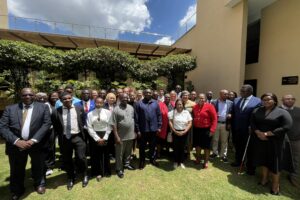
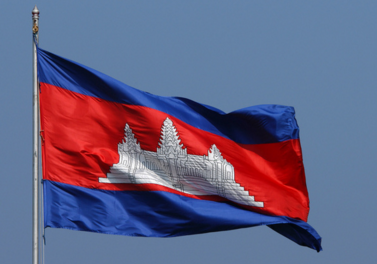
The ICJ and other human rights groups have released a joint statement highlighting concerns about Cambodia raised at the 32nd Session of the Human Rights Council.
In addition to the ICJ, the statement has been signed by the Asian forum for Human Rights and Development (Forum-ASIA), the Cambodian Centre for Human Rights, the Cambodian League for the Promotion and Defence of Human Rights (LICADHO), Civil Rights Defenders, the International Federation for Human Rights and the World Organisation Against Torture (OMCT).
The statement can be downloaded here: Cambodia-Joint Statement-HRC-Advocacy-2016-ENG (full text in PDF)
Jul 1, 2016 | Feature articles, News
A feature article by U Hayman Oo, ICJ Legal Researcher in Yangon, Myanmar.
In a recent meeting with Chinese ambassador to Myanmar and villagers, organized in Kyauk Phyu, a villager from Gone Shein Village asked the ambassador to help address the damages caused to their farmland by the Shwe Gas Pipeline Project that began five years ago.
She also expressed doubts that the Kyauk Phyu Special Economic Zone (Kyauk Phyu SEZ) would benefit villagers amid all the unresolved disputes.
Given such disputes, local people are not optimistic about the upcoming development of the Kyauk Phyu SEZ.
They perceive that the project will be a ‘loss’ rather than a ‘gain’ for them.
Most of the local population of farmers fear that the project will be a disaster to their livelihood along with massive land losses.
On a recent trip to Kyauk Phyu by the International Commission of Jurists (ICJ), community members, including local MPs and lawyers, reported their concerns that a second round of such abuses will be experienced, this time even worse, during development of the Special Economic Zone planned for the area, despite promises from the Government that the development will be environmentally sustainable and bring socio-economic benefits to the region.
In fact, Special Economic Zone can contribute to the country’s economy and help benefit the welfare of its people – but only if sound policies of sustainable development in compliance with human rights are in place.
Otherwise, massive economic projects of this kind risk large-scale adverse environmental, social and human rights impacts.
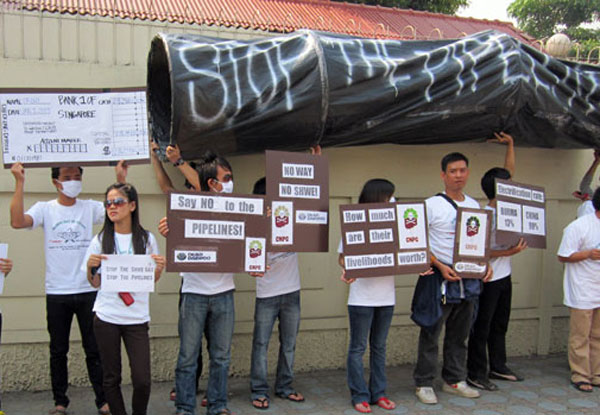
Kyauk Phyu residents know very well how foreign investments can be harmful for the community when investors fail to comply with local laws as well as international standards, because of their experience with the Shwe Gas Project, a Myanmar-China pipeline.
The Gas Pipeline project was notorious for reported labour abuses, and claims of inadequate compensation for land confiscation, arrest and detention of community leaders and loss of community livelihoods and environmental degradation.
Villagers still frequently take to the street demanding for the damages caused to their farmland to be addressed, in the absence of a proper grievance mechanism.
With these prevailing experiences in mind, local residents were alarmed when authorities reportedly measured about 250 acres for the SEZ around Kathapray, Krat Tein, and Thaing Chaung village tracts in Kyauk Phyu, raising more concerns of land acquisition and compensation.
Locals complain that there was no transparent discussion over compensation for this potential land acquisition.
Villagers from Pyai Sate Kay village reportedly lost about 40 acres of farmland to the construction of a reservoir.
Although, the compensation were made for 5.1 acre of farmland, the rest of grazing land was not compensated according to a report from a villager.
There were also complaints that the compensation was neither a current market price nor a sufficient amount of money for them to be able to buy a similar size of land for cultivation.
He also complained that the Government promised to provide replacement land, but that this has not yet happened.
A total of over 70 acres of land was also apparently acquired for another reservoir under construction near Thai Chaung village.
Compensation was only paid for the farmland acreas occupied for the construction excluding land affected by the access to the reservoir.
“We were compensated but the land we lost were not measured properly. The amount paid was only on the basis of approximation. The land we lost should have been measured carefully to pay for the compensation,” said Ko Tun Nu from Thaing Chaung village.
It is reported that these reservoirs were constructed with the purpose of water supply for the SEZ project.
Furthermore, villagers from Ohn Taw and Pyai Sate Kay also reportedly lost a total of 220 acres of land when it was allocated for construction of a police station between the villages.
Although generally the purpose of the security force stationed there is for the security of the township, local people suspect that this increased security presence is instead in preparation to meet the security demands for the planned SEZ project.
There has apparently been no discussion over compensation. It is also questionable whether this volume of land is necessary for the construction of a police station.
According to the Special Economic Zone Law 2014, the Ministry of Home Affairs is responsible for land acquisition in the area of a SEZ in accordance with existing laws and regulations.
It also imposes duties on the investors and developers to bear the expenses of compensation and relocation and to ensure that the standard of living of affected persons does not fall below their original living standard.
The new NLD-led Government has inherited ample land-related problems and has prioritized dealing with these issues.
On May 5th, the Government formed the ‘Central Committee for the Review of the Acquisition of Farmland and Other Land’ in order to combat nation-wide land disputes.
The Committee’s responsibilities include investigation of compliance with existing laws by relevant authorities.
The President has also instructed that all land acquisition cease until all existing land disputes are resolved.
In addressing those issues, it is important that international standards such as Basic Principles and Guidelines on Development Based Eviction and Displacement are integrated into national policies and regulations.
Only then will such projects ensure the protection of the rights and livelihood of communities and the promotion of responsible business in the country.
Myanmar-Kyauk Phyu SEZ-News-Op-eds-2016-BUR (Full text in Burmese, PDF)

Jun 30, 2016 | News
The Pakistani Government should not extend the oppressive and ineffective Protection of Pakistan Act (POPA), which is set to expire on 15 July 2016, said the International Commission of Jurists (ICJ) today.
POPA was enacted in July 2014 for a period of two years to combat “waging of war or insurrection against Pakistan” and to provide “speedy trial” for offences “threatening the security of Pakistan”.
Earlier this week, the Ministry of Interior confirmed that it planned to renew POPA for another two years.
“In these two years, not one suspect has been convicted under POPA, so we can conclude that the law doesn’t really protect people in Pakistan from terrorism and other violent acts, but instead it undermines their basic human rights protections,” said Sam Zarifi, ICJ’s Asia director.
“The Government’s plan to renew this hastily drafted law is a classic case of supposedly ‘temporary’ departures from normal legal processes and human rights protections on the basis of ‘exceptional” circumstances’ becoming a permanent part of the legal system.”
In a statement issued shortly after the Protection of Pakistan Act was enacted, the ICJ warned that POPA gives military and law enforcement authorities sweeping powers to detain individuals in contravention of Pakistan’s international human rights law obligations.
The law allows prolonged preventive administrative detention without adequate safeguards; retrospectively authorizes otherwise arbitrary or unlawful arrests or detentions; authorizes secret and unacknowledged detention; and gives law enforcement agencies broad powers to “shoot at sight”.
In addition, the law creates “special courts” to try scheduled offences under the Act. Procedures for the operation of these “special courts” allow for secret hearings and do not meet international standards for fair and public criminal proceedings before a competent, independent and impartial tribunal.
According to Government officials, the Ministry of Interior has cleared “hundreds of cases of peace disrupting elements” for trial before the “special courts” constituted under POPA.
The five “special courts” remained non-functional for many months because of lack of staff and other facilities. The courts are now functional, but have so far not concluded a single trial.
“POPA is not only an oppressive law, it has also proven to be completely ineffective,” added Zarifi. “Instead of renewing the law, the Government should focus on strengthening the existing criminal justice system, which is suffering because of years of neglect.”
Political groups, including the Muttahida Qaumi Movement (MQM) and the Pakistan People’s Party (PPP), have alleged that the unfettered powers given to civilian and military law enforcement agencies under POPA are being used to target their workers for political activity and association. They say the law has been used to arbitrarily detain dozens of their activists.
“Pakistan faces a genuine threat from militant groups engaging in acts of terrorism, and the Pakistani Government has an obligation to protect all people from such attacks,” said Zarifi. “International law gives governments reasonable flexibility to combat terrorism, without contravening human rights obligations, and claims of ‘threats to national security’ can never be used as a justification for the practice of extrajudicial killings, secret detention, and enforced disappearance.”
The ICJ urges the Pakistani authorities not to extend POPA.
It further calls on the authorities to review all national security legislation to ensure it is fully compatible with international human rights law and standards.
Contact:
Sam Zarifi, ICJ Asia Pacific Regional Director (Bangkok), t: +66 807819002; e: sam.zarifi(a)icj.org
Reema Omer, ICJ International Legal Adviser for Pakistan (London), t: +44 7889565691; e: reema.omer(a)icj.org
Jun 29, 2016 | Advocacy, Non-legal submissions
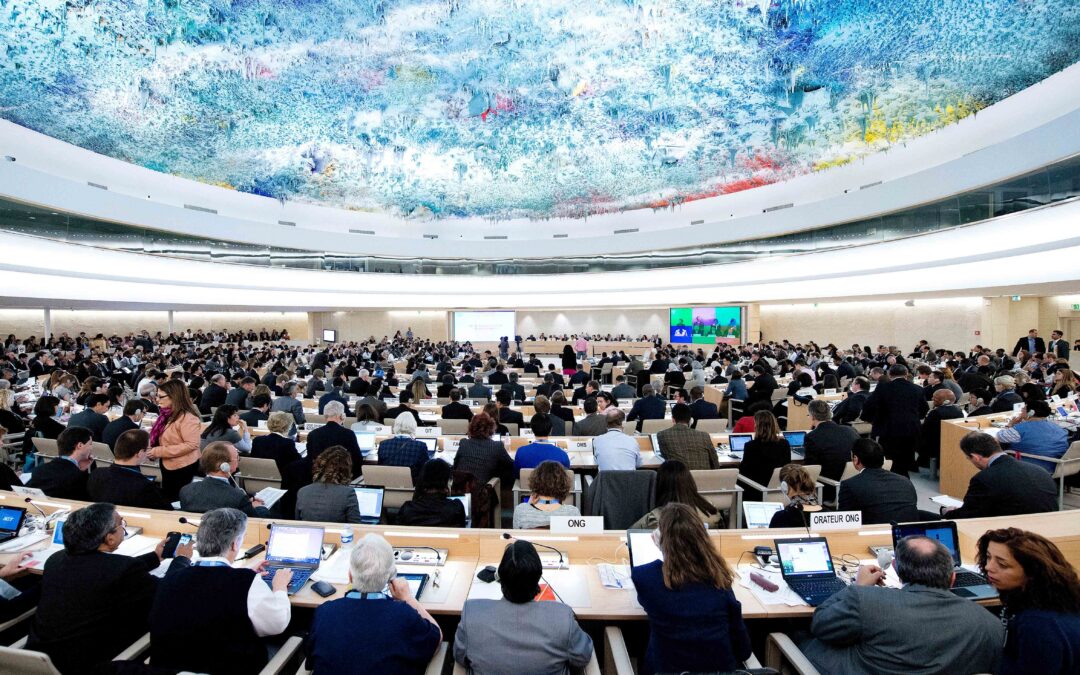
The ICJ, joined by FIDH, Franciscans International, and IMADR, today delivered a statement to the UN Human Rights Council.
The statement was on the situation of Rohingya Muslims in Myanmar, and on the need for active participation by international judges in the judicial mechanism to be adopted in Sri Lanka as part of the process of accountability and reconciliation.
The organizations stated, during general debate on an oral update on Sri Lanka from the High Commissioner for Human Rights, and the Commissioner’s report on the situation of Rohingya in Myanmar, that:
The Government of Myanmar has persecuted the Rohingya, refused to extend basic citizenship rights, and Parliament passed legislation entrenching discrimination such as the Race and Religion Protection laws. This has displaced thousands within Rakhine State and driven the Rohingya to sea and neighbouring countries. The ICJ, FIDH, Franciscans International and IMADR call on Myanmar:
- to repeal the 1982 Citizenship Law or amend it in accordance with the recommendations of the Special Rapporteur, to grant Rohingya full citizenship and accompanying rights;
- to develop a citizenship plan based on non-discrimination;
- to reject the Rakhine State Action Plan in its current form;
- to repeal laws that discriminate against ethnic and religious minorities;
- to diligently prosecute all acts of violence fuelled by discrimination, and hate speech that incites discrimination, hostility or violence; and
- to improve basic living conditions for the Rohingya and Arakanese in Rakhine State by enhancing protection of their economic, social, and cultural rights.
We welcome recent initiatives by the Government of Sri Lanka towards implementing Resolution 30/1, including the establishment of an Office of Missing Persons, and ratification of the Convention for the Protection of All Persons from Enforced Disappearance.
However, many of the commitments in the resolution remain unfulfilled. The other three transitional justice mechanisms envisioned by the resolution – an office of reparation, a truth-seeking commission, and a judicial mechanism – are yet to be established.
We call on Sri Lanka to implement, without delay, all elements of Resolution 30/1, including particularly the establishment of a credible judicial mechanism with full participation of international judges, prosecutors and lawyers. We agree that international participation is “a necessary guarantee for the independence and impartiality of the process in the eyes of the victims” (High Commissioner’s Oral Update, A/HRC/32/CRP.4, paragraph 32).
Rapid progress on this and other key elements of the resolution is essential to the credibility of the overall process of transition in Sri Lanka.
The statement can be downloaded in full, in PDF format, here: HRC32-OralStatement-SriLankaMyanmar-2016
Jun 26, 2016
Nepal’s new anti-torture bill is a welcome effort, but it must be revised to comply fully with international human rights law, the ICJ said in a briefing paper released today.
“Nepal’s anti-torture bill is a significant development, and has the potential to be an important step towards countering the systemic impunity for gross human rights violations in the country,” said Sam Zarifi, ICJ’s Asia Director.
“It is therefore crucial that the Bill be revised to fully comply with international human rights law,” he added.
In a 37-paged briefing paper released today, the ICJ has analyzed the Torture and Cruel, Inhuman or Degrading Treatment (Control) Bill, 2014 against relevant international law and standards, finding that several provisions of the bill are inconsistent with Nepal’s international obligations.
Major problems include the definition and scope of torture and other ill-treatment in the Bill, the existence of a limitation period for filing complaints, the disproportionately low severity of penalties imposed, and the failure to provide access to effective remedies and reparations for victims.
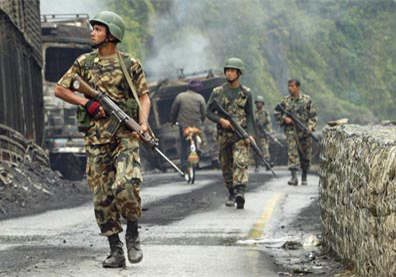
The briefing paper is released at a time when the United Kingdom is prosecuting a Nepali military officer, Colonel Kumar Lama, for allegations of torture and other ill-treatment during Nepal’s decade long internal armed conflict (photo).
“There are several other instances of torture and other human rights abuses during the conflict era that remain uninvestigated. It is high time that Nepal puts in place a strong anti-torture law that challenges entrenched impunity and enables victims to seek justice and accountability,” Zarifi said.
To this end, the ICJ has made a serious of recommendations in the briefing paper, which include:
- Revising the Bill to reflect the definition of torture and cruel, inhuman and degrading punishment in a manner consistent with the Convention against Torture and other international instruments
- Increasing the maximum penalty provided in the Bill, and providing for enhanced punishment for the supervising officer when he / she is complicit in torture
- Removing the limitation period for filing complaints and lodging cases
- Removing any penalties for the alleged filing of “fake” complaints
- Ensuring the right to all forms of reparation, not only compensation, when there are reasonable grounds to believe that torture or ill-treatment has taken place, and irrespective of the existence or outcome of a judicial proceeding
- Including a provision enabling authorities in Nepal to prosecute individuals accused of torture and ill-treatment, irrespective of their nationality and where the crime was committed
- Revising the Bill to be fully consistent with the international principle of non-refoulement, which prohibits the extradition, deportation, expulsion or removal in any other way of a person to a territory where there is a real risk of torture or other ill-treatment
- Placing obligations on specific State institutions to establish preventive programs for torture and monitoring their implementation.
Nepal-Torture Bill-Advocacy-Analysis Brief-2016-ENG (full text in PDF)