Aug 21, 2018 | Articles, Nouvelles
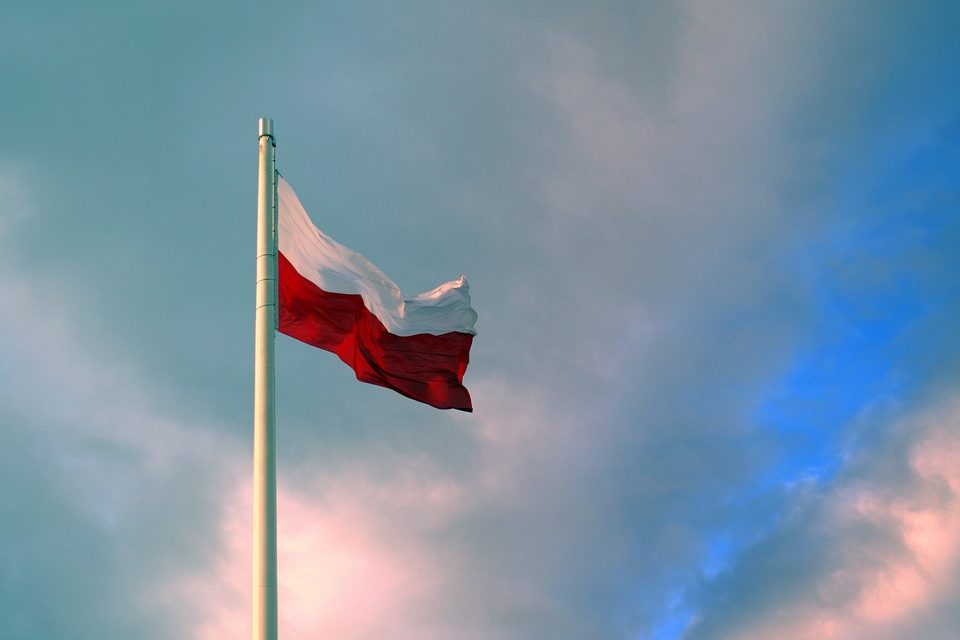
La CIJ et sa section polonaise ont exprimé aujourd’hui leur soutien aux actions de la Cour suprême pour défendre l’état de droit et l’indépendance du pouvoir judiciaire en Pologne, notamment en recourant à la Cour de justice des Communautés européennes (CJCE).
Ces faits interviennent dans la foulée d’attaques répétées de la part de personnalités politiques et des autorités.
La préservation et la sauvegarde de l’indépendance des tribunaux sont essentielles pour la protection des droits de l’Homme en Pologne, ont déclaré les deux organisations.
La CIJ et sa section polonaise ont exhorté les autorités exécutives et législatives du pays à cesser toute ingérence dans la conduite de ses fonctions légitimes par la Cour suprême.
La loi sur la Cour suprême qui a abouti à la «retraite» forcée d’un tiers de la Cour suprême, y compris de la présidente de la Cour, Małgorzata Gersdorf, doit être abrogée et les juges réintégrés, ont souligné la CIJ et sa section polonaise.
Le 2 août, la Cour suprême de Pologne a pris l’initiative, bienvenue, de présenter une demande de décision préliminaire à la Cour de justice de l’Union européenne (CJUE), conformément au droit de l’UE, afin de requérir son interprétation sur la conformité de la législation récente sur l’âge de la retraite des juges avec le droit de l’UE.
Plus précisément, la Cour suprême a demandé si la législation respectait le principe de l’inamovibilité des juges et de l’interdiction de la discrimination fondée sur l’âge en vertu de la directive 2000/78.
La Cour suprême a suspendu l’application de la loi tant que durera la procédure devant la CJUE.
La CIJ et sa section polonaise condamnent les attaques contre la Cour suprême de la part des autorités politiques, et notamment le président Andrzej Duda, qui ont prétendu que la suspension de l’application de la loi n’a aucun fondement juridique.
Au contraire, la Cour suprême de Pologne a agi dans le respect de ses obligations, en vertu de l’article 267 du Traité sur le fonctionnement de l’Union européenne (TFEU), pour questionner l’interprétation des traités et, conformément à la jurisprudence de la CJUE, et pour suspendre l’application de mesures qui pourraient constituer une violation du droit de l’Union européenne, dans l’attente du règlement de la question.
La législation soulève de sérieux problèmes en droit européen, tant en ce qui concerne la protection de l’état de droit en vertu de l’article 2 du TFEU que de la discrimination fondée sur l’âge.
Cette attaque contre les actions de la Cour suprême intervient alors que les autorités exécutives et législatives polonaises sapent systématiquement l’indépendance de la justice en Pologne, ce que la CIJ, sa section en Pologne et les juges du réseau mondial de la CIJ ont condamné à plusieurs reprises.
Les deux organisations soulignent que l’inamovibilité des juges est l’un des principaux piliers de l’indépendance judiciaire et donc de l’état de droit. Une lettre de la CIJ datée du 11 juillet 2018 (disponible uniquement en anglais), signée par 22 hauts magistrats de toutes les régions du monde, a exhorté le gouvernement polonais à agir immédiatement pour réintégrer les juges mis en retraite forcée.
Aug 21, 2018 | News
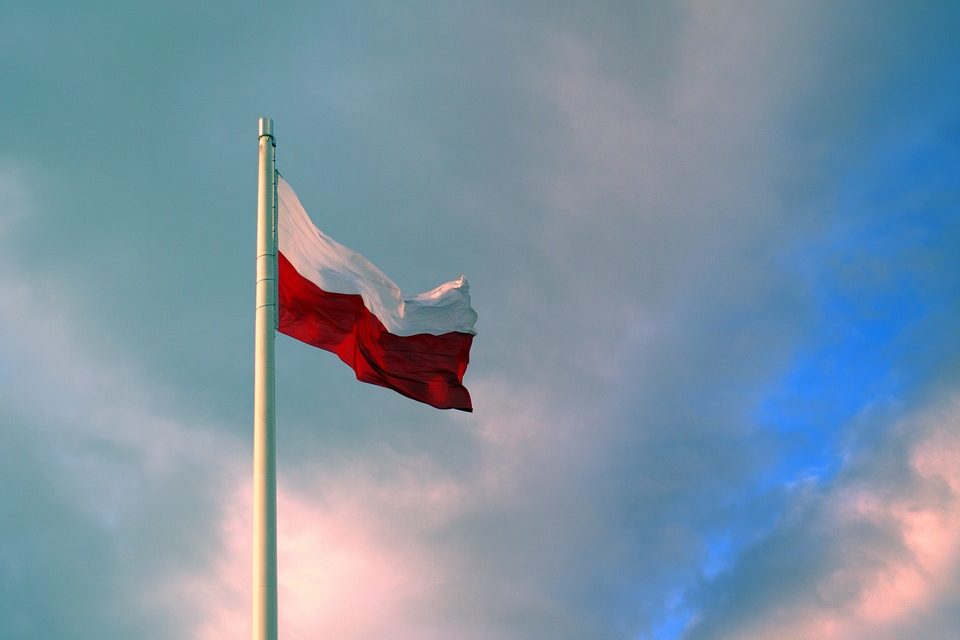
The ICJ and its Polish Section (ICJ Poland) today expressed their support for the actions of the Supreme Court to defend the rule of law and the independence of the judiciary in Poland, including by recourse to the European Court of Justice (CJEU).
This happened in the face of repeated attack by political figures and authorities.
Preserving and safeguarding the independence of the courts is essential for the protection of human rights in Poland, the organizations said.
The ICJ and ICJ Poland urged the Polish executive and legislative authorities to cease all interference with the conduct of the Supreme Court in the carrying out of its legitimate functions.
The law on the Supreme Court that has led to the forced “retirement” of one third of the Supreme Court, including the President of the Court, Małgorzata Gersdorf, must be repealed and the judges reinstated in office, the ICJ and ICJ Poland stressed.
On 2 August, the Supreme Court of Poland took the welcome step, in accordance with European Union law, of submitting a preliminary ruling request to the Court of Justice of the European Union (CJEU) seeking its interpretation on the compliance of the recent legislation on retirement ages of judges with EU law.
Specifically, the Supreme Court enquired as to the legislation’s compliance with the principle of irremovability of judges and the prohibition of discrimination on grounds of age under Directive 2000/78. The Supreme Court has suspended the implementation of the law during the proceedings before the CJEU.
The ICJ and ICJ Poland condemn the attacks against the Supreme Court by political authorities, including President Andrzej Duda, who claimed that the suspension of the law’s implementation has no legal basis.
On the contrary, the Supreme Court of Poland acted in compliance with its duties under article 267 of Treaty of the Functioning of the European Union to raise a question concerning the interpretation of the Treaties and, in conformity with the case-law of the CJEU, to suspend the application of such measures which may violate the law of the European Union, pending resolution of the question.
The legislation raises serious issues of EU law, both in regard to protection of the rule of law under Article 2 of the TFEU, and in regard to discrimination on grounds of age.
This attack against the actions of the Supreme Court occurs amid a systematic undermining of the independence of the judiciary in Poland by the Polish executive and legislative authorities, which the ICJ, ICJ Poland, and judges of the global ICJ network have repeatedly condemned.
The organizations emphasize that irremovability of judges is one of the main pillars of judicial independence and therefore of the rule of law. An ICJ letter of 11 July 2018, signed by 22 senior judges from all regions of the world, urged the Polish government to act immediately to reinstate the forcibly retired judges in office.
Jul 31, 2018 | News
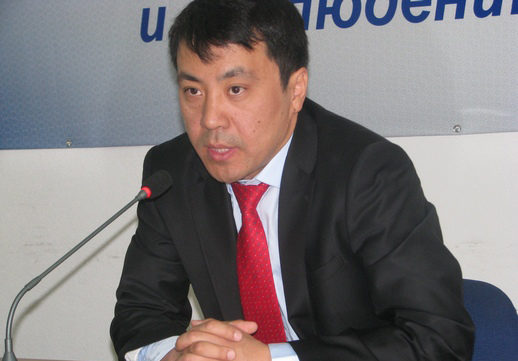
Today, the ICJ called on the government of Kazakhstan to drop all charges of “knowingly disseminating false information” against lawyer Bauyrzhan Azanov related to his representation of a child who is the alleged victim of sexual abuse by older children.
“The prosecution of Bauyrzhan Azanov in relation to statements he made as part of his representation of a child violates the lawyer’s freedom of expression, and prevent him from effectively representing his client,” said Temur Shakirov, Senior Legal Adviser for the ICJ’s Europe and Central Asia Programme.
“Instead of targeting a lawyer, the investigative authorities should use their resources to investigate the allegations of human rights violations in this case and ensure the protection of the rights of this child in accordance with Kazakhstan’s international obligations,” he added.
Bauyrzhan Azanov, a prominent lawyer in Kazakhstan, took up a high-profile case in which he represented a minor, an alleged victim of sexual and physical abuse over a prolonged period.
The case became public in March 2018 through media reports.
Once the case became public several district police officers were fired, and two heads of schools and some other state agents were suspended from office, reportedly in relation to their failure to report and investigate the case.
In his statements in the social media, Azanov alleged the investigation had been obstructed due to corrupt reasons.
In reaction to this, on 21 May 2018, the mother of the minor submitted a complaint against Azanov where she expressed concerns about “social tension”, “forming a negative image of the investigative body” and herself “as a mother”.
Following the mother’s complaint, on 24 July, the General Prosecutor’s Office initiated a criminal investigation against the lawyer for knowing dissemination of false information, which alleged that:
“The information disseminated by lawyer B. Azanov was deliberately distorted and untrue, which created a false idea among the public about the alleged corruption of justice system, investigative bodies, the mother of the child and other persons. This caused psycho-emotional and social tension among the public and created a threat of destabilization of the internal political situation, thereby creating a threat of violation of public order.”
Through the media, Azanov has denied the allegations against him and has stated that he acted in the best interests of his client and sought to ensure accountability for criminal acts.
On 1 June 2018, Nursultan Nazarbayev, President of the Republic of Kazakhstan commented on the case stating that unreasonable prolongation of the investigation is connected with the nepotism in the police and higher investigative authorities.
The Ombudsperson, members of the Kazakhstan Bar Association and human rights activists have made public statements in support of Bauyrzhan Azanov.
In these circumstances, the ICJ is concerned that criminal charges against lawyer Bauyrzhan Azanov for public comments in which he raised concerns about possible violations of human rights of his minor client, may violate the lawyer’s right to freedom of expression.
The right to freedom of expression is protected under international treaties to which Kazakhstan is a party, including by Article 19 of the International Covenant on Civil and Political Rights (ICCPR). As the UN Human Rights Committee stated in its General Comment 34 on the freedom of expression:
“When a State party invokes a legitimate ground for restriction of freedom of expression, it must demonstrate in specific and individualized fashion the precise nature of the threat, and the necessity and proportionality of the specific action taken, in particular by establishing a direct and immediate connection between the expression and the threat.”
According to the UN Basic Principles on the role of lawyers, lawyers have the right to take part in public discussion of matters concerning the law, the administration of justice and the promotion and protection of human rights without suffering professional restrictions by reason of their lawful action or their membership in a lawful organization (Principle 23).
It is of particular concern that the Prosecutor’s Office document uses vague concepts that may amount to arbitrary use of grounds for restriction of freedom of expression of the lawyer.
In particular, it is unclear how prosecutorial authorities measured “psycho-emotional and social tension of the public” or that on what basis the lawyer’s comments may have “created a threat of destabilization of the internal political situation” creating a threat to the public order.
These broadly and atypically worded justifications for prosecution are likely to lead to arbitrary interference with freedom of expression.
Prosecution of the lawyer for his attempts to raise human rights-related issues of his minor client, unsupported by any evidence or explanation what they may refer to, is also likely to have a chilling effect on those who defend human rights of victims of abuse.
The ICJ recalls that according to the UN Basic Principles on the Role of Lawyers, Governments must ensure that lawyers are able to perform all of their professional functions without intimidation, hindrance, harassment or improper interference (Principle 16).
Kazakhstan-Lawyer Azanov-News-web story-2018-ENG (full story, in PDF)
Kazakhstan-Lawyer-Azanov-News-Web-story-2018-RUS (full story in Russian, PDF)
Jul 31, 2018 | Articles, Nouvelles
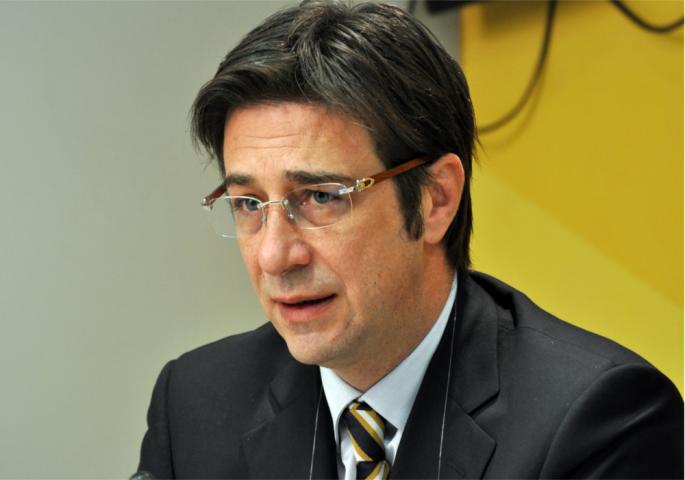
Le meurtre de l’avocat serbe Dragoslav Ognjanović doit faire l’objet d’une enquête indépendante, rapide et approfondie et les auteurs doivent être traduits en justice, a déclaré aujourd’hui la CIJ.
Dragoslav Ognjanović (photo), éminent avocat qui avait défendu Slobodan Milosovic et représenté des accusés dans des affaires de criminalité organisée, a été abattu devant son domicile à Belgrade, samedi 28 juillet.
«La sécurité des avocats est essentielle au bon fonctionnement du système judiciaire et à la protection de la primauté du droit. Les autorités serbes doivent maintenant prendre des mesures urgentes pour rétablir un climat de confiance dans lequel elles montrent qu’elles sont capables d’assurer la sécurité des avocats potentiellement menacés, et pour enquêter et traduire en justice les auteurs de ce crime,” a déclaré Radmila Dragicevic-Dicic, juge à la Cour suprême de Serbie et vice-présidente de la CIJ.
“L’enquête et les suites pénales liées à cette affaire constitueront un test important pour les autorités et le système judiciaire serbes,” a-t-elle ajouté.
Les barreaux de Serbie et de Belgrade ont appelé les avocats à suspendre leur travail durant une semaine pour exprimer leur préoccupation face au risque de violence qui les menace.
Les autorités serbes mettent cette situation sur le compte de la guerre de clans que se livrent les groupes du crime organisé pour le contrôle du marché de la drogue.
“Les préoccupations des avocats serbes doivent être prises au sérieux par le gouvernement et le parquet, et les barreaux devraient être consultés sur les moyens d’assurer la sécurité des avocats,” a dit Róisín Pillay, directrice du programme Europe de la CIJ.
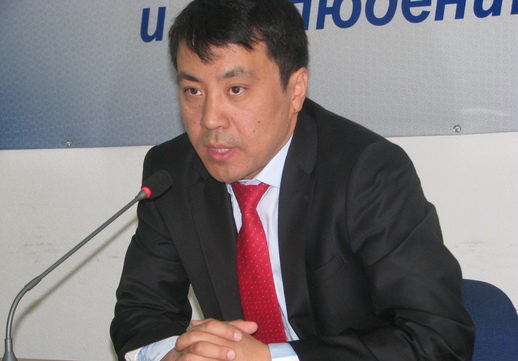
Jul 31, 2018 | Новости, Статьи
МКЮ призывает власти Казахстана снять все обвинения о «распространении заведомо ложной информации», выдвинутые против адвоката Бауыржана Азанова.
Обвинения связаны с защитой адвоката интересов ребенка, который предположительно является жертвой сексуального насилия со стороны подростков.
«Уголовное преследование Бауыржана Азанова на основании его заявлений в связи с защитой интересов ребенка нарушает свободу выражения мнения адвоката и препятствует эффективной защите прав клиента», – отметил Тимур Шакиров, Старший правовой советник Европейской программы МКЮ.
«Ресурсы следственных органов следует направлять не на преследование адвоката, а на расследование подозрений в нарушении прав человека по этому делу и обеспечение защиты прав ребенка в соответствии с международно-правовыми обязательствами Казахстана», – добавил он.
Бауыржан Азанов, известный казахстанский адвокат, вступил в громкое дело о систематическом сексуальном насилии и избиениях в отношении ребенка в качестве представителя потерпевшего. В марте 2018 года дело получило огласку в средствах массовой информации.
После того, как дело стало освещаться в СМИ, были уволены несколько сотрудников полиции, а два школьных директора и несколько должностных лиц были временно отстранены от должности, предположительно в связи с тем, что не сообщили о преступлении и не провели расследования по делу.
В сотсетях Азанов сделал ряд заявлений о том, что надлежащее расследование не проводится в связи с коррумпированностью должностных лиц.
В ответ на данные заявления 21 мая 2018 года мать ребенка обратилась с жалобой на Азанова, в которой обращает внимание на «социальную напряженность» и «формирование негативного образа органа следствия» и себя «как матери».
24 июля Генеральная прокуратура возбудила уголовное расследование в отношении адвоката по обвинению в распространении заведомо ложной информации. По мнению прокуратуры,
«информация, распространенные адвокатом Азановым, являлась преднамеренно искаженной и не соответствующей действительности, что создало у общественности ложное представление о якобы коррумпированности правосудия, органа, ведущего уголовный процесс, матери потерпевшего ребенка и других лиц, вызвала среди общественности психоэмоциональную и социальную напряженность и угрозу дестабилизации внутриполитической ситуации, тем самым создала угрозу нарушения общественного порядка».
В ответ адвокат выступил в СМИ с опровержением предъявленного обвинения. Азанов отметил, что действовал в интересах клиента и добивался привлечения виновных к уголовной ответственности.
1 июня 2018 года Нурсултан Назарбаев, Президент Республики Казахстан, прокомментировал данное дело. Он заявил, что затягивание расследования связано с тем, что сотрудники полиции и руководящих органов следствия оказывали покровительство своим родственникам в числе подозреваемых.
Уполномоченный по правам человека, представители Республиканской коллегии адвокатов и ряд правозащитников выступили с публичными заявлениями в поддержку Бауыржана Азанова.
Принимая во внимание обстоятельства данного дела, МКЮ выражает обеспокоенность в связи с тем, что уголовное преследование адвоката Азанова на основании публичных заявлений, сделанных с целью привлечь внимание к возможным нарушениям прав человека в отношении несовершеннолетнего клиента, может составлять нарушение права адвоката на свободу выражения мнения.
Право на свободу выражения мнения гарантируется международными договорами, участником которых является Казахстан, в том числе статьей 19 Международного пакта о гражданских и политических правах (МПГПП). Как указал Комитет по правам человека ООН в Замечании общего порядка 34 «Свобода мнений и их выражения»,
«Когда государство-участник ссылается на законные основания при установлении ограничения на свободу выражения мнений, оно должно четко и подробно продемонстрировать конкретный характер угрозы, а также то, что принятие конкретных мер отвечает критериям необходимости и соразмерности, в частности, путем установления прямой и непосредственной связи между формой выражения и угрозой».
В соответствии с Основными принципами ООН, касающимися роли юристов, юристы имеют право принимать участие в общественных дискуссиях по вопросам, касающимся права, отправления правосудия и поощрения и защиты прав человека, не подвергаясь ограничению своей профессиональной деятельности вследствие своих законных действий или членства в законной организации (принцип 23).
Особую обеспокоенность вызывают расплывчатые формулировки, которые используются в постановлении Генеральной прокуратуры, что может квалифицироваться как произвольное использование оснований для ограничения свободы выражения мнения адвоката.
В частности, неясно, каким образом органы прокуратуры измеряют степень «психоэмоциональной и социальной напряженности среди общественности», или же на каком основании они пришли к выводу о том, что высказывания адвоката «вызвали угрозу дестабилизации внутриполитической ситуации», что создает угрозу нарушения общественного порядка.
Данные расширительные основания для уголовного преследования, сформулированные весьма нестандартным образом, могут привести к произвольному вмешательству в свободу выражения мнения адвоката.
Уголовное преследование адвоката за попытки привлечь внимание общественности к проблеме нарушения прав человека в отношении несовершеннолетнего клиента, в отсутствие каких-либо доказательств или разъяснений, о каких именно действиях говорится в постановлении прокуратуры, также могут оказать запугивающее воздействие на тех, кто защищает права человека в отношении жертв насилия.
МКЮ напоминает, что, в соответствии с Основными принципами ООН, касающимися роли юристов, государства должны обеспечить, чтобы юристы могли выполнять все свои профессиональные обязанности в обстановке, свободной от угроз, препятствий, запугивания или неоправданного вмешательства (принцип 16).
Kazakhstan-Lawyer-Azanov-News-Web-story-2018-RUS (полная история на русском, в формате PDF)




