Sep 13, 2018 | Advocacy, Non-legal submissions
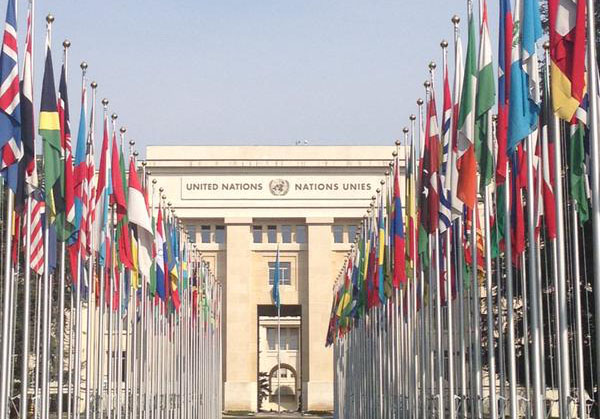
The ICJ prepared an oral statement on procedural safeguards and civil society’s action to prevent arbitrary detention and enforced disappearance, for the interactive dialogue with the UN Working Groups on Arbitrary Detention and on Enforced and Involuntary Disappearances.
Although the statement could not ultimately be read out due to the limited time for civil society statements at the Human Rights Council, the text can found here:
“Mr President, Chairpersons of the Working Groups,
The International Commission of Jurists (ICJ) welcomes the focus of the report of the Working Group on Arbitrary Detention on “Linkages between arbitrary detention and instances of torture and ill- treatment”.
The ICJ shares the view of the Working Group that “safeguards … to prevent” torture and ill-treatment minimize and prevent “instances of arbitrary detention” (A/HRC/39/45, para. 59, and the view that “Judicial oversight of detention is a fundamental safeguard of personal liberty ” (A/HRC/39/45, para. 60).
The ICJ further welcomes the interim report of the Working Group on Enforced and Involuntary Disappearances on effective investigations (A/HRC/39/46), including the finding that “relatives of the disappeared have proven to be essential in the context of investigations and should have the right to know the truth … .” (para. 65)
The ICJ however stresses that these standards are not always upheld by States in their policies and actions.
For example, in Turkey, judicial review of detention is carried out by Judgeships of the Peace whose independence is highly questionable.
Finally, with regard to enforced disappearances, the ICJ is very concerned by the actions of Turkish authorities prohibiting the Saturday Mothers to hold their weekly protests in Galatasaray Square (Istanbul) in memory of their disappeared, in breach of their right to freedom of assembly.
Events of this kind seriously weaken the procedural safeguards and the action of civil society to protect and promote the prohibition of arbitrary detention and ensure accountability against enforced disappearances.
The ICJ urges the Council to address these worrying developments.
I thank you.”
HRC39-OralStatement-WGADWGEID-2018-draft-ENG (download the statement)
Sep 10, 2018 | Advocacy, News
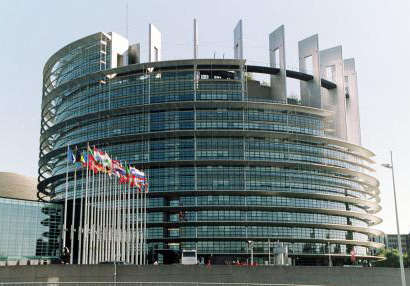
The ICJ today called on all MEPs to vote in favour of the draft resolution and report by rapporteur Judith Sargentini MEP, before the European Parliament, which would activate Article 7 of the Treaty of the European Union in respect of Hungary.
A vote for the resolution would mean that, under Article 7.1, the Council would determine whether there is a clear risk of serious breach by Hungary of the founding values of the EU.
Ultimately, if the situation persists, this would allow the Council to take more robust measures, including suspension of voting rights, to address the situation.
The vote, scheduled for 12 September, is crucial for the rule of law in Hungary and throughout the European Union.
The Parliament will vote on whether to activate the process under Article 7, by calling on the Council to identify a risk of serious breach by Hungary of the EU’s founding values, including the rule of law and respect for human rights.
The ICJ considers that the measures put in place by the Hungarian government since 2011 have led to a severe deterioration of the rule of law and human rights, by weakening Constitutional rights protection, limiting judicial independence, suppressing independent media, civil society and academic institutions, and imposing arbitrary laws that violate the human rights of marginalized sections of society.
Cumulatively, these measures pose a grave, systemic threat to the protection of the human rights of all people in Hungary.
“The European Parliament should respond to the critical situation in Hungary by using the powers available to it under Article 7 TEU to defend human rights and the rule of law. Not to do so would be to abandon Hungary to an increasingly dangerous path, and would set a damaging precedent for all of Europe,” said Róisín Pillay, Director of the ICJ Europe Programme.
Read the full statement and key concerns here: Hungary-triggering Art 7-Advocacy-2018-ENG (in PDF)
Sep 10, 2018 | Events, News
The legal profession plays a crucial role in ensuring access to justice for all, transparency and accountability of the state, Rule of law and the respect for human rights.
Yet, instead of being perceived as a vital player to the justice sector, today lawyers are often targeted by the governments in many OSCE countries for seeking truth and justice. As a result, lawyers often face high risks of persecution, harassment as well as severe sanctions for doing their job.
This side-event aims to specifically discuss the situation of lawyers in Belarus, Russia, Azerbaijan, Tajikistan and Kazakhstan. The discussion will extend to consider the latest developments related to the rights of lawyers and their independence in the respective countries, and what impact this has on the overall rule of law and human rights situation.
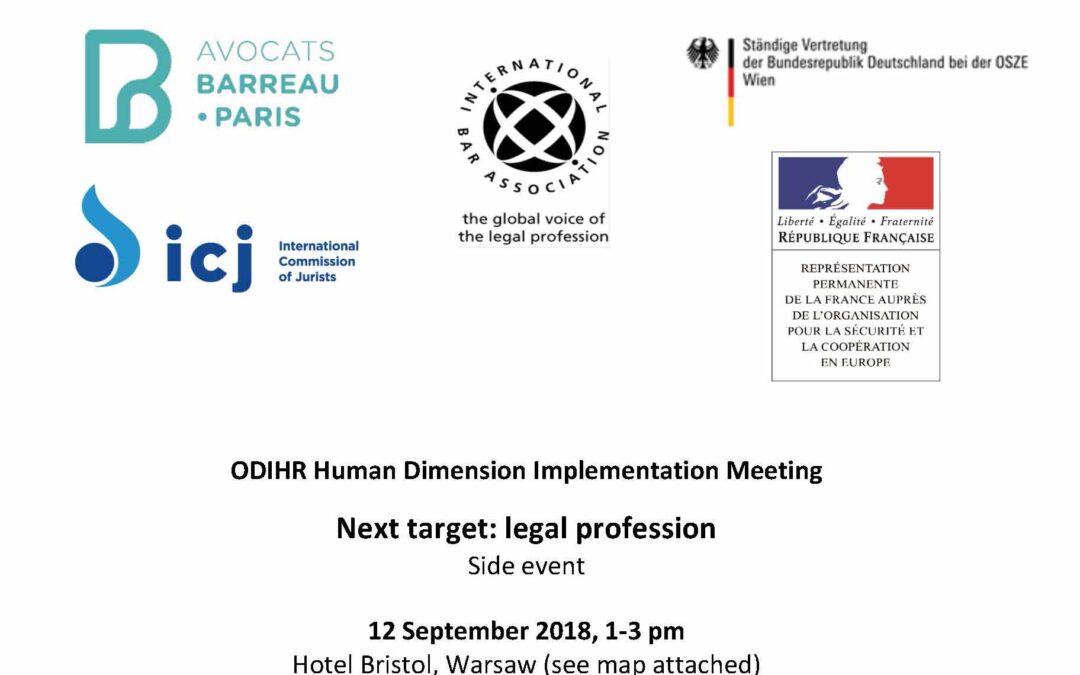
This side event will take place on 12 September 2018, from 13.00 -15.00 at Hotel Bristol, Warsaw
Moderator: Jurate Guzeviciute, Programme Lawyer, International Bar Association’s Human Rights Institute
Presentations and Discussions:
Independence of the legal profession and harassment of lawyers in Eastern Europe and Central Asia:
- Tajikistan: Dilrabo Samadova, lawyer, Tajikistan
- Azerbaijan: Nijat Mammadbayli, lawyer, Azerbaijan
- Kazakhstan: Snezhanna Kim, lawyer, Kazakhstan
- Russia: Róisín Pillay, Director of the Europe Regional Programme, International Commission of Jurists
- Belarus: Anne Souléliac, Head of the Human Rights section, Paris Bar Association
Organizers: Permanent Mission of the Federal Republic of Germany to the OSCE, Permanent Representation of France to the OSCE, International Bar Association’s Human Rights Institute, Paris Bar Association, International Commission of Jurists.
Poland-HDIM_Side event-News-event-2018-ENG (flyer of the event in PDF)

Sep 3, 2018
Today, the ICJ called on the President of the Council of Ministers, Giuseppe Conte, to remove the legal obstacles that for over a decade have frustrated justice in the case of Abu Omar, a victim of gross human rights violations during the so-called war on terror launched by the US in the 2000s.
Specifically, the organization said that the doctrine of “secret of state” , which shields from public and judicial disclosure information purported to affect national security interests, should be lifted in any case pertaining to the rendition of Abu Omar.
In a letter to President Conte, the President of the ICJ, Robert K. Goldman, recalls that Italy has been condemned by the European Court of Human Rights for its complicity in the unlawful rendition and enforced disappearance of Abu Omar and that Italy has a duty under international law to do all that is possible to unveil the truth to the victims and the general public about such crimes under international law.
“The Italian public has a right to know the truth about a gross violation of human rights that occurred in its country and about the role its own secret services and institutions played in it”, said Massimo Frigo, Senior Legal Advisor for the ICJ’s Europe Program.
“President Conte should lift state secrecy on this case right away, to demonstrate that he holds true to Italy’s obligations under international law and transparency and accountability of Government before its people.”
The ICJ noted that the European Court of Human Rights has determined, in Nasr and Ghali v. Italy, that Italian government violated human rights, including by allowing for effective impunity for such crimes despite the laudable efforts of the Italian judiciary to prosecute and try those responsible,” said Massimo Frigo.
“It is time for Italy to live up to its international obligations and show to the world and its people that gross violations of human rights and crimes under international law will not be tolerated and that accountability must be upheld at all times and without hesitation,” he added.
Background
Hassan Mustafa Osama Nasr (also known as Abu Omar) is an Egyptian national who was kidnapped in the streets of Milan in 2003 by CIA operatives, with the collaboration of Italian agents, while he was living in Italy with refugee status.
He was then subjected to torture and other cruel, inhuman or degrading treatment during his travel to Egypt and in Egypt, where he endured several years in arbitrary detention.
The rendition of Abu Omar, that also constituted an enforced disappearance under international law, was investigated and prosecuted by the Public Prosecutor’s Office of Milan and tried in the criminal tribunal, court of appeal of Milan and Court of Cassation.
This has been the only known prosecution and trial anywhere in the world against State agents alleged to be responsible for human rights violations in the context of the US-led rendition and secret detention system.
While 23 US agents and three Italian citizens were convicted – though without serving their sentences – the apex of the Italian military secret service (then SISMI) could not be tried because the Government invoked the doctrine of state secrecy in the proceedings.
The European Court of Human Rights found unanimously that that Italy had been complicit in the operation and had breached its obligations to prohibit and investigate torture and inhuman of degrading treatment of punishment (article 3 ECHR); the right to liberty of Abu Omar (article 5 ECHR); the right of his wife, Nabila Ghali, not to be subject to inhuman or degrading treatment caused by the suffering of not knowing the whereabouts of her husband (article 3 ECHR); their right to family life, and their right to an effective remedy for human rights violations (article 13 ECHR).
The judgment is still awaiting full execution by the Italian authorities, although there have been payments to the victims.
Contact:
Massimo Frigo, Senior Legal Advisor for the ICJ’s Europe Program
E-mail: massimo.frigo(a)icj.org
Italy-justice for Abu Omar-advoacy-open letters-2018-eng [Open Letter in English PDF]
Italy-justice for Abu Omar-news-press releases-2018-ita [Press Release in Italian PDF]
Italy-justice for Abu Omar-advocacy-open letters-2018-ita [Open Letter in Italian PDF]
Aug 24, 2018 | Новости, Событие, Статьи
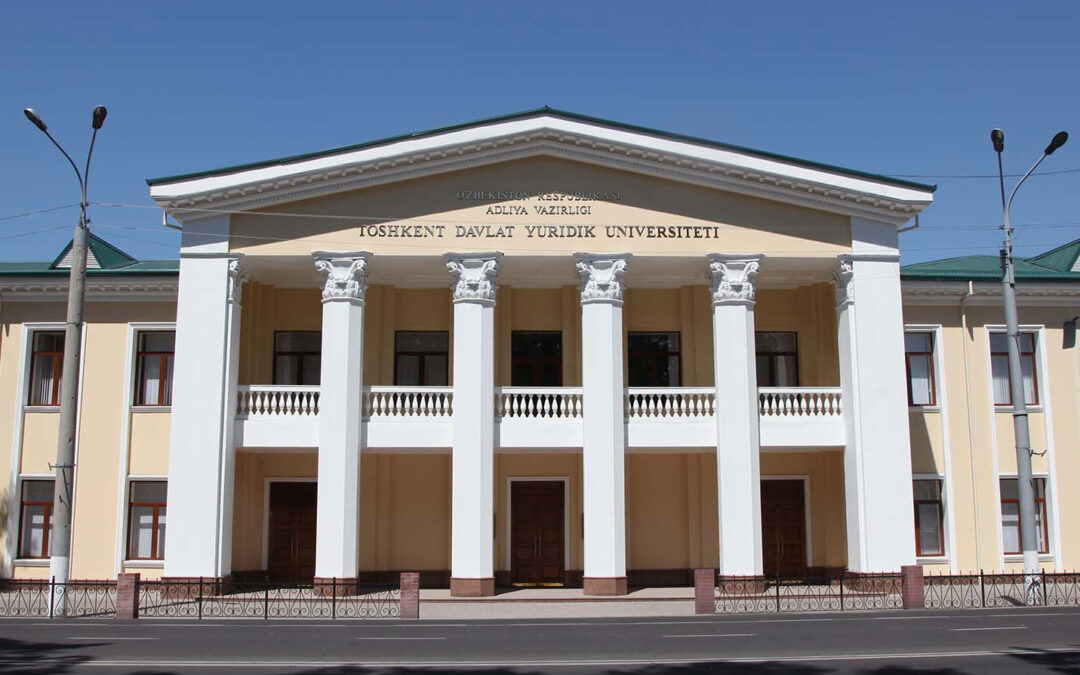
Международная комиссия юристов (МКЮ) совместно с Ташкентским государственным юридическим университетом (ТГЮУ) начинает «Экспертные дискуссии по экономическим, социальным и культурным правам».
В рамках дискуссий, МКЮ и ТГЮИ приглашают всех желающих подготовить и представить доклады (статьи) на рассмотрение рабочей группой для включения в список докладчиков и последующей их презентации, и обсуждения на первой экспертной встрече.
Первая встреча пройдет «18» сентября 2018 года в ТГЮУ. Темой первой встречи является «Право на труд» и принять участие в экспертной встрече могут все желающие, включая студентов и специалистов, интересующихся данной тематикой. Для регистрации просим пройти по следующей ссылке: https://goo.gl/forms/4WRTdugLuFI6l7Hu1. Регистрация открыта до «14 сентября» 2018 года.
Uzbekistan-ESCR Call for papers_ACCESS-News-web story-2018-RUS




