Jun 20, 2017 | News, Training modules
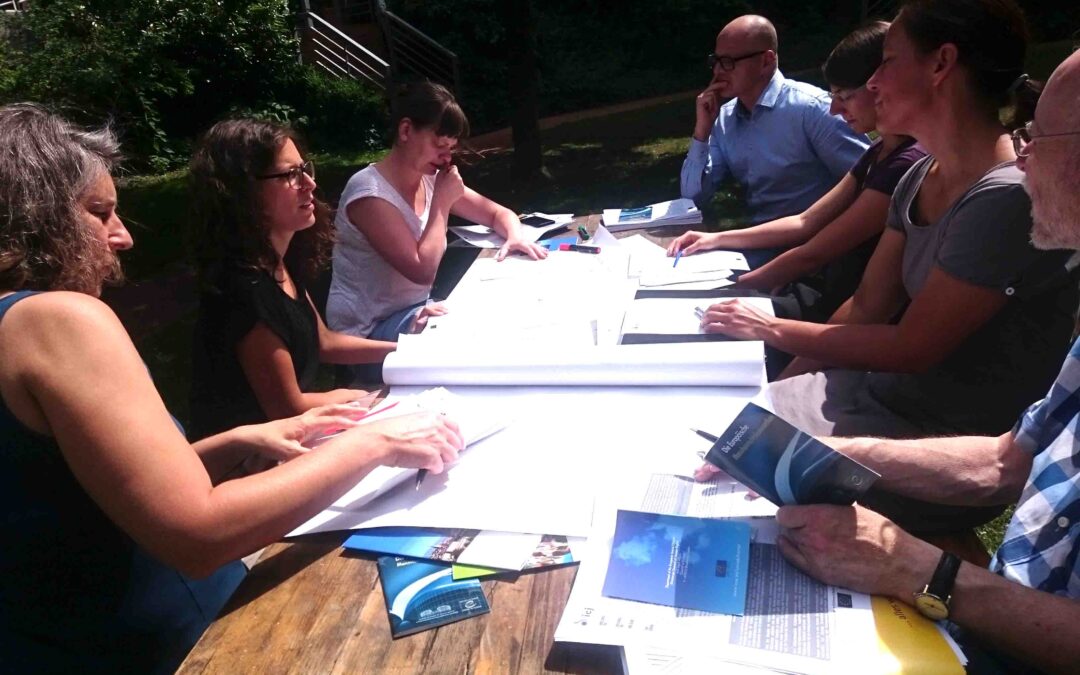
Today, the ICJ and Bundesfachverband unbegleitete minderjährige Flüchtlinge (BumF) are holding a training for lawyers on the rights of migrant children and on accessing international human rights mechanisms in Berlin.
The training aims to support the strategic use of national and international mechanisms to foster migrant children’s access to justice.
The training will take place over the course of two days: 20-21 June 2017.
The training will focus on accessing the international mechanisms in order to protect and promote the rights of migrant children, the child’s procedural rights including the right to be heard, the right to family life and family reunification.
A practical case analysis will be part of the training.
Trainers include Karolína Babická, Legal Adviser of ICJ’s Europe Programme, Claudia Kittel from the CRC Monitoring body in Germany, Sigrun Krause from JUMEN e.V. and Joris Sprakel, Lecturer at the Hague University.
The training is based on draft training materials prepared by the ICJ (to be published in the second half of 2017) and the ICJ Practitioners Guide no. 6: Migration and International Human Rights Law.
It is organized as part of the FAIR project co-funded by the Rights, Equality and Citizenship Programme of the European Union and OSIFE.
The past trainings on the rights of migrant children within the FAIR project took place in Spain, Italy, Bulgaria, Malta, Greece and Ireland. The Strategic litigation Retreat, which will bring three lawyers of each of the national trainings together with experts on in-depth insights and strategising on accessing international mechanisms will follow in October this year.
Download the agenda (in German) here:
Germany-FAIRtraining-Event-Agenda-2017 (in PDF)
Jun 16, 2017 | Advocacy, Non-legal submissions
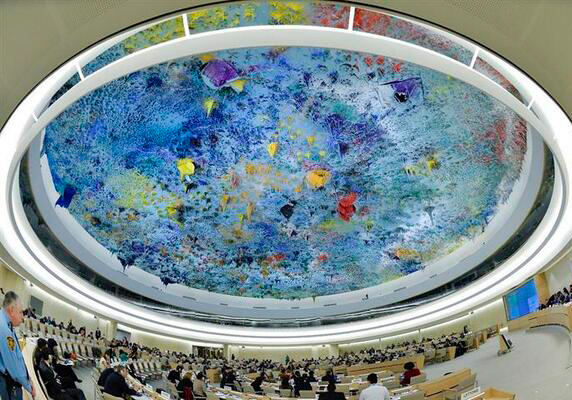
The International Commission of Jurists today drew to the attention of the Human Rights Council the failure of responsible States to ensure accountability for renditions and secret detention in several countries across the world.
The issue was highlighted by an oral statement in the General Debate on human rights situations that require the Council’s attention.
The ICJ statement continued as follows:
The US-administered rendition and secret detention programme of the last decade led to the commission of egregious violations of human rights and crimes under international law on a global scale with the complicity of several States, including in Europe.
Similar practices have been adopted in the Russian Federation where abductions of “terrorism” or “extremism” suspects and transfer to Central Asian States continue, in disregard of the principle of non-refoulement.
None of the States involved in the US-led renditions programme, or in abduction and transfer practices occurring in the Russian Federation, have ensured full accountability of those responsible and full redress for victims.
The ICJ calls on this Council to issue a strong call to all UN Member States to provide full accountability and redress for victims for the human rights violations that occurred during these operations.
Jun 16, 2017 | Адвокаси, Неюридические заявления
МКЮ сегодня обратила внимание Совета по правам человека на неспособность ответственных государств обеспечить подотчетность за выдачу и тайное содержание под стражей в нескольких странах мира. Этот вопрос был отмечен устным заявлением в Генеральном обсуждении о положении прав человека, которое требует внимания Совета.
Заявление МКЮ продолжалось следующим образом:
Осуществляемая США программа выдачи и тайного содержания под стражей последнего десятилетия привела к совершению вопиющих нарушений прав человека и преступлений по международному праву в глобальном масштабе с участием нескольких государств, в том числе в Европе.
Подобная практика была принята в Российской Федерации, где похищения подозреваемых в терроризме или «экстремизме» и передача в государства Центральной Азии продолжаются, не обращая внимания на принцип невыдворения.
Ни одно из государств, участвовавших в проводимой под руководством США программе выдачи, или в методах похищения и передачи, происходящих в Российской Федерации, не обеспечило полную ответственность виновных и полную компенсацию жертвам.
МКЮ призывает этот Совет настоятельно призвать все государства-члены ООН обеспечить полную ответственность и возмещение ущерба жертвам за нарушения прав человека, которые произошли в ходе этих операций.
Jun 13, 2017 | News
The ICJ welcomed today the Special Rapporteur’s report on Turkey and his preliminary findings on his visit to the country last November.
The ICJ welcomes and concurs with the finding that the “situation of the judiciary is undermining freedom of opinion and expression”.
Mass dismissals of judges have had a devastating effect on the judiciary’s independence, already weakened by the current state of emergency. Furthermore, we are concerned at the claim by the President that the state of emergency will remain in place until Turkey reaches “peace and prosperity”. Whatever other questions there may be about their validity, maintaining emergency derogations to human rights law instruments for such an open-ended period would clearly not be in line with international law.
The ICJ is also concerned at the constitutional amendments approved on the 16th of April by a referendum. Among other things, the amendments have given powers to the President and the Parliament to appoint all the members of the High Council of Judges and Prosecutors, the body tasked with protecting the independence of these professions.
The judiciary has had in the past an important role in implementing legislation that has severely limited the freedom of journalists to carry out their job.
The independence of the judiciary has now been eroded to its core in Turkey. Without it, there is no effective remedy in the country to protect freedom of opinion and expression.
Further reading: ICJ’s briefing paper Turkey: the Judicial System in Peril
Jun 12, 2017 | Advocacy, Non-legal submissions
Speaking at the UN Human Rights Council, the ICJ today highlighted judicial corruption and threats to judges and lawyers in Turkey and Azerbaijan, as well as regressive steps on violence against women in the United States of America and Russian Federation.
The statement, delivered during the interactive dialogue with the UN Special Rapporteur on Independence of Judges and Lawyers and the UN Special Rapporteur on Violence against Women, was as follows:
“The ICJ warmly welcomes the new Special Rapporteur on Independence of Judges and Lawyers. As he has highlighted, ensuring judges are accountable for corruption and human rights violations, while respecting judicial independence, should be a global priority. Our Practitioners’ Guide on Judicial Accountability, published last year, should be of particular use to the Rapporteur and other actors in this regard.
Several situations serve as stark examples of other issues raised in his report. In Turkey, recent constitutional amendments give the President and Parliament control over the judiciary’s governing body. This has undermined the judiciary’s independence, already threatened by the mass dismissal of judges and the state of emergency. Lawyers and legal scholars, among others, are routinely dismissed or threatened by the authorities.
In Azerbaijan, the Bar Association is not independent and does not protect its members against undue interference with the exercise of their professional duties. Rather, it often serves as a tool of retaliation against independent human rights lawyers, including through disbarment proceedings that contravene international standards.
We would ask the Special Rapporteur for his views on the role his mandate can play in these and similar situations.
The ICJ also welcomes the report of the Special Rapporteur on violence against women.
Despite increasing global acknowledgement of the grave and systemic nature of violence against women, some States continue to introduce regressive legislation undermining protections for women. For example, the Russian Federation’s decriminalization of certain forms of domestic violence, and attempts in some parts of the United States of America to restrict availability of sexual and reproductive healthcare, particularly impact on victims of sexual violence. The Philippines’ President’s public statements disregarding the gravity of sexual violence are another example. The ICJ would ask the Special Rapporteur what can be done to prevent such backsliding?”