Apr 27, 2017 | News
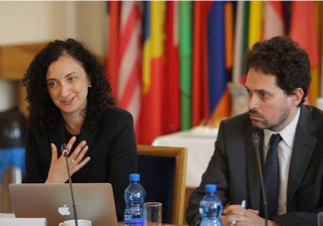
An expert meeting organized by the OSCE Office for Democratic Institutions and Human Rights (ODIHR) in Warsaw focused on the human rights-compliant implementation of legislation and policies to counter the foreign terrorist fighter phenomenon. The ICJ partnered in the event.
The two-day meeting (25-26 April) brought together 21 participants (11 men and 10 women) – including experts from international and national organizations, civil society, academia and OSCE staff – to reflect on experiences and human rights challenges in responses aimed at countering the threat posed by foreign terrorist fighters.
“Human rights compliance is essential both for the short and the long-term effectiveness of any measure to address the phenomenon,” said Omer Fisher, Head of the ODIHR Human Rights Department. “Jeopardizing human rights protection in the course of responding to the threat will not solve, but rather exacerbate the problem, because human rights violations provide fertile ground in which terrorism can thrive.”
Over the past few years, OSCE participating States have taken a wide range of administrative and criminal law measures to prevent the movement of terrorists or terrorist groups, to suppress the provision of support for them, and to counter the incitement and recruitment of foreign terrorist fighters.
“Broadly defined criminal offences and administrative measures based on vague definitions – including of terrorism and related offences – are open to abusive, arbitrary or discriminatory application,” said Róisín Pillay, Director of the Europe Programme of the ICJ.
“Legislation criminalizing acts such as travel for the purpose of terrorism must, therefore, be narrowly defined, clear and accessible, and provide for appropriate legal and procedural safeguards,” she added.
The expert meeting will inform a policy guidance document, which ODIHR will prepare in the coming months to assist OSCE participating States in the human rights-compliant and gender sensitive implementation of legislation and policies to address the phenomenon of foreign terrorist fighters.
Apr 26, 2017 | News, Training modules
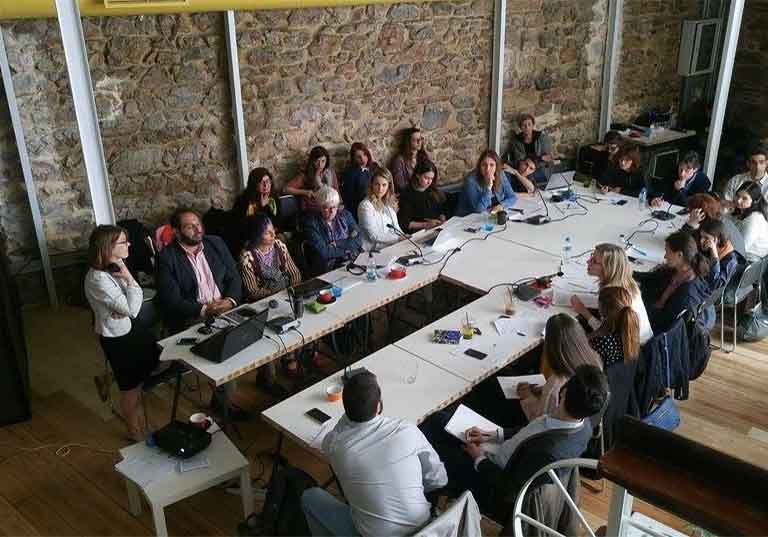
Today, the ICJ and Greek Council for Refugees are holding a training for lawyers on the rights of migrant children and on accessing international human rights mechanisms in Athens.
The training aims to support the strategic use of national and international mechanisms to foster migrant children’s access to justice.
The training will take place over the course of two days: 26-27 April 2017.
The training will focus on accessing the international mechanisms in order to protect and promote the rights of migrant children, the child’s procedural rights including the right to be heard and immigration detention.
A practical case analysis will be part of the training. Trainers include experts from the AIRE Center, UNICEF, UNHCR, Greek Ombudsman, the ICJ and experienced NGO lawyers.
The training is based on draft training materials prepared by the ICJ (to be published in the second half of 2017) and the ICJ Practitioners Guide no. 6: Migration and International Human Rights Law.
It is organized as part of the FAIR project co-funded by the Rights, Equality and Citizenship Programme of the European Union and OSIFE.
As part of the project, this training follows the trainings on the rights of migrant children in Spain, Italy, Bulgaria and Malta. Trainings in Ireland and Germany will follow later this year.
Download the agenda in Greek here: Greece-FAIRtraining-Event-agenda-2017-ENG (PDF)
Apr 18, 2017
In a briefing paper issued today, the ICJ presents its comments on selected key aspects of the Common Asylum procedure Regulation proposed by the European Commission.
On 13 July 2016, the European Commission published a proposal (Common Asylum procedure Regulation) to replace the current Common Asylum procedures Directive.
The ICJ submission focuses on the potential impact of the current proposal on the rights of asylum seekers in Europe, including the right to an effective remedy and the principle of non-refoulement.
In the briefing, the ICJ raises concerns at the proposal to use excessively accelerated and border procedures, even when children are involved, at the introduction of excessively short time-limits for people to access an effective remedy and at the limited scope of the proposal.
The ICJ further opposes the lack of access to information in a language an asylum seeker understands, and the limited access to legal assistance and representation and to legal aid.
The ICJ invites the co-legislators, the European Parliament and the Council of the EU to take these concerns into account during their negotiations.
Europe-Common Asylum Procedure Reg-Advocacy-Analysis brief-2017-ENG (full text in PDF)
Apr 13, 2017 | News
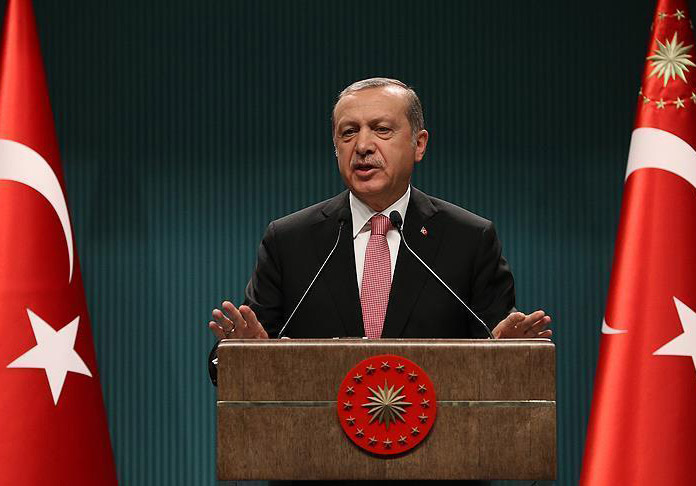
The ICJ today warned that proposed amendments to Turkey’s Constitution to be voted on in the referendum of 16 April could irremediably compromise the independence of the judiciary.
The amendments would introduce significant changes to the institutional framework governing the Turkish judiciary, with far reaching consequences for the separation of powers.
The ICJ is concerned that the proposed constitutional amendments, if approved, would enshrine in Turkish Constitution measures that would be severely damaging the rule of law in Turkey for the long term.
The separation of powers and the independence of the judiciary are fundamental components of the rule of law.
Under the proposals, the President of the Republic would be empowered to appoint six out of thirteen members of the High Council of Judges and Prosecutors, including four ordinary members as well as the Minister of Justice, (who would act as President of the Council) and the Under-Secretary of the Ministry of Justice.
The remaining seven members would be appointed by the National Assembly.
None of the members of the Council would be appointed by judges or public prosecutors.
The High Council of Judges and Prosecutors is the institution entrusted with the appointment, transfer, promotion, discipline and dismissal of judges and public prosecutors in Turkey.
It is the role of such a Council to act as a guardian of judicial independence and to protect the judiciary from interference by the executive and legislative powers.
The proposed Constitutional amendments are clearly contrary to international standards on the independence of the judiciary, which affirm that at least half of the members of a judicial council should be judges elected by their peers.
The amendments, if passed in the forthcoming referendum, would be enacted in a context where judicial independence has already been severely compromised.
Under the State of Emergency in place since the attempted coup of July 2016, approximately one fifth of the judiciary has been arbitrarily dismissed, and thousands of prosecutors and lawyers have been detained.
As the ICJ has previously highlighted, such measures have had a devastating effect on the independence of the judiciary at every level, compromising the courts’ ability to provide fair trials or an effective remedy for violations of human rights.
The ICJ understands that Turkey faced a serious threat to its democratic institutions in connection with the attempted coup of 15 July 2016.
Nonetheless, it stresses that measures meant to meet this threat must be undertaken within the framework of the rule of law and the country’s human rights obligations.
The ICJ reiterates its call on the Turkish authorities to lift the State of Emergency and the derogations from its international human rights law obligations that it has made as a matter of high priority.
Contact:
Róisín Pillay, ICJ Europe Programme Director, t: +32 2 734 84 46 ; e: roisin.pillay(a)icj.org
Background
An ICJ briefing paper of June 2016, the Turkey: the Judicial System in Peril , raised concern at measures eroding the independence of the judiciary, prosecution, and legal profession in Turkey, with serious consequences for protection of human rights.
The Council of Europe Recommendation CM/Rec(2010)12 of the Committee of Ministers to member states on judges: independence, efficiency and responsibilities, states:
- Not less than half the members of [councils for the judiciary] should be judges chosen by their peers from all levels of the judiciary and with respect for pluralism inside the judiciary.
Under international human rights law Turkey may derogate from certain human rights during a justified state of emergency only to the extent that derogating measures are strictly necessary to meet a current threat to the life of the nation.
Certain human rights, including freedom from torture, the right to life, and certain essential elements of the right to liberty, the right to a fair trial and the right to an effective remedy may never be restricted, even in an emergency situation.
Further guidance on relevant international law and standards can be found in the ICJ Legal Commentary to the Geneva Declaration on Upholding the Rule of Law and the Role of Judges and Lawyers in Times of Crisis.
Apr 12, 2017
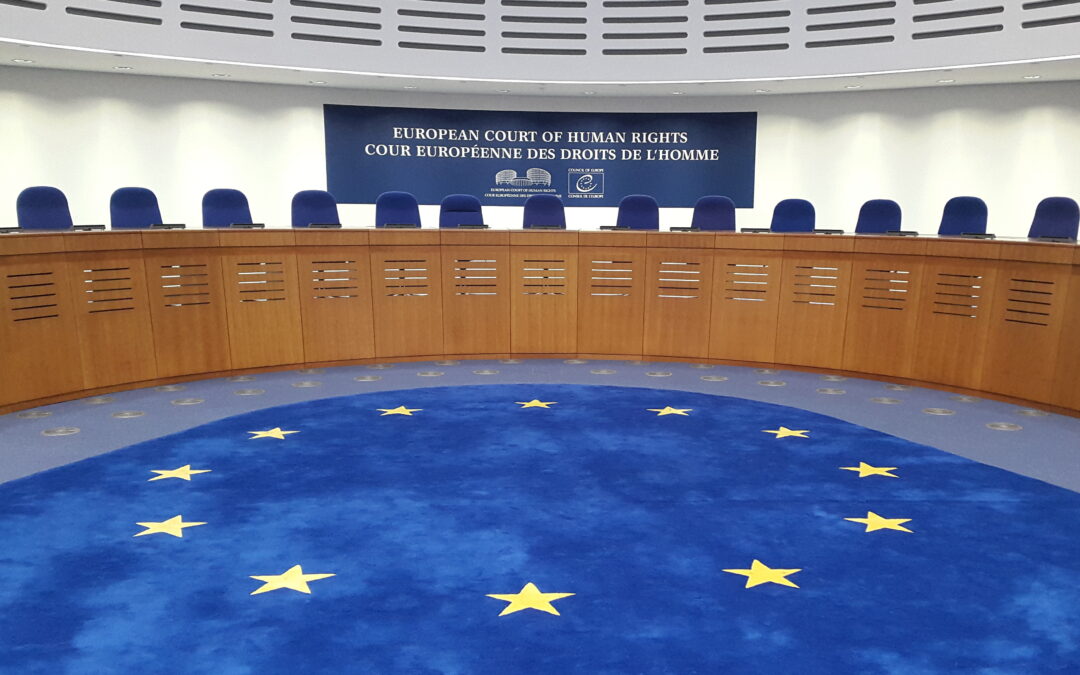
On 6 April, the ICJ, ECRE, the AIRE Centre and the Dutch Council for Refugees have submitted a third party intervention in the case of H. A. and Others v. Greece, which relates to the detention of nine unaccompanied minors (aged between 15 and 18), from Syria, Iraq and Morocco in Greek police stations.
The organisations argue that:
- A comprehensive assessment of the best interests of the child will presumptively exclude any resort to detention for children, when the detaining measures are being contemplated not in the context of furthering the child’s best interests but in the context of immigration control.
- The administrative detention of migrant children for immigration control purposes cannot fall within the scope of permissible detention under Article 5(1)(d) ECHR, which is intrinsically linked with the child’s educational supervision and protection needs.
- Before any administrative measure is taken concerning unaccompanied children, the State must appoint a guardian and provide the unaccompanied children with access to appropriate information in a language they understand.
- If the State fails to appoint a competent guardian for an unaccompanied child and/ or access to information is not adequately guaranteed, the State has failed to meet the procedural safeguards designed to assess, and determine the child’s best interests.
- Under EU law, EU Member States are obliged to provide conditions, procedures and information to children in order for them to have effective access to their rights under the Charter of Fundamental Rights of the EU.
Greece-HA_v_Greece-ECtHR-amicus-ICJ&others-final-eng-2017 (download the third party intervention)