
Jun 29, 2017
The ICJ presented today a submission to the Human Rights Council’s Universal Periodic Review of Serbia on the independence of the judiciary and the autonomy of the prosecution service.
In its submission, the ICJ drew attention to the following issues:
- the involvement of the National Assembly in the appointment and dismissal of judges and prosecutors;
- the composition of the High Judicial Council (HJC) and State Prosecutors’ Council (SPC) ;
- the tenure of judges, court presidents, public prosecutors, and deputy public prosecutors;
- the protection of judges and prosecutors; and
- Serbia’s engagement with international human rights instruments and mechanisms.
The submission concludes with recommendations addressing the above-mentioned concerns. It builds on the findings of the ICJ contained in its report Serbia’s judges and lawyers: the long road to independent self-governance.
Serbia-IndependenceJudiciaryProsecution-UPRSubmission-Advocacy-2017-ENG (download the submission)
Jun 28, 2017 | News
Government moves to amend the regulatory framework of the legal profession in Kazakhstan may undermine its independence and are contrary to the principle of self-regulation of the profession, the ICJ said today.
The ICJ called on the authorities of Kazakhstan to refrain from interference in the governance of the independent legal profession and step back to allow the collegia of lawyers to continue to take responsibility for such matters.
The ICJ stressed that any proposals for reform put forward by the governing bodies of the profession should be developed in consultation with and enjoy the consent of the members of advokatura in accordance with international law and standards on the independence of lawyers.
The ICJ was responding to proposals put forward by the Justice Minister Marat Beketayev for reform of the legal profession in Kazakhstan.
In a statement to Parliament on 29 May 2017 (Report of the Minister of Justice on the issues of further development and reform of the institutes of notary and advokatura on 29 May 2017), the Minister outlined plans to:
- lower training and entrance fees to the profession “in order to simplify access to the profession”;
- broaden the powers of the Republican Collegium to regulate the disciplinary system for lawyers, in light of the Minister’s view that lawyers were avoiding disciplinary responsibility in many cases under the current system;
- require lawyers to undergo annual training followed by exams, which would be set not by the collegia themselves, but by universities or external training centres;
- require lawyers, in addition to the participation in state-funded legal aid scheme, to provide mandatory legal assistance without financial support from the Government, which the Minister described as “pro bono” service
The importance of an independent legal profession which is self-regulating is well recognized and accepted under international standards and by international authorities.
One of the means by which such independence may be guaranteed is the governance of the profession by an organization independent from the State or other national institutions.
International standards provide that it is an important function of the lawyer’s association “[t]o maintain the honour, dignity, integrity, competence, ethics, standards of conduct and discipline of the profession” (Singhvi Declaration, para.99).
In this context, comments by the Justice Minister Marat Beketayev on the need to change the disciplinary system due to lawyers avoiding disciplinary responsibility “for violations committed” is of serious concern, the ICJ said.
While it is important that lawyers who act against the interests of their clients, or otherwise violate standards of lawyers’ ethics are subject to disciplinary responsibility, it is the function of the profession itself to decide on such matters. Disciplinary proceedings should never be used to undermine lawyers’ independence.
Lowering entrance fees for qualifying lawyers may be a positive measure that can enhance access to the profession for qualifying lawyers, in circumstances where such fees are inaccessibly high.
However the initiating and design of such proposals should not be in the hands of the executive, as this may limit the independence and effectiveness of the legal profession.
Financial sustainability of an independent legal profession largely depends on its members’ fees.
The advokatura should be able to regulate and finance its regular operations, including administration and training, the ICJ added.
As noted by the former UN Special Rapporteur on the Independence of Judges and Lawyers in his report of 2009: “… the legal profession is best placed to determine admission requirements and procedures and should thus be responsible for administering examinations and granting professional certificates. This would further help in preserving its independence and self-governance, as advised in the Basic Principles.”
The ICJ is also concerned at suggestions that, as part of continuing legal education, lawyers will be subject to examinations by institutions outside the profession.
While it remains unclear what role or effect such examinations would have, the proposal raises concerns regarding the legal profession’s self-regulation and would risk undermining its independence, the ICJ said.
It should be recalled that, Kazakhstan is required take measures to remove obstacles to the independence of lawyers.
Regarding the proposals on so called ‘pro bono legal assistance’, while it is welcome when any State adopts measures to make legal aid more accessible, such measures should not place an unreasonable burden on lawyers to provide mandatory legal assistance.
The scheme proposed by the Minister for Justice whereby lawyers become responsible for providing legal services without financial compensation for their work is of concern, and appears unlikely to ensure a high quality of legal advice, the ICJ added.
It should be the role of the government to provide regular and sufficient funding for such services, ensuring that legal aid is available for indigent clients in line with international standards.
Kazakhstan-Interference legal profession-News-2017-RUS (Russian version, in PDF)
Jun 20, 2017 | News, Training modules
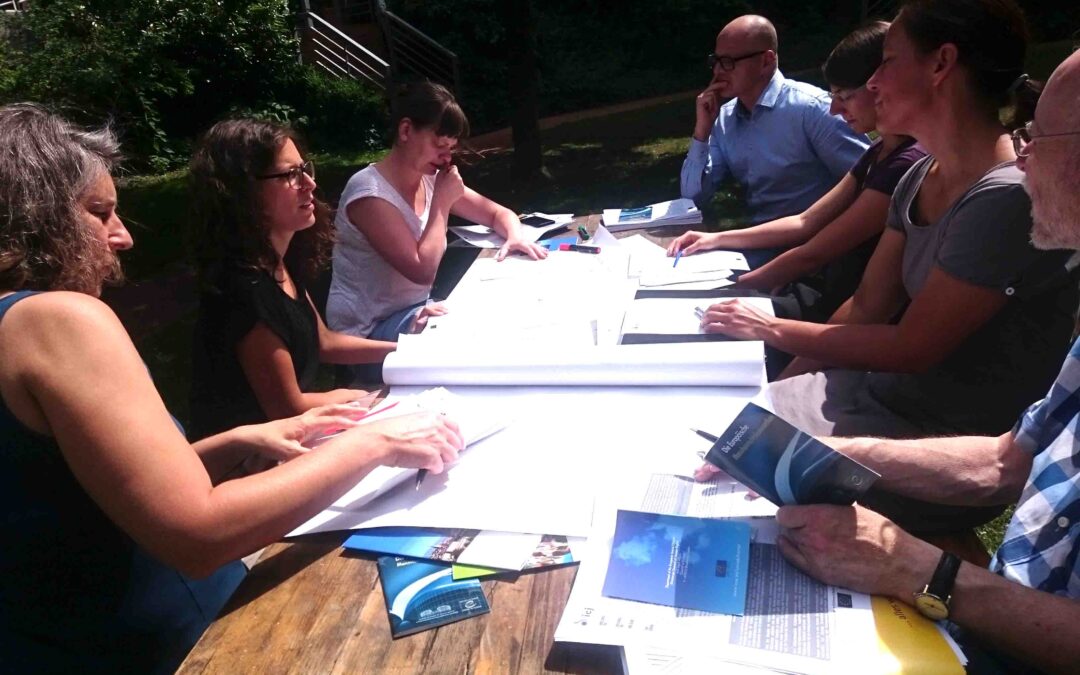
Today, the ICJ and Bundesfachverband unbegleitete minderjährige Flüchtlinge (BumF) are holding a training for lawyers on the rights of migrant children and on accessing international human rights mechanisms in Berlin.
The training aims to support the strategic use of national and international mechanisms to foster migrant children’s access to justice.
The training will take place over the course of two days: 20-21 June 2017.
The training will focus on accessing the international mechanisms in order to protect and promote the rights of migrant children, the child’s procedural rights including the right to be heard, the right to family life and family reunification.
A practical case analysis will be part of the training.
Trainers include Karolína Babická, Legal Adviser of ICJ’s Europe Programme, Claudia Kittel from the CRC Monitoring body in Germany, Sigrun Krause from JUMEN e.V. and Joris Sprakel, Lecturer at the Hague University.
The training is based on draft training materials prepared by the ICJ (to be published in the second half of 2017) and the ICJ Practitioners Guide no. 6: Migration and International Human Rights Law.
It is organized as part of the FAIR project co-funded by the Rights, Equality and Citizenship Programme of the European Union and OSIFE.
The past trainings on the rights of migrant children within the FAIR project took place in Spain, Italy, Bulgaria, Malta, Greece and Ireland. The Strategic litigation Retreat, which will bring three lawyers of each of the national trainings together with experts on in-depth insights and strategising on accessing international mechanisms will follow in October this year.
Download the agenda (in German) here:
Germany-FAIRtraining-Event-Agenda-2017 (in PDF)
Jun 16, 2017 | Advocacy, Non-legal submissions
The International Commission of Jurists today drew to the attention of the Human Rights Council the failure of responsible States to ensure accountability for renditions and secret detention in several countries across the world.
The issue was highlighted by an oral statement in the General Debate on human rights situations that require the Council’s attention.
The ICJ statement continued as follows:
The US-administered rendition and secret detention programme of the last decade led to the commission of egregious violations of human rights and crimes under international law on a global scale with the complicity of several States, including in Europe.
Similar practices have been adopted in the Russian Federation where abductions of “terrorism” or “extremism” suspects and transfer to Central Asian States continue, in disregard of the principle of non-refoulement.
None of the States involved in the US-led renditions programme, or in abduction and transfer practices occurring in the Russian Federation, have ensured full accountability of those responsible and full redress for victims.
The ICJ calls on this Council to issue a strong call to all UN Member States to provide full accountability and redress for victims for the human rights violations that occurred during these operations.
Jun 16, 2017 | Адвокаси, Неюридические заявления
МКЮ сегодня обратила внимание Совета по правам человека на неспособность ответственных государств обеспечить подотчетность за выдачу и тайное содержание под стражей в нескольких странах мира. Этот вопрос был отмечен устным заявлением в Генеральном обсуждении о положении прав человека, которое требует внимания Совета.
Заявление МКЮ продолжалось следующим образом:
Осуществляемая США программа выдачи и тайного содержания под стражей последнего десятилетия привела к совершению вопиющих нарушений прав человека и преступлений по международному праву в глобальном масштабе с участием нескольких государств, в том числе в Европе.
Подобная практика была принята в Российской Федерации, где похищения подозреваемых в терроризме или «экстремизме» и передача в государства Центральной Азии продолжаются, не обращая внимания на принцип невыдворения.
Ни одно из государств, участвовавших в проводимой под руководством США программе выдачи, или в методах похищения и передачи, происходящих в Российской Федерации, не обеспечило полную ответственность виновных и полную компенсацию жертвам.
МКЮ призывает этот Совет настоятельно призвать все государства-члены ООН обеспечить полную ответственность и возмещение ущерба жертвам за нарушения прав человека, которые произошли в ходе этих операций.




