Jun 13, 2017 | News
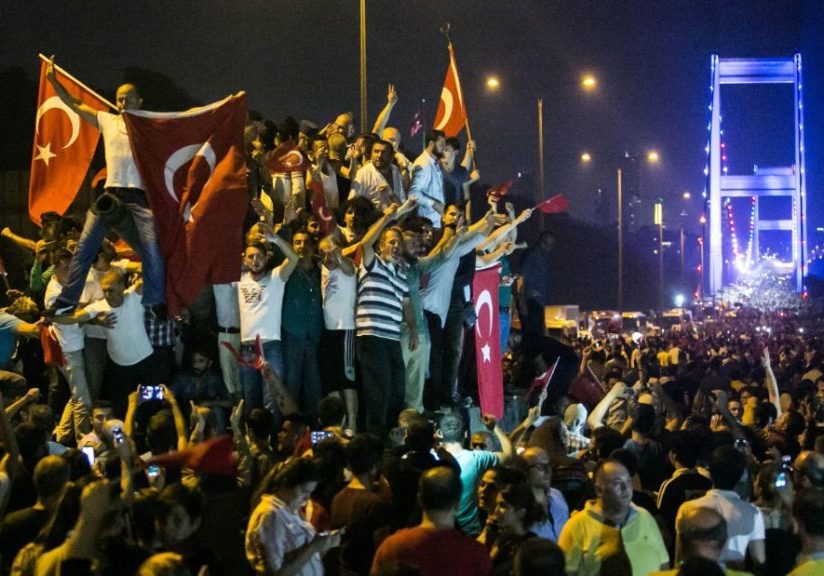
The ICJ welcomed today the Special Rapporteur’s report on Turkey and his preliminary findings on his visit to the country last November.
The ICJ welcomes and concurs with the finding that the “situation of the judiciary is undermining freedom of opinion and expression”.
Mass dismissals of judges have had a devastating effect on the judiciary’s independence, already weakened by the current state of emergency. Furthermore, we are concerned at the claim by the President that the state of emergency will remain in place until Turkey reaches “peace and prosperity”. Whatever other questions there may be about their validity, maintaining emergency derogations to human rights law instruments for such an open-ended period would clearly not be in line with international law.
The ICJ is also concerned at the constitutional amendments approved on the 16th of April by a referendum. Among other things, the amendments have given powers to the President and the Parliament to appoint all the members of the High Council of Judges and Prosecutors, the body tasked with protecting the independence of these professions.
The judiciary has had in the past an important role in implementing legislation that has severely limited the freedom of journalists to carry out their job.
The independence of the judiciary has now been eroded to its core in Turkey. Without it, there is no effective remedy in the country to protect freedom of opinion and expression.
Further reading: ICJ’s briefing paper Turkey: the Judicial System in Peril
Jun 12, 2017 | Advocacy, Non-legal submissions
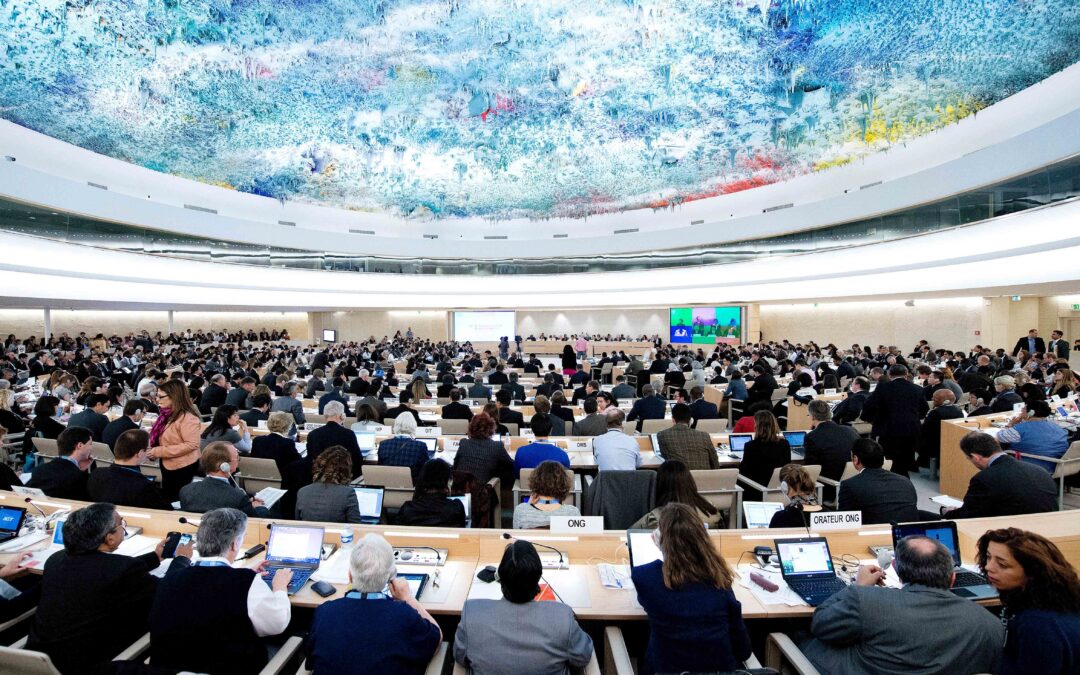
Speaking at the UN Human Rights Council, the ICJ today highlighted judicial corruption and threats to judges and lawyers in Turkey and Azerbaijan, as well as regressive steps on violence against women in the United States of America and Russian Federation.
The statement, delivered during the interactive dialogue with the UN Special Rapporteur on Independence of Judges and Lawyers and the UN Special Rapporteur on Violence against Women, was as follows:
“The ICJ warmly welcomes the new Special Rapporteur on Independence of Judges and Lawyers. As he has highlighted, ensuring judges are accountable for corruption and human rights violations, while respecting judicial independence, should be a global priority. Our Practitioners’ Guide on Judicial Accountability, published last year, should be of particular use to the Rapporteur and other actors in this regard.
Several situations serve as stark examples of other issues raised in his report. In Turkey, recent constitutional amendments give the President and Parliament control over the judiciary’s governing body. This has undermined the judiciary’s independence, already threatened by the mass dismissal of judges and the state of emergency. Lawyers and legal scholars, among others, are routinely dismissed or threatened by the authorities.
In Azerbaijan, the Bar Association is not independent and does not protect its members against undue interference with the exercise of their professional duties. Rather, it often serves as a tool of retaliation against independent human rights lawyers, including through disbarment proceedings that contravene international standards.
We would ask the Special Rapporteur for his views on the role his mandate can play in these and similar situations.
The ICJ also welcomes the report of the Special Rapporteur on violence against women.
Despite increasing global acknowledgement of the grave and systemic nature of violence against women, some States continue to introduce regressive legislation undermining protections for women. For example, the Russian Federation’s decriminalization of certain forms of domestic violence, and attempts in some parts of the United States of America to restrict availability of sexual and reproductive healthcare, particularly impact on victims of sexual violence. The Philippines’ President’s public statements disregarding the gravity of sexual violence are another example. The ICJ would ask the Special Rapporteur what can be done to prevent such backsliding?”
May 25, 2017 | News, Training modules
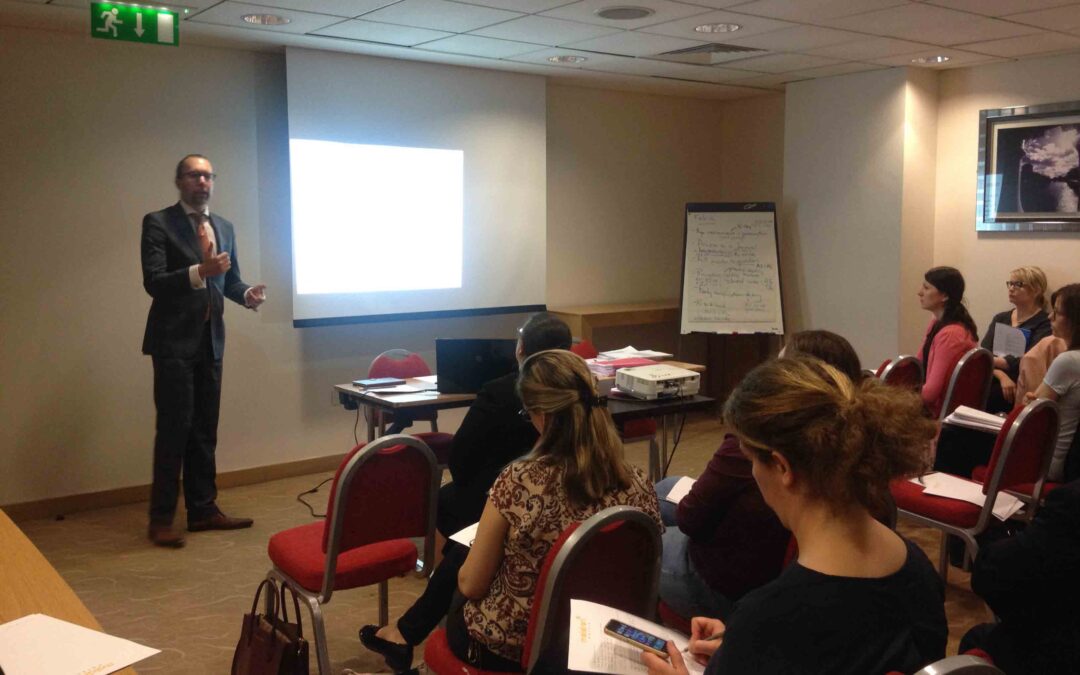
Today, the ICJ and the Immigrant Council of Ireland are holding a training for lawyers on the rights of migrant children and on accessing international human rights mechanisms in Dublin.
The training aims to support the strategic use of national and international mechanisms to foster migrant children’s access to justice.
The training will take place over the course of two days: 25-26 May 2017.
The training will focus on accessing the international mechanisms in order to protect and promote the rights of migrant children, the child’s procedural rights including the right to be heard, the right to family life, access to housing and education and immigration detention.
A practical case analysis will be part of the training. Trainers include Róisín Pillay, Director of ICJ’s Europe Programme, Dr. Patricia Brazil, BL and Joris Sprakel, Hague University.
The training is based on draft training materials prepared by the ICJ (to be published in the second half of 2017) and the ICJ Practitioners Guide no. 6: Migration and International Human Rights Law.
It is organized as part of the FAIR project co-funded by the Rights, Equality and Citizenship Programme of the European Union and OSIFE.
As part of the project, this training follows the trainings on the rights of migrant children in Spain, Italy, Bulgaria, Malta and Greece. Training in Germany and Strategic litigation Retreat will follow later this year.
Download the agenda here: Ireland-FAIRtraining-Event-agenda-2017-ENG
May 19, 2017 | Multimedia items, News, Video clips
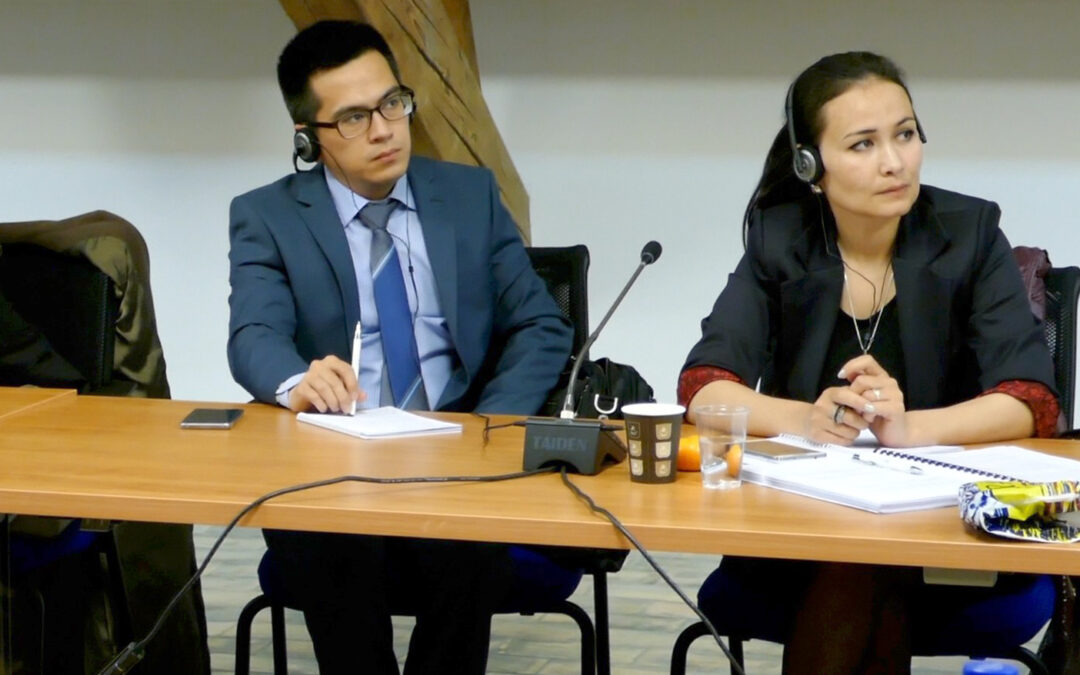
Zainab Kistabayeva, Iuliia Votslava, Shoira Sobirova and Daniyar Kanafin, four lawyers who have been trained at the Programme, and ICJ’s Legal Adviser Temur Shakirov, talk about this recent event.
Temur Shakirov
Zainab Kistabayeva
Iuliia Votslava
Shoira Sobirova
Daniyar Kanafin
May 11, 2017 | Advocacy
Today the ICJ presented its views on counter-terrorism, security and human rights in Europe, to the Committee on Civil Liberties, Justice and Home Affairs (LIBE) of the European Parliament, as part of a hearing on the EU’s Comprehensive Assessment of EU Security Policy.
The exchange of views, Chaired by the Chair of the LIBE Committee, Claude Moraes, included contributions by Commissioner Julian King of the European Commission, as well as representatives of national parliaments, civil society organisations and MEPs.
The ICJ presentation by Róisín Pillay (photo), Director of the ICJ Europe Programme, emphasised the need to make human rights and the rule of law central to EU security policy, to the development of EU legislation and its implementation at national level.”
The full text of the presentation can be downloaded here: Europe-Presentation LIBE-Advocacy-2017-ENG (in PDF)
More on LIBE




