May 3, 2017 | Advocacy
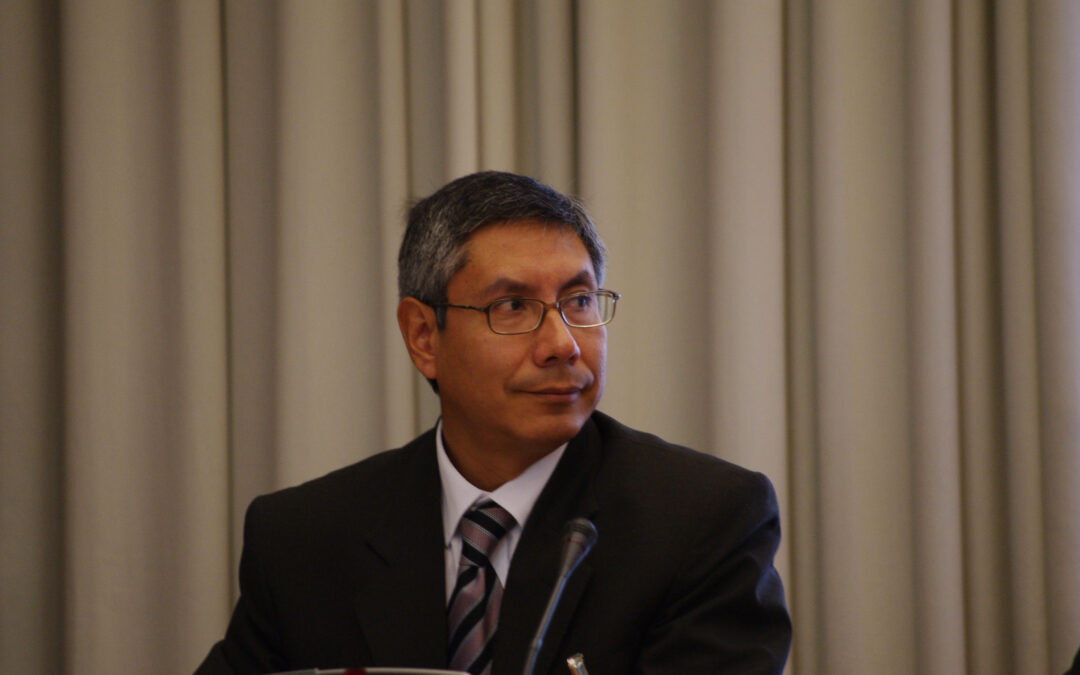
ICJ’s Senior Legal Adviser Carlos Lopez made an important speech today at a Joint Hearing of the European Parliament’s Committee on International Trade and Subcommittee on Human Rights.
The declaration was about the United Nations intergovernmental process towards a treaty in the field of business & human rights.
This treaty could be a crucial instrument for the EU, European countries and European businesses to promote common global rules of respect for human rights that are stronger and enforceable vis a vis companies from all regions.
This will help level the playing field for the companies that have a genuine interest in human rights protection by creating a common standard.
For Governments, it is an important instrument to advance the objective of a level playing field for businesses in the global marketplace.
This is not only important and a condition of success for European businesses who currently have to compete with businesses that do not have to observe the same rules in other parts of the world, but is also a condition for the sustainability of economic globalization and its potential to deliver for the human rights for all.
Download Carlos Lopez’s speech below:
Europe-ICJ speech at the european parliament-ADVOCACY-2017-ENG (in PDF)
May 1, 2017 | News
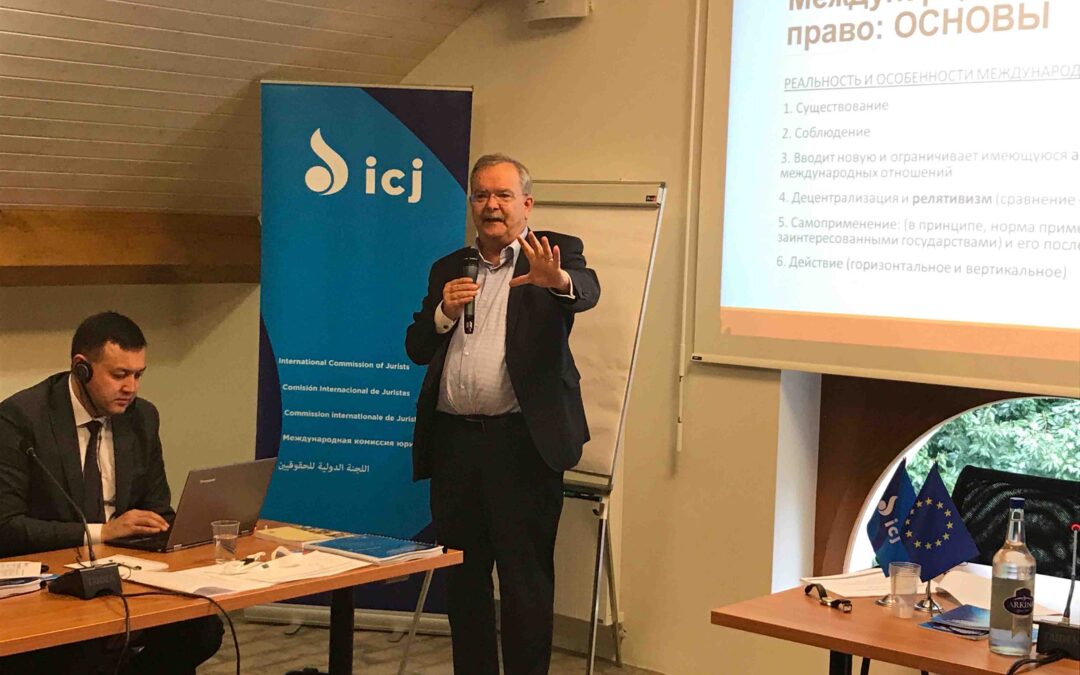
Today, the ICJ begins its third International Human Rights Training Programme for Lawyers from Central Asia.
The objective of this programme is to train Central Asian lawyers on application of international human rights law in criminal proceedings.
In the course of the programme, the participants will learn how to use international human rights law in national courts and to make effective use of international human rights mechanisms.
Leading international experts and practitioners will share their insights with the participants of the training programme on how to interpret key concepts of international human rights law and apply them in practice, both nationally and internationally.
The training programme is built around the study of the relevant international jurisprudence on the right to fair trial, right to liberty, freedom from torture and other ill-treatment, and associated rights, including cases originating from Central Asian region considered by UN treaty bodies, such as the UN Human Rights Committee.
“Lawyers are on the frontline of implementing international human rights law in practice, and this remains an enormous challenge in Central Asia,” said Róisín Pillay, Director of the ICJ Europe and CIS Programme.
“The programme presents a unique opportunity for lawyers from the region to meet key experts in international human rights law, officials from the UN Secretariat and other lawyers from the ICJ network, and to develop practical expertise on how to apply international human rights law in the defence of their clients,” she added.
In the course of the training programme, the participants will attend one of the meetings during the 60th session of the UN Committee Against Torture (CAT) that will take place in Geneva on 18 April–12 May 2017.
The 25 participants have been selected through a rigorous process from among 150 applications from across the region, which testifies to the growing interest of lawyers from the region in applying international human rights standards in their practice.
The ICJ is grateful to the European Union for its support of this initiative.
Download training materials in Russian:
Central Asia-Arbitrary arrest and detention-Training Modules-2017-RUS
Central Asia-CIS lawyers training-Training Modules-2017-RUS
Central Asia-Master file caselaw-GTP-Training Modules-2017-RUS
Central Asia-NRefpresMFICJ-CIS training-Training Modules-2017-RUS
Central Asia-PIL and HRL_Sassoli-Training Modules-2017-RUS
Central Asia-PPT Right to life-Training Modules-2017-RUS
Central Asia-Torture Pollard-Training Modules-2017-RUS
Apr 27, 2017 | News
An expert meeting organized by the OSCE Office for Democratic Institutions and Human Rights (ODIHR) in Warsaw focused on the human rights-compliant implementation of legislation and policies to counter the foreign terrorist fighter phenomenon. The ICJ partnered in the event.
The two-day meeting (25-26 April) brought together 21 participants (11 men and 10 women) – including experts from international and national organizations, civil society, academia and OSCE staff – to reflect on experiences and human rights challenges in responses aimed at countering the threat posed by foreign terrorist fighters.
“Human rights compliance is essential both for the short and the long-term effectiveness of any measure to address the phenomenon,” said Omer Fisher, Head of the ODIHR Human Rights Department. “Jeopardizing human rights protection in the course of responding to the threat will not solve, but rather exacerbate the problem, because human rights violations provide fertile ground in which terrorism can thrive.”
Over the past few years, OSCE participating States have taken a wide range of administrative and criminal law measures to prevent the movement of terrorists or terrorist groups, to suppress the provision of support for them, and to counter the incitement and recruitment of foreign terrorist fighters.
“Broadly defined criminal offences and administrative measures based on vague definitions – including of terrorism and related offences – are open to abusive, arbitrary or discriminatory application,” said Róisín Pillay, Director of the Europe Programme of the ICJ.
“Legislation criminalizing acts such as travel for the purpose of terrorism must, therefore, be narrowly defined, clear and accessible, and provide for appropriate legal and procedural safeguards,” she added.
The expert meeting will inform a policy guidance document, which ODIHR will prepare in the coming months to assist OSCE participating States in the human rights-compliant and gender sensitive implementation of legislation and policies to address the phenomenon of foreign terrorist fighters.
Apr 26, 2017 | News, Training modules
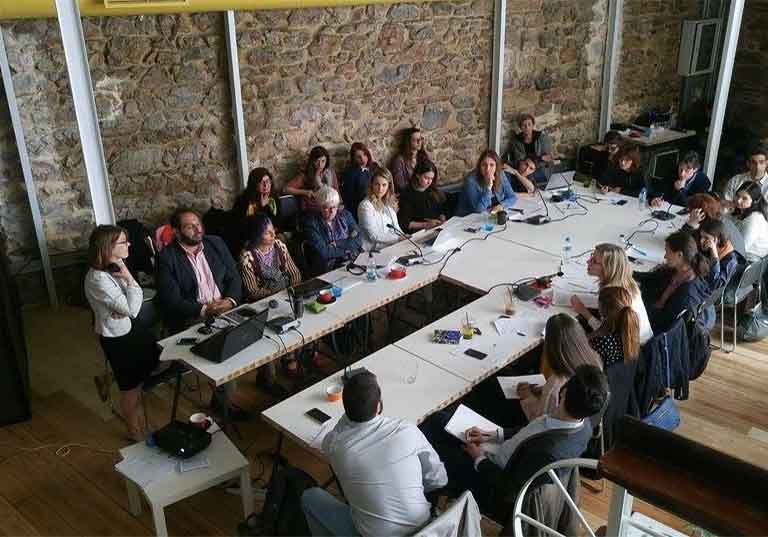
Today, the ICJ and Greek Council for Refugees are holding a training for lawyers on the rights of migrant children and on accessing international human rights mechanisms in Athens.
The training aims to support the strategic use of national and international mechanisms to foster migrant children’s access to justice.
The training will take place over the course of two days: 26-27 April 2017.
The training will focus on accessing the international mechanisms in order to protect and promote the rights of migrant children, the child’s procedural rights including the right to be heard and immigration detention.
A practical case analysis will be part of the training. Trainers include experts from the AIRE Center, UNICEF, UNHCR, Greek Ombudsman, the ICJ and experienced NGO lawyers.
The training is based on draft training materials prepared by the ICJ (to be published in the second half of 2017) and the ICJ Practitioners Guide no. 6: Migration and International Human Rights Law.
It is organized as part of the FAIR project co-funded by the Rights, Equality and Citizenship Programme of the European Union and OSIFE.
As part of the project, this training follows the trainings on the rights of migrant children in Spain, Italy, Bulgaria and Malta. Trainings in Ireland and Germany will follow later this year.
Download the agenda in Greek here: Greece-FAIRtraining-Event-agenda-2017-ENG (PDF)
Apr 18, 2017
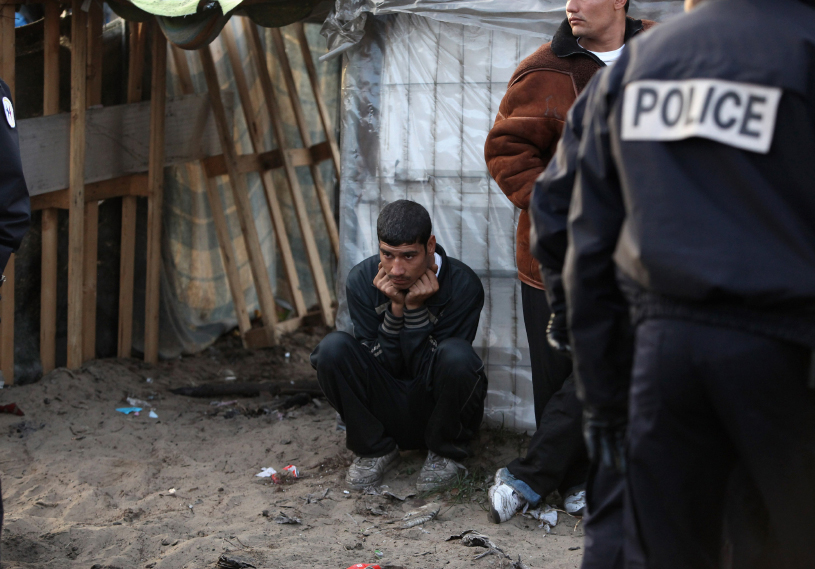
In a briefing paper issued today, the ICJ presents its comments on selected key aspects of the Common Asylum procedure Regulation proposed by the European Commission.
On 13 July 2016, the European Commission published a proposal (Common Asylum procedure Regulation) to replace the current Common Asylum procedures Directive.
The ICJ submission focuses on the potential impact of the current proposal on the rights of asylum seekers in Europe, including the right to an effective remedy and the principle of non-refoulement.
In the briefing, the ICJ raises concerns at the proposal to use excessively accelerated and border procedures, even when children are involved, at the introduction of excessively short time-limits for people to access an effective remedy and at the limited scope of the proposal.
The ICJ further opposes the lack of access to information in a language an asylum seeker understands, and the limited access to legal assistance and representation and to legal aid.
The ICJ invites the co-legislators, the European Parliament and the Council of the EU to take these concerns into account during their negotiations.
Europe-Common Asylum Procedure Reg-Advocacy-Analysis brief-2017-ENG (full text in PDF)