Mar 11, 2016 | News
The Joint Mobile Group is known for its courageous work in opening legal cases on behalf of victims of torture in Chechnya. On March 9th, they were travelling together with journalists and the group was physically attacked, their confidential notes stolen, and the vehicles they were in burned.
Their offices in Ingushetia were also attacked.
This is part of an ongoing pattern of threats and intimidation directed against the Joint Mobile Group.
As recently as December their offices in Chechnya were completely burned.
The Martin Ennals Award provides protection through publicity for Human Rights Defenders who are working at personal risk to protect the rights of others.
“Sadly it appears that the need for protection, in this case, remains as urgent as ever. We urge the responsible authorities to identify the perpetrators and bring them to justice,” the ICJ says.
The Award laureate is selected by a jury of 10 global human rights organizations, including the ICJ.
The other members are Amnesty International, Human Rights Watch, Human Rights First, FIDH – International Federation for Human Rights, World Organisation Against Torture (OMCT), Front Line Defenders, EWDE Germany, International Service for Human Rights and HURIDOCS.
For further information, you can also read articles on the BBC, The Guardian, Russia Today, and the report on the MEA 2013.
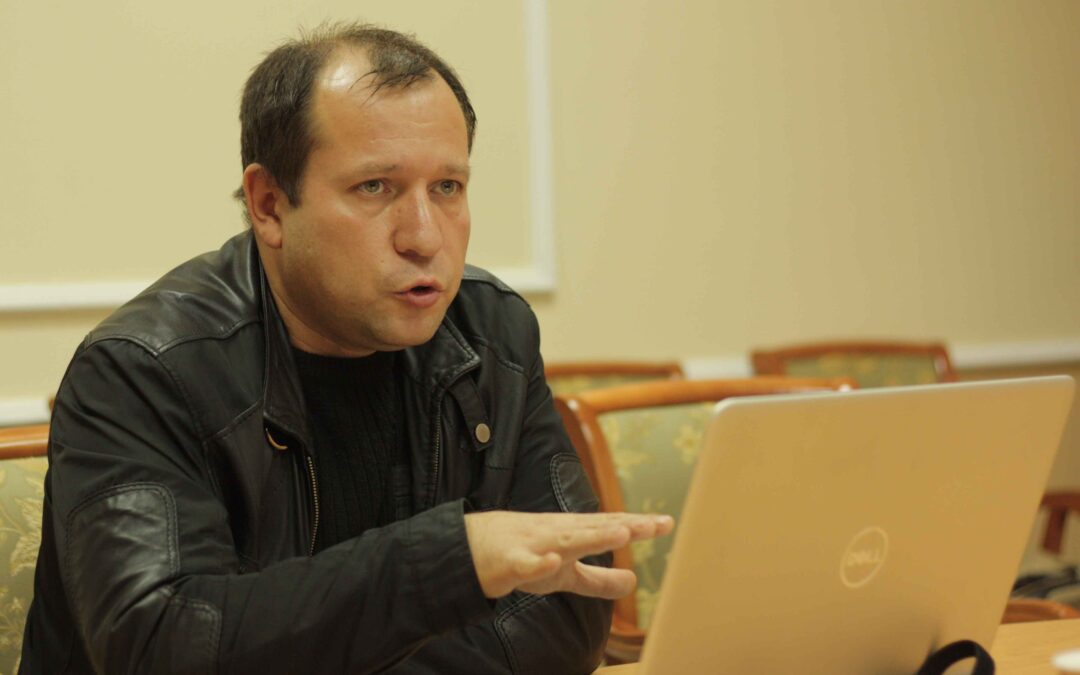
Picture: Igor Kalyapin, founder of the Joint Mobile Group.
Mar 1, 2016 | Advocacy, News, Non-legal submissions
The ICJ joined today other prominent human rights organizations in urging the European Union and its Member States to respect and protect human rights and the rule of law in countering terrorism.
In their joint statement, the thirteen human rights organizations stressed the implications of Eu counter-terrorism laws and policies for human rights and the rule of law with regard to the right to be free from torture and cruel, inhuman or degrading treatment or punishment, the principle of non-refoulement, the right to liberty and security of the person, the right to a fair trial, the principle of legality, the principle of non-discrimination, the rights to freedom of expression and peaceful assembly, the right to privacy, the rights of asylum-seekers and migrants, the freedoms of movement, of religion or belief and other dimensions.
The human rights organizations that signed up to this statement are, apart from the International Commission of Jurists, the European Network Against Racism (ENAR), Amnesty International, the International Federation of Human Rights (FIDH), the Open Society European Policy Institute, the World Organisation Against Torture (OMCT), Fair Trials, European Digital Rights (EDRi), the Forum of European Muslim Youth and Student Organisations (FEMYSO), the International Federation of Action by Christians for the Abolition of Torture (FIACAT), the International Rehabilitation Council for Torture Victims (IRCT), the Association for the Prevention of Torture (APT), and the European Association for the Defense of Human Rights (AEDH).
EU-counter-terrorism&humanrights-jointstatement-2016-ENG (download the joint statement)
Feb 24, 2016
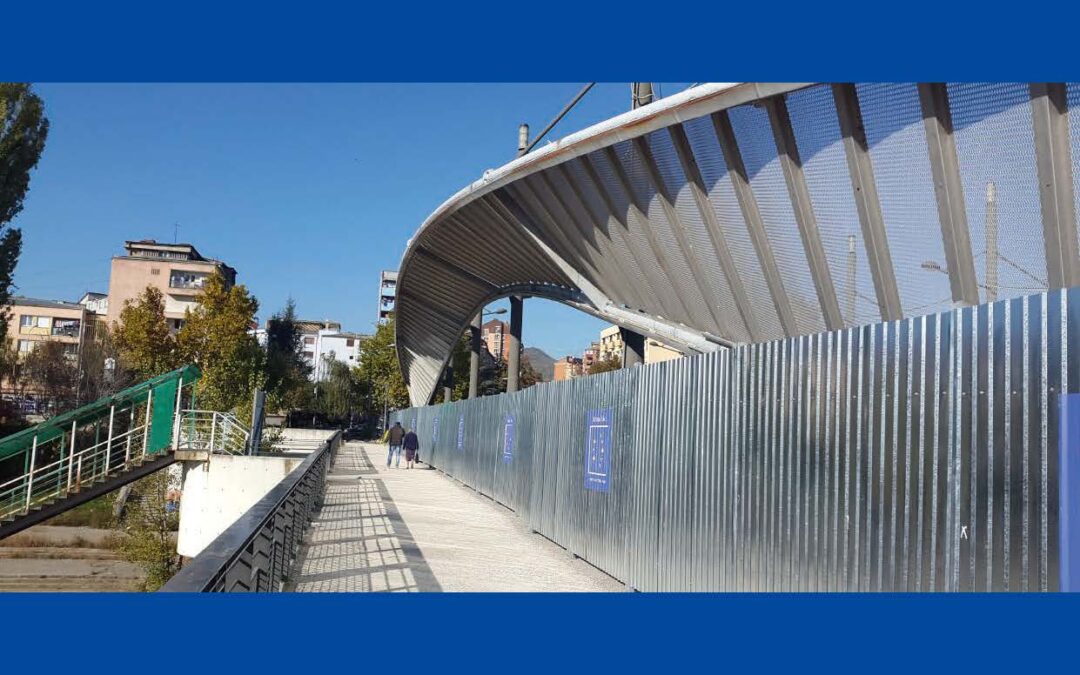
The ICJ published today a briefing paper providing a first assessment of the process of transition of the judicial system in Northern Kosovo from the Serbian to the Kosovo legal system.
The briefing paper, which follows a visit of a delegation of the ICJ in Kosovo from 1 to 4 November 2015, preliminarily identifies key issues for access to justice and the protection of human rights through the justice system, which need to be addressed and monitored during the transition process.
The paper documents an ongoing process of transition of the judicial system in Kosovo.
It concludes that a key determinant of the success of this transition must be the effective protection of access to justice for all in Kosovo that must be provided by an independent, impartial and effective judicial system, assisted by independent, impartial and effective legal profession and prosecution service.
In its conclusion, the ICJ found that the Kosovo legal system does not yet meet the requirements of the Kosovo Constitution to respect international human rights law and standards and, in particular, the right of minorities, including under the Council of Europe’s Framework Convention. Its shortcomings include:
- the reported lack of security for Kosovo Serb and Kosovo Albanians to access courts in areas dominated by the other ethnicity, with a clear obstructive effect on access to justice;
- the dramatic incapacity of the Kosovo legal and education system to ensure generational continuity for the Serb community in the legal profession with future stark consequences for the ethnic composition and competence of the judiciary, prosecution service and legal profession;
- the lack of equality in practice between Albanian and Serbian languages in judicial proceedings and unreliable quality of the drafting and translation of its legislation; and
- the existence of a deep divide between the laws as written, which often recall or refer to international standards, and the implementation of the laws on the ground.
Finally, the ICJ stressed that the respect, protection and fulfillment of all conditions of access to justice of the non-Albanian minorities is therefore a key benchmark against which the success of this transition or “integration” must be assessed.
The ICJ mission team was composed of Ketil Lund (ICJ Commissioner and former Supreme Court Justice of Norway), Róisín Pillay (Director of the ICJ Europe Programme), and Massimo Frigo (Legal Adviser of the ICJ Europe Programme).
Kosovo-Integration of the justice system-Publications-Reports-Fact Finding mission reports-2016-ENG (full paper, in PDF)

Feb 23, 2016
“The reform of the legal profession in the Republic of Tajikistan is in deadlock and requires urgent measures to secure an independent profession,” the ICJ said today as it published its recommendations on the reform of the legal profession in the country.
The ICJ found that the current situation risks depriving the legal profession of its independence and reduce significantly the number of practicing lawyers.
Following an ICJ round table discussion held in Dushanbe in December 2015, the ICJ was requested by the participants to provide an analysis of the state of the reform and present its recommendations.
The ICJ recommended amongst other things that:
- The authorities abstain from interference with the free election of office-holders of the self-regulating profession;
- Amendments to the Law on Advokatura enacted in November 2015 that impede the independence of the legal profession be repealed or replaced;
- The independence of the Qualification Commission from the executive be ensured in particular by making it a body of the Union of Lawyers;
- The requirement that already-qualified lawyers re-apply for qualification or lose their right to practice be repealed; and
- No discrimination, direct or indirect, should be permitted as regards entry into the profession.
These and other recommendations aim to facilitate a rapid way out of a stalemate which has emerged in Tajikistan where an independently elected Chair of the Union of Lawyers is refused his status as a lawyer as a result of problematic legislative amendments.
The recommendations follow a round table discussion organized by the ICJ in December 2015, where the principles and practice of the independence and self-governance of bar associations, as well as other issues of significance for the independence of lawyers, including the qualification process and disciplinary action, were discussed.
These discussions as well as the analysis of the legislation served as a foundation for the present recommendations based on international law and standards on the role of lawyers.
Tajikistan-Independence of legal profession-Publications-Reports-Thematic reports-2016-ENG (full report in PDF, English)
Tajikistan-Independence of legal profession-Publications-Reports-Thematic reports-2016-RUS (full report in PDF, Russian)
Tajikistan-Indep legal prof-News-Web stories-2016-RUS (full story in PDF, Russian)

Feb 23, 2016 | Доклады, Публикации, Тематические доклады
«Реформа адвокатуры в Республике Таджикистан зашла в тупик, и необходимо принять экстренные меры, направленные на защиту независимости профессии», – заявила сегодня МКЮ после опубликования рекомендаций по реформе адвокатуры.
МКЮ признала, что в стране сложилась ситуация, которая может привести к утрате независимости адвокатуры и к существенному сокращению числа практикующих адвокатов.
После того, как в декабре 2015 года МКЮ провела в Душанбе «круглый стол», участники семинара обратились к МКЮ с просьбой проанализировать состояние реформы и представить свои рекомендации.
В частности, МКЮ сделала следующие рекомендации:
- Властям следует воздерживаться от вмешательства в процесс свободного избрания должностных лиц самоуправляемой профессии;
- Следует отменить или изменить поправки к Закону «Об адвокатуре», принятые в ноябре 2015 года, которые ограничивают независимость адвокатуры;
- Необходимо обеспечить независимость Квалификационной комиссии от исполнительных органов власти, в частности, сделав её органом Союза адвокатов;
- Необходимо отменить требование о прохождении переаттестации адвокатами, уже допущенными к практике, под угрозой лишения их права на осуществление адвокатской деятельности; и
- Не должна допускаться прямая или косвенная дискриминация при предоставлении допуска к профессии.
- Эти и другие рекомендации направлены на поиск быстрого выхода из тупиковой ситуации, сложившейся в Таджикистане, где независимо избранный председатель Союза адвокатов не может получить статус адвоката в результате действия спорных поправок к новому закону.
Рекомендации подготовлены по результатам проведения «круглого стола», организованного МКЮ в декабре 2015 г., на котором обсуждались принципы и практические аспекты независимости и самоуправления адвокатских ассоциаций, а также иные вопросы, важные с точки зрения независимости адвокатов, включая процедуры их аттестации и привлечения к дисциплинарной ответственности.
Данное обсуждение, а также анализ законодательства легли в основу настоящих рекомендаций, подготовленных в свете международного права и стандартов, касающихся роли юристов.
Tajikistan-Independence of legal profession-Publications-Reports-Thematic reports-2016-RUS (полный доклад на русском, PDF)
Tajikistan-Indep legal prof-News-Web stories-2016-RUS (полная история на русском, PDF)