ICJ deplores the EU’s inadequate response to mass deaths in the Mediterranean sea

ICJ deplores the EU’s inadequate response to mass deaths in the Mediterranean sea

The ICJ is urging the European Council to immediately act to take effective measures to protect the lives of migrants at sea, after it failed to respond adequately to the repeated tragedies at a special meeting held on 23 April.

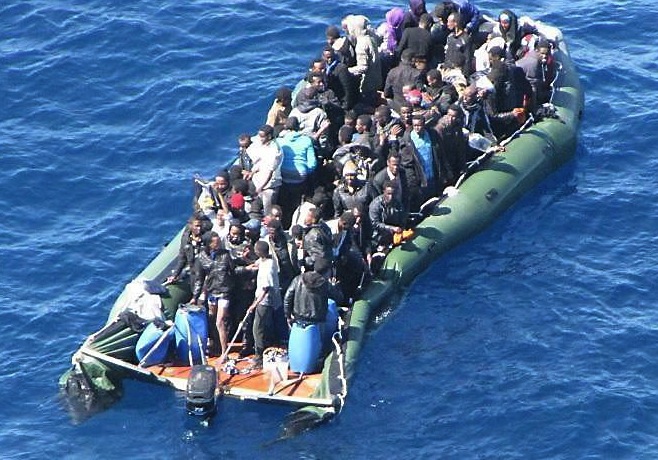
The special meeting of the European Council was called after the sinking of a boat in the Libyan Search and Rescue Zone left at least 700 persons dead. Since then, other incidents have brought the death toll in the Mediterranean to more than 1,000 in one week.

In its statement, released following the meeting, the European Council directed the EU institutions and the Member States to take a set of actions with the stated aim of preventing further loss of lives at sea.

The ICJ is deeply saddened by these tragedies that are the concern not only of the Mediterranean region and of Europe, but of the whole of the international community.

It is deeply regrettable that the reaction of the European Union and its Member States at a moment of such gravity has concentrated on presevering security of borders, and returning migrants, rather than on humanitarian and human rights concerns, particularly strengthening search and rescue operations in order to save lives, the ICJ says.

Although the European Council has affirmed that its “immediate priority is to prevent further loss of life at sea”, the measures envisaged in this statement are not designed to achieve this aim. Instead, they reflect a continuing security-based policy, centred on the need to “fight the traffickers” and on combatting irregular migration.

The ICJ supports the call of the UN Special Rapporteur on the rights of migrants, Fraçois Crépeau, urging the EU and Member States to focus their migration policies on the introduction of safe and legal migration routes and combatting the black labour market.

The framing of migration policies around narrowly perceived “security” interests and the strengthening of border controls creates a situation in which smugglers provide the only route for many migrants and this is leading to serious abuses of human rights. Migrants, many of whom are fleeing war or persecution, should not have to resort to such means of reaching safety in Europe.

“Strengthening our presence at sea”

While welcoming the increase in financial support for Frontex operations Triton and Poseidon with a view to foster its search and rescue capabilities, the ICJ is concerned that this commitment in the context of operations presently aimed to “control irregular migration flows towards the territory of the Member States of the EU and to tackle cross-border crime” risks marginalizing rescue at sea within these operations.

Resources must also be allocated directly to increase search and rescue capacities at the EU and national levels, in order to ensure that the human rights of migrants are protected, and that lives are saved.

“Fighting traffickers in accordance with international law”

The commitment in the statement to increase intelligence and police co-operation with third countries as a means of fighting trafficking, without corresponding human rights protections. Any such co-operation must be carried out in compliance with the EU Charter of Fundamental Rights, the European Convention on Human Rights and other international human rights law and standards.

Without strong safeguards in law and in practice, there is a risk that such co-operation may lead to exchange of information or evidence with, or transfer of suspects to, States in which human rights abuses are systematic or widespread or where particular individuals may be at risk.

This may lead to violations of human rights, including of the right to asylum, the right to the protection of non-refoulement, the right to be free from torture and ill-treatment and the right life.

In addition, engagement in intelligence and police cooperation, while an important tool in effective law enforcement, risks, if not undertaken with adequate safeguards, leading to infringements to the right to privacy, the right to data protection, and the prohibition of collective expulsions.

All of these rights are protected by the EU Charter of Fundamental Rights, as well as by international human rights treaties binding on EU Member States.

Regarding the commitment to take systematic action to capture and destroy vessels used by traffickers in the Mediterranean, the ICJ is also seriously concerned that any such any action risks to be in violation of international law and could lead to a risk of loss of lives.

Finally, the proposal to use Europol to detect and request removal of internet content used by “traffickers” to attract migrants and refugees may lack a sufficient legal basis in EU or national law.

While welcoming the statement’s acknowledgment that such measures must be in accordance with national constitutions, the ICJ recalls that they must also be in compliance with the EU Charter and international human rights law.

Any new measures must include safeguards and limitations to ensure that human rights, including the rights to freedom of expression and association are fully respected.

“Preventing illegal migration flows”

The ICJ is concerned that the stepping up of cooperation initiatives envisaged in the statement, with the aim of preventing irregular migration, poses a risk of complicity by the EU, i.e. aiding or assisting in violations of human rights by third countries.

The ICJ urges that any co-operation with third countries in preventing irregular migration must be in compliance with the EU Charter of Fundamental Rights and international human rights law.

Furthermore, the ICJ is particularly concerned by the decision of the European Council to promote further the readmission to third countries of “unauthorised economic migrants” and to order the establishment of a new return programme for the rapid return of “illegal migrants” from frontline member states, co-ordinated by Frontex.

While the content of the new fast return programme proposed by the Council remains unclear, as does the definition of “rapid return,” the ICJ considers that such a programme is likely to increase the possibility of European Union complicity in violations of the protections of non-refoulement, the right to asylum, the prohibition of collective expulsions and the right to an effective remedy, against its obligations under the EU Charter of Fundamental Rights.

The ICJ is concerned that the rapidity of the return could be linked to certain national expulsion practices that are at odds with the Member States’ obligations under the EU Charter and international human rights and refugee law. Furthermore, the ICJ recalls that under article 9 of the Frontex Regulation, Frontex, in its joint return operations, is not able to assess the compliance of return decisions on the merits. This lack of control increases the risk of aiding or assisting in serious violations of human rights.

“Reinforcing internal solidarity and responsibility”

Finally, in regard to the commitment to provide emergency aid to frontline Member States, the ICJ supports the rapid deployment of a long-term, sustainable programme of aid to such states, directed at the provision of search and rescue operations in the Mediterranean, and designed to safeguard the lives and rights of migrants.

The ICJ also recalls that, consistent with the dictates of the UN charter and international human rights treaties, States are under a general obligation to engage in international cooperation and assistance to protect human rights.

Conclusion

The ICJ deplores the fact that, following the tragic death of more than 1,000 people in one week, the EU Member States and the European Council, have failed to act meaningfully to protect the lives of migrants by taking decisive measures to protect the right to life of those crossing the Mediterranean.

In prioritizing border security and returns over search and rescue, the Member States of the European Union have demonstrated a reckless disregard for the human rights of migrants fleeing war, persecution or dire standards of living.

The ICJ urges the EU Member States and the EU institutions to take swift action, centred on the protection of lives and rights of migrants, in order to uphold the EU founding values of the rule of law and human rights, affirmed in article 2 of the Treaty on the European Union.

Perú: peritaje de la CIJ ante la Corte Interamericana de Derechos Humanos en el caso de la “Operación Chavín de Huántar”

Perú: peritaje de la CIJ ante la Corte Interamericana de Derechos Humanos en el caso de la “Operación Chavín de Huántar”

En febrero de 2014, el Representante para Suramérica de la CIJ rindió un dictamen pericial en audiencia pública ante la Corte Interamericana de Derechos Humanos, en el Caso Cruz Sánchez y otros Vs. Perú.

Este caso está referido a la ejecución extrajudicial de tres miembros del grupo armado “Movimiento Revolucionario Túpac Amaru – MRTA”, luego de ser puestos fuera de combate, por las fuerzas de seguridad peruanas en el marco de la llamada “Operación Chavín de Huántar”, de retoma de la Embajada del Japón en Lima (Diciembre 1996 –abril 1997).

El dictamen pericial rendido por la CIJ abordó cuestiones relativas a: i) la naturaleza jurídica de graves infracciones al derecho internacional humanitario; ii) la intervención de la justicia militar en la investigación y juzgamiento de delitos que no son de función y que pueden constituir violaciones a los derechos humanos; y iii) los estándares internacionales relativos a la debida diligencia en la investigación, juzgamiento y sanción de los responsables de violaciones de derechos humanos.

El pasado 17 de abril de 2015, la Corte Interamericana profirió Sentencia en el caso.

Peru-PeritajeFAGChavinHuantar-Advocacy-legal submission-2015-SPA (texto íntegro en PDF)

Kyrgyz Republic: removal of lawyer by police official without client’s consent violates international law

Kyrgyz Republic: removal of lawyer by police official without client’s consent violates international law

The ICJ is concerned at reports that a police official has purported to terminate a lawyer’s representation of a client against the client’s wishes, in violation of the right to fair trial and international standards on the independence and role of the legal profession.

A.J. Uchkempirov, the investigator of the City Department of Internal Affairs (the city police department) of Karakol City, reportedly issued a ruling removing lawyer Nurkyz Asanova from representation of her client, Mr Ishen Abdyrashev.

The ICJ is particularly concerned given that the removal of lawyer Asanova comes while she is representing Mr Abdyrashev in a case alleging that he was subjected to torture by police officers in detention, and subsequently detained at a police officer’s home and forced to carry out unpaid work for one and a half months.

On 29 December 2014, Ishen Abdyrashev, assisted by lawyer Asanova, complained about these events and a criminal investigation was initiated.

The investigation has now been completed and a criminal trial is underway.

On 3 April 2015, Abdrashev himself was charged with robbery, which he denies.

Lawyer Asanova also represents him in the robbery case.

On 14 April, investigator Uchkempirov issued a ruling purporting to remove her, despite Mr Abdyrashev’s opposition.

The purported basis for the ruling was that Lawyer Asanova was in some way interfering with the investigation of the case.

The investigator had no authority under Kyrgyz law to issue such a decision.

Under international standards, such a decision could in any event only be taken by an appropriately independent authority following a regular and fair procedure, which was clearly not the case here.

According to the UN Basic Principles on the Role of Lawyers, for instance, “[n]o court or administrative authority before whom the right to counsel is recognized shall refuse to recognize the right of a lawyer to appear before it for his or her client unless that lawyer has been disqualified in accordance with national law and practice and in conformity with these principles” (Article 19).

This is an important guarantee for the right under international law of every person to be represented by a lawyer of their own choice, as protected by the International Covenant on Civil and Political Rights and recognized by the Basic Principles.

The Principles also recognize, further to the right to fair trial under the Covenant, that it is the obligation of the government to guarantee that lawyers are able to pereform their functions without “intimidation, hindrance, harassment or improper interference” and that they are able to consult with their clients both within their own country and abroad.

The investigator’s decision should be declared void and lawyer Nurkyz Asanova’s right to represent, to communicate with and to visit her client, should be fully recognized and respected.

Furthermore, the authorities must take steps to ensure that there is no further unlawful interference with Ishen Abdyrashev’s right to the lawyer of his choice.

Kyrgysztan-Lawyer Asanova_statement-News-web story-2015-RUS (full text in PDF)

Кыргызская Республика: отстранение адвоката от дела сотрудником правоохранительных органов без согласия подзащитного нарушает международное право

Кыргызская Республика: отстранение адвоката от дела сотрудником правоохранительных органов без согласия подзащитного нарушает международное право

МКЮ обеспокоена сообщениями о том, что сотрудник правоохранительных органов попытался отстранить адвоката от дела против воли подзащитного, в нарушение права на справедливое судебное разбирательство и международных стандартов, касающихся независимости и роли юридической профессии.

Сообщается о том, что Aзамат Учкемпиров, следователь ОВД города Каракол, вынес постановление об отводе адвоката Нуркыз Асановой, которая представляет интересы Ишена Абдрашева.

МКЮ выражает особую обеспокоенность в связи с тем, что адвокат Асанова отстранена от защиты клиента, который жалуется на пытки со стороны сотрудников милиции во время содержания под стражей, а также на то, что впоследствии на протяжении полутора месяцев его удерживали в доме одного из сотрудников милиции, где заставляли выполнять различные (неоплачиваемые) работы.

29 декабря 2014 года Ишен Абдрашев при помощи адвоката Асановой обжаловал данные нарушения, и по его заявлению было возбуждено уголовное дело.

В настоящее время следствие уже завершено и дело находится на стадии рассмотрения судом.

3 апреля 2015 года Абдрашеву было предъявлено обвинение в грабеже, совершение которого он отрицает.

Адвокат Асанова осуществляет защиту Абдрашева и по данному делу.

14 апреля следователь Учкемпиров, несмотря на возражения Абдрашева, вынес постановление об отводе адвоката на том основании, что она якобы препятствует проведению расследования по делу.

С точки зрения кыргызского законодательства, следователь не обладает полномочиями по вынесению таких постановлений.

В соответствии с международными стандартами, такое постановление в любом случае может быть вынесено только органом, обладающим надлежащей независимостью, по итогам проведения предусмотренной законом и справедливой проверки, которая явно отсутствовала в настоящем деле.

Так, в соответствии с Основными принципами ООН, касающимися роли юристов, «(н)и один суд или административный орган, в котором признается право на адвоката, не отказывается признавать права юриста отстаивать в суде интересы своего клиента, за исключением тех случаев, когда юристу было отказано в праве выполнять свои профессиональные обязанности в соответствии с национальным правом и практикой и в соответствии с настоящими принципами» (Принцип 19).

Это важная международно-правовая гарантия права каждого лица пользоваться услугами адвоката по собственному выбору, которое защищается Международным пактом о гражданских и политических правах и признается Основными принципами ООН.

Принципы также закрепляют, в дополнение к праву на справедливое судебное разбирательство, предусмотренному Пактом, что правительства обязаны обеспечить, чтобы юристы могли выполнять все свои профессиональные обязанности в обстановке, свободной от «угроз, препятствий, запугивания или неоправданного вмешательства» и чтобы они могли беспрепятственно консультироваться со своими клиентами внутри страны и за ее пределами.

Постановление следователя должно быть признано незаконным, а право адвоката Нуркыз Асановой на защиту своего клиента, общение и свидания с ним должно всесторонне признаваться и соблюдаться.

Кроме того, власти обязаны принять меры, чтобы предотвратить незаконное вмешательство в право Ишена Абдрашева пользоваться услугами адвоката по собственному выбору в будущем.

Kyrgysztan-Lawyer Asanova_statement-News-web story-2015-RUS (полный текст, PDF)

Translate »