Feb 5, 2015 | News
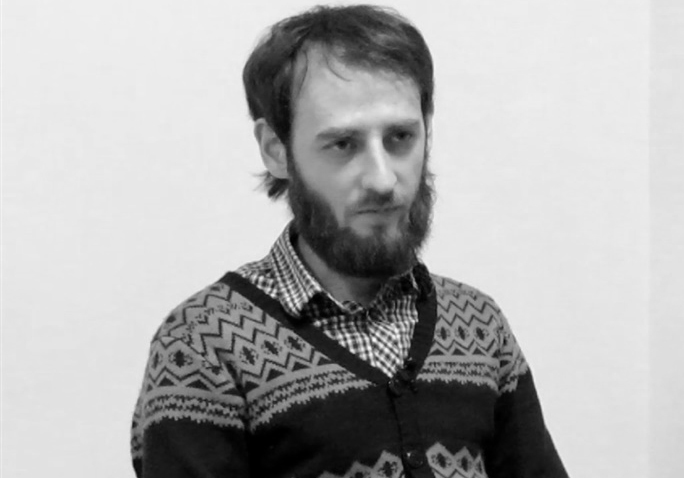
The ICJ is concerned by yesterday’s attack on lawyer Murad Magomedov in Makhachkala, near the Supreme Court of Dagestan building. The ICJ calls on the authorities to take effective measures to guarantee the security of lawyer Magomedov.
The attack took place during a break in a Supreme Court hearing in which Murad Magomedov was defending his client, Akhmed Israpilov, on charges of terrorism.
The lawyer was severely beaten by a group of five people, and sustained serious head injuries.
He was taken to the Republican Central Clinical Hospital, where he remains, recovering from concussion, multiple injuries and fractures of the jaw.
“This is yet another in a series of physical attacks against lawyers in Dagestan and shows the urgent need for the authorities to take effective measures to protect lawyers in the region,” Temur Shakirov, ICJ Legal Adviser, said today. “Both local and federal authorities in the Russian Federation must ensure a prompt investigation leading to those responsible for this violent act being brought to justice.”
The UN Basic Principles on the Role of Lawyer provide that “where the security of lawyers is threatened as a result of discharging their functions, they shall be adequately safeguarded by the authorities”.
Under international human rights law, the State must take steps to protect the security of persons who the authorities know or ought to know are under threat, and must ensure an independent, prompt, and thorough investigation of any attacks on the life or physical integrity of individuals.
Murad Magomedov has worked as a lawyer with “Memorial” Human Rights Centre since autumn 2014 and represents individuals affected by of a “special operation” in Dagestan’s Vremenyi village in September 2014. In this case Magomedov does not act as a Memorial representative.
The ICJ has previously highlighted cases of assault and killing of lawyers in Dagestan.
Contact:
Róisín Pillay, Director, Europe Programme, roisin.pillay(a)icj.org
Temur Shakirov, Legal Adviser, Europe Programme, temur.shakirov(a)icj.org

Feb 3, 2015 | News
On 2 February, the ICJ observed the trial of lawyer Kalid Baghirov, before the Nizami District Court of Baku.
In the case, the Azerbaijan Collegium of Lawyers seeks disbarment of the prominent lawyer (photo), who recently acted in a number of high profile cases in Azerbaijan, including on behalf of human rights defenders.
Following a letter of the Sheki Court of Appeal alleging misconduct by Khalid Baghirov during the trial against Ilgar Mammadov, leader of the “Republican Alternative” movement and former presidential candidate, on 10 December 2014 the Presidium of the Collegium of Lawyers suspended Khalid Baghirov’s practice.
At the same time, the Presidium applied to the Nizami District Court seeking complete termination of his right to practice law. The Court accepted the case for consideration.
The ICJ commissioned an international observer, Liliya Vigel, a lawyer practicing in the Republic of Uzbekistan, to observe the hearing in the case before the Nizami District Court.
The ICJ observer also met with the representative of the Collegium of Lawyers, with lawyer Baghirov, with members of the Presidium of the Collegium, and with a number of non-governmental organizations to collect information about the case.
The ICJ continues to monitor the case in relation to international standards on human rights and the rule of law, including as regards respect for the role of lawyers, and plans to publish a report on the proceedings in due course.
Contact:
Róisín Pillay, Director, Europe Programme, roisin.pillay(a)icj.org
Temur Shakirov, Legal Adviser, Europe Programme, temur.shakirov(a)icj.org

Jan 29, 2015
Today, the International Commission of Jurists (ICJ) salutes Dr Lydia Foy for her courage and determination and congratulates her for bringing legal recognition of transgender people finally within reach in Ireland.
During a period spanning over two decades, Dr Lydia Foy was forced repeatedly to bring legal proceedings challenging the Irish authorities’ continuing failure to issue her with a new birth certificate reflecting legal recognition of her female gender.
The ICJ intervened before the High Court in Dublin as an amicus curiae, a friend of the court, in the latest case brought by Dr Foy. She sought an effective remedy against the Irish State’s violation of her right to respect for her private life as a result of the authorities’ failure to make provisions for the legal recognition of her acquired gender identity.
Today, 29 January 2015, the Irish state and Dr Foy formally settled the case before the High Court following the publication and introduction of the Gender Recognition Bill in the Oireachtas (the Irish Parliament), and the start of the parliamentary debate on the Bill.
It is high time that Ireland enacts legislation giving effect to their international human rights legal obligation to legally recognize people’s preferred gender identity. The ICJ urges the Irish authorities to proceed promptly to ensure that trans persons in Ireland obtain as of right a birth certificate showing the gender that they prefer. In doing so, the Irish authorities should ensure that each person, whatever their gender identity, may enjoy their internationally recognized human rights without discrimination, including their right to respect for their private life.
Background
In October 2014 the ICJ filed written legal submissions in Dr Foy’s case to assist the High Court in the determination of certain points of law relating to the right to an effective national remedy under the European Convention on Human Rights. The organization’s submissions addressed, among others, the requirement that a domestic remedy be effective in law and practice. Namely, that a remedy must be accessible and enable the enforcement of the substance of the rights at stake; and that the national authority before which recourse is had must be capable of granting an appropriate relief, and offer reasonable prospects of success.
The ICJ was represented pro bono by Gráinne Gilmore BL and Elizabeth Mitrow and Wendy Lyon of KOD Lyons Solicitors.
Jan 14, 2015 | Новости, Статьи
Сегодня МКЮ выразила обеспокоенность в связи с уголовным преследованием адвоката Шухрата Кудратова и его осуждением городским судом Душанбе по обвинению в мошенничестве и даче взятки.
13 января судья Тохирбек Мусобехзод огласил обвинительный приговор в отношении адвоката, приговорив его к девяти годам лишения свободы с отбыванием наказания в колонии строгого режима и лишением права заниматься адвокатской деятельностью в течение двух лет после освобождения.
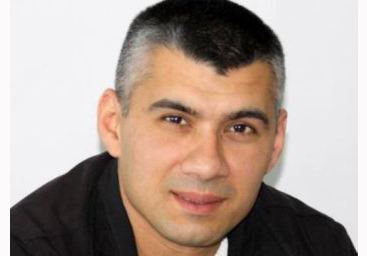
Шухрат Кудратов (см. фото) отрицал предъявленные ему обвинения, включая обвинение в покушение на дачу взятки по делу своего клиента Амирали Суламаева.
МКЮ обеспокоена тем, что осуждение адвоката может являться формой возмездия за защиту другого клиента, Зайда Саидова, – бывшего министра промышленности энергетики, приговоренного к 26 годам лишения свободы по обвинению в совершении ряда преступлений в 2014 г..
Еще до задержания Шухрат Кудратов и еще один адвокат Зайда Саидова сообщали о том, что получают угрозы и подвергаются запугиванию, а также что их предупредили о необходимости выйти из дела Зайда Саидова.
Второй адвокат Зайда Саидова, Фахриддин Зокиров, был также лишен свободы по обвинению в мошенничестве, но его освободили по акту об амнистии в ноябре 2014 г.
МКЮ обеспокоена тем, что вынесение обвинительного приговора в отношении Шухрата Кудратова может оказать негативное влияние на независимость всех адвокатов Таджикистана, а также на их способность защищать права человека своих клиентов.
В соответствии с Основными принципами ООН, касающимися роли юристов, адвокаты должны иметь возможность выполнять свои функции в обстановке, свободной от угроз, препятствий, запугивания и неоправданного вмешательства.
Кроме того, Основные принципы ООН гарантируют, что адвокаты не должны отождествляться со своими клиентами или интересами своих клиентов в результате выполнения ими своих функций.
Основные принципы предусматривают, что государство должно обеспечить, чтобы на практике адвокаты не подвергались уголовному преследованию и административным, экономическим или иным санкциям за любые действия, совершенные в соответствии с признанными профессиональными обязанностями, нормами и этикой, а также угрозам такого преследования и санкций.
Основные принципы ООН являются важным руководством в сфере международноправовых обязательств Таджикистана, закрепленных, к примеру, в Международном пакте о гражданских и политических правах, международно-правовом договоре в области прав человека, к которому Таджикистан присоединился в 1999 г.
МКЮ известно о том, что в ближайшее время приговор по делу Шухрата Кудратова будет обжалован в Верховный Суд Республики Таджикистан.
МКЮ призывает власти Таджикистана обеспечить, чтобы апелляционное производство по делу соответствовало международно-правовым обязательствам Таджикистана в области прав человека, включая право на справедливое судебное разбирательство.
МКЮ продолжит пристальное наблюдение за данным делом.
Tajikistan-Statement Kudratov-News-Webstory-2015-RUS (полный текст PDF)
Jan 14, 2015 | News
The ICJ today expressed its concern at the prosecution and conviction of lawyer Shukhrat Kudratov by Dushanbe City Court on charges of fraud and bribery.