
Attack on Charlie Hebdo an assault on freedom of expression
The ICJ deplores today’s murderous attack against journalists and others by armed assailants at the offices of the weekly satirical magazine Charlie Hebdo.

The ICJ deplores today’s murderous attack against journalists and others by armed assailants at the offices of the weekly satirical magazine Charlie Hebdo.
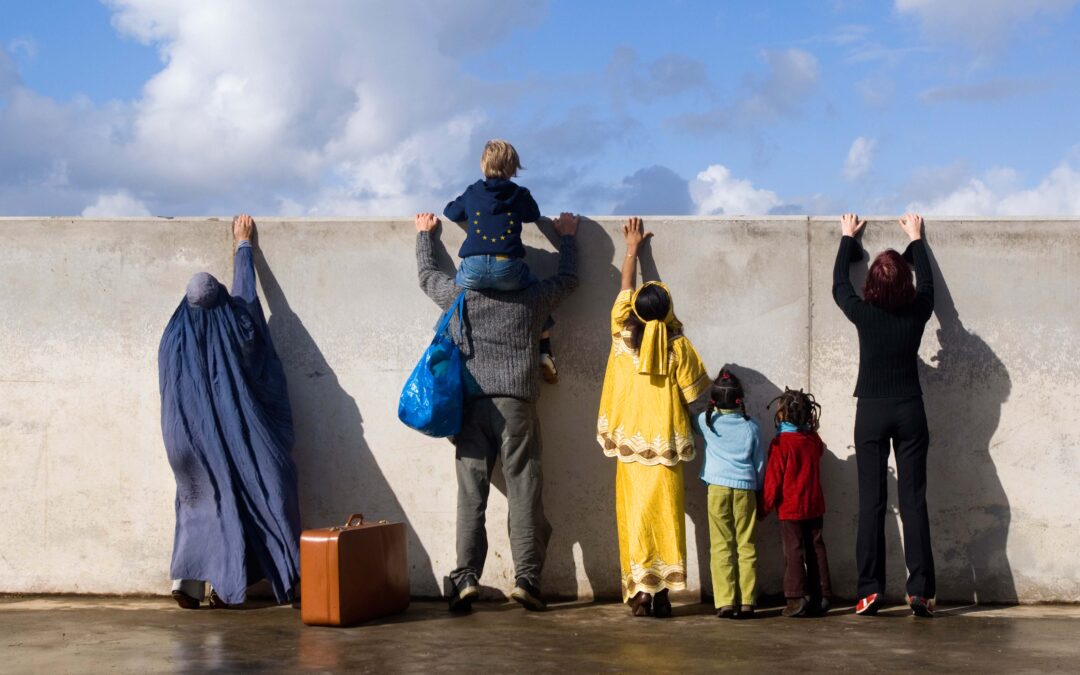
The ICJ presented today an expert opinion on the international law applicable to administrative detention of non-citizens before the Constitutional Court of Bosnia and Herzegovina.
The ICJ submitted its expert opinion in the appeal no. AP-2742/13 related to Mr Imad Al-Husin. This expert opinion focuses on the international legal obligations and standards, as well as the attendant jurisprudence applicable to Bosnia and Herzegovina pertaining to the basis for the detention of foreign nationals for the purpose of impeding unlawful entry or performing a deportation.
This ICJ expert opinion was written at the request of the applicant’s lawyers. It was produced pro bono in full independence.
Bosnia-ICJ Expert Opinion Const Court-Advocacy-Legal submission-2014-ENG (read the expert opinion in English)
Bosnia-ICJ Expert Opinion Const Court-Advocacy-Legal submission-2014-BOS (read the expert opinion in Bosnian)
Today’s Opinion by the Court of Justice of the European Union (CJEU) in Luxembourg on the European Union’s (EU) accession to the European Convention on Human Rights (ECHR) is a regrettable setback for human rights in Europe, said Amnesty International, the ICJ and the AIRE Centre.
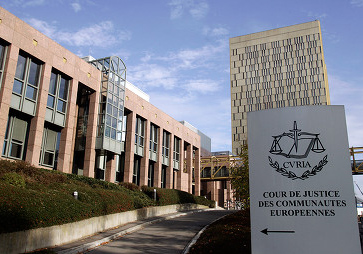
Today, the Court of Justice of the European Union (CJEU) delivered its judgment in the joint cases of A, B and C v. Staatssecretaris van Veiligheid en Justitie.
It affirms the need for national authorities to undertake individualized credibility assessments in asylum cases involving claims of persecution based on sexual orientation.
The ruling concerned a request for a preliminary ruling from the Netherlands, through its Council of State, to the CJEU.
The cases arose from three applications for asylum in the Netherlands by three men claiming a well-founded fear of persecution in their countries of origin based on their alleged same-sex sexual orientation.
The Dutch authorities rejected each asylum claim on the basis that each applicant had failed to prove his same-sex sexual orientation.
The Council of State asked the CJEU what limits the EU Qualification Directive and the Charter of Fundamental Rights, and in particular article 3 (right to the integrity of the person) and article 7 (respect for private and family life), impose on the method of assessing the credibility of a declared sexual orientation, and whether these limits are different from those applying to the assessment of credibility in asylum claims based on other grounds.
Interpreting the Qualification Directive in light of articles 3 and 7 of the Charter, as well as article 1, i.e. human dignity, the Court held that EU law does impose certain requirements on refugee status determination authorities.
The ICJ welcomes the Court’s determination that the competent domestic authorities must ensure that any credibility assessment method must allow for an individualized consideration of each applicant’s claim, having regard to its specific features, and that it is the duty of the State to cooperate with the applicant in the context of the assessment of all the relevant elements of her or his claim.
The ICJ welcomes a number of other aspects of the ruling, including:
See also the ICJ’s commentary on the CJEU judgment in X, Y and Z v. Minister voor Immigratie en Asiel.
В докладе МКЮ делается вывод о том, что для обеспечения независимости судебных органов в России и их способности стать на страже Верховенства закона необходимо провести всестороннюю реформу системы назначения судей и их продвижения по службе, а также иных аспектов судебной системы.
В докладе, подготовленном по итогам ее миссии в Российскую Федерацию, рассматриваются вопросы отбора судей, их назначения и продвижения по службе, а также анализируются институциональные, процессуальные и практические аспекты назначения и продвижения судей.
Также в докладе освещено объединение Верховного Суда РФ и Высшего Арбитражного Суда РФ и процесс переназначения судей в новый состав Верховного Суда, крайне актуальные с точки зрения более общего предмета миссии – процедуры назначения судей.
В докладе делается вывод о том, что слабые стороны процедуры назначения судей порождают недостатки с точки зрения независимости российских судебных органов, на которые МКЮ обратила внимание в своих предшествующих докладах: «Состояние судебной системы в России» 2010 года и «Защита правосудия: дисциплинарное производство в отношении судей в Российской Федерации» 2012 года.
Расхождения между законом и практикой в процессе отбора судей, а также «внепроцессуальные» рычаги влияния и «обходные пути», к которым прибегают лица, руководящие комплексным многоэтапным процессом отбора и назначения судей, относятся к основным недостаткам процедуры.
В докладе предложен ряд конкретных рекомендаций, затрагивающих различные аспекты процедуры отбора, органы, которые играют главную роль в данном процессе, а также необходимую судебную реформу.
В основу доклада легли выводы миссии, проведенной в мае 2014 г., участники которой встретились с рядом заинтересованных сторон в г. Москве, включая судей, независимых экспертов и НКО.
В ходе миссии были проведены два круглых стола с участием ряда экспертов.
Данные обсуждения были организованы при поддержке Института права и публичной политики и Независимого экспертно-правового совета.
В проведении миссии приняли участие: Азар Качалия (судья Апелляционного Суда ЮАР и Председатель Исполнительного комитета МКЮ), Джолин Шуккинг (судья Административного высокого торгово-промышленного суда Нидерландов), Видар Штрёмме (председатель норвежского отделения МКЮ), Роушин Пиллей (директор Европейской программы МКЮ), Тимур Шакиров (правовой советник Европейской программы МКЮ) и Мари Гьефсен (член норвежского отделения МКЮ). Проведению миссии содействовали консультации Тамары Морщаковой, комиссара МКЮ и судьи Конституционного Суда РФ в отставке.
Контакты:
Роушин Пиллей, директор Региональной программы МКЮ по Европе, roisin.pillay(a)icj.org
Тимур Шакиров, правовой советник Региональной программы МКЮ по Европе, temur.shakirov(a)icj.org
RUSSIA-Selecting the judges-News-2014-Rus (полный текст на русском, PDF)
RUSSIA-Selecting the judges-Publications-Reports-2014-Rus (полный доклад на русском, PDF)
 Thailand: Judges have a critical role to play in combating and ensuring accountability for torture and enforced disappearance
 Joint Letter: Urgent diplomatic action to halt further executions in eastern Libya
 Czech Republic: UN Committee on the Rights of the Child finds that immigration detention of children violated the prohibition of arbitrary detention and ill-treatment
 UN Human Rights Council once again navigates troubled waters to protect human rights in crisis situations, despite global setbacks.