Nov 28, 2014
A new ICJ report concludes that a comprehensive reform of the system judicial appointments and promotions, as well as of other aspects of the judicial system, is essential to ensure that the judiciary in Russia is independent and able to be an effective guardian of the Rule of Law.
Following a mission to the Russian Federation, the report examines issues of judicial selection, the appointment and promotion of judges, considers the institutional, procedural and practical aspects of judicial appointments and promotions.
The Supreme Court and the High Arbitration Court of the Russian Federation merger and a process of re-appointment of judges to the new Supreme Court, which was highly relevant to the mission’s more general concern with judicial appointments, are addressed in the report.
The report concluded that weaknesses in the judicial appointments process have contributed to shortcomings in the independence of the Russian judiciary, which the ICJ has highlighted in previous reports of 2010, the State of the Judiciary in Russia and of 2012 Securing Justice: the Disciplinary system for judges in the Russian Federation.
A gap between law and practice in the selection process and “extra procedural” influences and “shortcuts” used by those tasked with navigating the complex multistage process of selection and appointment of judges are mentioned among main problems in the procedure.
The report offers a number of specific recommendations regarding different aspects of the selection procedure, institutions that play a major role in the process and the judicial reform which needs to be undertaken.
The report was based on the findings of the Mission in May 2014, which met with a number of stakeholders in Moscow, including judges, independent experts and NGOs.
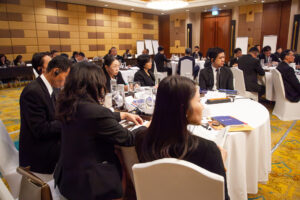
Two expert round-table discussions were held during the mission.
The round-table discussions were organized in cooperation with the Institute of Law and Public Policy and the Independent Council for Legal Expertise.
The Mission included Justice Azhar Cachalia, Judge of the South African Court of Appeal and Chair of the ICJ Executive Committee, Judge Jolien Schukking, Judge of the Administrative High Court for Trade and Industry of the Netherlands, Vidar Stromme, Chair of the ICJ-Norway, Róisín Pillay, Director of the ICJ Europe Programme, Temur Shakirov, Legal Adviser of the ICJ Europe Programme and Mari Gjefsen, member of the ICJ-Norway. The mission benefited from the advice of Justice Tamara Morshakova, ICJ Commissioner and former justice of the Constitutional Court of the Russian Federation.
Contact:
Róisín Pillay, Director, Europe Programme, roisin.pillay(a)icj.org
Temur Shakirov, Legal Adviser, Europe Programme, temur.shakirov(a)icj.org
RUSSIA-Selecting the judges-News-2014-Rus (full text in PDF)
RUSSIA-Selecting the judges-Publications-Reports-2014-Eng (full text in PDF)
RUSSIA-Selecting the judges-Publications-Reports-2014-Rus (full text in PDF)
Nov 27, 2014 | News
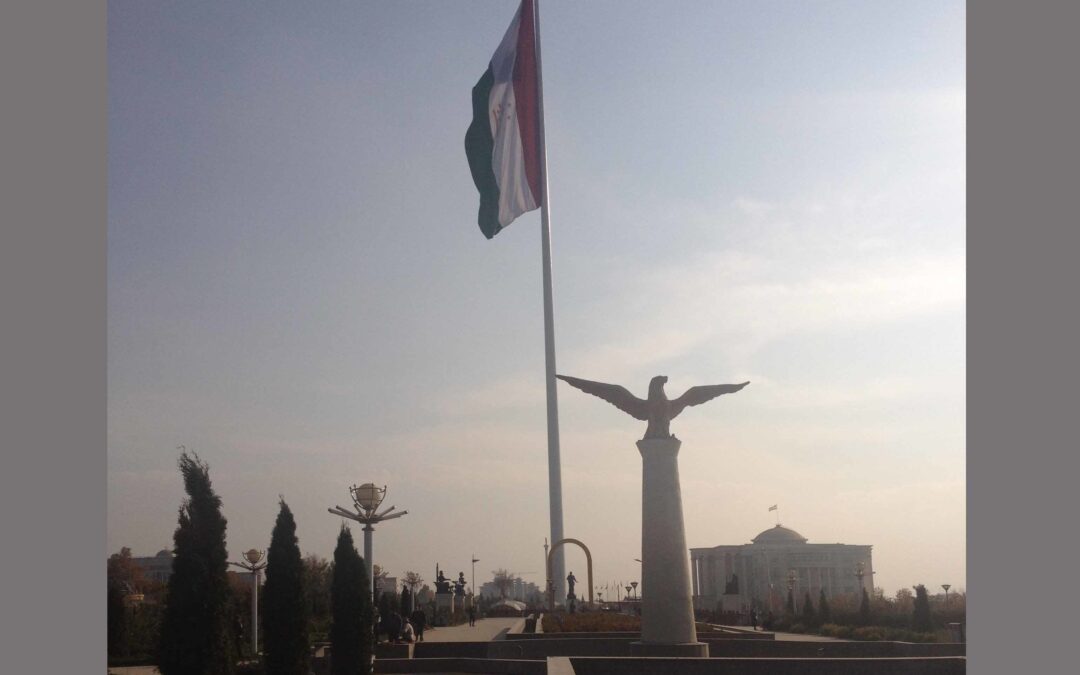
Following a visit to the country from 15 to 19 November, the ICJ called on the government of Tajikistan to take meaningful steps to ensure that the institutional independence of the legal profession and the personal integrity of individual lawyers are secured.
The ICJ expressed concern at the continued detention of lawyer Shukhrat Kudratov, on criminal charges. It welcomed the release of another lawyer, Fakhriddin Zokirov, who had been on trial on charges that appeared to constitute an act of retaliation for his work as a defence lawyer. He was released on 3 November as a result of an amnesty.
“While the release of Fakhriddin Zokirov is a positive step, we are concerned that Shukhrat Kudratov remains in detention pending trial on similar criminal charges. We have received credible information that the charges against him are linked to his representation of a client, contrary to international standards on the independence of lawyers”, said Róisín Pillay, Director of the Europe and CIS programme at the ICJ.
The ICJ reiterated its concern at aspects of the reform of the legal profession presently under consideration under the draft law on Advokatura.
Following a mission to Tajikistan in 2013, the ICJ expressed concerns that the independence of the legal profession would be undermined by requirements in the draft law that all lawyers go through a new qualification process, administered by a body in which the Ministry of Justice would play a prominent role.
Amendments recently introduced to the draft law have not altered the inappropriate role which the Ministry of Justice would play in regulating the profession.
Under the draft law, the Deputy Minister of Justice would serve as an ex officio Chair of the Qualification Commission which determines who may be accredited as a lawyer.
This significant role by a member of the executive would jeopardize the independence of the profession.
The ICJ also remains concerned that the draft law would still require requalification of many lawyers, with exemptions only for those with at least 15 years of professional experience as defence lawyers.
Such provisions are contrary to international standards on the independence of the legal profession, including the UN Basic Principles on the Role of Lawyers.
The ICJ recalls Tajikistan’s earlier commitment during the UN Human Rights Committee’s session of 2013 that the Qualification Commission would be placed under the Ministry of Justice only for a short transitional period. A provision to this effect has not yet been introduced in the draft law.
Contact:
Róisín Pillay, Director, ICJ Europe Programme, roisin.pillay(a)icj.org
Temur Shakirov, Legal Adviser, ICJ Europe Programme, temur.shakirov(a)icj.org
Notes:
From 15 to 19 November, an ICJ legal expert, Dr Stefan Strobl, visited Tajikistan and held meetings with a number of international and local civil society organizations and lawyers to discuss recent progress on the reform of the legal profession and the wide ranging challenges it faces.
The visit followed an ICJ mission to Tajikistan in November 2013.
Tajikistan-Independence of legal profession-News-webstory-2014-RUS (full text in PDF)
Nov 19, 2014 | Articles, Événements, Nouvelles, Publications, Rapports
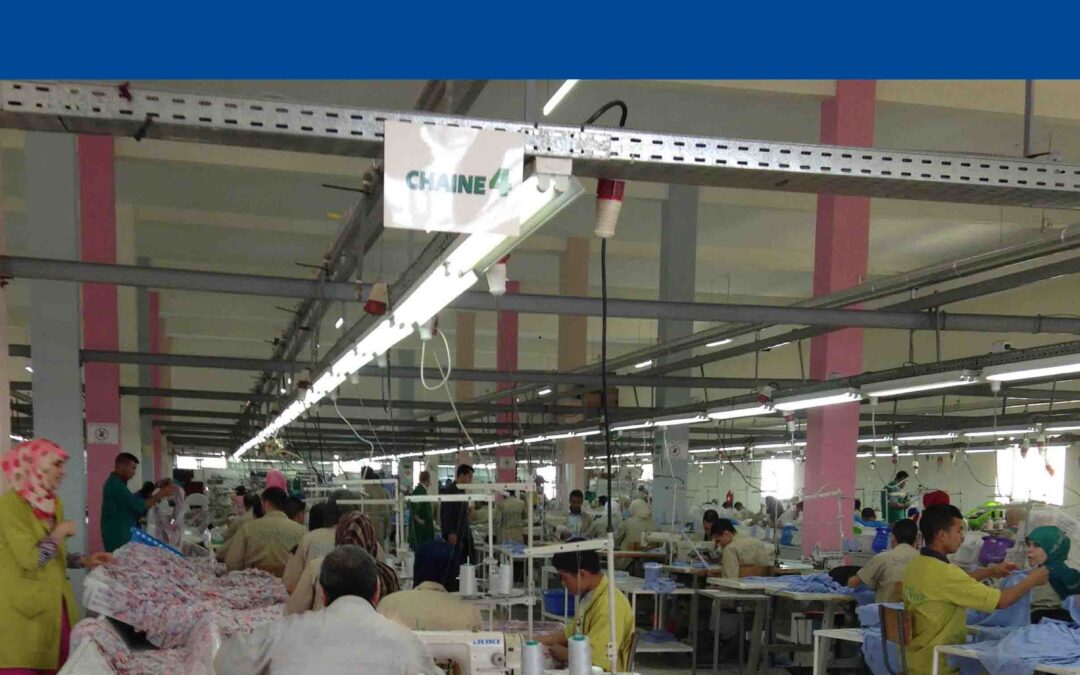
Le 18 novembre, la CIJ a présenté, dans le cadre d’une réunion et d’une discussion au Parlement européen de Brucelles, deux nouveaux rapports sur les régimes économiques spéciaux et leur impact sur les droits sociaux au Maroc et au Pérou.
Les deux études se penchent notamment sur de l’impact des régimes économiques spéciaux sur les droits à la terre et à l’eau et sur la sécurité sociale et de l’emploi.
Ces régimes ont pour but de faciliter les exportations et les investissements dans des domaines comme l’agriculture et le textile.
Morocco-Droits sociaux et regimes speciaux-Publications-thematic report-2014-FRE (Rapport sur le Maroc en français – PDF)
Contacts:
Carlos Lopez, Senior Legal Advisor, Business and Human Rights Programme, t +41 22 979 3816, carlos.lopez(a)icj.org
Sandra Ratjen, Senior Legal Advisor, Economic, Social and cultural Rights Programme, t +41 22 979 3835, sandra.ratjen(a)icj.org
Nov 19, 2014 | Artículos, Eventos, Noticias
El 18 de noviembre, la CIJ presentó y discutió, en una reunión en el Parlamento Europeo en Bruselas, sus dos informes sobre regímenes económicos especiales y su impacto en los derechos sociales en Perú y Marruecos.
El eurodiputado Richard Howitt, miembro de la Subcomisión de Derechos Humanos del Parlamento, y el comisario de la CIJ, Olivier De Schutter, encabezaron las discusiones.
Los informes ponen de relieve el impacto en los derechos, incluidos los derechos laborales y sociales, los derechos de tierras y aguas, de regímenes económicos especiales que tienen por objeto facilitar las exportaciones y las inversiones en áreas como la agricultura y los textiles.
La reunión permitió examinar el papel que la UE y sus Estados miembros pueden y deben desempeñar en su diálogo general y cooperación con los dos países, en particular en lo que se refiere a las relaciones y acuerdos comerciales, así como a la reglamentación de las empresas comerciales de la UE que se benefician de estos Regímenes especiales.
La presentación de las investigaciones y los informes de la CIJ viene en un momento importante en las relaciones de la UE con Perú y Marruecos.
En cuanto a estos últimos, el informe de la CIJ alimentará el diálogo sobre derechos humanos entre la Subcomisión de Derechos Humanos del Parlamento Europeo y Marruecos que se celebra hoy en Bruselas.
Peru-Regimenes especiales exportacion-Publications-thematic report-2014-SPA (Full report in Spanish – PDF)
Contactos:
Carlos Lopez, Senior Legal Advisor, Business and Human Rights Programme, t +41 22 979 3816, carlos.lopez(a)icj.org
Sandra Ratjen, Senior Legal Advisor, Economic, Social and cultural Rights Programme, t +41 22 979 3835, sandra.ratjen(a)icj.org
Nov 19, 2014 | Events, News
On 18 November, the ICJ presented and discussed, in a meeting at the European Parliament in Brussels, its two reports on special economic regimes and their impact on social rights in Peru and Morocco.
MEP Richard Howitt, Member of the Subcommittee on Human Rights at the Parliament, and ICJ Commissioner Olivier De Schutter led the discussions.
The reports highlight the impact on rights, including labour and social security, land and water rights, of special economic regimes that aim at facilitating exports and investment in areas such as agriculture and textile.
The meeting enabled discussion of the role that the EU and its member states can and should play in its general dialogue and cooperation with the two countries, particularly in regard to trade relationships and agreements and also the regulation of the EU based business enterprises benefiting from these special regimes.
The presentation of the ICJ research and reports comes at an important moment in the relationships of the EU with both Peru and Morocco.
As to the latter, the ICJ report will feed into the Human Rights dialogue between the Subcommittee on Human Rights of the European Parliament and Morocco that is taking place today in Brussels.
Reports:
Peru-Social Rights for Export Promotion-Publications-thematic report-2014-ENG (Full report in English – PDF)
Peru-Regimenes especiales exportacion-Publications-thematic report-2014-SPA (Full report in Spanish – PDF)
Morocco-Droits sociaux et regimes speciaux-Publications-thematic report-2014-FRE (Full Report in French – PDF)
Contacts:
Carlos Lopez, Senior Legal Advisor, Business and Human Rights Programme, t +41 22 979 3816, carlos.lopez(a)icj.org
Sandra Ratjen, Senior Legal Advisor, Economic, Social and cultural Rights Programme, t +41 22 979 3835, sandra.ratjen(a)icj.org