Oct 10, 2012
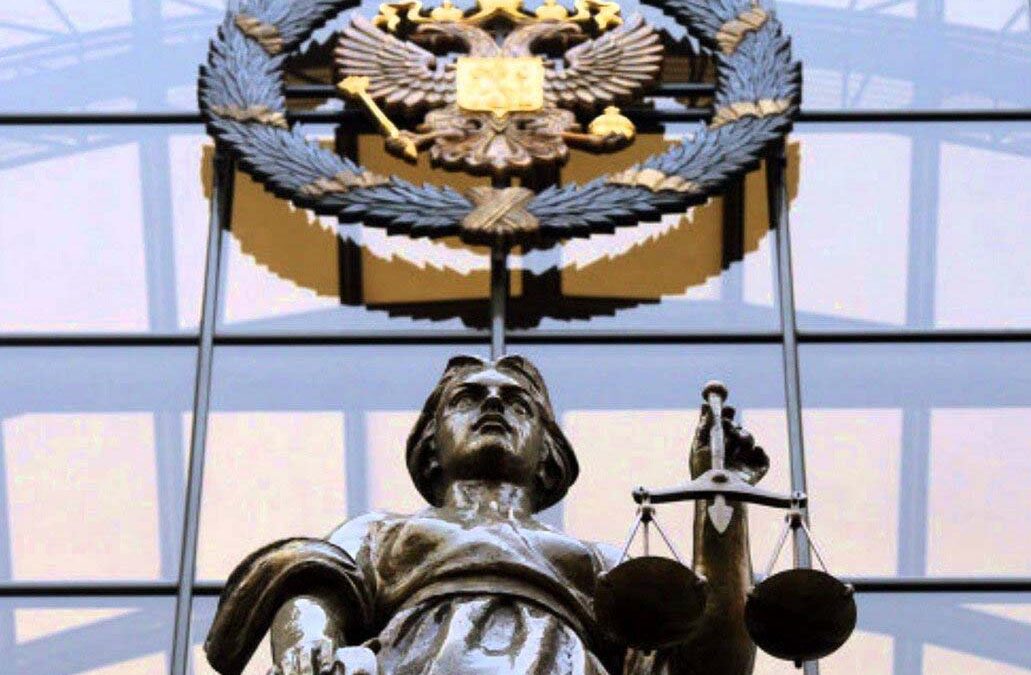
 The ICJ presented its views on the Russian Federation’s compliance with the Convention against Torture, highlighting torture and ill-treatment in detention, impunity, and refoulement to face torture.
The International Commission of Jurists highlighted, in its submission, situations of widespread practice of torture and other ill-treatment in detention, especially in pre-trial detention facilities, and impunity for torture and ill-treatment, particularly in the North Caucasus. The ICJ also raised concerns about the transfer of suspects to member States of the Shanghai Co-operation Organisation, in violation of the principle of non-refoulement, and the failure of the Russian Federation to cooperate with the UN mechanisms, especially with regard to visits by the Special Procedures.
Russia-UNCAT-legal submission-2012 (download the ICJ submission)
Oct 9, 2012 | Advocacy, Non-legal submissions
 The ICJ commented on the UPR of the Russian Federation, addressing issues including torture and ill-treatment, impunity, judicial independence, NGO laws and “homosexual propaganda” bans.
The International Commission of Jurists has brought to the attention of the Human Rights Council’s Working Group on the UPR and to the Human Rights Council issues concerning:
- prevention of torture and ill-treatment and other gross human rights violations;
- impunity for gross human rights violations;
- independence of the judiciary; amendments to NGO laws;
- non-refoulement; homosexual propaganda bans; and
- Russia’s engagement with international human rights instruments and mechanisms.
Russia-ICJ comments on UPR-non-legal-submission-2012 (download the ICJ submission)

Oct 6, 2012 | News
 The ICJ today expressed its heartfelt condolences at the passing away of Professor Vojin Dimitrijevic.
An international law expert and ICJ Commissioner, Vojin Dimitrijevic died at the age of 81 on 5th October 2012 in Belgrade.
He was the Director of the Belgrade Centre for Human Rights, serving in this position since the organisation’s foundation in 1995. Until 1998, he was also Professor of Public International Law and International Relations at the University of Belgrade Law School.
Professor Dimitrijevic was a member of the Presidency of the Civic Alliance of Serbia and former President of the Yugoslav Association for International Law. He was also a member of the Venice Commission for Democracy through Law and of the Institut de Droit International.
From 1982-1994, he was a member of the Human Rights Committee, serving as Rapporteur and Vice-Chairman at different stages during this time. He taught at many universities throughout the world and published numerous books and articles on human rights issues.
In 2001, he was bestowed the order of the Legion d’Honneur by the President of France, Jacques Chirac.
Vojin Dimitrijevic graduated with a PhD from the Faculty of Law of the University of Belgrade. He was first elected as an ICJ Commissioner in 2003 and re-elected in 2008. He was also a member of the ICJ’s Executive Committee, serving in this role between 2006 and 2012.
Oct 4, 2012
The ICJ and nine other NGOs presented comments on proposed protocols to the European Convention on Human Rights, amending the procedure and criteria for applying to the Court, and allowing for advisory opinions.
Amnesty International, the AIRE Centre, the European Human Rights Advocacy Centre (EHRAC), the Helsinki Foundation for Human Rights (HFHR), Human Rights Watch, Interights, the International Commission of Jurists (ICJ), JUSTICE, Open Society Justice Initiative and REDRESS take note of the ongoing discussion over the drafting of Protocols 15 and 16 (P15 and P16) to the European Convention on Human Rights and wish to provide the following comments.
EuropeanCourt-JointSubmission-Advocacy-2012 (download the joint submission)
Oct 3, 2012 | News
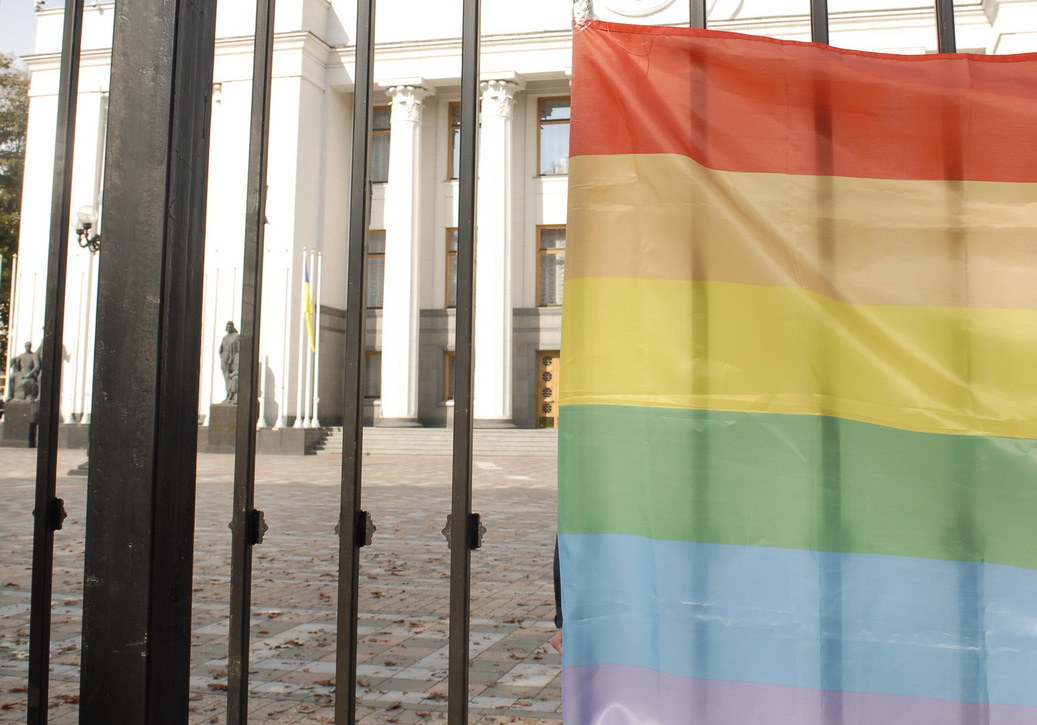 The Verkhovna Rada, the Ukrainian parliament, voted on 2 October 2012 in favor of a bill that would ban “homosexual propaganda”. The ICJ and ILGA-Europe have condemned the draft law and called on Ukrainian authorities not to adopt it. Two hundred and eighty-nine out of 450 members of parliament supported the bill, which is now expected to move for a second round of reading in parliament later this month.
The organisations are deeply concerned about the impact of Draft Law no. 8711 on the rights of lesbian, gay, bisexual and transgender (LGBT) people in Ukraine as well as the rights of everyone to the freedoms of expression, peaceful assembly and association. ICJ and ILGA-Europe urge the Ukrainian parliament to withdraw the bill from its agenda and call on the Chair of the Parliament and the President, who would both need to sign the bill in order for it to become law, to speak out against it.
The bill would modify several existing laws in Ukraine, including criminal law, and introduce sanctions for the import, production and distribution of products that would “promote” homosexuality. “Promotion of homosexuality” is itself undefined. “If voted into law, it would lead to the further marginalisation of the lesbian, gay, bisexual and trans community in the country and would limit the work of human rights defenders,” Evelyne Paradis, Executive Director of ILGA-Europe said.
ILGA-Europe and the ICJ believe that Draft Law no. 8711 is incompatible with international human rights law. First it is so vague that it fails to conform to the requirement that restrictions must be provided for by law. Under the draft law, it is impossible for an individual to determine what kind of expression is banned. Second, the asserted reasons for the “homosexual propaganda” ban fail the tests of proportionality and necessity. In other words, the restriction serves no permissible purpose. Third and finally, the homosexual propaganda ban discriminates against LGBT people by prohibiting public discourse on issues that matter to LGBT lives. “Restrictions on rights may not be discriminatory, and discrimination on the basis of sexual orientation is clearly prohibited under international law,” said Alli Jernow, Senior Legal Adviser of the International Commission of Jurists.
The EU should raise these developments in the context of the monitoring of the implementation of the Visa Liberalisation Action Plan. Parliamentary discussion of this law clearly demonstrates that progress is stalled. If the bill passes a second reading, further negotiations with Ukraine should be delayed or ultimately suspended. We also call on the Council of Europe to unequivocally denounce Draft Law no. 8711 in representations to the Ukrainian government.
The law is expected to be discussed at a second hearing in the coming weeks. After that the Chair of the Parliament and the President would need to sign the bill before it would become official law.
ICJ and ILGA-Europe earlier this year issued a joint briefing paper on “homosexual propaganda bans” that have been enacted or proposed in Europe and other Eastern European countries.
Photo credit: Insight NGO