Jan 18, 2019 | News
A legal challenge to the violations of migrant children’s social rights on mainland Greece and its North Eastern Aegean islands has been lodged by the ICJ and the European Council on Refugees and Exiles (ECRE) before a European body specialized in the protection of social rights at the European level.
The legal action, taken in the form of a collective complaint to the European Committee on Social Rights, catalogues the numerous instances of Greece failing its child care and protection obligations towards migrant children by leaving them in conditions of squalor, insecurity and violence.
The complaint to the Committee, an impartial body which oversees the protection of certain economic and social rights by assessing the conformity of domestic law and practice with the European Social Charter, has been supported by the Greek Council for Refugees and includes reports from Médecins Sans Frontières on health and living conditions of migrant children in Lesvos.
Amongst the most blatant infringements of migrant children’s rights described in the complaint has been the systematic and ongoing absence of sufficient accommodation facilities and the lack of an effective guardianship system for unaccompanied children in Greece, exposing them to significant protection risks, including homelessness and placement in detention.
Such severe deficiencies in basic care facilities has led to dire living conditions which deprive children of their most fundamental rights.
Overcrowded, insalubrious and dangerous conditions prevail most obviously on the North Eastern Aegean islands where the standards of human dignity and special protection accorded to children by virtue of their particular status under international human rights law are repeatedly violated.
The complaint notes that the dearth in basic care facilities for migrants in Greece extends to medical services, particularly on the islands, which has a serious knock-on effect on hygiene, sanitation and substantive physical and mental health care and treatment for children.
In addition, mixed living arrangements, limited, if not non-existent security patrols and deficient guardianship systems have led to numerous reports of sexual abuse, violent assaults, harassment and humiliation of migrant children in camps on the Greek islands.
The consequences of the conditions listed in the complaint have been, in certain locations, children self-harming and even attempting suicide.
“Greece’s deference to the violations being committed against migrant children on its territory has gone on for far too long without any foreseeable improvement on the horizon.
Transfers of migrant children and vulnerable persons from the islands to the mainland are paralysed by a shortage of places on the mainland and administrative encumbrances.
All the while, children are left to languish in a forgotten environment of impoverishment and destitution.
This legal challenge to Greece’s indifference will hopefully pave the way for institutional condemnation and for substantive change in the protection of society’s most vulnerable” says Amanda Taylor, Senior EDAL Coordinator at the European Council on Refugees and Exiles.
“As signatory of the European Social Charter, Greece is under an international obligation to ensure that migrant children in its jurisdiction have access to basic economic and social rights. Particularly in the case of migrant children, who find themselves in a vulnerable situation, remaining even for a short period of time in such terrible conditions as currently exist in Greece, is likely to result in irreparable harm and injury and have a detrimental and non-reversible impact on their development,” said Karolína Babická, Legal Adviser for Europe and Central Asia with the ICJ.
“This complaint refers to two of the most pressing protection issues in Greece; the protection of unaccompanied minors and the conditions prevailing on the Greek islands after the launch of the EU-Turkey Statement, where migrant children are stranded. In December 2018, almost two out of three unaccompanied children in Greece were deprived of a place in long-term accommodation facility for minors. At the same time, 30% of the 14,600 persons remaining on the Greek islands were children. Thus, the procedure initiated before the European Committee of Social Rights can significantly contribute to guaranteeing the respect of migrant children’s rights in Greece,” said Alexandros Konstantinou, member of the Legal Unit of the Greek Council for Refugees.
The complaint awaits examination and determination by the European Committee on Social Rights.
As part of the complaint and in order to immediately alleviate the situation which migrant children face in Greece, ECRE and ICJ have urgently requested Greece to remove migrant children from unsuitable and overcrowded camps on the islands; to provide them with adequate and age-appropriate facilities, sufficient food, water and medical care, and with effective and competent guardians; and to remove unaccompanied migrant children from detention and place them in tailored accommodation suitable for their age.
Read the full complaint here.

Dec 21, 2018 | News
CORE and the ICJ have been granted permission to intervene in an appeal before the United Kingdom Supreme Court (Vedanta Resources PLC and another v. Lungowe and others).
The two organizations will provide evidence on comparative law and international standards regarding the responsibilities of companies in relation to human rights and environmental protection, in particular the recognition of a duty of care of parent companies in relation to the communities living in the surrounding of companies operations.
In August 2015, 1800 Zambian villagers launched a legal action in the UK against mining company Vedanta Resources Plc and its Zambian subsidiary, Konkola Copper Mines, claiming that their water sources and farming land were poisoned from the copper mining operations of both companies.
Last year, the Court of Appeal upheld a High Court ruling that the Zambian claimants had a legal right to bring a claim through the courts in the UK and that a parent company may owe a duty of care to third parties affected by its subsidiary. Vedanta is appealing this ruling in the Supreme Court.
CORE and the ICJ have been lead participants in the elaboration processes of all major international instruments in the field of businesses’ human rights responsibilities in the last decade and are also specially situated to provide information on the state of the law in various jurisdictions.
Our submission is that the Court of Appeal’s conclusion that Vedanta arguably owed a duty of care to the claimants is supported by: international standards regarding the responsibilities of companies in relation to human rights and environmental protection; material published by the UK government with the aim of implementing those international standards; and comparative law jurisprudence.
The hearing will take place on 15-16 January 2019.

Dec 20, 2018 | News
The ICJ today called on Hungarian President Áder János not to sign the Law on the Administrative Courts but to send it back to the Parliament for further review and discussion. In particular, the law should be re-considered in light of international standards as well as the forthcoming reasoned opinion of the Venice Commission, the ICJ said.
On 12 December, the Hungarian Parliament adopted, in a highly contested process, the Law on the Administrative Courts (T/3353). The vote took place despite the fact that an opinion of the Council of Europe Venice Commission on the new law is still awaited.
The administrative courts will have significant competencies in matters of public interest concerning the action of the executive and other public institutions. They will have jurisdiction over “administrative disputes” as well as other issues transferred to their jurisdiction by law (Article 1(3)).
The ICJ is concerned at the significant powers conferred on the executive over the proposed Administrative Courts, in particular the Minister of Justice’s powers in the appointment of administrative judges (Article 72(2)) as well as the powers of the Minister of Justice and of the Parliament in regard to the annual budget of these courts. Under the new law, judges of the administrative courts would be appointed by the Minister of Justice on the advice of a newly-established National Administrative Judicial Council, with the Minister having a discretion to reject the first-ranked nominee of the Council. In a context where the independence of the Hungarian judiciary is already being eroded, this role of the executive raises significant concerns regarding the independence of the new courts.
The new law comes at a time when measures put in place by the Hungarian government since 2011 have led to a severe deterioration of the rule of law and human rights, by weakening Constitutional rights protection, limiting judicial independence, suppressing independent media, civil society and academic institutions, and imposing arbitrary laws that violate the human rights of marginalized sections of society.
The ICJ recalls that judicial independence and the separation of powers are the bedrock of the rule of law. International law, including the International Covenant on Civil and Political Rights and the European Convention on Human Rights, and other international standards such as the United Nations Basic Principles on the Independence of the Judiciary, reflect the fundamental role of an independent judiciary in protecting human rights and the rule of law.
Dec 16, 2018 | Agendas, Events
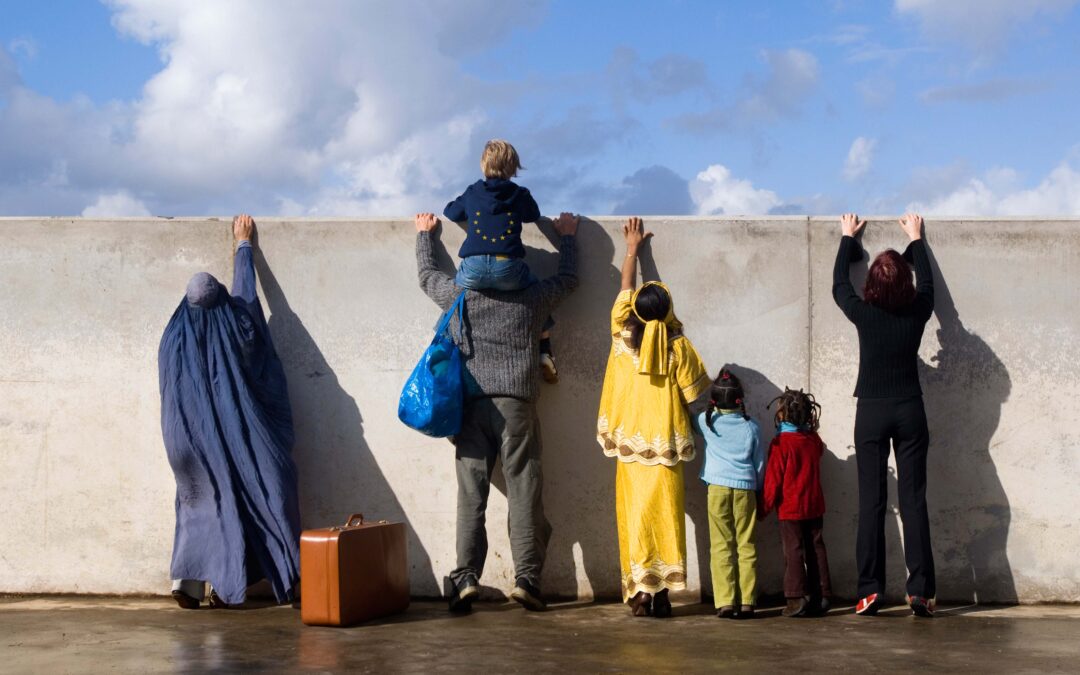
Today begins in Ankara (Turkey) a two-day international workshop for lawyers and CSO practitioners representing and working with migrants, refugees and asylum-seekers.
This event is organized by ICJ, in cooperation with its partners Refugee Rights Turkey, the European Council on Refugees and Exiles (ECRE), Mülteci-Der (MD) and ICJ-EI, as part of the EU co-financed project Fostering Access to Rights for Migrants, Refugees and Asylum-Seekers in Turkey.
Lawyers and civil society practitioners – representing numerous bar associations and relevant organisations from the Istanbul area and other nearby key migration and asylum locations – are taking part in the workshop that takes place on 16-17 December.
The international conference on “Legal avenues and the role of lawyers in protecting migrant and refugee rights” includes a section on strategic litigation on asylum and migration law and European experiences.
In the second part of the conference, a final workshop is held on 17 December to discuss efforts to support expertise and effectiveness of Turkish lawyers on asylum and immigration law. This workshop will bring together key stakeholders and interlocutors to strategize about the remaining gaps and needs and the next steps in this field.
During this workshop, the organisers will present their project and its results.
The project “Fostering Access to Rights for Migrants, Refugees and Asylum-Seekers in Turkey” is funded by the European Instrument for Democracy and Human Rights (EIDHR) of the European Union.
Turkey-Workshop-Agenda-MigrationAsylumIHRL-Ankara2-2018-eng (download the agenda in English)
Turkey-Workshop-Agenda-MigrationAsylumIHRL-Ankara2-2018-tur (download the agenda in Turkish)