Sep 18, 2018 | Plaidoyer
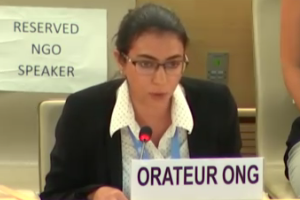
La CIJ a mis en lumière les graves menaces qui pèsent sur l’état de droit en Hongrie, en Pologne et en Turquie, lors de sa prise de parole au Conseil des droits de l’Homme à Genève.
La déclaration, faite pendant le débat général sur les situations nécessitant l’attention du Conseil, est la suivante:
«La Commission internationale de juristes (CIJ) voudrait attirer l’attention du Conseil sur les graves menaces qui pèsent sur l’état de droit en Hongrie, en Pologne et en Turquie.
En Pologne, le gouvernement a adopté une mesure législative pour imposer de manière arbitraire un «départ à la retraite» involontaire d’un tiers de ses juges à la Cour suprême, portant ainsi un coup fatal à l’indépendance du pouvoir judiciaire, déjà mis à mal par les réformes passées.
En Hongrie, de multiples réformes législatives ont affaibli l’indépendance des juges et puni les activités de certaines ONG de défense des droits de l’homme et restreint leur financement.
Enfin, en Turquie, la consolidation de mesures d’urgence en droit commun, des réformes constitutionnelles régressives, et le licenciements massif de juges et de procureurs a supprimé une protection essentielle pour le fonctionnement d’un pouvoir judiciaire indépendant.
La CIJ est en outre préoccupée par l’interdiction des manifestations des mères du samedi qui prévoit d’organiser des manifestations hebdomadaires à la mémoire des membres de leur famille disparus, en violation de leur droit à la liberté de réunion.
La CIJ est profondément préoccupée par l’escalade de telles menaces aux principes fondamentaux de l’état de droit en Europe, sans que des mesures spécifiques soient prises par le Conseil pour y remédier.
La CIJ exhorte le Conseil à prêter attention à ces développements, qui s’inscrivent dans le cadre d’une attaque mondiale plus vaste contre la primauté du droit [1] et à observer la situation des droits de l’homme dans ces pays.
[1] Voir la CIJ, «L’état de droit sous la menace mondiale» (déclaration lors du débat général sur le compte rendu oral du Haut Commissaire), 11 septembre 2018: https://www.icj.org/hrc39-gd2-hc/
Sep 18, 2018 | Advocacy, Non-legal submissions
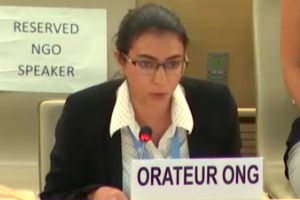
The ICJ today put the spotlight on serious threats to the rule of law in Hungary, Poland and Turkey, speaking at the UN Human Rights Council in Geneva.The statement, made during general debate on situations that require the Council’s attention, read as follows:
“The International Commission of Jurists (ICJ) would like to bring to the Council’s attention the serious threats to the rule of law in Hungary, Poland and Turkey.
In Poland, the Government has adopted legislation to arbitrarily force into involuntary “retirement” one third of its Supreme Court Justices, delivering a fatal blow to the independence of the judiciary, already strained by past reforms.
In Hungary, multiple legal reforms have weakened judicial independence and effectively criminalized the activities of certain human rights NGOs and curtailed their financing.
Finally, in Turkey, consolidation of emergency measures in ordinary law, regressive constitutional reforms, and the mass dismissal of judges and prosecutors have removed essential protection for the independent functioning of the judiciary.
The ICJ is further concerned by the protest ban against the Saturday Mothers to hold weekly protests in memory of their disappeared family members, in breach of their right to freedom of assembly.
The ICJ is alarmed at the escalation of such threats to the very basic tenets of the rule of law in Europe, without specific action being taken by this Council to address them.
The ICJ urges the Council to give attention to these developments, which indeed form part of a broader global attack on the rule of law,[1] and to keep under observation the human rights situation in these countries.”
[1] See ICJ, “The Rule of Law under Global Threat” (statement in general debate on the oral update of the High Commissioner), 11 September 2018: https://www.icj.org/hrc39-gd2-hc/
Sep 14, 2018 | News
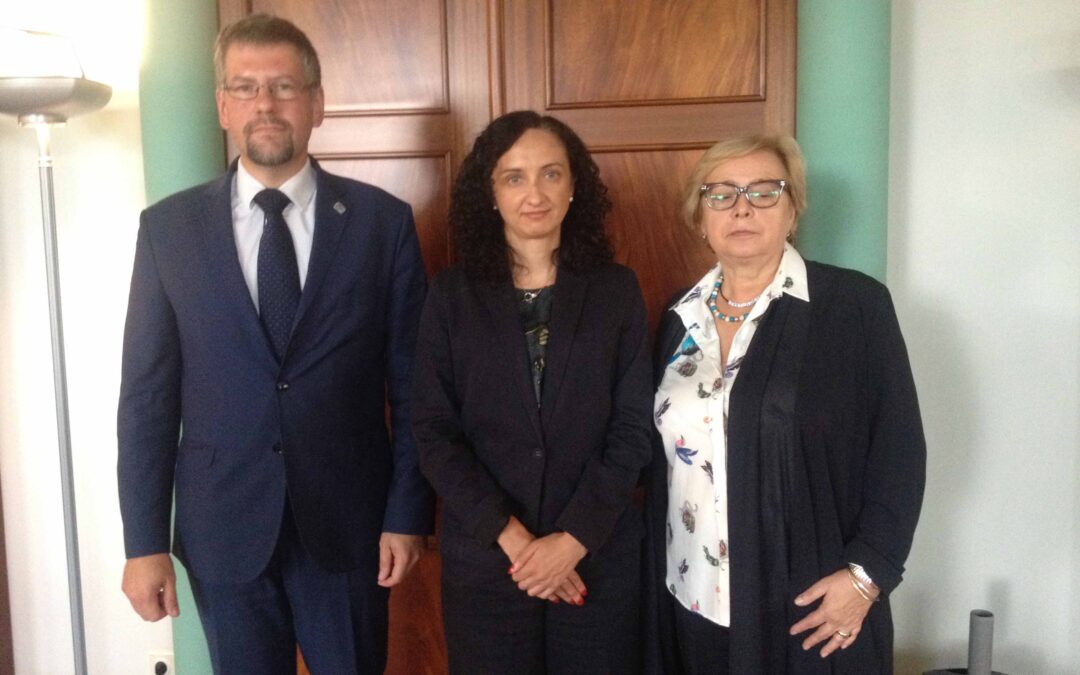
The ICJ met this week in Warsaw with the First President of the Polish Supreme Court, Małgorzata Gersdorf.
Róisín Pillay, Director of the ICJ Europe and Central Asia Programme, met with President Gersdorf to convey the support of the ICJ for the Court’s defence of the rule of law and the independence of the judiciary in Poland, in the face of government attacks.
The ICJ emphasized that a new law on the Supreme Court that attempts to force the “retirement” of 27 of the 72 Supreme Court judges, including the First President, by lowering the mandatory retirement age for its judges from 70 to 65 years, contravenes international human rights law and standards, including the right to a fair hearing.
The measure is contrary to the principle of the security of tenure of judges and therefore to the independence of the judiciary, as expressed in the UN Basic Principles on the Independence of the Judiciary.
In August, the Supreme Court submitted a preliminary ruling request to the Court of Justice of the EU (CJEU) seeking its interpretation on the compliance of the measure with EU law. The Supreme Court has suspended implementation of the law pending the proceedings before the CJEU.
The European Commission has recognized the current situation as undermining “the principle of judicial independence, including the irremovability of judges” and has triggered a procedure under Article 7 of the Treaty of the European Union that could ultimately lead to suspension of Poland’s EU voting rights.
The Commission has also launched infringement proceedings against Poland in respect of the law on the Supreme Court.
An ICJ letter of 11 July 2018, signed by 22 senior judges from all regions of the world, urged the Polish government to act immediately to reinstate the forcibly retired judges in office.
Sep 13, 2018 | Advocacy, Non-legal submissions
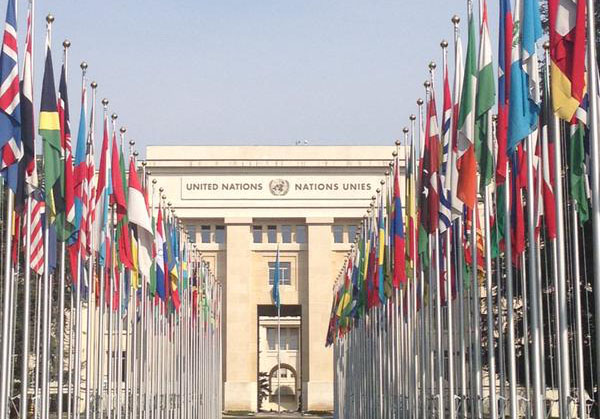
The ICJ prepared an oral statement on procedural safeguards and civil society’s action to prevent arbitrary detention and enforced disappearance, for the interactive dialogue with the UN Working Groups on Arbitrary Detention and on Enforced and Involuntary Disappearances.
Although the statement could not ultimately be read out due to the limited time for civil society statements at the Human Rights Council, the text can found here:
“Mr President, Chairpersons of the Working Groups,
The International Commission of Jurists (ICJ) welcomes the focus of the report of the Working Group on Arbitrary Detention on “Linkages between arbitrary detention and instances of torture and ill- treatment”.
The ICJ shares the view of the Working Group that “safeguards … to prevent” torture and ill-treatment minimize and prevent “instances of arbitrary detention” (A/HRC/39/45, para. 59, and the view that “Judicial oversight of detention is a fundamental safeguard of personal liberty ” (A/HRC/39/45, para. 60).
The ICJ further welcomes the interim report of the Working Group on Enforced and Involuntary Disappearances on effective investigations (A/HRC/39/46), including the finding that “relatives of the disappeared have proven to be essential in the context of investigations and should have the right to know the truth … .” (para. 65)
The ICJ however stresses that these standards are not always upheld by States in their policies and actions.
For example, in Turkey, judicial review of detention is carried out by Judgeships of the Peace whose independence is highly questionable.
Finally, with regard to enforced disappearances, the ICJ is very concerned by the actions of Turkish authorities prohibiting the Saturday Mothers to hold their weekly protests in Galatasaray Square (Istanbul) in memory of their disappeared, in breach of their right to freedom of assembly.
Events of this kind seriously weaken the procedural safeguards and the action of civil society to protect and promote the prohibition of arbitrary detention and ensure accountability against enforced disappearances.
The ICJ urges the Council to address these worrying developments.
I thank you.”
HRC39-OralStatement-WGADWGEID-2018-draft-ENG (download the statement)
Sep 10, 2018 | Advocacy, News
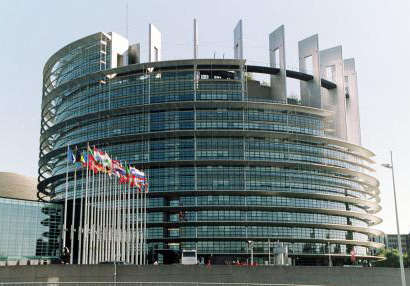
The ICJ today called on all MEPs to vote in favour of the draft resolution and report by rapporteur Judith Sargentini MEP, before the European Parliament, which would activate Article 7 of the Treaty of the European Union in respect of Hungary.
A vote for the resolution would mean that, under Article 7.1, the Council would determine whether there is a clear risk of serious breach by Hungary of the founding values of the EU.
Ultimately, if the situation persists, this would allow the Council to take more robust measures, including suspension of voting rights, to address the situation.
The vote, scheduled for 12 September, is crucial for the rule of law in Hungary and throughout the European Union.
The Parliament will vote on whether to activate the process under Article 7, by calling on the Council to identify a risk of serious breach by Hungary of the EU’s founding values, including the rule of law and respect for human rights.
The ICJ considers that the measures put in place by the Hungarian government since 2011 have led to a severe deterioration of the rule of law and human rights, by weakening Constitutional rights protection, limiting judicial independence, suppressing independent media, civil society and academic institutions, and imposing arbitrary laws that violate the human rights of marginalized sections of society.
Cumulatively, these measures pose a grave, systemic threat to the protection of the human rights of all people in Hungary.
“The European Parliament should respond to the critical situation in Hungary by using the powers available to it under Article 7 TEU to defend human rights and the rule of law. Not to do so would be to abandon Hungary to an increasingly dangerous path, and would set a damaging precedent for all of Europe,” said Róisín Pillay, Director of the ICJ Europe Programme.
Read the full statement and key concerns here: Hungary-triggering Art 7-Advocacy-2018-ENG (in PDF)