Sep 10, 2018 | Events, News
The legal profession plays a crucial role in ensuring access to justice for all, transparency and accountability of the state, Rule of law and the respect for human rights.
Yet, instead of being perceived as a vital player to the justice sector, today lawyers are often targeted by the governments in many OSCE countries for seeking truth and justice. As a result, lawyers often face high risks of persecution, harassment as well as severe sanctions for doing their job.
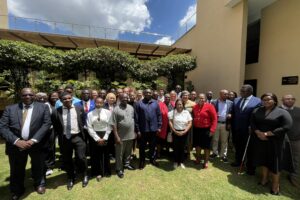
This side-event aims to specifically discuss the situation of lawyers in Belarus, Russia, Azerbaijan, Tajikistan and Kazakhstan. The discussion will extend to consider the latest developments related to the rights of lawyers and their independence in the respective countries, and what impact this has on the overall rule of law and human rights situation.
This side event will take place on 12 September 2018, from 13.00 -15.00 at Hotel Bristol, Warsaw
Moderator: Jurate Guzeviciute, Programme Lawyer, International Bar Association’s Human Rights Institute
Presentations and Discussions:
Independence of the legal profession and harassment of lawyers in Eastern Europe and Central Asia:
- Tajikistan: Dilrabo Samadova, lawyer, Tajikistan
- Azerbaijan: Nijat Mammadbayli, lawyer, Azerbaijan
- Kazakhstan: Snezhanna Kim, lawyer, Kazakhstan
- Russia: Róisín Pillay, Director of the Europe Regional Programme, International Commission of Jurists
- Belarus: Anne Souléliac, Head of the Human Rights section, Paris Bar Association
Organizers: Permanent Mission of the Federal Republic of Germany to the OSCE, Permanent Representation of France to the OSCE, International Bar Association’s Human Rights Institute, Paris Bar Association, International Commission of Jurists.
Poland-HDIM_Side event-News-event-2018-ENG (flyer of the event in PDF)

Sep 3, 2018
Today, the ICJ called on the President of the Council of Ministers, Giuseppe Conte, to remove the legal obstacles that for over a decade have frustrated justice in the case of Abu Omar, a victim of gross human rights violations during the so-called war on terror launched by the US in the 2000s.
Specifically, the organization said that the doctrine of “secret of state” , which shields from public and judicial disclosure information purported to affect national security interests, should be lifted in any case pertaining to the rendition of Abu Omar.
In a letter to President Conte, the President of the ICJ, Robert K. Goldman, recalls that Italy has been condemned by the European Court of Human Rights for its complicity in the unlawful rendition and enforced disappearance of Abu Omar and that Italy has a duty under international law to do all that is possible to unveil the truth to the victims and the general public about such crimes under international law.
“The Italian public has a right to know the truth about a gross violation of human rights that occurred in its country and about the role its own secret services and institutions played in it”, said Massimo Frigo, Senior Legal Advisor for the ICJ’s Europe Program.
“President Conte should lift state secrecy on this case right away, to demonstrate that he holds true to Italy’s obligations under international law and transparency and accountability of Government before its people.”
The ICJ noted that the European Court of Human Rights has determined, in Nasr and Ghali v. Italy, that Italian government violated human rights, including by allowing for effective impunity for such crimes despite the laudable efforts of the Italian judiciary to prosecute and try those responsible,” said Massimo Frigo.
“It is time for Italy to live up to its international obligations and show to the world and its people that gross violations of human rights and crimes under international law will not be tolerated and that accountability must be upheld at all times and without hesitation,” he added.
Background
Hassan Mustafa Osama Nasr (also known as Abu Omar) is an Egyptian national who was kidnapped in the streets of Milan in 2003 by CIA operatives, with the collaboration of Italian agents, while he was living in Italy with refugee status.
He was then subjected to torture and other cruel, inhuman or degrading treatment during his travel to Egypt and in Egypt, where he endured several years in arbitrary detention.
The rendition of Abu Omar, that also constituted an enforced disappearance under international law, was investigated and prosecuted by the Public Prosecutor’s Office of Milan and tried in the criminal tribunal, court of appeal of Milan and Court of Cassation.
This has been the only known prosecution and trial anywhere in the world against State agents alleged to be responsible for human rights violations in the context of the US-led rendition and secret detention system.
While 23 US agents and three Italian citizens were convicted – though without serving their sentences – the apex of the Italian military secret service (then SISMI) could not be tried because the Government invoked the doctrine of state secrecy in the proceedings.
The European Court of Human Rights found unanimously that that Italy had been complicit in the operation and had breached its obligations to prohibit and investigate torture and inhuman of degrading treatment of punishment (article 3 ECHR); the right to liberty of Abu Omar (article 5 ECHR); the right of his wife, Nabila Ghali, not to be subject to inhuman or degrading treatment caused by the suffering of not knowing the whereabouts of her husband (article 3 ECHR); their right to family life, and their right to an effective remedy for human rights violations (article 13 ECHR).
The judgment is still awaiting full execution by the Italian authorities, although there have been payments to the victims.
Contact:
Massimo Frigo, Senior Legal Advisor for the ICJ’s Europe Program
E-mail: massimo.frigo(a)icj.org
Italy-justice for Abu Omar-advoacy-open letters-2018-eng [Open Letter in English PDF]
Italy-justice for Abu Omar-news-press releases-2018-ita [Press Release in Italian PDF]
Italy-justice for Abu Omar-advocacy-open letters-2018-ita [Open Letter in Italian PDF]
Aug 24, 2018 | Новости, Событие, Статьи
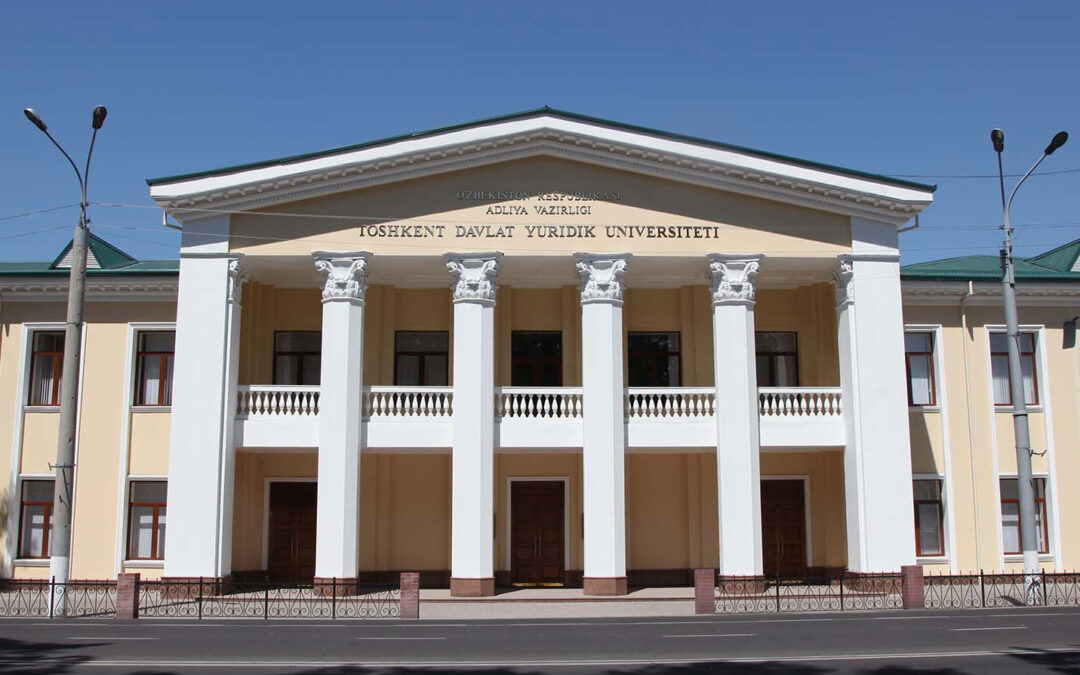
Международная комиссия юристов (МКЮ) совместно с Ташкентским государственным юридическим университетом (ТГЮУ) начинает «Экспертные дискуссии по экономическим, социальным и культурным правам».
В рамках дискуссий, МКЮ и ТГЮИ приглашают всех желающих подготовить и представить доклады (статьи) на рассмотрение рабочей группой для включения в список докладчиков и последующей их презентации, и обсуждения на первой экспертной встрече.
Первая встреча пройдет «18» сентября 2018 года в ТГЮУ. Темой первой встречи является «Право на труд» и принять участие в экспертной встрече могут все желающие, включая студентов и специалистов, интересующихся данной тематикой. Для регистрации просим пройти по следующей ссылке: https://goo.gl/forms/4WRTdugLuFI6l7Hu1. Регистрация открыта до «14 сентября» 2018 года.
Uzbekistan-ESCR Call for papers_ACCESS-News-web story-2018-RUS

Aug 21, 2018 | Articles, Nouvelles
La CIJ et sa section polonaise ont exprimé aujourd’hui leur soutien aux actions de la Cour suprême pour défendre l’état de droit et l’indépendance du pouvoir judiciaire en Pologne, notamment en recourant à la Cour de justice des Communautés européennes (CJCE).
Ces faits interviennent dans la foulée d’attaques répétées de la part de personnalités politiques et des autorités.
La préservation et la sauvegarde de l’indépendance des tribunaux sont essentielles pour la protection des droits de l’Homme en Pologne, ont déclaré les deux organisations.
La CIJ et sa section polonaise ont exhorté les autorités exécutives et législatives du pays à cesser toute ingérence dans la conduite de ses fonctions légitimes par la Cour suprême.
La loi sur la Cour suprême qui a abouti à la «retraite» forcée d’un tiers de la Cour suprême, y compris de la présidente de la Cour, Małgorzata Gersdorf, doit être abrogée et les juges réintégrés, ont souligné la CIJ et sa section polonaise.
Le 2 août, la Cour suprême de Pologne a pris l’initiative, bienvenue, de présenter une demande de décision préliminaire à la Cour de justice de l’Union européenne (CJUE), conformément au droit de l’UE, afin de requérir son interprétation sur la conformité de la législation récente sur l’âge de la retraite des juges avec le droit de l’UE.
Plus précisément, la Cour suprême a demandé si la législation respectait le principe de l’inamovibilité des juges et de l’interdiction de la discrimination fondée sur l’âge en vertu de la directive 2000/78.
La Cour suprême a suspendu l’application de la loi tant que durera la procédure devant la CJUE.
La CIJ et sa section polonaise condamnent les attaques contre la Cour suprême de la part des autorités politiques, et notamment le président Andrzej Duda, qui ont prétendu que la suspension de l’application de la loi n’a aucun fondement juridique.
Au contraire, la Cour suprême de Pologne a agi dans le respect de ses obligations, en vertu de l’article 267 du Traité sur le fonctionnement de l’Union européenne (TFEU), pour questionner l’interprétation des traités et, conformément à la jurisprudence de la CJUE, et pour suspendre l’application de mesures qui pourraient constituer une violation du droit de l’Union européenne, dans l’attente du règlement de la question.
La législation soulève de sérieux problèmes en droit européen, tant en ce qui concerne la protection de l’état de droit en vertu de l’article 2 du TFEU que de la discrimination fondée sur l’âge.
Cette attaque contre les actions de la Cour suprême intervient alors que les autorités exécutives et législatives polonaises sapent systématiquement l’indépendance de la justice en Pologne, ce que la CIJ, sa section en Pologne et les juges du réseau mondial de la CIJ ont condamné à plusieurs reprises.
Les deux organisations soulignent que l’inamovibilité des juges est l’un des principaux piliers de l’indépendance judiciaire et donc de l’état de droit. Une lettre de la CIJ datée du 11 juillet 2018 (disponible uniquement en anglais), signée par 22 hauts magistrats de toutes les régions du monde, a exhorté le gouvernement polonais à agir immédiatement pour réintégrer les juges mis en retraite forcée.

Aug 21, 2018 | News
The ICJ and its Polish Section (ICJ Poland) today expressed their support for the actions of the Supreme Court to defend the rule of law and the independence of the judiciary in Poland, including by recourse to the European Court of Justice (CJEU).
This happened in the face of repeated attack by political figures and authorities.
Preserving and safeguarding the independence of the courts is essential for the protection of human rights in Poland, the organizations said.
The ICJ and ICJ Poland urged the Polish executive and legislative authorities to cease all interference with the conduct of the Supreme Court in the carrying out of its legitimate functions.
The law on the Supreme Court that has led to the forced “retirement” of one third of the Supreme Court, including the President of the Court, Małgorzata Gersdorf, must be repealed and the judges reinstated in office, the ICJ and ICJ Poland stressed.
On 2 August, the Supreme Court of Poland took the welcome step, in accordance with European Union law, of submitting a preliminary ruling request to the Court of Justice of the European Union (CJEU) seeking its interpretation on the compliance of the recent legislation on retirement ages of judges with EU law.
Specifically, the Supreme Court enquired as to the legislation’s compliance with the principle of irremovability of judges and the prohibition of discrimination on grounds of age under Directive 2000/78. The Supreme Court has suspended the implementation of the law during the proceedings before the CJEU.
The ICJ and ICJ Poland condemn the attacks against the Supreme Court by political authorities, including President Andrzej Duda, who claimed that the suspension of the law’s implementation has no legal basis.
On the contrary, the Supreme Court of Poland acted in compliance with its duties under article 267 of Treaty of the Functioning of the European Union to raise a question concerning the interpretation of the Treaties and, in conformity with the case-law of the CJEU, to suspend the application of such measures which may violate the law of the European Union, pending resolution of the question.
The legislation raises serious issues of EU law, both in regard to protection of the rule of law under Article 2 of the TFEU, and in regard to discrimination on grounds of age.
This attack against the actions of the Supreme Court occurs amid a systematic undermining of the independence of the judiciary in Poland by the Polish executive and legislative authorities, which the ICJ, ICJ Poland, and judges of the global ICJ network have repeatedly condemned.
The organizations emphasize that irremovability of judges is one of the main pillars of judicial independence and therefore of the rule of law. An ICJ letter of 11 July 2018, signed by 22 senior judges from all regions of the world, urged the Polish government to act immediately to reinstate the forcibly retired judges in office.