Oct 1, 2018 | Advocacy, Cases, Legal submissions
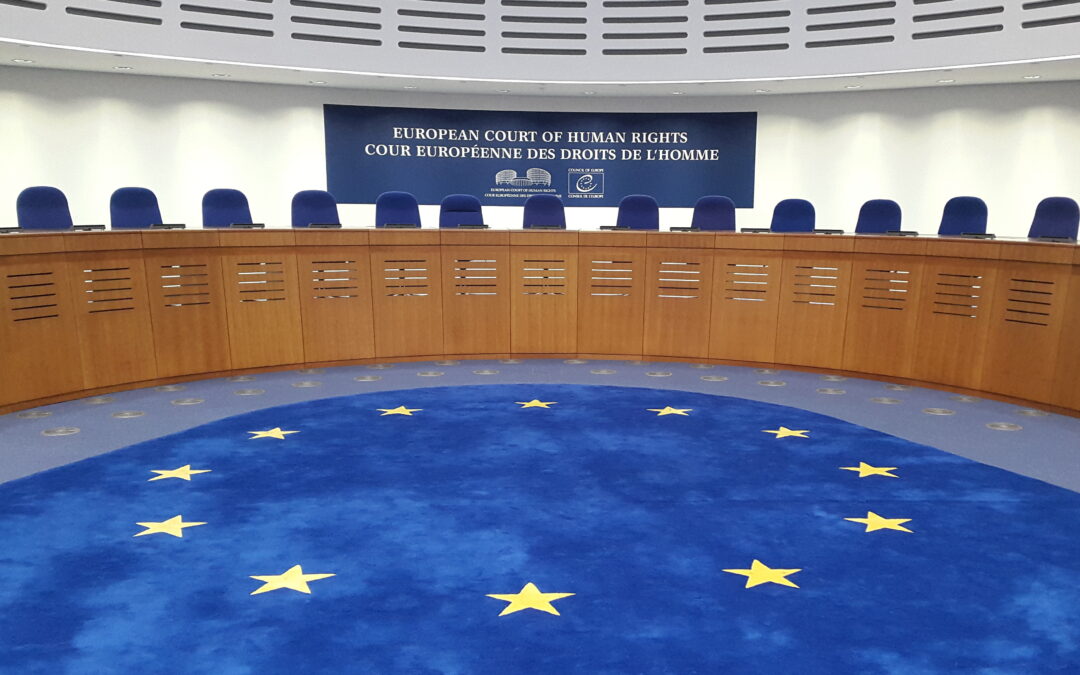
The ICJ made submissions today to the European Court of Human Rights in support of the right of association of Azerbaijan’s lawyers representing applicants before the Court and highlighting the situation of harassment of the legal profession in the country.
The ICJ intervened today in the cases of Democracy and Human Rights Resource Centre v. Azerbaijan and Mustafayev and Democracy and Human Rights Resource Centre v. Azerbaijan.
In these cases, lawyer Asabali Mustafayev and its NGO challenged the compliance of the freezing of their assets and criminal proceedings for financial offences as arbitrary interferences with their work as human rights defenders and in representation of clients before the European Court of Human Rights itself.
The ICJ has intervened to highlight the case-law regarding the right to individual application before the Court under article 34 ECHR and its application to the work of lawyers and legal NGOs.
It further examined the systemic practice in Azerbaijan of harassment of lawyers and of NGOs established by lawyers for the purpose of providing legal advice or representation, including representation of applicants before the European Court of Human Rights.
Finally, the ICJ analyzed the implications of such practices with regard to the State’s obligations under article 18 ECHR read together with article 11 ECHR.
Azerbaijan-icj-DHRRC&other-Advocacy-legal submission-2018-ENG (download the submission)
“Defenseless Defenders: Systemic Problems in the Legal Profession of Azerbaijan” – ICJ report in Azeri, Russian and English.
Question to the parties: http://hudoc.echr.coe.int/eng?i=001-184179
Sep 27, 2018 | Communiqués de presse, Nouvelles
2018 marque le 60ème anniversaire de l’arrivée à Genève de l’ICJ, à l’initiative du grand juriste Suisse Jean-Flavien Lalive qui était Secrétaire Général de l’Organisation en 1958.
Lors du Congrès de l’ICJ à New Delhi en 1959, le Dr Lalive a contribué à définir les principes de l’Etat de Droit et des droits de l’Homme.
La Déclaration de Delhi, en particulier, constitue à ce jour un instrument fondamental dans la définition de la primauté du droit dont les juristes sont principalement responsables pour sauvegarder et faire progresser les droits de l’Homme.
Cela fait de l’ICJ l’une des plus anciennes organisations internationales basées à Genève.
Elle y joue un rôle unique et prééminent en tant qu’organisation non gouvernementale pour la défense des droits de l’Homme et de l’Etat de Droit dans le monde.
L’ICJ va marquer cet événement par deux activités majeures:
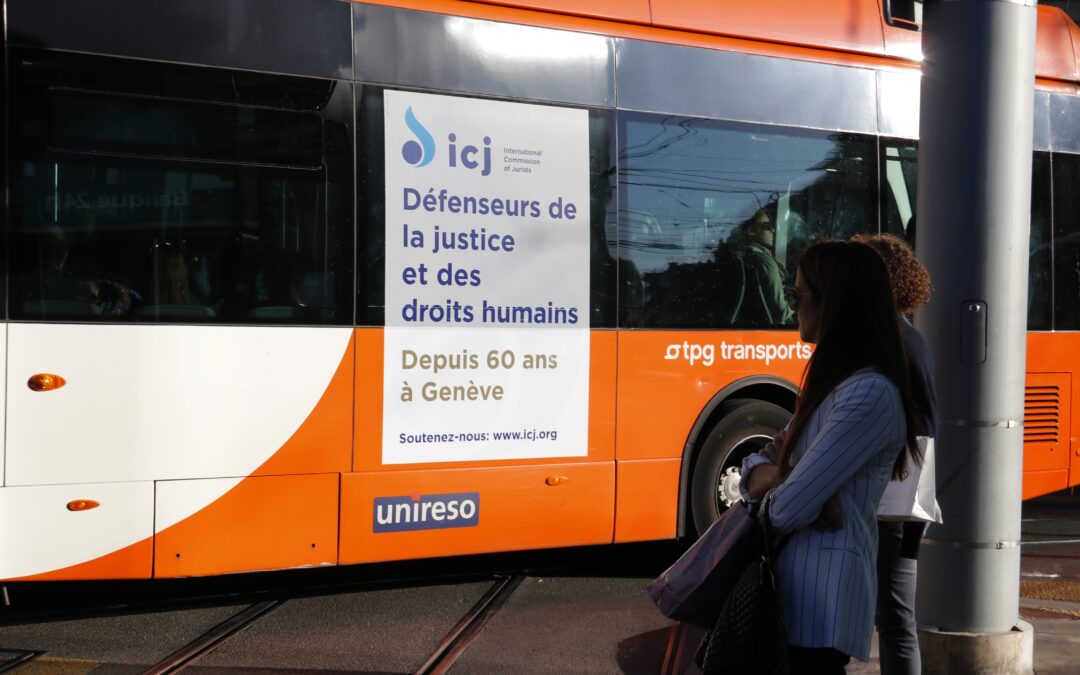
- Une campagne de visibilité du 26 septembre au 9 octobre sur cinq véhicules et tous les écrans intérieurs des trams et bus des TPG avec le slogan « Défenseurs de la justice et des droits humains – Depuis 60 ans à Genève »
- Le lancement de l’Appel du 60ème Anniversaire à tous les avocats du canton et de la Ville de Genève pour qu’ils soutiennent l’ICJ et, à travers elle, leurs confrères moins privilégiés, victimes de persécutions sur les cinq continents.
« Genève peut être fière de son image de capitale mondiale des droits de l’Homme. Elle est un phare pour ces défenseurs de la justice dans le monde. Il faut continuer à le faire rayonner, » souligne Sam Zarifi, secrétaire général de l’ICJ.
« Par son action en 60 ans, l’ICJ a grandement contribué à l’aura de Genève en matière de protection des droits de l’Homme : les campagnes ayant abouti à la création du poste de Haut-Commissaire aux droits de l’Homme en 1993 et du Conseil des droits de l’Homme à l’ONU en 2006, ainsi que celle qui a concouru à l’adoption de la Convention des Nations Unies contre la torture en 1984 sont quelques exemples notoires, » rappelle Olivier Coutau, Délégué à la Genève Internationale.
« Face aux attaques répétées contre les droits de l’Homme, le monde a besoin, plus que jamais, d’une défense compétente, rigoureuse et efficace de l’Etat de Droit par l’ICJ, » ajoute Sam Zarifi, secrétaire général de l’ICJ.
L’Appel du 60ème Anniversaire de l’ICJ est soutenu par la République et canton de Genève.
Information additionnelle
La réputation internationale de l’ICJ repose sur les piliers suivants:
- 60 Commissaires – juges et avocats éminents – du monde entier et de tous les systèmes juridiques, avec une connaissance sans égale du droit et des droits de l’Homme;
- Coopération avec les gouvernements qui s’engagent à améliorer leur performance en matière de droits de l’Homme;
- Équilibre efficace entre diplomatie, critique constructive, renforcement des capacités et, si nécessaire, dénonciation;
- Accès direct unique aux systèmes judiciaires nationaux et mise en place de normes internationales et de législations améliorées impactant des millions de personnes;
- Guider, former et protéger les juges et les avocats dans le monde afin qu’ils respectent et appliquent ces normes;
- Oeuvrer en faveur de l’accès à la justice pour les victimes, les survivants et les défenseurs des droits de l’Homme, et notamment les personnes issues de communautés marginalisées;
- Gestion rigoureuse basée sur résultats concrets dans l’exécution de ses projets.
En reconnaissance de cette approche efficace, l’ICJ s’est vu décerner, au cours de sa longue histoire, certaines des distinctions internationales les plus prestigieuses : Prix Européen des Droits de l’Homme du Conseil de l’Europe, United Nations Award for Human Rights, Erasmus Prize, Carnegie Foundation Wateler Peace Prize.
En 2018, l’ICJ a offert des formations locales sur les cinq continents, afin que 4,300 juges, avocats et procureurs renforcent leur compétence pour protéger et promouvoir les droits fondamentaux.
L’ICJ a un statut consultatif auprès des Nations Unies, du Conseil économique et social des Nations Unies, de l’UNESCO, du Conseil de l’Europe et de l’Union africaine.
Contact :
Michaël W. Sombart, Directeur Philanthropie & Partenariats stratégiques, t: +41 22 979 38 31 ; m: +41 77 965 98 45 ; e: michael.sombart(a)icj.org
Sep 27, 2018
The ICJ intervened in the case Nahhas and Hadri v Belgium in front of the European Court for Human Rights in a case of a Syrian family applying for a visa at a Belgian embassy in Beirut.
The ICJ together with partner organisations (DCR, ECRE, AIRE Centre) submitted that there is an extra-territorial jurisdiction over persons when a state is issuing visa at its embassy, and that there might be positive obligations for the States to issue such visa when refusal would leave the applicants at a real risk of exposure to violations of Article 3 ECHR. Best interests of the child must underpin all decisions taken by the state.
In particular:
- Jurisdiction exists in a number of extra-territorial situations, including where the State exercises authority or control over persons, including decisions of diplomatic and consular personnel on the issuance of visas to third country nationals.
- State responsibility may thus be engaged when refusing treatment of a visa application, in circumstances where the State is or ought to be aware that applicant if returned faces a real risk of serious Convention human rights violations, in the absence of available alternatives that would prevent such outcome.
- To comply with their obligations under the Convention, Contracting States are prohibited from refusing to issue visas to travel to their territory when requested by those who have an arguable claim that he or she is at real risk of an Article 3 violation in a third State. This is particularly the case if no other legal route to safety exists and where if denied such visas, refusal would leave the applicants at a real risk of exposure (whether directly or indirectly) to violations of Article 3 in the third State and the Contracting State from which the visa is requested has (or ought to have) knowledge of the risks in question.
- Article 3 of the Convention read in the light of Article 3, 22 and 37 of the UNCRC requires that the best interests of the child underpin all decisions taken by Contracting States with regard to children, and that Contracting states ensure the child’s protection and give separate consideration to the child’s interest. These standards apply to decisions on visa applications made by children and their parents at the embassy of a Contracting State.
Please find the full intervention here:Belgium-Nahhas Intervention-Advocacy-Legal Submission-2018-ENG
Sep 26, 2018
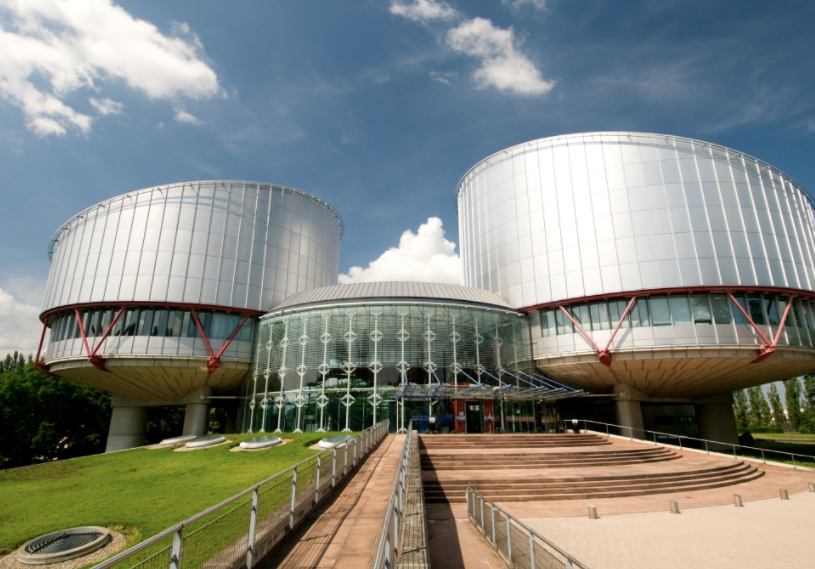
Today, the ICJ has presented a third party intervention before the European Court of Human Rights in Alayif Hasan oglu Hasanov v. Azerbaijan case.
In its submissions, the ICJ stresses that, while lawyers must perform their professional functions in conformity with ethical standards, the systems and procedures in respect of conditions of service, including in respect of admission to the profession and discipline, must not enforce such obligations in a way that impairs the exercise of human rights by lawyers or their capacity to effectively represent their clients.
The ICJ presented the submissions based on the jurisprudence of this Court as well as international standards governing the legal profession.
In particular, the submission addressed permissible restrictions of lawyers’ rights to respect for private (including professional) life under article 8 ECHR and to freedom of expression under article 10 ECHR, as well as the procedural safeguards required to apply such restrictions under article 6 ECHR.
Finally, the submission set out key findings of a recent ICJ fact-finding mission to assess the compliance of the governance of the legal profession in Azerbaijan with international law and standards.
Additional information:
Questions to the parties are available at http://hudoc.echr.coe.int/eng?i=001-184367
“Defenseless Defenders: Systemic Problems in the Legal Profession of Azerbaijan” – ICJ report in Azeri, Russian and English.
Azerbaijan-ICJ submission to ECHR-legal submission-2018-ENG – Submission in English.
Sep 21, 2018 | Advocacy, News, Non-legal submissions
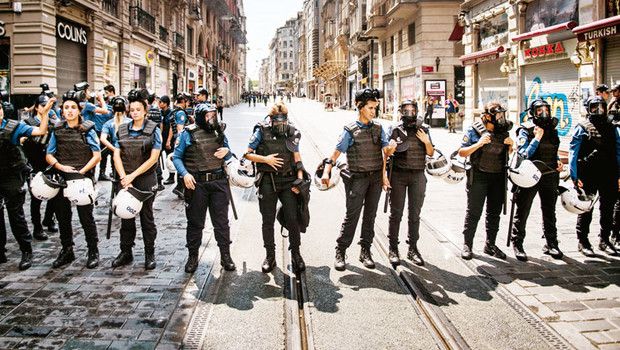
The ICJ wrote today to the Council of Europe’s Commissioner for Human Rights, Dunja Mijatović, to request action against the decision by Turkish authorities to ban entrance to Galatasaray square in Istanbul (Turkey) to a collective of mothers of disappeared persons called “Saturday Mothers”.
On 25 August 2018 , the Sub-Governorship of Beyoğlu District of İstanbul announced the prohibition of gatherings for assembly of any type of demonstrations in Galatasaray Square in Istanbul, the square where the Saturday Mothers have gathered every Saturday since 1995 to 1998 and since 2009 until 2018.
On the 700th week of their peaceful protests, the Saturday Mothers and their supporters congregated in Galatasaray Square at midday to once again raise awareness of the need for those responsible to be held accountable for the extrajudicial killings and enforced disappearances following their time in State custody in the 1990s. The police used tear gas to stop the protest and arrested 47 people. All were released by Saturday evening.
Senior officers of the Turkish authorities have even issued statements accusing the Saturday Mothers of being abused by or in collusion with terrorist organisations.
The ICJ wrote to the European Commissioner for Human Rights, that it “considers this situation to be at odds with Turkey’s obligations under international human rights law, in particular of the right to peaceful assembly under article 11 of the European Convention on Human Rights and article 21 of the International Covenant on Civil and Political Rights.”
The ICJ further added that “given the consistent record and presence of the Saturday Mothers in Galatasaray Square throughout the years, it is hard to see how the restriction on their right to peaceful assembly could in any way be necessary and proportionate to a legitimate purpose. It is clear that no prior warning for the gathering was needed for security reasons in light of its regular occurrence at least since its resumption in 2009, i.e. nine years ago. Furthermore, the demonstration took place on a pedestrian area where cars are not allowed.”
ICJ-Letter-SaturdayMothers-CoEComm-Turkey-2018-ENG (download the letter)