Mar 23, 2016
Member States of the UN Human Rights Council should support the adoption of a vital draft resolution on the protection of human rights defenders and vote down over 30 hostile amendments proposed by China, Cuba, Egypt, Pakistan and Russia, which could substantially weaken the text.
In an open letter to governments, more than 100 non-governmental organisations from all regions of the world have said that the resolution – which focuses on the situation and protection needs of those working to promote economic, social and cultural rights – is a timely, balanced and important response to the worsening crackdown on human rights defenders. States from all regions, including Australia, Brazil, France, Ghana, Japan and Tunisia, among others, have already pledged their support for the Norwegian-led text.
The draft resolution will be voted upn by 47 Member States of the Human Rights Council on 23 or 24 March.
The amendments being pushed by China, Cuba, Egypt, Pakistan and Russia include proposals to remove any reference in the text to the term ‘human rights defenders’, to deny the legitimacy of their work, and to weaken their protection against attacks and reprisals.
Re: Support resolution on the protection of human rights defenders addressing economic, social and cultural rights
22 March 2016
Your Excellency,
The undersigned civil society organisations, coming from all regions, urge your delegation to support the adoption of the resolution on the protection of human rights defenders working to promote economic, social and cultural rights as tabled. We urge you to resist efforts to undermine and weaken this resolution.
The draft resolution entitled ‘Protecting human rights defenders addressing economic, social and cultural rights (A/HRC/31/L.28) is being considered by the 31st session of the Human Rights Council. It will be presented for adoption on 23 or 24 March.
South African jurist and former High Commissioner for Human Rights, Navi Pillay, has articulated the importance of such a resolution in the following terms:
As a South African, I have seen and experienced first-hand the role of ESC rights defenders in combating poverty and injustice and in promoting universal human rights for all, even the most powerless and disadvantaged. I have seen how the work of those who defend ESC rights benefits entire communities; just as attacks against those who defend ESC rights harm entire communities. That is why it is so important and timely that the UN Human Rights Council is currently negotiating a resolution on the protection of ESC rights defenders.
The draft resolution has been developed through a number of open and transparent informal negotiations.
The text, as tabled, is balanced and appropriate, in recognising the vital contribution of human rights defenders to the realisation of economic, social and cultural rights and the right to development. It is currently cosponsored by a broad group of States from all regions of the world.
The text also identifies the threats, attacks and challenges facing this group of defenders and the obligations, duties and interests of State and non-State actors in terms of supporting and safeguarding this work. It provides good practice guidance to both State and non-State actors in this regard.
Despite the importance of the resolution – so tragically illustrated at the commencement of the 31st session with the murder of Honduran woman human rights defender Berta Caceres – a small group of States, led by the Russian Federation, China, Egypt, Cuba and Pakistan are seeking to seriously undermine the text. A large number of adverse amendments being pushed by these States include proposals which have the purpose or would have the effect of:
- Removing any reference to the term ‘human rights defenders’;
- Denying the legitimacy of the work of human rights defenders;
- Weakening protection against, and accountability for, intimidation and reprisals against human rights defenders and others who cooperate with the United Nations;
- Failing to acknowledge the specific risks and violations faced by women, indigenous, and land and environment human rights defenders, their families and communities;
- Diluting and regressing from consensus language and terminology from past human rights defenders resolutions; and
- Seeking to justify limitations on human rights that are impermissible under international human rights law.
The amendments being advocated by the Russian Federation, China, Egypt, Cuba and Pakistan should be seen in the context of the systematic efforts currently underway in several of these States to restrict and criminalise the important and legitimate work of human rights defenders and independent civil society organisations in violation of international human rights law. The proposal to weaken language on reprisals should similarly be understood in the context of several of the proposing States being the subject of allegations of intimidation or reprisals in both the Secretary-General’s report and the joint communications report of Special Procedures.
We urge you not to associate with such positions. Instead, we respectfully urge your delegation to co-sponsor resolution L.28 as tabled, vote against the amendments presented, and vote in favor of the resolution as drafted.
Civil society and human rights defenders around the world look to the HRC and its Member States for support and protection, and we hope your delegation will stand with us.
Yours sincerely,
- International Service for Human Rights
- Amnesty International
- Arc International
- ARTICLE 19
- Asian Forum for Human Rights and Development
- Association for Women’s Rights in Development (AWID)
- Boys of Bangladesh
- Cairo Institute for Human Rights Studies (CIHRS)
- Cambodian Center for Human Rights (CCHR)
- CELS (Argentina)
- CIVICUS
- Coalition Ivoirienne des Défenseurs des Droits Humains (CIDDH)
- Defend Defenders (East and Horn of Africa Human Rights Defenders Project)
- Digital Empowerment Foundation (India)
- Egyptian Initiative for Personal Rights (EIPR)
- FIDH, within the framework of the Observatory for the Protection of Human Rights Defenders
- Foundation HELP (Tanzania)
- Global Initiative for Economic, Social & Cultural Rights
- Globe International Center
- Groundation Grenada
- Gulf Centre for Human Rights (GCHR)
- Human Rights Defenders Network Sierra Leone
- Human Rights House Foundation
- Human Rights Law Centre (Australia)
- Human Rights Watch
- International Commission of Jurists
- International Lesbian and Gay Association (ILGA)
- International Platform against Impunity
- Ivorian Observatory for Human Rights (OIDH)
- JASS -Just Associates-
- LGBT Centre (Mongolia)
- Mongolian Women’s employment supporting federation
- Nazra for Feminist Studies (Egypt)
- OT Watch (Mongolia)
- Peace Brigades International
- Protection International
- Reporters Without Borders
- Rivers without Boundaries Mongolia
- Salmmah Women’s Resource Centre (Sudan)
- Southern Africa Litigation Centre (SALC)
- Steps Without Borders NGO
- Terra de Direitos (Brazil)
- Urgent Action Fund for Women’s Human Rights
- West African Human Rights Defenders’ Network
- World Organisation Against Torture (OMCT), within the framework of the Observatory for the Protection of Human Rights Defenders
(The above 45 NGOs were the initial signatories, an updated version with additional signatories is here.)
Mar 18, 2016 | Advocacy, Non-legal submissions
The ICJ today joined an oral statement on the role of judges, lawyers, and prosecutors, as well as the threats they face, and the Universal Periodic Review of the UN Human Rights Council.
The statement, delivered by the Director of the International Bar Association’s Human Rights Institute, Dr Phillip Tahmindjis, read as follows:
“The International Bar Association’s Human Rights Institute (IBAHRI) released this week its report on the ‘Role of the UPR in advancing human rights in the administration of justice’. The report assesses more than 38,000 recommendations made between 2008 and 2014 for references to the legal profession.
The report’s key findings include:
UPR recommendations still insufficiently address the role of judges, lawyers and prosecutors, or the threats they face, as extensively documented by the Special Rapporteur on the Independence of Judges and Lawyers. Significantly, these recommendations often make no reference to relevant UN standards.
Recommendations relating to the independence of judges are often too vague to be an effective response to the shortcomings of any given jurisdiction. Serious issues in the appointment and removal of judges are mostly ignored.
The independence of lawyers was considered in fewer than 100 of the 38,000 UPR recommendations.
Prosecutorial independence is addressed in less than 10 per cent of the recommendations calling upon States to effectively investigate or prosecute rights violations.
Guarantees for legal professionals’ rights to freedom of expression, assembly and association are barely addressed. This fails to reflect the key role that self-governing organisations of legal professionals should play in upholding human rights and the rule of law, the independence of the legal profession and law reform processes.
As international organisations of legal professionals, we foster the engagement of the legal profession in UN human rights mechanisms and in monitoring the implementation of UPR recommendations.
We call upon the Human Rights Council, as well as States, to ensure that in the third cycle of the UPR, the role of judges, lawyers, and prosecutors receives the heightened attention that it is due, as recognised by the UN Basic Principles on the independence of the judiciary, the UN Basic Principles on the role of lawyers and the UN Guidelines on the role of prosecutors.”
The following organisations endorsed the statement:
- Commonwealth Magistrates’ and Judges’ Association
- Commonwealth Lawyers Association
- International Bar Association’s Human Rights Institute
- International Commission of Jurists
- Judges for Judges
- Lawyers for Lawyers
- Southern Africa Litigation Centre
The statement can be downloaded in PDF format here: HRC31-JointOralStatement-UPRLegalProfessions-2016
The IBAHRI report on ‘The role of the UPR in advancing human rights in the administration of justice’ is available at : http://tinyurl.com/gr525sq

Mar 11, 2016 | Advocacy, Non-legal submissions
The ICJ today made an oral statement at the UN Human Rights Council, on negotiations for a treaty on business and human rights.
The statement welcomed the report of the Chairperson Rapporteur of the first session of the Intergovernmental Working Group on a Legally Binding Instrument on Transnational Corporations and other Business enterprises and Human Rights, and thanked Ambassador Espinosa for her effective leadership of the process.
The ICJ reiterated its support to the process of elaboration of an international legally binding instrument. A treaty, together with other existing instruments and coupled with effective and robust national action, has the potential of significantly contributing to advance the protection of human rights in the context of global business operations. The ICJ called on States to ensure that the process results in an instrument that addresses the most pressing challenges in legal accountability of both national and transnational businesses and access to justice and also provides for the crucial international supervisory and monitoring mechanisms to enhance its effectiveness.
Hundreds of civil society organizations, mostly from the grassroots level, participated in the first session of the IGWG and are active in the whole process. The ICJ urges the United Nations and member States to facilitate civil society participation, including from the global south. Despite the significant participation of many States and business associations, the ICJ believes that more should be done to encourage broad and active stakeholder participation. The ICJ calls on states that are home to large transnational corporations to take part in the deliberations of the working group.
The ICJ believes a legally binding instrument will be the necessary complement to the Guiding Principles on Business and Human Rights, and other instruments. The drafting process should build on some of the accepted key principles and processes, including on the results of the OHCHR project on Corporate Accountability and Access to remedy, cover the conduct of all business enterprises and also contain provisions which address the particular regulatory and jurisdictional challenges pertaining to transnational companies.
Mar 8, 2016
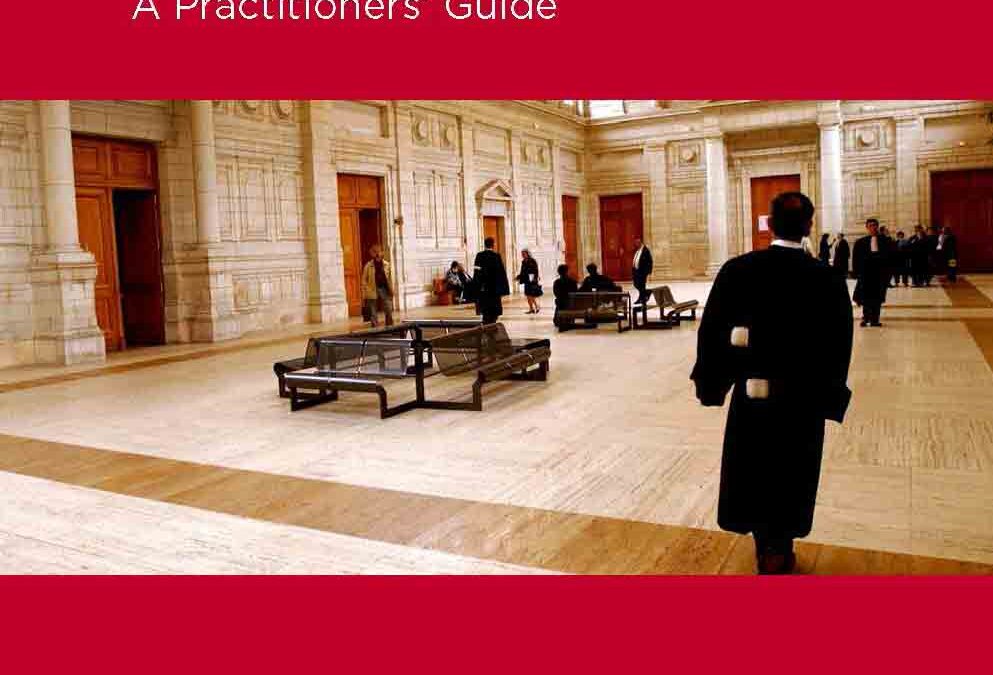
The ICJ addresses women’s access to justice for gender based violence in its new Practitioners’ Guide, launched today on International Women’s Day.
Since the early 1990s there has been international recognition of the problem of gender-based violence and awareness that this impairs the ability of women and girls to access and enjoy all the rights that should be available to them as afforded under international law.
However, in 2016, violence against women remains a public health problem of epidemic proportions, thought to affect between 35-70 per cent of all women and girls at some point during their lives.
The ICJ’s 12th Practitioner’s Guide, Women’s Access to Justice for Gender-Based Violence, is designed to support legal practitioners and human rights defenders involved, or interested, in pursuing cases of gender-based violence.
Lasting change to address the root causes of violence against women can only take place as part of a coordinated effort on behalf of multiple stakeholders, however the ICJ believes that legal practitioners and human rights defenders are indispensible to addressing the problem and realizing women’s access to justice.
Access to justice for gender-based violence means that States must implement a range of measures that recognize violence against women as a crime and ensure appropriate procedures are in place that enable investigations, prosecutions and access to effective remedies and reparation.
These measures may, where necessary, include amending or adopting national legislation.
The ICJ produced this Guide as part of an ongoing project on empowering legal practitioners and human rights defenders seeking justice for women.
Woven into the Guide are commentaries, reflections and recommendations from legal advocates and women human rights defenders from their experiences in this area.
The Guide provides information about regional and international law and standards relevant to gender-based violence, advice on implementing these standards as part of domestic law reform and examples of existing good practice in seeking protection for women.
It also contains a summary of some leading academic literature and civil society commentary and research, signposting users to other in-depth sources where these may be potentially relevant.
The new Guide also addresses the practical issues that are faced by women who have been subject to gender-based violence and the steps that are necessary to secure their access to justice in practice.
It considers women’s experiences of the criminal justice system and reflects on how the justice process deals with women’s safety and need for access to services beyond legal assistance.
The ICJ intends for this guide to be used as a practical tool to assist in navigating individual cases as well as a means of advocating for change on a larger scale.
The ICJ believes that enabling women’s access to justice for gender-based violence will lead to new norms of acceptability, where children and young people are raised to reject gender discrimination and violence.
Download
Universal-Womens accesss to justice-Publications-Practitioners’ Guide Series-2016-ENG (full guide English, in PDF)
Universal-Womens accesss to justice-Publications-Practitioners’ Guide Series-2019-ARA (full guide Arabic, in PDF)
Mar 8, 2016 | Advocacy, Non-legal submissions
The ICJ spoke today at the UN Human Rights Council, addressing the human rights impacts of tax evasion and avoidance, and on women’s access to food and the right to food.
The statement was made in an interactive dialogue with the Independent Expert on the effects of foreign debt, and the Special Rapporteur on the right to food.
The statement addressed the following points, among others:
Welcoming the report of the Independent Expert, the ICJ highlighted that tax evasion and tax avoidance are forms of business’ misbehaviour that are facilitated by inadequate legislation and lack of international frameworks and cooperation in tax matters, and as such need to be tackled by the international community. This is all the more important now that the private sector has been assigned a greater role in the achievement of the 2030 development goals. In this regard, the recommendations by these Special Procedures should receive careful consideration.
The ICJ also welcomed the report on Women’s access to food by the Special Rapporteur on the Right to Food. The report highlights the legal barriers in domestic law that prevent women from fully realizing their right to food, including property rights, land rights and intellectual property rights. The report also highlights the negative impact of certain economic and market models as well as agribusiness corporations in enhancing women’s difficulties in accessing food and achieving food security.
The full statement may be downloaded in PDF format here: HRC31-OralStatement-IEforeigndebt-2016